
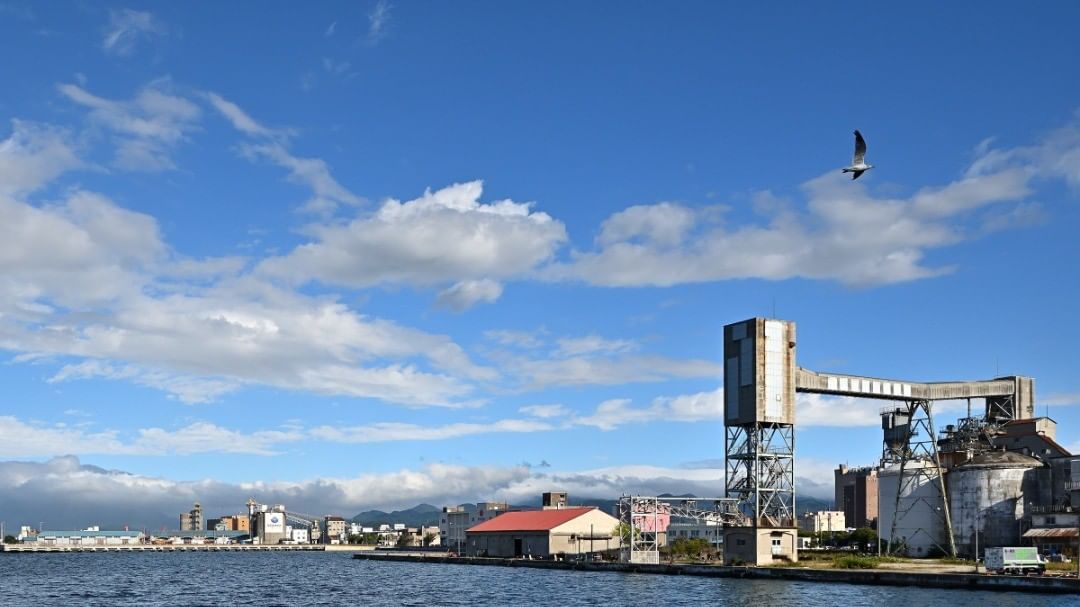
1. Port and Terminal Operations
1.1 Aomori Port operates 24/7, but specific terminals may have restricted working hours. Confirm with the Aomori Port Authority (APA) for current schedules.
1.2 The East Wharf (No.1-4 Berths) handles general cargo, while the West Wharf (No.5-8 Berths) specializes in container and Ro-Ro operations. Draft limitations: East Wharf 10.5m, West Wharf 12.0m.
1.3 Mandatory use of port-approved mooring arrangements. APA requires minimum 8 mooring lines for vessels >150m LOA.
1.4 No.3 Berth (East Wharf) is designated for fishing vessels and cannot be used by commercial ships without prior permission.
1.5 All cargo operations must comply with APA’s “Port Safety Management Regulations” (2022 Edition), particularly for heavy lifts (>20 tons).
1.6 Passenger terminal (No.9 Berth) has dedicated security screening facilities (ISPS Code compliant).
1.7 Maximum permissible crane load: 50 tons at East Wharf, 80 tons at West Wharf (APA Equipment Certification 2023).
2. Navigation and Pilotage
2.1 Compulsory pilotage for all foreign-flagged vessels >500 GT and domestic vessels >3,000 GT. Pilot boarding area: 40°51.5’N, 140°44.5’E (1.5nm NE of breakwater).
2.2 Main channel depth maintained at 13m (datum: Aomori Port Zero). Under-keel clearance must exceed 10% of vessel’s draft.
2.3 Special caution required when navigating near the Aomori Bay Bridge (clearance height 51m at MHWS).
2.4 Vessels exceeding 200m LOA must coordinate with APA for special navigation arrangements during strong currents (>3 knots).
2.5 Radar-assisted navigation mandatory in fog conditions (visibility <1nm) per Japan Coast Guard Notice No.2021-15.
2.6 Tugboat assistance compulsory for vessels >180m LOA or >12m draft (APA Navigation Rule §5-3).
2.7 Prohibited navigation zone established 500m around the LNG terminal (Aomori Prefecture Safety Ordinance No.15).
3. Anchorage Regulations
3.1 Designated anchorage areas: Area A (40°50’N, 140°45’E) for vessels <200m LOA; Area B (40°49’N, 140°46’E) for larger vessels.
3.2 Maximum anchoring period: 72 hours without APA permission. Anchoring prohibited in the fairway (Penalty under Port Regulations Article 24).
3.3 Anchorage holding ground: Firm sand with 3:1 scope required for vessels >10,000 DWT (APA Navigation Bulletin No.12).
3.4 Emergency anchorage (40°48’N, 140°47’E) reserved for vessels in distress only.
3.5 Anchoring prohibited during tsunami warnings (Japan Meteorological Agency Alert Level 3 or above).
3.6 Vessels at anchor must maintain continuous VHF watch on Ch 16 and 12 (Japan Coast Guard Regulation 30-2).
4. Cargo Handling Requirements
4.1 All timber cargo must be secured following APA Circular No.2021-03 (JIS Z 0015 standards).
4.2 Refrigerated containers require 48-hour pre-arrival notice for power connection arrangements.
4.3 Hazardous materials handling limited to West Wharf Berth 7 only (IMSBC Code Category A cargo prohibited).
4.4 Grain cargo operations require dust suppression systems per APA Environmental Ordinance Chapter 5.
4.5 Steel coil loading must use ISO 3874-compliant securing devices with APA inspection prior to departure.
4.6 Ro-Ro operations require minimum 50cm clearance between vehicles (APA Vehicle Cargo Handling Manual).
4.7 Liquid bulk transfer requires double-hose connection for vessels >10,000 DWT (Japan Fire Service Act Article 21).
5. Safety and Emergency
5.1 Port emergency contact: VHF Ch 16/12 (APA Operations Center).
5.2 Mandatory SOPEP equipment check before entry for oil tankers >150 GT.
5.3 Winter operations (Dec-Mar): Ice accumulation monitoring required on deck equipment (APA Winter Navigation Guidelines).
5.4 Firefighting water supply: All berths equipped with 200mm diameter hydrants (JIS B 8410 standard).
5.5 Emergency muster stations clearly marked at 100m intervals along quays.
5.6 Gangway safety nets mandatory when tide difference exceeds 2m (APA Port Safety Rule 8-2).
5.7 Hot work permits require gas-free certification for adjacent tanks (Japan Industrial Safety and Health Act).
6. Environmental Compliance
6.1 Strict ballast water management (Japan’s Ship Ballast Water Control Act).
6.2 Prohibition of scrubber washwater discharge within 12nm of port (Aomori Prefecture Ordinance No.42).
6.3 Mandatory use of low-sulfur fuel (<0.1%) while berthed (Air Pollution Control Law Article 21-2).
6.4 Oily water separator discharge records must be retained for 3 years (Japan’s Waste Management Law).
6.5 Prohibition of garbage burning within port limits (MARPOL Annex V, Japan Implementation Rules).
6.6 Mandatory containment systems for coal and ore dust (APA Environmental Protection Regulation §7).
7. Crew and Vessel Services
7.1 Crew changes permitted with 72-hour advance notice to Immigration Office.
7.2 Bunkering available at West Wharf only (ISO 8217:2017 compliant fuel).
7.3 Fresh water supply pressure: 3.5 bar minimum at all berths (JIS K 0127 standard).
7.4 Garbage disposal services operate daily 0800-1600 (MARPOL Annex V compliance required).
7.5 Medical waste handling requires special approval from Aomori Public Health Center.
7.6 Ship chandlers must be pre-approved by APA (Port Services License No.2023-45).
8. Administrative Requirements
8.1 E-Notice of Arrival submission required 24 hours prior to ETA via Japan MOL’s e-Gov system.
8.2 Original Ship Sanitation Control Certificate must be presented to Quarantine.
8.3 Port dues calculation based on GT and cargo volume (APA Tariff Schedule 2023).
8.4 Customs clearance available 24/7 for pre-declared shipments (Japan Customs Notice 2020-8).
8.5 P&I Club representatives must be registered with APA 48 hours before vessel arrival.
8.6 Crew lists must include passport numbers and seaman’s book details (Immigration Control Act Article 6-2).
8.7 Mandatory submission of stowage plan 6 hours before cargo operations (APA Cargo Handling Regulation 12).
9. Special Notices
9.1 Annual Nebuta Festival (Aug 2-7): Increased security zones around passenger terminals.
9.2 Tsunami evacuation procedures posted at all berths (follow marked routes to designated shelters).
9.3 Real-time port updates available through Japan Coast Guard’s JMIS system.
9.4 Typhoon season (Jun-Oct): Mandatory double mooring when wind forecast exceeds Beaufort 6.
9.5 Fishing gear restrictions: No trawling within 2nm of port entrance (Aomori Fisheries Regulation §15).
9.6 Special whale migration season (Apr-May): Speed reduction to 10 knots within 5nm of port.
9.7 Military exercise areas occasionally established – monitor NAVTEX for warnings.
10. Additional Operational Notes
11.1 Local time zone: JST (UTC+9), no daylight saving time adjustments.
11.2 Port working language: Japanese (English translations available for key documents).
11.3 Currency: JPY only for port payments (credit cards accepted with 3% surcharge).
11.4 Nearest hospital with decompression chamber: Aomori City Hospital (3km from port).
11.5 Port security level normally at MARSEC Level 1 unless notified otherwise.
11.6 Wi-Fi available at all berths (free basic service, premium available for purchase).
11.7 Tide tables published annually by Japan Coast Guard (available at port office).


