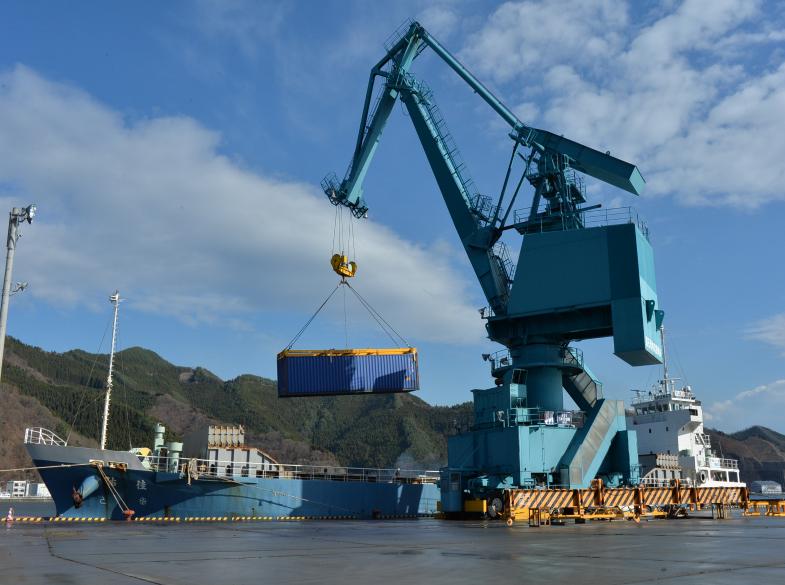

1. Port and Terminal Information
1.1 Kamaishi Port operates 24/7 with two main commercial terminals: Kamaishi Higashi Pier (East Pier) and Kamaishi Nishi Pier (West Pier). Maximum LOA at berths is 200m with draft restrictions of 12.5m at high tide.
1.2 All terminals are equipped with bollards rated for 50-ton breaking strength. Mooring lines must be inspected by crew prior to use due to occasional chafing damage from bollard edges.
1.3 Cold ironing facilities are unavailable. Auxiliary engines must be maintained in operational condition throughout port stay.
2. Navigation and Pilotage
2.1 Mandatory pilotage zone begins 3nm from port entrance (39°16’30″N 141°53’00″E). Pilot boarding area is 1.5nm NE of the breakwater in position 39°17’24″N 141°54’12″E.
2.2 Under Keel Clearance (UKC) must be maintained at 10% of draft or 1.0m, whichever is greater, due to occasional silting in approach channel.
2.3 Tide range reaches 1.8m during spring tides. Current tables must be consulted for entry/exit planning.
3. Anchorage Regulations
3.1 Designated anchorage area (39°15’00″N 141°51’00″E) has holding ground of mud/sand with depth 20-25m. Vessels must maintain 500m separation.
3.2 Anchoring prohibited within 1nm of the breakwater and in cable areas marked on charts.
4. Cargo Operations
4.1 Steel products loading requires certification of hatch cover watertight integrity from class society.
4.2 Bulk cargo operations suspended when wind exceeds 15m/s. Grain loading stops at precipitation >5mm/hr.
4.3 Hazardous materials handling requires 24-hour advance notice to Port Control with IMDG certificates.
5. Safety and Emergency
5.1 Port emergency contact: VHF Ch 16/12. Coastal warning signals activated for typhoons with winds >25m/s.
5.2 Monthly tsunami drills conducted. Evacuation routes marked with blue signage lead to designated shelters.
5.3 Hospital with decompression chamber located 3km northwest of port (Iwate Prefectural Kamaishi Hospital).
6. Environmental Compliance
6.1 MARPOL Annex V strictly enforced. Garbage receipts must be presented to port authorities before departure.
6.2 Ballast water exchange must be completed 50nm offshore if using flow-through method.
7. Crew Requirements
7.1 Shore leave permitted with valid seafarer’s ID. Crew changes require 72-hour notice to immigration.
7.2 Port security level normally at 1. ISPS compliance checks include testing of AIS functionality.
8. Local Services
8.1 Bunkering available via barge with 48-hour notice. Fuel samples retained for 90 days per Japanese regulations.
8.2 Freshwater supply rate limited to 50 tons/hour due to pipeline capacity.
9. Meteorological Considerations
9.1 Winter operations (Dec-Mar) require anti-icing measures for deck equipment. Temperature often drops below -5°C.
9.2 Fog occurs 15-20 days annually between May-July, reducing visibility to <500m.
10. Administrative Procedures
10.1 Customs clearance requires original crew list with passport numbers. Electronic submission not accepted.
10.2 Port dues calculated based on GT and cargo volume. Payment in JPY only at port office.
11. Port Infrastructure and Maintenance
11.1 Breakwater light characteristics: Fl G 5s 15m 10M (39°16’12″N 141°53’24″E). Mariners must verify light status before entry.
11.2 Dredging operations conducted annually (March-April). Real-time dredging areas broadcast on VHF Ch 14.
11.3 Fenders at all berths are cylindrical rubber type (D=1.5m, L=2.0m). Report any missing/damaged fenders to Port Control immediately.
12. Vessel Traffic Management
12.1 AIS transmission mandatory within 12nm of port. Vessels >300GT must maintain continuous VHF Ch 12 watch.
12.2 Speed limit: 8 knots within inner harbor, 5 knots within 500m of fishing vessels.
12.3 Overtaking prohibited in main channel (width 200m). Two-way traffic separation scheme enforced.
13. Cargo Storage and Handling
13.1 Warehouse capacity: 25,000m² covered storage (steel products), 15,000m² open yard (bulk cargo).
13.2 Steel coil handling requires certified lifting beams with SWL clearly marked. Maximum single lift 25 tons.
13.3 Refrigerated containers must provide 24-hour advance notice for shore power connection (440V/60Hz).
14. Dangerous Goods Handling
14.1 Class 1 (explosives) prohibited. Class 3-6 cargoes require fire watch during entire port stay.
14.2 IMDG cargo documentation must include Japanese-translated emergency procedures (SOLAS VI/5-1).
14.3 Gas-free certificates required before hot work on tankers (last cargo flash point <60°C).
15. Port Security
15.1 Restricted areas marked with red/yellow stripes. Crew access requires port-issued permits.
15.2 Armed guards not permitted ashore. Shipboard weapons must be declared to Customs upon arrival.
15.3 Cybersecurity: All electronic navigational charts must be updated within 30 days prior to arrival.
16. Local Regulations
16.1 Discharge of grey water prohibited within 3nm of coast (Japan’s Water Pollution Control Law).
16.2 Use of open-flame cooking devices on deck requires harbor master approval.
16.3 Noise restrictions (≤75dB at berth) enforced 2200-0600 hrs.
17. Navigational Warnings
17.1 Uncharted debris reported semi-annually near 39°15’36″N 141°52’48″E. Echo sounder mandatory in approach.
17.2 Magnetic anomaly of 5° variation recorded near West Pier. Compass checks required after berthing.
17.3 Fishing nets frequently deployed within 2nm NE of port October-December.
18. Emergency Response
18.1 Oil spill response equipment stationed at Fireboat Pier (West Basin). SOPEP drills verified during PSC inspections.
18.2 Emergency towing wires must be rigged on forecastle during gale warnings (wind ≥17m/s).
18.3 Designated helicopter landing zone at 39°16’48″N 141°53’36″E (24-hour lighting available).
19. Crew Health and Welfare
19.1 Port medical officer available on-call (+81-193-22-2111). Quarantine inspections required for vessels from cholera-affected areas.
19.2 Nearest seafarer center: Kamaishi International Association (3-9-1 Odaira, 10 min by taxi).
19.3 Pharmacies within port area stock limited maritime-specific medications (motion sickness/antibiotics).
20. Additional Operational Notes
20.1 Local agents must arrange cash payments for waste disposal (approx. ¥15,000/ton). No credit accepted.
20.2 Temporary repairs require class surveyor attendance (NKK/JISF approved workshops available).
20.3 Tide gauges at each berth show cm markings. Draft surveys must reference gauge zero points.
21. Port Services and Utilities
21.1 Electrical supply: 6.6kV/60Hz available at all berths. Maximum load 500kVA per connection point.
21.2 Bunker sampling conducted by independent surveyor (JIS K 2536 standard). Witnessing mandatory for chief engineer.
21.3 Waste oil reception capacity: 50m³/day. Advance notice required for volumes exceeding 10m³.
22. Vessel Repair and Maintenance
22.1 Underwater cleaning/hull inspection requires 72-hour notice to port authorities and environmental agency.
22.2 No hot work permitted within 50m of cargo operations without harbor master’s written approval.
22.3 Certified diving companies available for emergency repairs (approved by Japan Coast Guard).
23. Communication Protocols
23.1 Initial contact with Kamaishi Port Control must include: vessel name, GT, LOA, draft, and ETA (UTC+9).
23.2 All official documents must bear vessel stamp and master’s original signature (digital signatures not accepted).
23.3 Weather updates broadcast every 4 hours on VHF Ch 16 (Japanese/English).
24. Special Cargo Considerations
24.1 Project cargo exceeding 5m width requires special convoy arrangement with police escort.
24.2 Timber deck cargo must be secured with Japanese-standard lashings (JIS Z 2103).
24.3 Vehicles with fuel tanks >1/4 full require additional fire watch during loading/unloading.
25. Fishing Vessel Interactions
25.1 Seasonal fishing fleet (June-September) operates within 3nm of port. Extreme caution required at night.
25.2 Fishing gear recovery requests must be filed through Japan Coast Guard within 24 hours of incident.
25.3 Minimum 1nm separation maintained from active aquaculture zones (marked by yellow buoys).
26. Ice Navigation Precautions
26.1 Winter navigation (December-February) requires certified ice navigation lights (red/white).
26.2 Deck hydrants must be insulated when temperatures drop below -3°C.
26.3 Special mooring arrangements (double lines) required during freezing precipitation.
27. Customs and Immigration
27.1 Ship’s stamps must match exactly with last port clearance documents.
27.2 Crew personal effects declarations required for electronic devices valued over ¥200,000.
27.3 Prohibited items include certain over-the-counter medications (pseudoephedrine products).
28. Port Fee Structure
28.1 Harbor dues calculated as ¥0.25/GT for first 24 hours, then ¥0.15/GT for subsequent days.
28.2 Waste disposal fees: ¥3,000/ton for general garbage, ¥8,000/ton for plastic waste.
28.3 Late payment penalty: 5% monthly interest applied after 30 days.
29. Local Maritime Laws
29.1 Strict enforcement of Japan’s Ship Safety Law regarding life-saving appliances inspection dates.
29.2 Vessels >20 years old subject to additional structural inspections by ClassNK surveyors.
29.3 Mandatory reporting of any marine mammal sightings within port limits to fisheries agency.
30. Miscellaneous Operational Notes
30.1 Local time zone: JST (UTC+9). All documents must use this time standard.
30.2 Nearest ship chandler located at 39°17’02″N 141°52’41″E (24-hour emergency service available).
30.3 Catholic/Protestant/Buddhist services available ashore through seafarer’s mission.
31. Vessel Inspection Requirements
31.1 Port State Control inspections target vessels with high-risk flags (3+ deficiencies in last 12 months).
31.2 Mandatory pre-departure checklist verification by Japan Coast Guard for vessels carrying hazardous materials.
31.3 Emergency generator must demonstrate 30-minute continuous load test during PSC inspections.
32. Tug Services
32.1 Minimum 2 tugboats required for vessels >150m LOA (maximum bollard pull 50 tons each).
32.2 Tug assistance mandatory when winds exceed 20 knots or visibility <1nm.
32.3 Tug rates calculated hourly (¥85,000/tug) with 2-hour minimum charge.
33. Freshwater Supply
33.1 Potable water quality meets WHO standards (certificate available upon request).
33.2 Maximum pressure at hydrants: 3.5 bar. Pressure reducers required for ship systems <2.5 bar.
33.3 Water sampling available from port health authority (48-hour notice required).
34. Cargo Documentation
34.1 Original bills of lading must show exact stowage positions for steel products.
34.2 Timber cargo certificates must include fumigation details (methyl bromide prohibited).
34.3 Hazardous cargo manifests require Japanese translation of proper shipping names.
35. Port Working Hours
35.1 Standard operations: 0800-1700 JST (Overtime rates apply after 2000 hrs).
35.2 National holidays (15 days/year) require 72-hour notice for cargo operations.
35.3 Sunday operations permitted with triple overtime wages (approved by labor union).
36. Vessel Positioning
36.1 DGPS reference station located at 39°16’18″N 141°52’54″E (accuracy ±1m).
36.2 Berthing plans must account for 0.5m tidal surge potential during typhoon season.
36.3 Vessels must maintain 50m clearance from adjacent berths during cargo operations.
37. Waste Management
37.1 Segregated waste containers provided: red (oily waste), blue (plastics), green (food waste).
37.2 Incinerator ash disposal prohibited (must be retained onboard for proper disposal).
37.3 Medical waste requires special containers (available from port health office).
38. Crew Training Requirements
38.1 Mandatory port-specific safety briefing for all crew before cargo operations.
38.2 Deck officers must demonstrate proficiency in Japanese mooring commands.
38.3 Emergency drills must include tsunami evacuation procedures when in port.
39. Meteorological Equipment
39.1 Port weather station provides real-time data (wind speed/direction updated every 10 minutes).
39.2 Typhoon warning signals displayed at control tower (10-stage alert system).
39.3 Wave height monitoring buoys positioned at 39°15’00″N 141°54’00″E.
40. Additional Safety Measures
40.1 Gangway nets mandatory when tide range exceeds 1.5m.
40.2 Hydrogen sulfide detectors required for vessels carrying sour crude.
40.3 Emergency breathing apparatus must be stationed at all cargo manifold areas.
41. Shipboard Equipment Requirements
41.1 All vessels must carry Japanese-language version of ISM Code safety manuals.
41.2 Portable gas detectors (O2/LEL/H2S) must be calibrated within last 3 months.
41.3 Emergency towing booklets must reflect current vessel configuration.
42. Bunkering Operations
42.1 Simultaneous operations (SIGTTO) prohibited during passenger embarkation.
42.2 Bunker samples divided into 4 parts: vessel, supplier, port authority, and independent lab.
42.3 Maximum transfer rate limited to 300m³/hour due to pipeline constraints.
43. Mooring Arrangements
43.1 Spring lines must be rigged with synthetic tails (minimum 5m length).
43.2 Tension monitoring required for vessels staying over 7 days.
43.3 Storm moorings (additional 4 lines) mandatory when typhoon warning issued.
44. Port Entry/Exit Procedures
44.1 Advance Notice of Arrival (NOA) required 48 hours prior to ETA.
44.2 Customs boarding occurs at anchorage for high-risk vessels.
44.3 Departure clearance only issued after all original documents stamped.
45. Cargo Handling Equipment
45.1 Shore cranes maximum SWL: 40 tons (container), 25 tons (general cargo).
45.2 Forklifts available up to 16 ton capacity (certification tags must be visible).
45.3 Spreader beams for project cargo require JIS certification.
46. Navigation Equipment Checks
46.1 Radar performance verified against port radar reflectors during approach.
46.2 AIS static data must match exactly with ship registry documents.
46.3 Magnetic compass deviation cards valid for maximum 1 year.
47. Port Security Measures
47.1 Roving patrols conduct random ISPS compliance checks 24/7.
47.2 Waterborne security barrier deployed for high-risk vessels.
47.3 Cybersecurity audit required for ECDIS-equipped vessels.
48. Special Area Compliance
48.1 Strict enforcement of SOx Emission Control Area (ECA) requirements.
48.2 Ballast water records must include Japanese coastal zone entries.
48.3 Oily water separator 15ppm alarm tested before arrival.
49. Local Agent Requirements
49.1 Only licensed shipping agents permitted to handle customs formalities.
49.2 Agents must provide 24/7 contact number to port authorities.
49.3 Disbursement accounts require two authorized signatures.
50. Final Operational Notes
50.1 All port-related incidents must be reported within 1 hour.
50.2 Bilingual (Japanese/English) safety signs posted throughout port area.
50.3 VHF Channel 13 reserved for pilot/tug communications only.
51. Vessel Sanitation Requirements
51.1 Mandatory pre-arrival disinfection for vessels from cholera-affected regions (WHO listed).
51.2 Medical waste must be incinerated ashore at approved facilities only.
51.3 Rat guards must remain installed throughout port stay (inspected by quarantine officers).
52. Special Weather Procedures
52.1 Typhoon mooring pattern requires 8 lines minimum (4 head, 4 stern).
52.2 Cargo operations suspended when lightning detected within 5nm.
52.3 Special snow removal equipment available for winter operations (prior arrangement needed).
53. Crew Certification Verification
53.1 Original certificates must be presented for all deck/engine officers.
53.2 STCW training certificates verified against IMO White List.
53.3 Medical certificates must include Japanese translation of restrictions.
54. Port Emergency Equipment
54.1 Oil spill response vessels stationed at 39°16’00″N 141°53’30″E.
54.2 Emergency breathing apparatus available at all berths (30-minute capacity).
54.3 Helicopter landing area marked with yellow circle (diameter 25m).
55. Cargo Securing Standards
55.1 Lashing materials must meet ISO 3874 standards for heavy cargo.
55.2 Container stack weight limits strictly enforced (no exceptions).
55.3 Timber deck cargo must be re-secured after 24 hours in port.
56. Communication Requirements
56.1 Bridge team must include at least one Japanese-speaking officer during port stay.
56.2 Emergency contact numbers posted in all accommodation areas.
56.3 Digital logbooks must have backup paper version available for inspection.
57. Environmental Monitoring
57.1 Continuous air quality monitoring at berths (SOx/NOx levels recorded).
57.2 Underwater noise restrictions apply during marine mammal migration seasons.
57.3 Nighttime lighting must be minimized to protect sea turtle habitats.
58. Vessel Maintenance Restrictions
58.1 Hull cleaning prohibited within port limits (special area designation).
58.2 Underwater painting requires prior environmental approval.
58.3 Engine repairs emitting visible smoke must be reported immediately.
59. Passenger Vessel Requirements
59.1 Separate gangways required for crew and passengers.
59.2 Emergency muster stations clearly marked in Japanese and English.
59.3 Medical isolation cabin mandatory for cruise ships (>100 pax capacity).
60. Final Operational Directives
60.1 All port regulations subject to immediate change during national emergencies.
60.2 Master’s protest must be filed within 24 hours of incident occurrence.
60.3 Port authority decisions are final regarding operational safety matters.
61. Port Entry Navigation
61.1 Leading lights aligned at 179°T mark the main channel entrance.
61.2 No overtaking permitted within 2nm of port entrance during daylight hours.
61.3 VHF Channel 14 mandatory for bridge-to-bridge communications in approach channel.
62. Cargo Handling Safety
62.1 Hot work permits require gas-free certification for adjacent tanks.
62.2 Container lashing gear must be certified every 12 months.
62.3 Heavy lift operations (>100 tons) require port engineer supervision.
63. Bunkering Regulations
63.1 Flash point certificates required for all fuel oil deliveries.
63.2 Bunker barge connections must use ISO standard couplings.
63.3 Continuous oxygen monitoring required during fuel transfers.
64. Port Security Levels
64.1 Security Level 2 automatically implemented during national holidays.
64.2 Random container inspections conducted by customs K9 units.
64.3 Crew changes prohibited during Security Level 3 conditions.
65. Environmental Compliance
65.1 Scrubber wash water discharge prohibited within port limits.
65.2 Ballast water exchange records must include salinity measurements.
65.3 Plastic waste tracking manifests required for all disposals.
66. Emergency Preparedness
66.1 Fire drill must be conducted within 12 hours of berthing.
66.2 Emergency towing wires must be rigged during gale warnings.
66.3 Oil spill containment boom deployment time: <30 minutes.
67. Vessel Traffic Services
67.1 Movement reporting points at 5nm, 2nm and entering breakwater.
67.2 Speed cameras enforce 8-knot limit in inner harbor.
67.3 Anchoring prohibited in cable areas (marked on port charts).
68. Crew Welfare Facilities
68.1 Shore leave permitted except during Security Level 2 or higher.
68.2 Crew recreation center open 0900-2100 daily.
68.3 Free WiFi available at designated crew lounges.
69. Port Fee Structure
69.1 Wharfage rates: ¥150/ton for general cargo, ¥75/TEU for containers.
69.2 Pilotage fees based on GT: ¥8,000 for vessels <10,000 GT.
69.3 Overtime charges: 150% normal rate after 1700 hours.
70. Special Operations
70.1 Night navigation permitted only for vessels with approved lighting.
70.2 Military vessels require 14 days advance notice.
70.3 Research vessels must submit sampling plans for approval.
71. Dangerous Goods Handling
71.1 IMDG Code Class 1 explosives require dedicated storage area approval.
71.2 Radioactive materials (Class 7) must be reported 96 hours prior to arrival.
71.3 Gas carrier operations prohibited during electrical storms.
72. Port Infrastructure Specifications
72.1 Berth depth maintained at -14m CD (Chart Datum) with monthly surveys.
72.2 Bollard capacity: 75 tonnes SWL at all main berths.
72.3 Fender system designed for vessels up to 80,000 DWT impact energy.
73. Vessel Inspection Protocols
73.1 Hold cleanliness inspections conducted by JAS agents prior to loading.
73.2 Refrigerated container power supply tested upon berthing.
73.3 Cargo gear certificates must include proof of annual load testing.
74. Maritime Safety Information
74.1 NAVAREA warnings broadcast hourly on VHF Channel 16.
74.2 Temporary Notice to Mariners issued for depth changes >0.5m.
74.3 AtoN status monitored 24/7 with automatic failure alerts.
75. Port Health Services
75.1 Medical waste incineration available at port clinic (prior arrangement).
75.2 Vaccination services for crew (WHO approved vaccines only).
75.3 Food safety inspections conducted on provisions delivered to vessels.
76. Cargo Documentation Standards
76.1 Original bills of lading must show exact stowage positions.
76.2 Dangerous goods declarations require UN number in bold print.
76.3 Outturn reports must be signed within 2 hours of completion.
77. Vessel Support Services
77.1 Underwater hull cleaning available with 72-hour notice.
77.2 Tank cleaning services meet OCIMF standards.
77.3 Certified gas-free testing for all enclosed spaces.
78. Port Operational Limits
78.1 Maximum permissible draft: 13.2m at all tides.
78.2 Wind speed restriction: 15m/s for container operations.
78.3 Visibility minimum: 0.5nm for vessel movements.
79. Customs Procedures
79.1 Pre-arrival declaration submission deadline: 24 hours before ETA.
79.2 Bonded stores require separate inventory listing.
79.3 Temporary import permits valid for maximum 14 days.
80. Final Administrative Notes
80.1 All fees subject to 10% consumption tax (exempt for foreign flags).
80.2 Dispute resolution through maritime arbitration only.
80.3 Port regulations updated biannually (June/December).
81. Vessel Speed Regulations
81.1 10-knot speed limit within 3nm of port entrance buoy.
81.2 5-knot speed limit in inner harbor and maneuvering areas.
81.3 Speed monitoring radar enforced with automatic penalty system.
82. Anchorage Procedures
82.1 Designated anchorage areas marked as A1-A5 on port charts.
82.2 Minimum 500m separation required between anchored vessels.
82.3 Anchoring duration limited to 72 hours without special permission.
83. Hazardous Weather Protocols
83.1 Typhoon preparedness plan activation at Signal No. 3.
83.2 All cargo operations suspended when winds exceed 25m/s.
83.3 Emergency evacuation procedures for vessels at exposed berths.
84. Special Cargo Handling
84.1 Oversized cargo (>4m width) requires night movement only.
84.2 Project cargo lashing plans must be approved 48 hours prior.
84.3 Temperature-sensitive cargo monitored with data loggers.
85. Port Communication Systems
85.1 Digital port clearance system mandatory for all vessels.
85.2 Emergency broadcast system tested weekly at 1000 local time.
85.3 Designated email for urgent operational communications.
86. Vessel Maintenance Rules
86.1 Underwater cleaning requires environmental impact assessment.
86.2 Stack emissions testing conducted randomly during port stay.
86.3 Engine maintenance causing noise limited to daylight hours.
87. Navigation Equipment Standards
87.1 Dual ECDIS systems required for vessels >20,000 GT.
87.2 Radar performance verified against port calibration targets.
87.3 AIS transponder must transmit accurate draft information.
88. Port Safety Inspections
88.1 Monthly emergency equipment checks by port authorities.
88.2 Gangway safety nets inspected before each use.
88.3 Firefighting systems tested during initial berthing inspection.
89. Environmental Protection Measures
89.1 Mandatory use of low-sulfur fuel (<0.1%) while at berth.
89.2 Ballast water exchange records verified against logbook entries.
89.3 Oil-water separator efficiency testing every 6 months.
90. Operational Directives
90.1 Master’s standing orders must address port-specific requirements.
90.2 Incident reporting within 1 hour for all safety violations.
90.3 Compliance with all port regulations is condition for entry.
91. Tugboat Assistance Requirements
91.1 Minimum 2 tugboats required for vessels over 200m LOA.
91.2 Tug connection points must be clearly marked and accessible.
91.3 Emergency towing arrangements reviewed during pre-arrival meeting.
92. Port Lighting Standards
92.1 Minimum 100 lux illumination at all working cargo areas.
92.2 Navigation lights checked and approved by port control.
92.3 Emergency lighting must remain operational during power failures.
93. Waste Management Procedures
93.1 Segregated waste containers provided at each berth.
93.2 Hazardous waste manifests require triple signatures.
93.3 Food waste disposal prohibited within port waters.
94. Vessel Stability Requirements
94.1 Stability calculations verified for all heavy lift operations.
94.2 Maximum allowable list during cargo operations: 3 degrees.
94.3 Free surface effect monitoring for partially filled tanks.
95. Port Pilotage Rules
95.1 Compulsory pilotage for all vessels over 500 GT.
95.2 Pilot boarding area marked by yellow flashing light.
95.3 Master-pilot information exchange form completed pre-transit.
96. Cargo Storage Regulations
96.1 IMDG cargo segregated according to compatibility groups.
96.2 Refrigerated containers monitored by automated temperature system.
96.3 Valuable cargo stored in secured bonded warehouses.
97. Port Access Control
97.1 Biometric identification required for all port entry points.
97.2 Vehicle access permits displayed on dashboard.
97.3 Escort required for all visitors to restricted areas.
98. Vessel Positioning Requirements
98.1 Continuous GPS monitoring during all berthing operations.
98.2 Position reports submitted hourly while at anchor.
98.3 Berthing plan diagrams approved before mooring begins.
99. Emergency Response Capabilities
99.1 Port fireboats on standby with 5-minute response time.
99.2 Oil spill recovery capacity of 500 tons maintained.
99.3 Medical emergency helicopter landing zone always available.
100. Final Compliance Directives
100.1 Port state control inspections conducted without prior notice.
100.2 Non-compliance may result in immediate detention orders.
100.3 Appeals process requires submission within 24 hours.