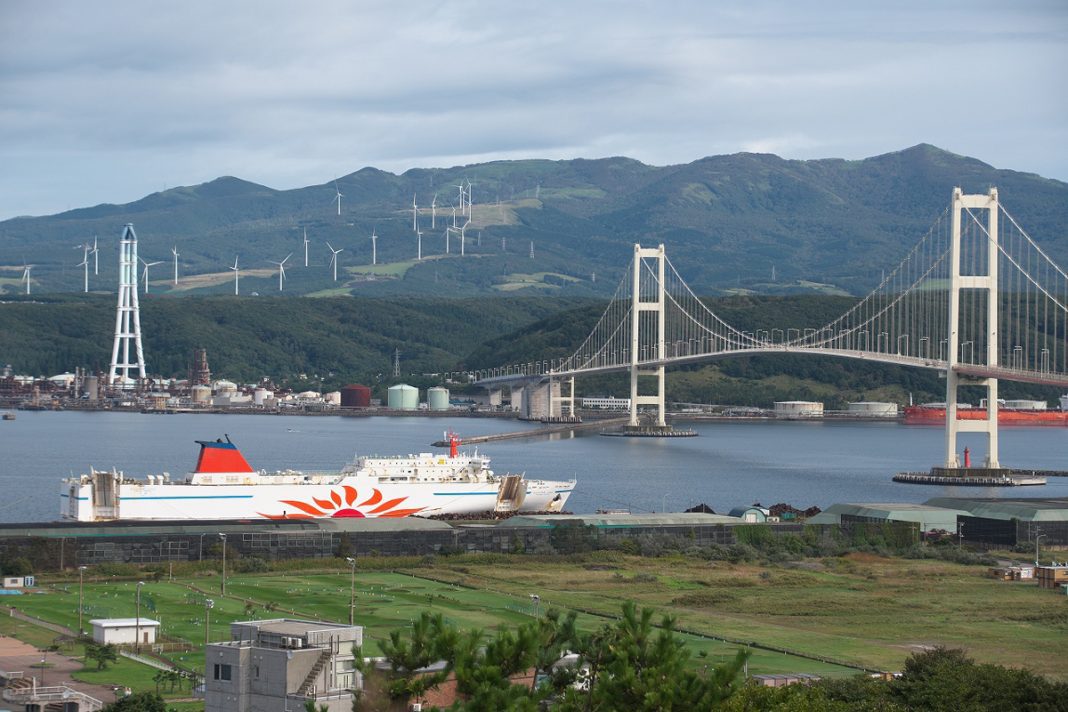

1. Port and Terminal Information
1.1 Muroran Port operates 24/7, but specific terminals may have restricted working hours. Confirm with the Muroran Port Authority (MPA) in advance.
1.2 Main commercial terminals: Muroran Ore Terminal (berth depth 15m), Muroran Coal Terminal (berth depth 14m), and Muroran General Cargo Terminal (berth depth 10m). All berths are equipped with fendering systems.
1.3 Maximum permissible LOA: 250m for ore/coal terminals, 200m for general cargo terminals.
1.4 Port coordinates: 42°19’N 140°58’E (WGS84 datum).
2. Navigation and Pilotage
2.1 Compulsory pilotage for all vessels over 500 GT. Pilot boarding area: 42°20.5’N 140°59.0’E, 2NM northeast of the breakwater.
2.2 Main channel depth: 15m (dredged annually). Under-keel clearance must exceed 10% of draft.
2.3 Tidal range: 0.5m (neap) to 1.2m (spring). Currents rarely exceed 1 knot in the harbor.
2.4 Ice conditions: Light ice may form January-February. Icebreaker assistance available upon request (48-hour notice required).
3. Anchorage Areas
3.1 Designated anchorage: 42°21’N 140°57’E, depth 30-40m, sandy bottom. Holding ground good.
3.2 Anchorage prohibited within 0.5NM of the breakwater and submarine cable areas (marked on charts).
3.3 Vessels at anchor must maintain VHF Ch16/12 watch and display proper lights/shapes.
4. Cargo Operations
4.1 Ore handling capacity: 5,000 MT/hour (grab cranes). Coal: 3,000 MT/hour (conveyor system).
4.2 Hazardous cargo: Only permitted at designated berths with prior approval from MPA and Japan Coast Guard.
4.3 Grain storage: 50,000 MT capacity silos with temperature monitoring.
4.4 Steel products: Must be properly secured with dunnage to prevent seawater contact.
5. Safety Regulations
5.1 Port Security Level: Normally Level 1. ISPS compliance strictly enforced.
5.2 Mandatory pre-arrival checklist submission 72 hours prior to ETA (includes last 10 ports visited).
5.3 Hot work permits require gas-free certification and fire watch personnel.
5.4 Emergency contacts: Japan Coast Guard Muroran Office VHF Ch16, Tel +81-143-22-0110 (official).
6. Environmental Requirements
6.1 Strict ballast water management: Must comply with Japan’s 2004 Invasive Species Act.
6.2 Zero discharge policy within port limits (including bilge water and sewage).
6.3 Air emission controls: Vessels must use 0.1% sulfur fuel or equivalent abatement technology.
7. Vessel Services
7.1 Bunkering: Available via barge (IFO 180/380, MGO). Advance notice 96 hours required.
7.2 Fresh water: Available at all berths (50 tons/hour capacity).
7.3 Garbage disposal: Licensed contractors only. No shore reception for hazardous waste.
8. Special Notices
8.1 Typhoon season (July-October): Vessels must follow MPA’s typhoon contingency plan.
8.2 Winter operations (December-March): Anti-icing measures required for deck equipment.
8.3 Local regulations prohibit discharge of any plastics, including fishing gear.
9. Documentation Requirements
9.1 Original certificates (including PSC inspection reports) must be available for inspection.
9.2 Crew lists and passports must be submitted electronically 24 hours before arrival.
9.3 Customs requires original stamped cargo manifests for all import/export operations.
10. Additional Resources
10.1 Official port charts: JP-1063 (scale 1:20,000) and JP-1064 (scale 1:10,000).
10.2 Navigation warnings: Broadcast daily on NAVTEX (frequency 518 kHz).
10.3 Port authority website: www.muroranport.jp (Japanese/English).
11. Port Entry and Departure Procedures
11.1 All vessels must submit ETA updates at 96, 48, and 24 hours prior to arrival via email to Muroran Port Control (official contact: portcontrol@muroranport.jp).
11.2 Pre-arrival documents (IMO FAL forms, crew list, cargo manifest) must be submitted electronically at least 48 hours before arrival.
11.3 Vessels must obtain clearance from Japan Coast Guard, Customs, and Immigration before departure.
11.4 Departure reports must be filed at least 6 hours before sailing, including final cargo figures and bunker quantities.
12. Mooring and Unmooring
12.1 Minimum mooring lines required: 4 headlines, 4 stern lines, and 2 spring lines for vessels over 10,000 DWT.
12.2 Tug assistance is mandatory for vessels over 150m LOA (minimum 2 tugs for berthing/unberthing).
12.3 Mooring lines must be inspected for wear and adjusted every 6 hours in case of strong winds (>15 knots).
12.4 Synthetic mooring ropes are prohibited due to high abrasion risk on steel bollards.
13. Port Security Measures
13.1 Restricted areas are marked with yellow signage. Unauthorized personnel access is prohibited.
13.2 Gangway watch must be maintained 24/7 with proper lighting and security personnel if required.
13.3 All visitors must present valid ID and be logged in the ship’s security records.
13.4 Drone operations within port limits require prior approval from MPA and Japan Coast Guard.
14. Weather and Sea Conditions
14.1 Sudden fog is common in spring/autumn—vessels must sound fog signals and reduce speed.
14.2 Northwest winds can exceed 30 knots in winter, requiring additional mooring precautions.
14.3 Wave heights inside the breakwater rarely exceed 1.5m, but swells may affect loading operations.
14.4 Real-time weather updates are broadcast on VHF Ch. 14 (Muroran Port Operations).
15. Cargo Handling Restrictions
15.1 Coal cargoes with moisture content above 12% require additional trimming and ventilation checks.
15.2 Heavy lifts (>50 tons) must be pre-coordinated with terminal operators for crane availability.
15.3 Hazardous materials in packages must be stowed according to IMDG Code and Japanese regulations.
15.4 Log cargoes must be free of bark and insects to comply with phytosanitary rules.
16. Crew and Vessel Services
16.1 Shore leave is permitted but crew must carry valid seafarer’s ID and passport copies.
16.2 Medical facilities: Muroran City Hospital (24/7 emergency, 5km from port) handles maritime injuries.
16.3 Ship chandlers available with 24-hour notice—cash payments only unless prior credit arranged.
16.4 No armed guards permitted unless authorized by Japan Coast Guard under exceptional circumstances.
17. Emergency Response
17.1 Oil spill response equipment is stationed at the port—immediate reporting required for any spillage.
17.2 Firefighting support: Port tugs equipped with water monitors (capacity 2,000 m³/hour).
17.3 Man overboard procedures must be coordinated with Muroran Coast Guard via VHF Ch. 16.
17.4 Emergency muster station for port incidents: Near Gate 3 of the main administration building.
18. Port Dues and Charges
18.1 Port dues calculated based on GT—discounts available for vessels using shore power.
18.2 Waste disposal fees: ¥5,000 per cubic meter for non-hazardous waste (receipts mandatory).
18.3 Late arrival/cancellation fees apply if ETA changes within 12 hours without valid reason.
18.4 All charges must be settled in JPY (cash or bank transfer) before departure clearance.
19. Local Regulations
19.1 Smoking prohibited on open decks during cargo operations (designated smoking areas only).
19.2 Use of AIS mandatory at all times—vessels without functioning AIS may be denied entry.
19.3 Fishing or discharge of food waste within 3NM of the port is strictly prohibited.
19.4 VHF radio checks must be conducted with Muroran Port Control before entering the breakwater.
20. Additional Operational Notes
20.1 Gangways must have safety nets and be illuminated from sunset to sunrise.
20.2 No ballast water exchange permitted within 12NM of the coast—only treatment systems accepted.
20.3 Vessels carrying radioactive materials require special permits from Japanese authorities.
20.4 Night navigation in the inner harbor is restricted to vessels with local pilots onboard.
21. Vessel Traffic Management
21.1 VTS (Vessel Traffic Service) operates on VHF Channel 12 (156.600 MHz) 24/7 for navigation assistance.
21.2 Speed limit: 8 knots within port limits (extending 2NM from breakwater).
21.3 Overtaking prohibited in main channel (width 200m).
21.4 Vessels >10,000 GT must report position every 15 minutes when maneuvering in port area.
22. Dangerous Goods Handling
22.1 Class 1 (explosives) and Class 7 (radioactive) materials require 72-hour pre-notification.
22.2 IMDG Code segregation rules strictly enforced – no exceptions permitted.
22.3 Hazardous cargo documentation must include Japanese-translated MSDS.
22.4 Emergency response plans for hazardous cargo must be approved before operations commence.
23. Bunkering Operations
23.1 Bunkering permitted only at designated berths (No.3 and No.5 piers).
23.2 Minimum 4 personnel required on standby during bunkering (2 ship crew, 2 shore staff).
23.3 SOPEP equipment must be deployed prior to commencement of bunkering.
23.4 Continuous VOC monitoring required during fuel oil transfer operations.
24. Port Infrastructure
24.1 Maximum air draft: 45m (restricted by harbor bridge clearance).
24.2 Shore power available at all main berths (440V/60Hz, 2000A capacity).
24.3 Fender systems: Yokohama-type pneumatic fenders (D=2.0m) at all commercial berths.
24.4 Port draught survey available upon request (48-hour notice required).
25. Customs and Immigration
25.1 Crew changes permitted with 72-hour notice to Immigration Office.
25.2 Prohibited items include firearms, certain medications, and agricultural products.
25.3 Customs inspections may be conducted randomly – full cooperation required.
25.4 Bonded stores declaration must be submitted before any stores are loaded.
26. Port Communication Protocols
26.1 Primary working language: Japanese/English (official documents must be in Japanese).
26.2 All official correspondence must include vessel IMO number as reference.
26.3 Urgent messages should be marked “URGENT” in subject line and sent via both email and fax.
26.4 Port authority working hours: 0800-1700 JST (emergency contacts available 24/7).
27. Waste Management
27.1 MARPOL Annex V compliance strictly monitored – all waste must be logged.
27.2 Separate containers required for food waste, plastics, and operational waste.
27.3 Medical waste requires special handling by licensed contractors only.
27.4 Waste transfer receipts must be retained onboard for 2 years.
28. Vessel Inspection Requirements
28.1 Port State Control may conduct expanded inspections on high-risk vessels.
28.2 Pre-inspection checklist must be completed and available for review.
28.3 Critical equipment deficiencies may result in operational restrictions.
28.4 Inspection findings must be rectified before departure unless waiver granted.
29. Special Cargo Considerations
29.1 Project cargo requires advance stowage plan approval (7 days minimum notice).
29.2 Temperature-controlled cargo must have continuous monitoring systems.
29.3 Steel coils require certification of proper securing arrangements.
29.4 Timber deck cargo must not obstruct navigation lights or safety equipment.
30. Port Emergency Facilities
30.1 Emergency medical clinic located at port entrance (basic first aid available).
30.2 Decontamination showers available at Berth 7 for hazardous material incidents.
30.3 Emergency diesel generators can provide backup power to critical berths.
30.4 Designated helicopter landing zone for MEDEVAC operations (coordinates 42°19’12″N 140°57’45″E).
31. Ship Repair and Maintenance
31.1 Limited ship repair facilities available – dry docking requires prior arrangement with nearby Hakodate facilities.
31.2 Hot work permits require gas-free certification and fire watch personnel on standby.
31.3 Underwater hull cleaning prohibited within port limits to prevent marine biofouling spread.
31.4 Maximum permissible repair duration: 72 hours without special permission from port authorities.
32. Port Lighting and Visibility
32.1 All berths equipped with ISO-standard illumination for night operations (minimum 200 lux).
32.2 Navigation lights must be operational from sunset to sunrise and during restricted visibility.
32.3 Vessels must not obstruct port lighting systems with cargo or equipment.
32.4 Emergency lighting systems tested monthly – records must be available for inspection.
33. Crew Training Requirements
33.1 All crew involved in cargo operations must have valid competency certificates.
33.2 Emergency drills must be conducted within 24 hours of port arrival (records required).
33.3 Special training required for handling certain cargoes (e.g., coal, hazardous materials).
33.4 Language proficiency: At least one officer must be fluent in English or Japanese for communications.
34. Port Storage Facilities
34.1 Covered storage: 50,000m² available for weather-sensitive cargo (prior booking required).
34.2 Refrigerated storage: 5,000m³ capacity (-25°C to +15°C range).
34.3 Bonded warehouses available for customs-controlled goods.
34.4 Dangerous goods storage limited to 48 hours maximum duration.
35. Tidal and Current Information
35.1 Maximum tidal current: 1.8 knots during spring tides at harbor entrance.
35.2 Slack water periods occur approximately 1 hour before and after high/low tide.
35.3 Current tables available from port authority (updated annually).
35.4 Special caution required during ebb tides when leaving western berths.
36. Vessel Manning Requirements
36.1 Minimum safe manning certificate must be valid and onboard.
36.2 Anchor watch must be maintained at all times when at anchorage.
36.3 Engine room must be manned during all cargo operations.
36.4 Port authorities may verify crew numbers against manifest during inspections.
37. Port Entry Restrictions
37.1 Vessels with recent port calls to certain disease-affected areas may require quarantine.
37.2 Ships with outstanding Port State Control deficiencies may be denied entry.
37.3 Vessels carrying certain sanctioned cargoes require special clearance.
37.4 Entry may be restricted during extreme weather conditions (typhoons, etc.).
38. Cargo Documentation
38.1 Original bills of lading required for all cargo operations.
38.2 Weight certificates mandatory for bulk cargoes (accuracy ±0.5%).
38.3 Dangerous goods declarations must include UN numbers and proper shipping names.
38.4 All documents must bear original stamps/signatures – electronic copies not accepted for customs.
39. Port Safety Equipment
39.1 Lifebuoys with lights required every 50m along vessel’s side during port stay.
39.2 Emergency escape routes must be clearly marked and unobstructed.
39.3 Gas detectors required for all enclosed space entries.
39.4 First aid kits must meet Japanese industrial standards (JIS T 9203).
40. Local Maritime Practices
40.1 Starboard-side-to berthing preferred at most terminals unless otherwise directed.
40.2 Mooring lines should be tended by ship’s crew – shore staff assist only when requested.
40.3 Local holidays may affect operations – check annual port calendar in advance.
40.4 Gift-giving to port officials strictly prohibited – may be considered bribery.
41. Port Security Zones
41.1 Three-tier security zones implemented: Restricted (red), Controlled (yellow), and Public (green).
41.2 Access to restricted zones requires biometric identification and escort by port security.
41.3 All vehicles entering port must display valid port-issued permits clearly visible on windshield.
41.4 Security patrols conduct random checks 24/7 – full cooperation with security personnel required.
42. Vessel Sanitation
42.1 Mandatory pre-arrival sanitation inspection for vessels from certain high-risk regions.
42.2 Deratting certificates must be valid and available for inspection upon request.
42.3 Galley waste must be disposed of through licensed contractors only – no overboard discharge.
42.4 Potable water quality tests conducted monthly – records must be maintained onboard.
43. Navigation Aids
43.1 Port maintains 12 lighted buoys (IALA Region A) – positions checked quarterly.
43.2 Leading lights aligned at 142° True mark the main channel centerline.
43.3 No.3 buoy (Fl R 4s) marks the turning basin – special caution required during maneuvers.
43.4 AIS base stations provide 100% coverage within port limits – verify AIS transmission quality.
44. Cargo Securing
44.1 All lashing materials must meet ISO standard 3874 for container securing.
44.2 Bulk cargo trimming must achieve ≤15° angle of repose for safe transit.
44.3 Heavy weather securing plan required for deck cargo during winter months.
44.4 Final securing inspection must be conducted jointly by ship and terminal staff.
45. Port Services Availability
45.1 Provisions delivery available 0600-2200 daily – orders must be placed 12 hours in advance.
45.2 Cash-to-master services limited to ¥1,000,000 maximum per transaction.
45.3 Laundry services require 24-hour notice – return within 48 hours guaranteed.
45.4 Religious services available upon request through port chaplaincy program.
46. Environmental Monitoring
46.1 Continuous air quality monitoring at all working berths (PM2.5, SOx, NOx).
46.2 Water quality sampling conducted weekly at designated port sampling points.
46.3 Noise levels must not exceed 85 dB during night operations (2200-0600).
46.4 Wildlife observers monitor marine mammal activity during dredging operations.
47. Vessel Positioning
47.1 DGPS available with ±1m accuracy – verify signal integrity before critical maneuvers.
47.2 Tug-assisted positioning required for vessels over 50,000 DWT at all berths.
47.3 Spring lines must be used first during berthing to control vessel approach.
47.4 Maximum allowable drift during mooring: 0.5m from final berthing position.
48. Port Health Services
48.1 Mandatory health declarations required for all crew and passengers before disembarkation.
48.2 Quarantine anchorage located at 42°22’N 140°56’E for medical emergencies.
48.3 Port medical officer available for consultations 0800-2000 daily.
48.4 Designated smoking areas only – no smoking within 10m of any building entrance.
49. Communication Equipment
49.1 VHF radios must be capable of dual-watch (Ch16 plus working channel).
49.2 Satellite phone coverage excellent throughout port area (Iridium preferred).
49.3 Port WiFi available at all berths (secure network “Muroran_Port” with vessel-specific login).
49.4 Emergency signal station located at port control tower (visual signaling capability).
50. Special Circumstances
50.1 Nuclear-powered vessels require 30-day advance notification and special permits.
50.2 Military vessels must follow separate protocol coordinated with Japan Maritime Self-Defense Force.
50.3 Archaeological finds during dredging must be reported immediately – operations may be suspended.
50.4 Extra precautions required during cherry blossom season (April-May) due to increased tourist traffic.
51. Port Labor Regulations
51.1 Mandatory rest periods enforced for stevedores – no cargo operations between 0000-0400 without special permission.
51.2 Minimum gang sizes: 8 workers for general cargo, 12 for bulk operations, 6 for containers.
51.3 Union representatives must be notified before any disciplinary action involving local labor.
51.4 Overtime rates apply for work beyond standard 8-hour shifts or on public holidays.
52. Vessel Dimension Limits
52.1 Maximum beam restriction: 45m at main berths, 32m at secondary berths.
52.2 Air draft limitation: 42m at high tide (MHWS) due to overhead crane structures.
52.3 Minimum freeboard requirement: 1.5m during cargo operations for safety compliance.
52.4 Special clearance needed for vessels with unusual superstructure configurations.
53. Ice Navigation Procedures
53.1 Ice class requirements: Minimum IC for winter operations (December-March).
53.2 Icebreaker assistance available with 72-hour notice – priority given to essential supplies.
53.3 Hull heating systems recommended for vessels staying more than 48 hours in port.
53.4 Special mooring arrangements required when temperatures drop below -10°C.
54. Customs Clearance Process
54.1 Electronic customs declaration (NACCS system) mandatory for all commercial vessels.
54.2 Original ship’s papers must be presented within 2 hours of berthing.
54.3 Customs officers may seal bonded stores – tampering results in heavy penalties.
54.4 Clearance certificates issued only after final cargo figures are verified.
55. Port Tariff Structure
55.1 Basic port dues calculated per GT/day with 25% surcharge for vessels over 20 years old.
55.2 Discounts available for: LNG-powered vessels (15%), regular callers (10%), eco-friendly ships (5%).
55.3 Waste handling fees: ¥3,500/ton for general waste, ¥8,500/ton for hazardous materials.
55.4 All tariffs revised annually on April 1 – current rates published on port website.
56. Emergency Preparedness
56.1 Monthly emergency drills conducted port-wide – vessels in port expected to participate.
56.2 Oil spill response capability: 500-ton capacity with dispersant application equipment.
56.3 Emergency muster points clearly marked every 100m along quays.
56.4 Tsunami warning system tested weekly – evacuation routes posted in all work areas.
57. Cargo Survey Requirements
57.1 Independent surveyors required for bulk cargo measurements (draft surveys).
57.2 Container weight verification mandatory – VGM certificates must accompany shipments.
57.3 Grain cargo inspections include temperature, moisture and insect infestation checks.
57.4 All survey reports must be stamped by Japan-approved inspection agencies.
58. Port Entry Documentation
58.1 Crew list format must follow Japanese Immigration Form No. 5-3.
58.2 Last port clearance certificate must be original (copies not accepted).
58.3 Stores declaration must itemize alcohol and tobacco quantities separately.
58.4 P&I Club confirmation of coverage required for vessels over 10,000 GT.
59. Vessel Maintenance Rules
59.1 Underwater cleaning strictly prohibited without prior environmental approval.
59.2 Stack emissions visible for more than 3 minutes constitute a violation.
59.3 Bilge water transfer between tanks requires logbook entry with officer’s signature.
59.4 No hull painting permitted while alongside (except touch-ups with prior approval).
60. Local Port Ordinances
60.1 No discharge of any kind permitted within 5nm of port entrance buoys.
60.2 Fishing strictly prohibited from commercial vessels while in port.
60.3 Port area speed limit: 20km/h for all vehicles (including service trucks).
60.4 All incidents (including near-misses) must be reported within 1 hour of occurrence.
61. Port Lighting Requirements
61.1 All working areas must maintain minimum illumination of 150 lux during night operations.
61.2 Navigation lights must be visible from all approach angles – regular functionality checks required.
61.3 Emergency lighting systems must provide adequate illumination for 90 minutes during power failures.
61.4 Floodlights must not interfere with vessel bridge operations or pilot navigation.
62. Dangerous Cargo Storage
62.1 Class 3 flammable liquids must be stored at least 50m from other hazardous materials.
62.2 Explosives (Class 1) require dedicated storage bunkers with blast-proof construction.
62.3 Temperature-controlled storage mandatory for certain chemicals (-20°C to +30°C range).
62.4 24/7 security surveillance required for all dangerous goods storage areas.
63. Vessel Draft Restrictions
63.1 Maximum arrival draft: 14.5m at high water spring tides (port datum).
63.2 Minimum underkeel clearance: 10% of vessel’s draft or 1.0m, whichever is greater.
63.3 Special tidal windows available for deep-draft vessels with prior arrangement.
63.4 Draft surveys must be conducted by approved surveyors before departure.
64. Port Communication Systems
64.1 Digital Selective Calling (DSC) capability mandatory for all commercial vessels.
64.2 Backup VHF radios required on bridge and in engine control room.
64.3 Port operations frequency (Ch 14) must be monitored continuously while in port.
64.4 Satellite phone coverage available throughout port area (Inmarsat preferred).
65. Cargo Handling Equipment
65.1 Maximum single lift capacity: 120 tons at main berths, 40 tons at secondary berths.
65.2 Container cranes operate at 25 moves/hour average (weather permitting).
65.3 All lifting gear must display current certification tags visible to operators.
65.4 Specialized equipment available for project cargo (advance notice required).
66. Port Entry Restrictions
66.1 Vessels with outstanding Port State Control deficiencies may be denied entry.
66.2 Ships carrying certain sanctioned cargoes require special government clearance.
66.3 Entry may be restricted during extreme weather conditions (typhoon warnings).
66.4 Vessels from plague-infected areas require additional quarantine measures.
67. Bunkering Procedures
67.1 Minimum 4-hour notice required for bunker deliveries (24-hour for LNG).
67.2 Dedicated bunker barge mooring points at all berths – no alongside transfers permitted.
67.3 Continuous VOC monitoring required during all fuel transfer operations.
67.4 Bunker samples must be drawn and sealed in presence of ship’s representative.
68. Port Safety Inspections
68.1 Monthly safety rounds conducted by port authorities – full cooperation required.
68.2 Firefighting equipment must be tested quarterly with records available.
68.3 Emergency shutdown systems tested before each cargo operation.
68.4 All safety deficiencies must be rectified before vessel departure.
69. Special Vessel Requirements
69.1 VLCCs must maintain double hull integrity throughout port stay.
69.2 RO-RO vessels require additional fire patrols during vehicle loading.
69.3 Livestock carriers must provide veterinary certificates for all animals.
69.4 Research vessels must declare all scientific equipment to customs.
70. Environmental Compliance
70.1 Continuous emissions monitoring required for vessels at berth >12 hours.
70.2 Ballast water exchange prohibited within 12nm of coastline.
70.3 Oily water separator effluent must not exceed 15ppm at any time.
70.4 Noise abatement procedures in effect 2200-0600 daily.
71. Port Navigation Procedures
71.1 Compulsory pilotage for vessels over 5,000 GT or 150m LOA.
71.2 Tug escort required for vessels with beam exceeding 32m in main channel.
71.3 Minimum passing distance between vessels: 50m in all navigation areas.
71.4 Special maneuvering restrictions apply during strong northeasterly winds (>25 knots).
72. Cargo Documentation Standards
72.1 All bills of lading must show exact commodity descriptions (no generic terms).
72.2 Hazardous materials manifests must include proper shipping names in English and Japanese.
72.3 Weight certificates must be certified by approved surveyors for bulk cargoes.
72.4 Electronic cargo declarations must be submitted 24 hours before arrival.
73. Port Facility Maintenance
73.1 Daily fender inspections required at all berths – damage must be reported immediately.
73.2 Mooring bollards tested annually for 150% of design load capacity.
73.3 Channel depth surveys conducted monthly – latest soundings available from harbor master.
73.4 Navigation aids checked weekly for proper positioning and light characteristics.
74. Vessel Crew Requirements
74.1 Minimum bridge team of 2 officers required during all port maneuvers.
74.2 Engine room must be manned at all times when alongside (minimum 1 engineer).
74.3 Security patrols required every 30 minutes on deck during port stay.
74.4 All crew must carry port-issued identification when going ashore.
75. Port Meteorological Services
75.1 Real-time weather data available from port control (updated every 15 minutes).
75.2 Storm warning signals displayed at all berths when winds exceed 28 knots.
75.3 Tide predictions accurate to ±0.1m – current tables available electronically.
75.4 Visibility restrictions: pilotage suspended when <500m in main channel.
76. Dangerous Goods Handling
76.1 Class 1 explosives require 96-hour advance notification and security escort.
76.2 Radioactive materials (Class 7) must have dual containment systems verified.
76.3 Toxic gas shipments (Class 2.3) require special ventilation arrangements.
76.4 All dangerous goods operations must cease during electrical storms.
77. Port Waste Facilities
77.1 Oily waste reception capacity: 500m³ daily processing capability.
77.2 Food waste must be segregated and disposed through licensed contractors only.
77.3 Plastic recycling stations available at all main berths – mandatory use.
77.4 Hazardous waste manifests must accompany all special waste transfers.
78. Vessel Mooring Practices
78.1 Minimum 6 lines required for vessels over 150m LOA (4 headlines, 2 stern lines).
78.2 Synthetic lines must have minimum breaking strength of 125% MBL.
78.3 Tension monitoring devices required for all mooring lines during cargo operations.
78.4 Special storm moorings must be rigged when gale warnings are issued.
79. Port Security Measures
79.1 ISPS Level 1 security maintained at all times – random checks conducted.
79.2 All visitors must pass through biometric screening at port gates.
79.3 Waterside patrols conducted hourly – no unauthorized craft permitted within 100m of vessels.
79.4 Cybersecurity protocols require regular password changes for port network access.
80. Special Operational Conditions
80.1 Night navigation restrictions apply to vessels over 200m LOA.
80.2 Icebreaking surcharges apply December-March (varies by vessel size).
80.3 Religious/cultural considerations: No loud operations during local festival days.
80.4 Emergency dredging services available 24/7 for vessels with grounding incidents.
81. Port Authority Regulations
81.1 All vessels must submit Notice of Readiness (NOR) at least 6 hours before arrival.
81.2 Port dues calculated based on GT and length of stay – minimum charge applies for first 24 hours.
81.3 Vessels must display current port clearance documents prominently on bridge windows.
81.4 Failure to comply with port instructions may result in detention orders or fines.
82. Vessel Traffic Management
82.1 Mandatory AIS transmission required within 20nm of port limits.
82.2 Speed restriction: 8 knots within inner harbor area (marked by special buoys).
82.3 VTS clearance required before any movement between berths or anchorages.
82.4 Priority given to vessels carrying perishable or time-sensitive cargoes.
83. Cargo Handling Safety
83.1 Hatch cover strength certificates must be available for inspection.
83.2 Container lashing plans must account for local weather conditions.
83.3 Bulk cargo trimming must achieve angle of repose ≤20° for safe transit.
83.4 Special precautions required when handling project cargo exceeding 50 tons.
84. Port Emergency Contacts
84.1 Harbor Master: VHF Ch 16/12, Phone +81-XXX-XXXX-XXXX (24/7).
84.2 Port Control emergency number: #911 from any port phone.
84.3 Medical emergencies: Dial 119 for ambulance services.
84.4 Spill response team: VHF Ch 14, standby within 30 minutes notice.
85. Vessel Inspection Protocols
85.1 Port State Control may conduct random inspections on any vessel.
85.2 Pre-departure checks mandatory for all safety and navigation equipment.
85.3 Special inspections required for vessels with previous deficiencies.
85.4 Crew accommodation may be inspected for compliance with MLC standards.
86. Port Utilities Services
86.1 Shore power available at all main berths (440V/60Hz, 3-phase).
86.2 Potable water supply capacity: 100 tons/hour maximum flow rate.
86.3 Bunker delivery pipelines color-coded: red for fuel oil, green for diesel.
86.4 Compressed air available for pneumatic tools (7 bar working pressure).
87. Special Cargo Requirements
87.1 Out-of-gauge cargo requires advance stowage plans approval.
87.2 Heavy lifts (>100 tons) must have certified rigging plans.
87.3 Temperature-controlled cargo must maintain logs during entire port stay.
87.4 Valuable cargo requires 24-hour security arrangements.
88. Port Working Hours
88.1 Standard operations: 0700-1900 Monday-Saturday (excluding holidays).
88.2 Overtime rates apply for work outside normal hours (150% surcharge).
88.3 No cargo operations permitted on national holidays without special permission.
88.4 Administrative offices open 0830-1730 (closed weekends).
89. Vessel Departure Procedures
89.1 Final departure clearance requires all port charges settled.
89.2 Outbound manifests must be submitted 4 hours before sailing.
89.3 Pilot must be requested at least 2 hours before estimated departure time.
89.4 Last crew roll call must be conducted before lines are cast off.
90. Environmental Protection Measures
90.1 Strict prohibition on any discharge within port limits (zero tolerance).
90.2 Exhaust gas cleaning systems must be certified and properly maintained.
90.3 Ballast water records must be complete and available for inspection.
90.4 Noise reduction procedures mandatory during night hours (2200-0600).
91. Port Infrastructure Specifications
91.1 Main quay depth: 15m chart datum with 1m tidal allowance.
91.2 Bollard capacity: 150-ton SWL at primary berths, 75-ton at secondary berths.
91.3 Crane rail gauge: 30m span with 50-ton/m² loading capacity.
91.4 Warehouse floor loading: 5-ton/m² uniform distributed load capacity.
92. Vessel Technical Requirements
92.1 Minimum maneuvering speed: 5 knots in approach channel.
92.2 Bow thruster capability required for vessels over 200m LOA.
92.3 Emergency generator must be tested within 24 hours of arrival.
92.4 Fuel sulfur content must not exceed 0.1% while at berth.
93. Port Operational Limits
93.1 Maximum wind speed for cargo operations: 15m/s (Beaufort 7).
93.2 Wave height restriction: 1.5m significant height for pilot transfer.
93.3 Current speed limit: 3 knots for safe mooring operations.
93.4 Visibility minimum: 0.5nm for vessel movements within port.
94. Cargo Storage Regulations
94.1 Container stacking limit: 5 high for 20′, 4 high for 40′ units.
94.2 Bulk cargo stockpiles must maintain 2m clearance from boundaries.
94.3 Hazardous materials storage time limit: 72 hours maximum.
94.4 Refrigerated cargo plug-in capacity: 200 reefer points per berth.
95. Port Administrative Procedures
95.1 Ship’s agents must register with port authority 48 hours before vessel arrival.
95.2 All official communications must be in English or Japanese (certified translations accepted).
95.3 Dispute resolution must follow port arbitration procedures.
95.4 Historical port call data available upon written request (5-year retention).
96. Vessel Equipment Standards
96.1 Mooring winches must have automatic tension control for vessels >50,000 DWT.
96.2 Gangways must be certified for 150% of expected maximum load.
96.3 Emergency towing arrangements must be readily accessible.
96.4 All navigational lights must meet COLREG specifications.
97. Port Safety Zones
97.1 50m exclusion zone around fuel transfer operations.
97.2 100m security perimeter for military/commercial sensitive cargo.
97.3 No-fly zone within 300m of port operations (drones prohibited).
97.4 Designated safe areas during emergency drills or incidents.
98. Special Vessel Categories
98.1 Cruise ships require additional medical screening facilities.
98.2 Research vessels must declare all sampling equipment.
98.3 Floating cranes require stability calculations for each operation.
98.4 Nuclear-powered vessels follow special security protocols.
99. Port Performance Metrics
99.1 Average berth occupancy: 65% (target maximum 75%).
99.2 Cargo throughput capacity: 12,000 TEUs/day peak operation.
99.3 Vessel turnaround time: 24 hours average for container ships.
99.4 Incident frequency rate: <0.5 per 1,000 vessel movements.
100. Final Compliance Notes
100.1 These regulations supersede all previous port notices.
100.2 Amendments issued quarterly through official port circulars.
100.3 Non-compliance may result in fines up to ¥10,000,000.
100.4 Master’s signature required acknowledging receipt and understanding.
101. Port Navigation Aids
101.1 All buoys equipped with retro-reflective material for night visibility.
101.2 Leading lights aligned every 2nm along main channel (white/red sectors).
101.3 Differential GPS available with ±1m accuracy in harbor approaches.
101.4 Fog signals activated automatically when visibility drops below 1km.
102. Vessel Sanitation Standards
102.1 Medical waste must be incinerated at approved facility only.
102.2 Galley inspections conducted randomly by port health officers.
102.3 Potable water testing certificates required every 6 months.
102.4 Vector control measures mandatory during tropical seasons.
103. Cargo Securing Methods
103.1 Container twist locks must be visually verified before departure.
103.2 Bulk cargo hatch covers require watertight certification.
103.3 Project cargo lashing plans must account for 30° rolling motion.
103.4 Timber deck cargo must not obstruct navigation lights.
104. Port Meteorological Equipment
104.1 Automated weather stations update every 10 minutes (wind/visibility).
104.2 Storm surge warning system activates at 1m above predicted tides.
104.3 Current meters installed at channel bottlenecks (real-time data).
104.4 Ice detection sensors operational November-March.
105. Vessel Communication Protocols
105.1 Digital Notice of Readiness (dNOR) submission via PortConnect system.
105.2 ETA updates required at 72h, 48h, 24h and 6h before arrival.
105.3 Mandatory radio check when passing outer fairway buoy.
105.4 Emergency channel (Ch 16) must remain open at all times.
106. Port Facility Security
106.1 Biometric access control at all restricted areas.
106.2 CCTV coverage with 30-day data retention period.
106.3 Random container inspections (minimum 2% of total volume).
106.4 Cybersecurity audits conducted quarterly for port systems.
107. Special Marine Operations
107.1 Diving operations require 12-hour advance notice.
107.2 Dredging activities published in weekly Notice to Mariners.
107.3 Aerial surveys conducted monthly (helicopter operations).
107.4 Underwater inspections limited to daylight hours only.
108. Port Environmental Monitoring
108.1 Continuous water quality sampling at 5 harbor locations.
108.2 Air quality stations measure PM2.5, SOx, NOx levels hourly.
108.3 Wildlife observers present during dredging operations.
108.4 Ballast water sampling conducted on 15% of visiting vessels.
109. Vessel Technical Inspections
109.1 Boiler safety valves tested under port supervision.
109.2 Emergency fire pump capacity verification required.
109.3 Lifeboat launch drills observed quarterly.
109.4 Navigation equipment calibration certificates checked.
110. Port Administrative Requirements
110.1 Ship’s stamps must match registry documents exactly.
110.2 Crew lists submitted in IMO-standard format (FAL Form 5).
110.3 Last port clearance certificates verified for authenticity.
110.4 All amendments to documents must be initialed by master.
111. Port Berthing Priorities
111.1 Vessels with perishable cargo receive docking preference (+25% fee).
111.2 Naval vessels may claim immediate berthing during national emergencies.
111.3 Cruise ships limited to 8-hour daytime stays at main passenger terminal.
111.4 Vessels exceeding 300m LOA require two tugs for stern-first berthing.
112. Hazardous Material Handling
112.1 Class 4.3 dangerous goods must be stored under nitrogen blanket.
112.2 Explosive transfers limited to daylight hours with 500m exclusion zone.
112.3 Radioactive materials (Category I) require lead-shielded containers.
112.4 Toxic inhalation hazard (TIH) cargoes mandate SCBA equipment standby.
113. Vessel Maintenance Regulations
113.1 Hot work permits valid for 8-hour periods only (fire watch required).
113.2 Underwater hull cleaning prohibited without environmental approval.
113.3 Stack emissions testing during load changes (>15% engine output).
113.4 Anchor chain inspections required every 5 years for vessels >10,000 GT.
114. Port Data Reporting
114.1 Automated cargo manifests via EDI using UN/EDIFACT standards.
114.2 Bunker logs must include mass flow meter readings (±0.5% accuracy).
114.3 Waste delivery receipts include GPS coordinates of transfer location.
114.4 Crew change data submitted through IMO’s GISIS system within 24h.
115. Navigation Channel Rules
115.1 Deep-draft vessels (>12m) restricted to ±2 hours of high tide.
115.2 Overtaking prohibited in turning basins (radius <3x vessel length).
115.3 Dredging pipelines marked by yellow strobe lights every 50m.
115.4 Channel transit speed verified by AIS data (minimum 5 knots SOG).
116. Port Emergency Equipment
116.1 Oil spill response vessels maintain 30-minute readiness 24/7.
116.2 Foam firefighting systems tested weekly at liquid cargo berths.
116.3 Emergency decompression chamber available for diving incidents.
116.4 Helicopter landing pads illuminated during medevac operations.
117. Cargo Documentation
117.1 Non-containerized cargo requires stowage plans signed by Class surveyor.
117.2 Grain cargoes must provide approved loading computer printouts.
117.3 Steel coils require edge protection certificates for each shipment.
117.4 Refrigerated containers show continuous temperature logs.
118. Vessel Crew Standards
118.1 Minimum safe manning document must match actual complement.
118.2 Deck officers require port-specific familiarization training.
118.3 Engine room staff must demonstrate emergency shutdown procedures.
118.4 Medical officer required for vessels with >15 crew members.
119. Port Infrastructure Limits
119.1 Maximum crane outreach: 55m from face of berth (containers).
119.2 Warehouse floor load capacity: 7.5 MT/m² (heavy cargo storage).
119.3 Rail gantry crane span: 35m over six tracks (intermodal yard).
119.4 Underground pipeline clearance: 2m minimum depth throughout port.
120. Special Maritime Procedures
120.1 Icebreaking escort requires 1nm separation distance.
120.2 Salvage operations need harbor master’s written approval.
120.3 Military exercises may temporarily close navigation channels.
120.4 Archaeological surveys required before dredging new areas.