Tunnel thrusters can be optimised and fitted to electric motors and intelligent controls to reduce ship emissions
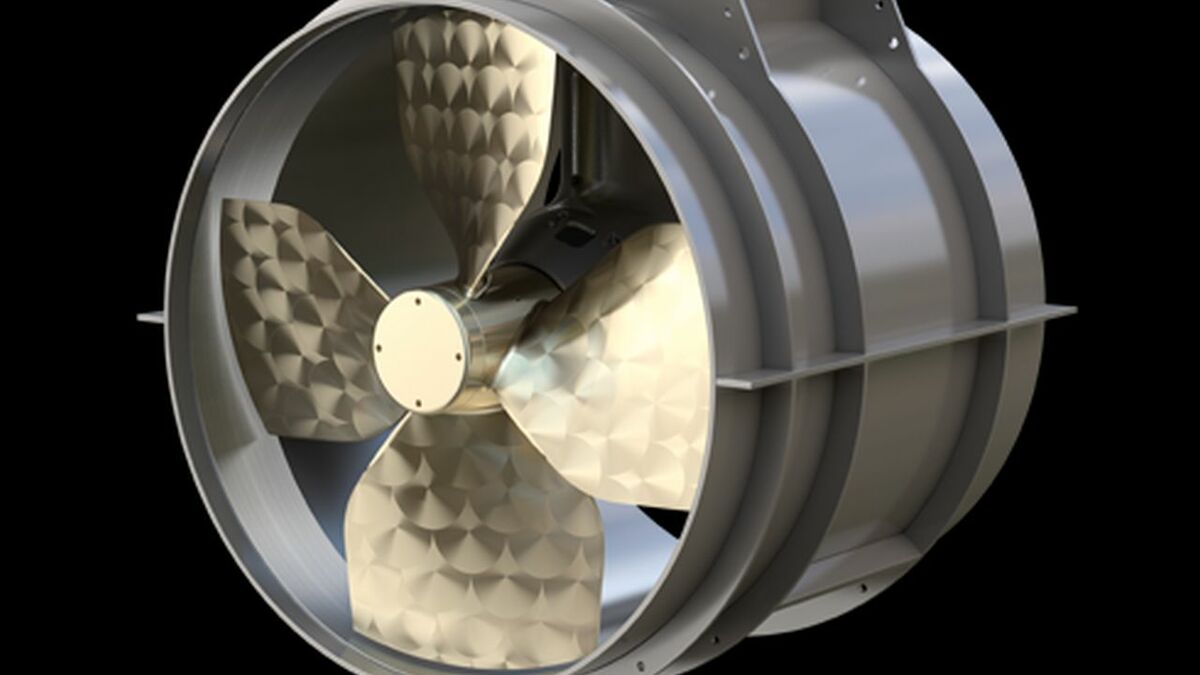
These thrusters can significantly improve the manoeuvrability of vessels in congested harbours and around offshore platforms in dynamic positioning (DP) mode. They need to be optimised for maximum efficiency and connected to electric drives to reduce fuel consumption and emissions.
During Riviera Maritime Media’s Tunnel thrusters: the link between manoeuvrability, propulsion efficiency and fuel consumption webinar, Wärtsilä Marine Power product manager for thrusters Joost van Eijnatten described the reasons for selecting a thruster with a fixed-pitch (FP) propeller over a controllable-pitch (CP) propeller.
This webinar, sponsored by Berg Propulsion, was held 14 April during Rivera’s Marine Propulsion Webinar Week.
Mr van Eijnatten said steerable tunnel thrusters bring operational benefits as they provide a “means of safe and unassisted manoeuvring” in harbours, “minimising turnaround times in port.”
They can also help with station keeping and DP operations, particularly with offshore vessels working around offshore installations and can be run on electric power sourced from the main engine or from other power sources. If the thruster has an FP propeller, electric motors and a variable frequency drive (VFD) can be included in the setup for more efficient operations.
“When switching from CP to FP, thruster efficiency is improved, installed power can be reduced, and when adding electric motors and a VFD emissions are reduced,” said Mr van Eijnatten.
“An FP can be more capex costly, but when operating with an FP, power levels are lower to get the same thrust. It also eliminates fuel consumption that CP propellers have when idle.”
Using an FP plus VFD on a tunnel thryuster can be 44% more expensive than for a CP version. But Mr van Eijnatten estimated fuel consumption and emissions are reduced by 15% per year, and there are fewer spare-part costs – perhaps 25% over 20 years. Which means there is a differential payback time of around eight years.
“There are lower number of components improving reliability, with less wear on seals and other main components,” he said.
An FP tunnel thruster can also run on environmental acceptable lubricants (EALs) and barrier seal types.
“Transverse thruster selection based on power and cost can be improved to reduce emissions and operating expenditure, with variable speed FP solutions,” said Mr van Eijnatten.
“Tunnel edge optimisation can increase manoeuvrability performance, reduce noise and vibration. They contribute significantly to a better environment, more comfort and increased vessel safety.”
Berg Propulsion business manager for electrical system integration Mattias Dombrowe said tunnel and azimuth thrusters should be considered as part of an integrated system with the engines, power source and control systems.
“We are then able to select the right equipment – together with shipowners, shipyards and designers – to put together one package,” said Mr Dombrowe. “Everything is more together than ever as a system solution, so we know what is required for the vessel.”
This would include Berg thrusters and propulsion control and dynamic drive system. A dynamic drive enables better control and management of the propulsion system for maintaining speeds in water or limiting fuel consumption.
Dynamic drive can control the engine revolutions and propeller pitch to ensure a vessel reaches an estimated time of arrival, said Mr Dombrowe.
Information is displayed on a standard Berg MPC800 graphical user interface on the bridge.
“We can see the relationship between the pitch and rpm, reduce speed of the vessel and run the propeller at good speeds,” he said.
Poll results:
Will the coming CII regulations affect your decisions around automated propulsion efficiency optimisation systems?
Has your company investigated the use of automated propulsion efficiency optimisation systems?
When do you think automatic systems for propulsion efficiency optimisations will be standard on board vessels?
Source: Riviera Maritime Media