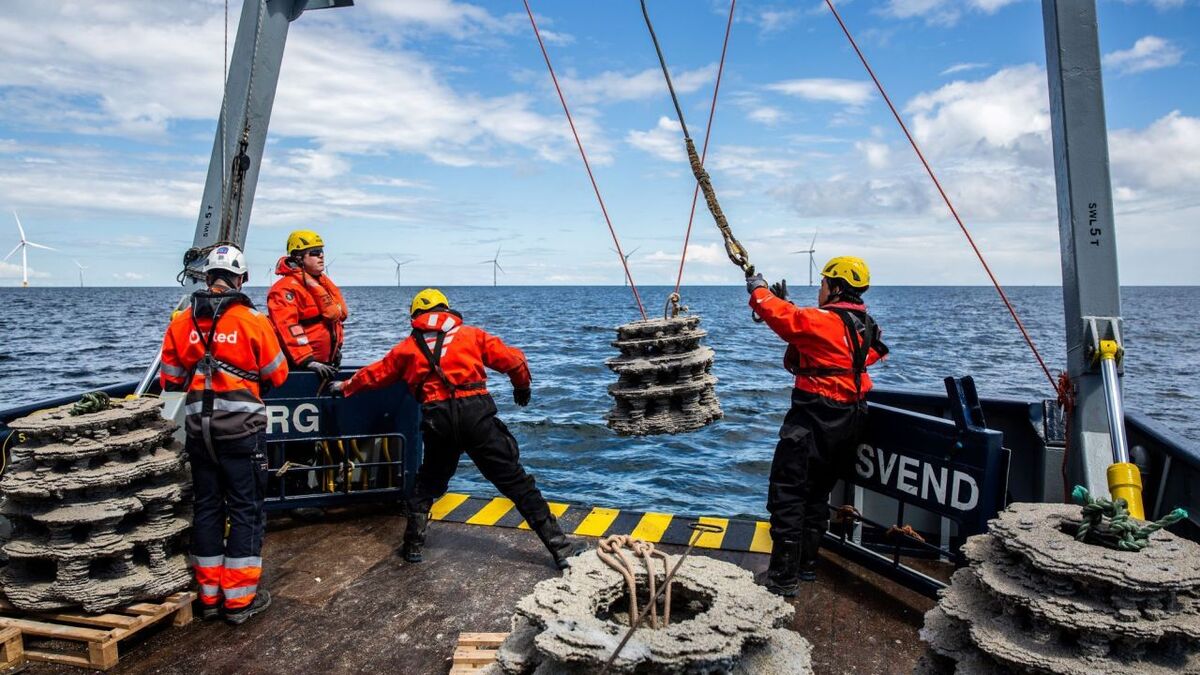
Ørsted and the Worldwide Fund for Nature (WWF Denmark) are testing how 3D-printed reefs could benefit biodiversity in the Kattegat, the strait between Denmark and Sweden, where cod stocks are now historically low
The offshore wind developer said this is the first time 3D-printed reefs have been used in Danish waters. They will complement boulder reefs Ørsted established when constructing the Anholt offshore windfarm in 2012-13.
Ørsted and WWF have deployed 12 3D-printed structures on the seabed between the wind turbines at the Anholt windfarm in the Kattegat. Overfishing, increasing oxygen depletion and habitat loss have resulted in a decline of the cod stock in the Kattegat for the past 20 years. It is now alarmingly low. This creates a domino effect on the Kattegat ecosystem, impacting biodiversity and the marine ecosystem’s resilience to climate-driven changes. The partners in the project hope it will have positive effects on the Kattegat cod stock and in turn contribute to a healthier, more resilient marine ecosystem with improved biodiversity.
Ørsted vice president of sustainability Filip Engel said, “The ocean holds vast potential to help meet our climate goals. Improving ocean health and restoring marine biodiversity is fundamental to addressing biodiversity loss and the climate crisis.
“Governments around the world are ramping up plans to grow renewable energy capacity and offshore wind will require more space. At Ørsted, we believe action on climate and nature can and must go hand-in-hand.”
WWF Denmark secretary general said Bo Øksnebjerg said, “There are 90% fewer cod in the Kattegat now than in 1990. Urgent action is needed.”
In 2021, working with the Kattegat Centre, WWF Denmark and Ørsted installed ‘biohuts’ at Port of Grenaa. Together, the two projects offer new habitats for cod at key stages in their lifecycle. Biohuts are ‘fish kindergartens’ that offer protection to small fish. Juvenile cod can seek shelter and food in them until they are large enough to swim out into deeper water.
The project at Anholt is supported by PensionDanmark and PKA, which have a 30% and 20% share in the windfarm, respectively.
As highlighted by OWJ, Ørsted is working with environmental experts on a range of projects to restore and enhance biodiversity, such as ReCoral by Ørsted, a world-first attempt at supporting coral reefs by growing coral on offshore wind turbine foundations in Taiwan.