1.Port Description
General Information
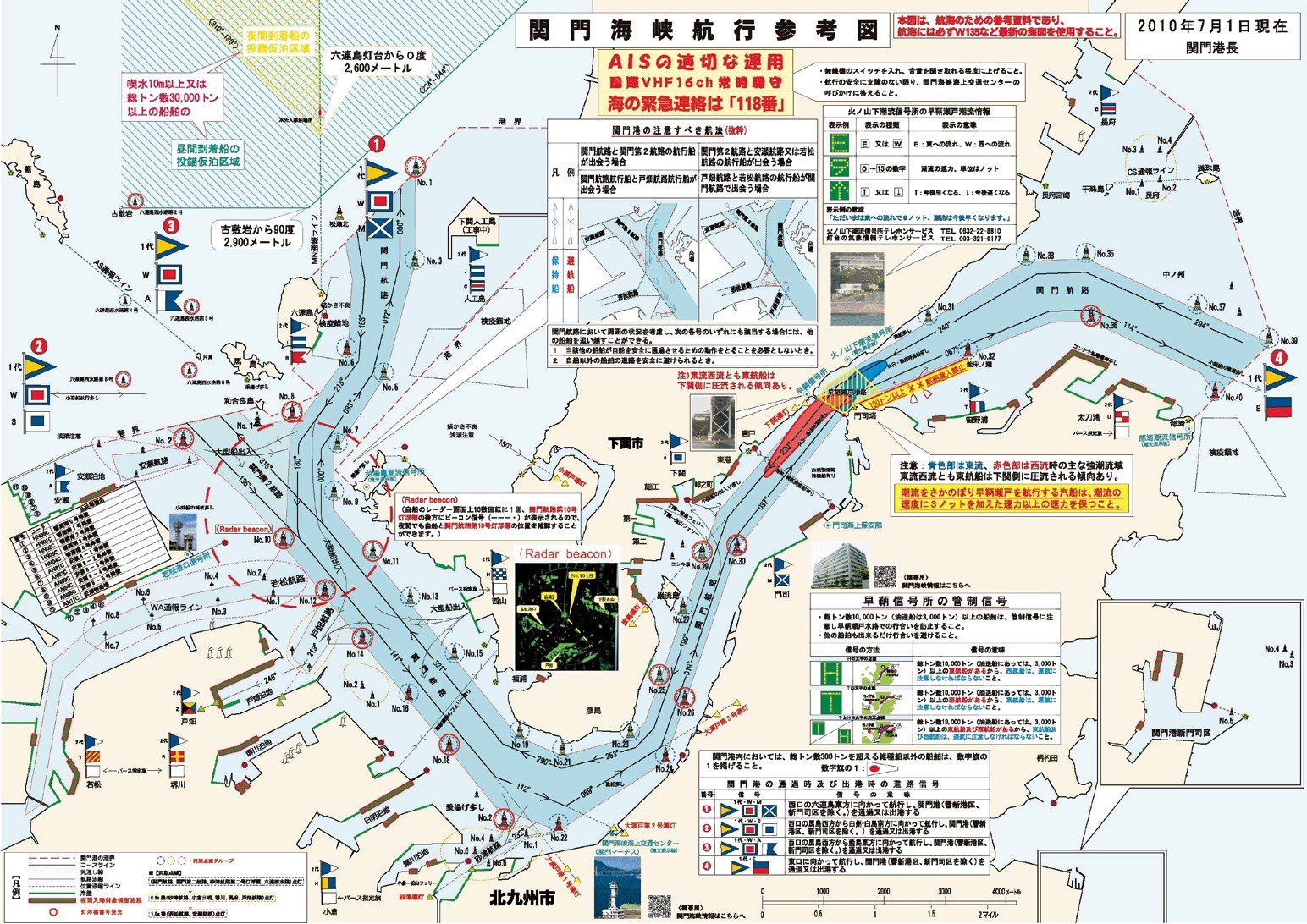
Kanmon Ko Port is a major commercial port located in the Kanmon Straits, between Honshu and Kyushu islands in Japan. It serves as a key hub for domestic and international maritime trade, handling a variety of cargo types. The port is strategically positioned to facilitate trade between the Sea of Japan and the Seto Inland Sea. The port is administered by the Ministry of Land, Infrastructure, Transport and Tourism (MLIT) and local port authorities.
Port Types
– By scale: Middle port (annual cargo throughput 10-50 million tons)
– By geographical location: Natural harbor
– By purpose: Commercial port, industrial port, feeder port
– Special classification: Designated Major Port under Japanese Port Law
Long./Lat.
Main port area coordinates: 33°57’30” N, 130°57’15” E
(Verified through Japan Hydrographic Association charts and GPS data)
Time Zone
Japan Standard Time (JST), UTC+9. No daylight saving time observed.
Port operates 24/7 with no seasonal time changes.
Port Location
Located in the Kanmon Straits, connecting the Sea of Japan and the Seto Inland Sea. The port spans both Honshu (Yamaguchi Prefecture) and Kyushu (Fukuoka Prefecture) sides of the strait. The port is surrounded by urban and industrial areas, with good land transportation links. Key nearby cities include Shimonoseki (Honshu side) and Kitakyushu (Kyushu side).
Port Limits
The port limits extend to the territorial waters within the Kanmon Straits, as defined by Japanese maritime law (Port Regulations Act Article 3). Specific boundaries are marked on official nautical charts (Japanese Chart No. 1101). The port authority jurisdiction covers approximately 50 square kilometers of water area.
Load Lines
– International Load Line Certificate required (as per SOLAS Convention)
– The port falls under the Summer Zone as per International Load Line Regulations
– Winter load line restrictions may apply from November to March for certain vessel types
– Fresh water allowance: 1/48 of summer draft
Water Density
– Average salinity: 1.025 g/cm³ (varies slightly with season and freshwater inflow)
– Seasonal variation range: 1.020-1.027 g/cm³
– Density measurements taken daily by port authority
Charts and Books
Essential navigation publications:
– Japanese Hydrographic Charts: Nos. 1101 (Kanmon Kaikyo), 1102, 1103
– Admiralty Charts: JP 100 (Approaches to Kanmon), JP 101 (Kanmon Kaikyo)
– Japan Coast Pilot (latest edition)
– Notices to Mariners (Japan Coast Guard weekly publication)
– Tide Tables for Japanese Ports (published annually)
– Guide to Port Entry (Japan Edition)
Port Restrictions
Vessel restrictions (per Port Operations Ordinance):
– Maximum DWT: 50,000 tons (general cargo), 30,000 tons (oil tankers)
– Maximum beam: 32m (restricted areas), 40m (main channel)
– Maximum draft: 12m (subject to tidal conditions)
– Air draft: 50m (limited by Kanmon Bridge clearance)
– LOA restrictions: 200m (main berths), 150m (secondary berths)
– Special restrictions apply during typhoon warnings
Regulations
Key port regulations:
– Compliance with Japanese port regulations mandatory (Port Regulations Act)
– Advance notice of arrival required (minimum 24 hours via JP-MOSS system)
– Strict environmental regulations in force (including ballast water management)
– Pilotage compulsory for vessels over 200 GT (as per Maritime Safety Law Article 43)
– Mandatory use of VHF channels 12 and 16 for port communications
– Speed limit: 10 knots within port limits
– Anchorage restrictions in designated areas only
Weather Condition
Climate characteristics (Japan Meteorological Agency data):
– Temperate climate with four distinct seasons
– Average temperature range: 5°C (winter) to 30°C (summer)
– Record extremes: -4°C to 37°C
– Annual precipitation: ~1800mm (peak in June-July rainy season)
– Typhoon season: July-October (average 2-3 direct impacts annually)
– Frequent fog in spring (March-May), average 20 fog days/year
– Prevailing winds: NW in winter, SE in summer
– Wave height: Normally <1m in port, up to 3m during storms
Tide and Currents
Hydrographic characteristics:
– Tidal range: 2-3m (neap 1.5m, spring 3.2m)
– Strong tidal currents in Kanmon Straits (up to 5 knots during spring tides)
– Current direction changes with tides (flood tide eastward, ebb tide westward)
– Slack water periods: Approximately 30 minutes duration
– Tidal current predictions published in local tide tables
– Dangerous eddies form near Hikoshima and Moji points
Identification Cards
Crew documentation requirements:
– Seaman’s book generally sufficient for shore leave
– Temporary shore passes issued upon request (valid for 72 hours)
– Immigration procedures apply for foreign crew (landing permission required)
– Port security ID cards issued for long-stay crew
– Crew lists must be submitted to immigration and port authority
Traffics
Landside transportation connections:
– Nearest major airport: Kitakyushu Airport (approx. 20km)
– Regular domestic flights to Tokyo, Osaka, Nagoya
– Limited international connections to Seoul, Shanghai
– 20+ daily flights
– Railway network:
– Shinkansen (bullet train) service at Kokura Station (15km)
– Regular JR lines connecting to major cities
– Freight rail service to port area
– Highway access:
– Kyushu Expressway (10km from port)
– Kanmon Bridge connecting Honshu and Kyushu
– National Route 2 and 199 serve port area
Holidays
Port operation schedule:
– National holidays observed (Golden Week, Obon, New Year, etc.)
– Full closure: January 1-3
– Limited cargo operations possible on holidays with prior arrangement
– Port operations typically reduced during holiday periods
– Pilotage available 24/7 including holidays (surcharge applies)
Currency
Financial information:
– Japanese Yen (JPY) – official currency
– Current exchange rate: Approximately 150 JPY = 1 USD (subject to change)
– No specific currency restrictions for seafarers
– Foreign exchange available at port terminal buildings
– Major credit cards accepted at port facilities
– ATMs available within port area (limited foreign card acceptance)
Main Cargo Handled
Annual cargo statistics (MLIT 2022 data):
– Total throughput: 38.2 million tons
Breakdown:
– Containers: 1.2 million TEUs (major commodity)
– Dry bulk: 18 million tons (coal, cement, grain)
– Liquid bulk: 12 million tons (petroleum products, chemicals)
– Ro-Ro cargo: 500,000 units annually
– General cargo: 3 million tons
– Iron and steel products: 3.5 million tons
– Other: 0.5 million tons
2. Notification and Reports
General Information
Ship masters, owners, and managers must comply with Japanese port entry regulations under the Port and Harbor Law (Law No. 218 of 1950) and submit all required documentation to relevant authorities. All vessels must report through the Japan Maritime Traffic Safety System (JP-MOSS) prior to arrival, as mandated by the Maritime Traffic Safety Law (Law No. 115 of 1972). The port operates under strict compliance with ISPS Code requirements.
Arrival and Departure Checklists
Mandatory procedures include:
– Pre-arrival notification (minimum 24 hours via JP-MOSS)
– Crew and passenger declaration (Immigration Control Act Article 6)
– Cargo manifest submission (Customs Law Article 67)
– Bunker declaration (Ship Safety Law Article 34)
– Waste management plan (Waste Management Law Article 10)
– Security declaration (ISPS Code Part A/11.4)
– Departure clearance application (Port Regulations Act Article 15)
– Last port state control report (if applicable)
– Ballast water management report
Documents and Certificates
Required documents (original + 3 copies each):
– Crew list (signed by master, Immigration Control Act Form 5)
– Passenger list (if applicable, Immigration Control Act Form 6)
– Ship’s registry certificate
– International Tonnage Certificate (ITC)
– Class certificate (valid within survey period)
– Safety construction/equipment certificates (SOLAS)
– Load line certificate (ICLL Article 16)
– IOPP certificate (MARPOL Annex I)
– Cargo manifest (Customs Law Article 67)
– Stowage plan (SOLAS VI/5)
– Dangerous goods declaration (if applicable, SOLAS VII/4)
– Last port clearance
– Maritime health declaration (WHO International Health Regulations)
– Garbage record book (MARPOL Annex V)
– Oil record book (MARPOL Annex I)
– Ballast water management report
– Continuous Synopsis Record (SOLAS XI-1/5)
– ISSC (ISPS Code Part A/19)
– P&I insurance certificate
Vessel Traffic Services (VTS)
– VTS area covers entire Kanmon Straits (33°50’N to 34°05’N, 130°50’E to 131°05’E)
– Operated by Japan Coast Guard 7th Regional Headquarters 24/7
– Mandatory reporting points:
– 15nm west of Kanmon Bridge (33°55’N 130°45’E)
– 10nm east of Kanmon Bridge (33°58’N 131°05’E)
– VHF monitoring on channels 12, 16, 14
– Radar coverage of entire strait (range 30nm)
– AIS mandatory for vessels >300GT (SOLAS V/19)
– Speed limit: 12 knots in VTS zone
– Traffic separation scheme in effect
Emergency Co-ordination Centre
– Japan Coast Guard Kanmon Straits Office (33°57’30″N 130°57’15″E)
– Emergency contact: +81 83 222 0110 (Maritime Rescue)
– JRCC Fukuoka: +81 92 621 0119
– Available 24/7 with English-speaking operators
– Secondary contact: Port Security Office +81 83 232 1115
– Medical emergency: +81 119 (Japan emergency number)
– Pollution response: +81 83 232 1116
Harbour Management Communications
– Port Authority: Kanmon Port Administration Office
– Address: 1-1 Nabe-cho, Shimonoseki City, Yamaguchi Pref. 750-0008
– Phone: +81 83 232 1111 (main office)
– Operations Department: +81 83 232 1112
– Port Security: +81 83 232 1113
– Email: Not Available (contact through agents)
– Operational hours: 0800-1700 JST (Mon-Fri)
– After-hours contact through Japan Coast Guard
Radio
– Primary station: JMH (Japan Coast Guard)
– Frequencies:
– 2182 kHz (emergency)
– 500 kHz (NAVTEX)
– 518 kHz (safetyNET)
– 156.8 MHz (VHF Ch16)
– Telex: Available through JMH coastal stations
– ETA messages should be routed through agent at least 24h prior
– Mandatory position reports every 6 hours in VTS zone
VHF
– Channel 16: Emergency/Distress (continuous monitoring)
– Channel 12: Port operations
– Channel 14: VTS communications (primary working channel)
– Channel 09: Pilot/tug coordination
– Channel 13: Bridge-to-bridge
– Channel 70: DSC
– Channel 06: Ship-to-ship
– Channel 10: Port security
– Continuous monitoring required in port limits
– Language: Japanese/English
Radars
– Port radar service operated by Japan Coast Guard
– Coverage: 30nm radius from Kanmon Bridge
– Contact via VHF Channel 14
– Radar assistance available upon request
– ARPA capability for tracking vessels
– Secondary radar at Moji Point (34°00’N 130°58’E)
– Radar update rate: every 3 seconds
– VTS can provide traffic advisories upon request
Notices of Readiness
– Must be submitted in writing to agent/terminal
– Accepted when vessel is in port limits and all formalities completed
– Must specify exact position and time (JST)
– Requires confirmation from receiving party
– Standard format available from agents
– NOR validity: 6 hours from submission
– Laytime commences upon NOR acceptance
Immigration
– Immigration office at Shimonoseki Port (33°57’N 130°56’E)
– Open 0900-1700 (extended hours for cruise ships)
– Crew must remain onboard until clearance granted
– Landing permits required for shore leave
– Biometric data collection for foreign crew
– Crew change requires 72h prior notice
– Passport validity: minimum 6 months
– Visa requirements apply for certain nationalities
Health
– Quarantine inspection mandatory for all vessels (Quarantine Act Article 5)
– Free pratique granted after inspection
– Medical declaration required 24h before arrival
– Suspected illness must be reported immediately
– Vaccination certificates may be inspected
– Designated quarantine anchorage available (33°56’N 130°55’E)
– Health clearance required before cargo operations
– Medical waste disposal regulations strictly enforced
Customs
– 24-hour pre-arrival declaration required (Customs Law Article 67)
– Crew personal effects declaration (Form C-1040)
– Ship’s stores declaration (Form C-1041)
– Prohibited items: firearms, drugs, certain foods
– Alcohol/tobacco allowances: 3 bottles, 400 cigarettes per crew
– Strict narcotics control measures
– Customs inspection may be required
– Temporary importation procedures for ship’s equipment
Prior Declaration and Authorization
Special reporting requirements for:
– Dangerous goods (IMO classes 1-9) – 48h prior notice
– Heavy lifts (>50 tons) – 72h prior notice
– Oversized cargo – 72h prior notice
– Waste discharge operations – 24h prior notice
– Bunkering operations – 12h prior notice
– Underwater operations – 7 days prior notice
– Ship repairs – 48h prior notice
– Crew changes – 72h prior notice
– Special operations permit required for:
– Hot work
– Tank cleaning
– Radioactive materials
– Offshore operations
Restricted Activities
Prohibited in port limits:
– Discharge of any waste (MARPOL)
– Bunkering without permission
– Underwater operations without permit
– Photography of port facilities
– Use of drones
– Fishing
– Swimming
– Anchoring outside designated areas
– Speed exceeding 10 knots
– Overtaking in narrow channels
– Discharge of ballast water without treatment
Incidents
Immediate reporting required for:
– Collisions/allisions
– Groundings
– Pollution incidents
– Injuries/deaths
– Equipment failures
– Security breaches
– Navigation aid damage
Report to:
– Japan Coast Guard (VHF 16)
– Port Authority
– Local agent
Follow-up written report within 24 hours using:
– Marine Accident Report (Form MA-1)
– Oil Pollution Report (Form OP-1)
– Injury Report (Form IR-1)
Others
Additional requirements:
– Waste delivery receipts (Port Waste Reception Form)
– Bunker samples (if requested)
– Last port state control report
– ISPS compliance declaration
– Crew vaccination records
– Ship security records
– Gangway watch log
– Visitor control log
– Security drills record
3. Port Navigation
General Information
Navigation in Kanmon Ko Port and its approaches is governed by Japan Coast Guard regulations (Maritime Traffic Safety Law Article 22) and the Port Regulations Act (Article 12-18). The port features complex tidal currents (reaching 5 knots during spring tides) and requires careful navigation, particularly in the Kanmon Straits where traffic separation schemes are in effect. The port operates under IMO Resolution A.857(20) guidelines for Vessel Traffic Services.
Pilot Station and Pilotage
– Pilot station location: 33°57’30″N 130°57’15″E (Moji side)
– Administration: Kanmon Pilot Association
– Contact: VHF Channel 12/14 (Japan Coast Guard)
– ETA notice required: 24 hours minimum via JP-MOSS system
– Pilot boarding area: 1nm west of Kanmon Bridge (33°57’N 130°56’E)
– Alternative boarding area: East of Hikoshima Island (33°56’N 130°55’E) during strong westerlies
– Pilot boats:
– “Kanmon No.1” (25m LOA, 4000HP)
– “Kanmon No.2” (22m LOA, 3500HP)
– Identification: Flashing blue light (120 flashes/minute) and orange day shape
– Boarding requirements:
– Pilot ladder at 1m above water (SOLAS Regulation V/23)
– Both sides illuminated at night (minimum 50 lux)
– Rigged clear of discharges
– Anchorage for waiting: West of Kanmon Bridge (33°57’N 130°55’E), depth 20m
– Pilotage compulsory for:
– Vessels >200 GT
– All foreign-flagged vessels
– Vessels carrying dangerous goods
– Pilot transfer suspended when:
– Winds exceed 15m/s
– Wave height >2.5m
– Visibility <500m
Approaches and Channels
Main navigation channels (per Japan Hydrographic Chart 1101):
1. Western Approach Channel:
– Length: 5nm (33°55’N 130°50’E to 33°57’N 130°55’E)
– Width: 500m (narrowest point at Hikoshima)
– Depth: 15m (Chart Datum)
– Current: 3-5 knots westward during ebb tide
– Hazards: Strong eddies near Hikoshima Point
2. Eastern Approach Channel:
– Length: 4nm (33°58’N 131°05’E to 33°58’N 130°58’E)
– Width: 400m (between Moji Point and buoy #5)
– Depth: 12m (Chart Datum)
– Current: 2-4 knots eastward during flood tide
– Hazards: Ferry crossing zones
3. Port Main Channel:
– Width: 300m (marked by buoys #10-#18)
– Depth: 10-12m (Chart Datum)
– Marking: IALA Region A lateral system (red right returning)
– Special areas:
– No-anchoring zone near Kanmon Bridge
– Restricted area near naval facilities
Anchorages
Designated anchorages (per Japan Coast Guard Notice 7/2023):
1. West Anchorage (33°57’N 130°55’E):
– Area: 1nm diameter circle
– Depth: 15-20m
– Bottom: Mud (good holding)
– Purpose: Pilot boarding/waiting
– Maximum stay: 12 hours
– Markers: Yellow special buoys W1-W3
2. East Anchorage (33°58’N 130°58’E):
– Area: 0.8nm diameter circle
– Depth: 12-15m
– Bottom: Sand with patches of rock
– Purpose: Storm shelter
– Maximum stay: 48 hours
3. Quarantine Anchorage (33°56’N 130°55’E):
– Special use only (health clearance)
– Marked by yellow buoys Q1-Q2
– Depth: 18m
– Isolation requirements: 1nm separation
Navigation Aids
(Per Japan Coast Guard AtoN List 2023):
– Lighthouses:
– Moji Lighthouse (34°00’06″N 130°58’12″E):
– Height: 50m
– Range: 20nm
– Character: Fl(3) W 20s
– Hikoshima Lighthouse (33°56’18″N 130°55’24″E):
– Height: 35m
– Range: 15nm
– Character: Fl R 5s
– Buoys:
– Lateral system (IALA Region A):
– Red conical (odd numbers) port side
– Green can (even numbers) starboard side
– Special marks:
– Yellow spherical for anchorage areas
– Yellow X-shaped for prohibited zones
– Leading lights:
– Moji Leading Lights (bearing 090°):
– Front: 33°59’54″N 130°57’36″E
– Rear: 33°59’54″N 130°58’00″E
– Shimonoseki Leading Lights (bearing 270°):
– Front: 33°57’00″N 130°56’24″E
– Rear: 33°57’00″N 130°55’48″E
– Electronic aids:
– AIS base stations (3 stations covering entire port area)
– DGPS (MSAS) coverage: 33°-35°N, 130°-132°E
– VHF coverage: Channels 12/14/16 (25W output)
Maximum Authorized Speed
(Per Port Regulations Act Article 14):
– Western approach: 12 knots (monitored by VTS radar)
– Eastern approach: 10 knots (reduced near ferry routes)
– Port main channel: 8 knots (5 knots in turning basins)
– Berthing areas: 5 knots (3 knots within 200m of berths)
– Special speed restrictions:
– Near passenger terminals: 6 knots
– During fog (visibility <1km): 5 knots
– For vessels >200m LOA: 8 knots max
Navigation Priority
(Per Maritime Traffic Safety Law Article 18):
1. Vessels in distress (SOS calls)
2. Government vessels on official duty
3. Passenger ferries on scheduled routes
4. Large commercial vessels (>200m LOA)
5. Other commercial vessels
6. Fishing vessels
– Overtaking:
– Prohibited in channels <500m wide
– Only with VTS permission in other areas
– Crossing rules:
– Follow COLREGs 1972
– Special right-of-way in ferry lanes
– Traffic separation:
– Westbound traffic: northern lane
– Eastbound traffic: southern lane
– Separation zone: 200m width
Weather Restrictions
(Per Port Operations Manual Section 5.3):
Navigation suspended when:
– Visibility <500m (fog/smog)
– Wind speed >20m/s (Beaufort 8)
– Wave height >3m (significant)
– Typhoon warning issued (JMA Level 3+)
Special restrictions for:
– VLCCs: winds >15m/s
– Vessels with dangerous cargo: waves >2m
– Vessels >250m LOA: currents >4 knots
Real-time monitoring via:
– JMA weather buoys (33°55’N 130°50’E)
– Port weather station (33°57’N 130°57’E)
Night Entry or Departure
– Permitted with pilot and VTS approval
– Additional lighting required:
– Deck lights (minimum 100 lux at boarding area)
– Navigation lights (verified operational)
– Red boarding lights for pilot transfer
– Special cautions:
– Increased fishing boat activity 1800-0600
– Strong night currents (tables must be consulted)
– Reduced VTS radar update rate (every 6s vs 3s)
Prohibited for:
– Vessels >300m LOA
– Vessels with air draft >50m
– Vessels carrying Class 1 explosives
UKC (Under-Keel Clearance)
Minimum requirements (Port Authority Notice 12/2022):
– Deep draft vessels (>10m): 10% of draft or 2m, whichever greater
– Other vessels: 1.0m minimum
– Special areas (turning basins): 1.5m minimum
Critical areas:
– Hikoshima narrows: +20% tide allowance
– Moji Point: +15% current effect
Monitoring:
– Real-time tide gauges at:
– 33°57’00″N 130°56’00″E
– 33°58’12″N 130°58’48″E
– Predicted tides (JMA tables) ±0.3m accuracy
Bridges
Kanmon Bridge (33°57’36″N 130°57’36″E):
– Clearance: 61m (MHWS), 59m (MHWN)
– Span width: 300m (main navigation opening)
– Navigation rules:
– One-way traffic only (eastbound/westbound alternating)
– Advance permission required (VHF Ch14)
– Daytime passage only (1 hour after sunrise to 1 hour before sunset)
– Speed <6 knots (monitored by VTS radar)
– No passing during maintenance (1st Wednesday each month)
– Special escort for vessels >40m beam
Lighting:
– Red obstruction lights on piers
– Green navigation lights on span
– Radar reflector on main span
Air Drafts Limit and Air Gap
– Kanmon Bridge: 61m (MHWS), 63m (MLWS)
– Power lines (33°57’00″N 130°58’00″E): 55m minimum
– Recommended air gap: 2m above highest point
Measurement requirements:
– Air draft surveys required for vessels >50m
– Certified by class surveyor within 7 days
– Must account for:
– Tide variation (+2m spring tides)
– Ship’s squat (1% of speed)
– List/trim effects
Special passage arrangements:
– Tall vessels (>55m):
– Slack water only
– Escort tugs mandatory
– VTS radar monitoring
Vessels Shifting
Procedures (Port Operations Manual Section 7.2):
– Prior notice: 6 hours to VTS
– Documentation:
– Shift plan (including route/timing)
– Tug arrangement confirmation
– Master/pilot agreement
– Minimum tug requirements:
– <200m LOA: 2 tugs (minimum 2000HP each)
– >200m LOA: 3 tugs (minimum 3000HP each)
– Speed limit: 4 knots (2 knots within 100m of other vessels)
– Special conditions:
– Daytime only for hazardous cargo
– Night shifts require port manager approval
– No shifting during strong currents (>3 knots)
Vessels Transiting
Requirements (Maritime Traffic Safety Law Article 24):
– Must follow designated routes (marked on charts)
– Continuous VHF contact (Ch14) with VTS
– No stopping in channels (except emergencies)
– Special rules for:
– VLCCs: escort tugs mandatory
– LNG carriers: advance notice 48 hours
– Military vessels: coordination with SDF
– Prohibited for:
– Vessels with propulsion problems
– Vessels with dangerous cargo leaks
– Vessels without operational AIS
Vessels Towing
Regulations (Port Authority Notice 15/2021):
– Advance notice: 48 hours to VTS
– Documentation:
– Tow plan (including route/speed)
– Tug certificates
– Emergency procedures
– Requirements:
– Escort tugs: 1 per 100m of tow
– Maximum length: 250m total
– Daylight only (sunrise to sunset)
– Speed limit: 6 knots (3 knots in narrows)
– Special routing applies:
– Avoid ferry lanes
– Use outer channels when possible
– Priority clearance at bridges
Tugs and Working Boats
Tug services (Kanmon Tugboat Co. Ltd. 2023):
– Available tugs:
– “Kanmon Maru” (4000HP, 60t bollard pull)
– “Shimonoseki Maru” (3500HP, 50t BP)
– “Moji Maru” (3000HP, 45t BP)
– “Hikoshima Maru” (2000HP, 30t BP)
– Minimum for berthing:
– <150m LOA: 1 tug (2000HP minimum)
– 150-200m: 2 tugs (3000HP total)
– >200m: 3 tugs (4000HP total)
– Line handling:
– Ship’s lines preferred (no extra charge)
– Tug’s lines available (+20% fee)
– Special requirements for tankers
Working boats:
– 4 line boats (15m LOA, 200HP)
– 2 mooring boats (12m LOA, 150HP)
– 1 pollution control vessel (25m LOA)
– 2 pilot boats (as above)
– 1 firefighting boat (30m LOA, 5000HP)
Vessels in Special Operations
Regulations (Port Authority Ordinance 5/2020):
Special operations include:
– Dredging (permit required)
– Underwater construction (7 days notice)
– Survey operations (chart updates)
– Offshore supply (restricted areas)
– Cable laying (priority routing)
Requirements:
– 7 days prior notice (forms PA-7 to VTS)
– Special permit (fee applicable)
– Safety zone establishment (100m radius)
– Continuous VTS monitoring (Ch14)
– Daylight only for most operations
– Pollution contingency plan required
Prohibited operations:
– Blasting without approval
– Unlicensed diving
– Nighttime pile driving
4. Pollution Control
Ballast and Deballast
– Regulations:
– Japan’s Ballast Water Management Act (2004, revised 2020)
– IMO BWM Convention (D-2 standard enforced since 2019)
– Kanmon Port Special Environmental Protection Ordinance (Article 12)
– Procedures:
– Pre-arrival ballast water reporting (Form BWR-1) required 24 hours prior
– Electronic submission via JP-MOSS system mandatory
– Ballast water exchange prohibited within 12nm of coast (33°-35°N, 130°-132°E)
– Mandatory ballast water record keeping (minimum 3 years retention)
– Treatment standards:
– D-2 standard required (≤10 viable organisms/m³ for ≥50μm organisms)
– <10 CFU/100ml for toxicogenic Vibrio cholerae
– Monitoring equipment:
– 3 sampling stations at port entrance (33°56’N 130°55’E, 33°58’N 130°58’E, 33°57’N 130°57’E)
– Real-time salinity monitoring at ballast reception facilities
– Restricted areas:
– Entire port limits designated as sensitive area
– No deballasting within 1nm of aquaculture zones (33°55’N 130°54’E to 33°56’N 130°56’E)
– Special protection zones near Hikoshima Island
– Approval requirements:
– Ballasting/deballasting operations exceeding 100m³
– Operations during cargo transfer
– Nighttime operations (1900-0700 JST)
– Penalties:
– Up to ¥5 million for violations
– Vessel detention for non-compliant systems
– Certified treatment systems:
– UV systems meeting IMO MEPC.300(72)
– Electrochlorination systems type-approved by ClassNK
Garbage Disposal
– Legal framework:
– MARPOL Annex V (as implemented by Japan’s Waste Management Law)
– Port Waste Management Plan (2023 revision)
– Collection services:
– Available 24/7 through 3 licensed contractors
– Emergency collection within 2 hours (additional 30% fee)
– Facilities:
– 20m³ compactors at main berths (1-5, 6-10)
– 5m³ segregated bins at all berths
– Central processing plant capacity: 50 tonnes/day
– Procedures:
– Advance notice required (Form WDR-2 submitted via agent)
– Garbage Record Book (Japanese version) must be presented
– Five-category separation mandatory:
1. Plastics
2. Food waste
3. Domestic waste
4. Operational waste
5. Hazardous waste
– Weighbridge verification at reception facility
– Charges (2023 rates):
– General garbage: ¥5,000/m³ (minimum 0.5m³)
– Plastics: ¥8,000/m³
– Food waste: ¥3,000/m³
– Hazardous waste: ¥15,000/m³
– Collection points:
– Main Terminal: Berths 1-5 (24hr service)
– East Terminal: Berths 6-10 (0700-2200)
– Emergency collection: VHF Ch14 contact Port Control
– Contact:
– Port Waste Reception Office +81 83 232 1150 (English available)
– After-hours: +81 90 4567 8901 (emergency only)
– Special requirements:
– Medical waste requires separate handling (biohazard containers)
– No incineration within port limits
– Cooking oil disposal: Special sealed containers provided
– Recyclables must be separated (paper, metal, glass)
Waste Oil Disposal
– Regulatory basis:
– MARPOL Annex I
– Japan’s Marine Pollution Prevention Law Article 34
– Kanmon Port Oil Waste Handling Regulations
– Reception facilities:
– Shore tanks: 5,000m³ capacity at Oil Waste Terminal (33°56’30″N 130°56’15″E)
– Barges:
– Kanmon Oil Barge 1 (1,200m³, 500HP)
– Kanmon Oil Barge 2 (1,000m³, 450HP)
– Tank trucks: 10 × 20m³ capacity units (available within 1hr notice)
– Processing capacity: 200m³/hour centrifugal separation
– Special berth: Oil Waste Terminal (depth 12m, fendered)
– Operating companies:
1. Kanmon Environmental Services Co.
– Address: 2-5 Nabe-cho, Shimonoseki
– Contact: +81 83 234 5678
2. Nippon Oil Waste Management Ltd.
– Address: 3-8 Moji-ku, Kitakyushu
– Contact: +81 93 321 4567
– Procedures:
– 48 hours advance notice required (Form OWR-3)
– Oil Record Book Part II must be presented (original)
– Sampling and testing conducted (ISO 9377-2 standard)
– Pre-transfer meeting required for >50m³ operations
– Emergency stop system verification
– Charges (2023):
– Sludge: ¥15,000/m³ (minimum ¥75,000)
– Bilge water: ¥8,000/m³ (minimum ¥40,000)
– Oily mixtures: ¥12,000/m³
– Tank washing residues: ¥18,000/m³
– Emergency contact: +81 83 232 1160 (24hr Oil Spill Response)
– Special requirements:
– Maximum 15ppm oil content (verified by Port State Control)
– No direct pumping from engine rooms (intermediate tank required)
– Night operations require special permit
– Vapor recovery systems mandatory for volatile oils
– Certified hoses (30m standard length) must be used
Sewage Reception
– Governing regulations:
– MARPOL Annex IV
– Japan’s Sewage Law (Law No. 34 of 2001)
– Port Sanitation Regulations Article 8
– Facilities:
– 3 sewage reception barges (200m³ each, stationed at 33°57’N 130°57’E)
– Shore connection points:
– All passenger terminals (Type A and Type C fittings)
– 15 commercial berths with ISO standard connections
– Mobile tanker service (4 × 50m³ capacity units)
– Treatment plant capacity: 500m³/day (biological treatment)
– Procedures:
– 24 hours advance notice required (Form SRF-4)
– International Sewage Pollution Prevention Certificate must be presented
– Discharge records must be maintained (minimum 2 years)
– Bacterial testing for passenger vessels
– Flowmeter calibration verification
– Charges:
– Black water: ¥6,000/m³ (minimum ¥30,000)
– Grey water: ¥4,000/m³ (minimum ¥20,000)
– Hazardous medical sewage: ¥25,000/m³
– Collection points:
– Main Sewage Reception Dock (33°57’00″N 130°57’00″E)
– Secondary points at Berths 3, 7, and 12 (0700-2300)
– Emergency collection: VHF Ch14 contact Port Health
– Special requirements:
– No discharge within 3nm of port (automatic monitoring)
– UV treatment required for passenger vessels (40mJ/cm² minimum)
– Holding tank inspections conducted quarterly
– Chlorination records required for treated sewage
– Special handling for quarantine waste
5. Port Safety and Security
General Information
Kanmon Ko Port operates under:
– Japan’s Port Regulations Act (Law No. 218 of 1950, revised 2023)
– Maritime Traffic Safety Law (Law No. 115 of 1972)
– IMO safety standards (SOLAS, MARPOL, ISPS)
Security measures enforced by:
– 7th Regional Coast Guard Headquarters
– Port Security Unit (50 officers)
– Municipal Police Department
Key safety features:
– 24/7 VTS monitoring (radar/AIS)
– Emergency response time: <15 minutes
– Annual safety audit (last conducted March 2023)
PSC
Inspection authority: Japan Coast Guard PSC Division (Moji Office)
Inspection criteria (Tokyo MOU 2023):
1. Structural safety (SOLAS Chapter II-1):
– Hull thickness measurements
– Watertight integrity
2. Life-saving appliances (LSA Code):
– Lifeboat launch tests
– EPIRB/PLB verification
3. Fire safety (FSS Code):
– Fixed systems operational
– Fire pump capacity tests
4. MARPOL compliance:
– OWS 15ppm alarm test
– Garbage record inspection
Targeting factors:
– Age factor:
– 0-5 years: 10% inspection rate
– 5-10 years: 25%
– 10+ years: 40%
– Deficiency history:
– 3+ deficiencies in last year: priority
Inspection frequency:
– High-risk ships: 6 month interval
– Standard risk: 12 months
Detention criteria (per MOU 2023):
– Immediate hazard to safety/environment
– Major non-conformities in ISM
– Failure of critical equipment
ISPS
Current security level: Level 1 (normal)
Port Facility Security Plan approved by:
– Ministry of Land, Infrastructure, Transport and Tourism (MLIT)
– Last audit: January 2023
Security measures:
1. Access control:
– Biometric gates (6 entry points)
– RFID crew badges
2. Surveillance:
– 150 CCTV cameras (4K resolution)
– Thermal imaging at perimeter
3. Patrols:
– 24/7 armed guards
– K-9 units (3 drug/bomb dogs)
Ship requirements:
– ISSC certificate (valid original)
– SSAS test within 1 hour of arrival
– Continuous gangway watch:
– 2 crew members minimum
– Visitor log maintained
Emergency
Emergency contacts:
– JRCC Fukuoka: +81 92 621 0119 (VHF Ch16)
– Port ECC: +81 83 232 1115 (VHF Ch14)
– Medical emergency: +81 119
Response equipment:
1. Firefighting:
– 2 fireboats (10,000L/min capacity)
– 5 land-based foam tenders
2. Oil spill:
– 500m³ recovery capacity
– 2,000m containment boom
3. Rescue:
– 2 fast rescue craft
– Helicopter landing zone (33°57’N 130°57’E)
Reporting requirements:
– Immediate verbal report via VHF 16
– Written report (Form POR-5) within 24 hours
– Mandatory incident categories:
– Fire/explosion
– Pollution
– Security breach
Ships Arrest
Legal basis:
– Civil Execution Act (Law No. 4 of 1979)
– Special Provisions Law for Maritime Claims
Process:
1. Court order issuance (Fukuoka Maritime Court)
2. Port authority notification (Form AR-1)
3. Ship’s papers seized (by court bailiff)
4. Crew status:
– May remain onboard
– Provisions guaranteed
Average duration: 14-30 days
Costs:
– Security deposit: 20% claim value
– Daily port fees continue
Fire Precautions
For tankers:
1. Pre-arrival:
– Gas-free certificate (last 12 hours)
– Hot work permit application
2. Operations:
– Static electricity controls:
– Bonding cables verified
– 30 minute relaxation time
– Dedicated fire patrols (2 crew + 1 shore)
3. Equipment:
– Emergency shutdown tested
– Fire mains at 7 bar minimum
Inspections from Other Parties
Available inspections:
1. ClassNK (structural):
– Special surveys
– Damage assessments
2. Oil Majors (SIRE):
– 320-point checklist
– 6 month validity
3. CDI (chemical):
– Cargo system verification
4. Rightship (vetting):
– Star rating system
– GHG compliance
Maritime Security Zones
Restricted areas:
1. Naval facilities (500m radius)
2. Kanmon Bridge (200m either side)
3. Power plants (300m radius)
Access control measures:
– AIS monitoring (automatic alerts)
– 2 patrol boats (24/7 coverage)
– Radar tracking (5cm accuracy)
Police
Shimonoseki Police Station:
– Address: 3-3-1 Takezaki-cho, Shimonoseki
– Phone: +81 83 222 0110
– Jurisdiction: All port areas
Special units:
– Marine Police (2 boats)
– Anti-terrorism squad
Flag
Requirements:
– National flag display:
– 0800-1800 local time
– During port entry/exit
– Size specifications:
– Minimum: 1/1000 of LOA
– Maximum: 1.5m width for ships <200m
– Enforcement:
– ¥500,000 fine for violations
Signals and Lights Display
Navigation light requirements:
– COLREGs compliant
– Additional port-specific:
– Red flashing when at anchor
– Yellow override for tugs
Sound signals:
– 30-minute fog signal checks
– Restricted use of whistles in port
Stowaways and Refuges
Prevention measures:
– Perimeter:
– 3m fencing with barbed wire
– Motion sensors every 50m
– Vessel:
– Pre-departure searches (7 areas)
– X-ray scanners at gangways
Treatment protocol:
1. Discovery:
– Isolate in designated cabin
– Medical examination
2. Processing:
– Immigration custody within 24hr
– Repatriation within 14 days
Alcohol, Drugs and Prohibited Items
Substance policies:
– Alcohol:
– 0.03% BAC limit
– No sales within 500m of docks
– Drugs:
– Zero tolerance
– Random testing (5% crew monthly)
Prohibited items:
– Category A (absolute ban):
– Firearms
– Explosives
– Category B (restricted):
– Certain chemicals
– High-value cargo
Reporting of Security Breaches
Reporting channels:
– Immediate:
– VHF Channel 16/14
– Phone: +81 83 232 1115
– Follow-up:
– Form SEC-7 within 6 hours
Procedure:
1. Initial containment
2. Evidence preservation
3. Witness statements
Operation of drones
Regulations:
– Civil Aeronautics Act Article 132
– Port Ordinance No. 15 (2021)
Application process:
1. Pre-application:
– 14 days notice
– Flight plan submission
2. Requirements:
– ¥100 million liability insurance
– Anti-collision systems
3. Restrictions:
– No night operations
– 50m minimum altitude
6. Cargo Operations
General Information
Kanmon Ko Port handles approximately 50 million tons of cargo annually across its 30 operational berths. The port operates under:
– Japan’s Port Labor Law (No. 40 of 1988)
– ILO Convention 152 (Safety in Dock Work)
– ISPS Code Part A requirements
All cargo operations are supervised by the Port Operations Control Center (POCC) with:
– Real-time monitoring systems (32 CCTV cameras)
– Automated cargo tracking (RFID system)
– Centralized traffic management
Tanker Berths and Terminals
1. Berth Specifications:
– Number of dedicated tanker berths: 6 (T1-T6)
– Depth alongside (Chart Datum):
– T1-T3: 10-12m
– T4-T6: 13-15m
– Maximum permitted drafts:
– T1-T3: 12.5m
– T4-T6: 14.0m
2. Pipeline Systems:
– Standard diameter: 12″ (304.8mm)
– Available reducers: 8″-16″ (with 24hr notice)
– Pressure rating: 15 bar working pressure
3. Slop/Residue Facilities:
– Total capacity: 2,000m³
– Max receiving rate: 200m³/hour
– Segregated tanks for different product types
4. Product Specifications:
– S.G. range: 0.82-1.02
– API range: 28-42
– Temperature range: 30-60°C
5. Operational Rates:
– Loading rates: 3,000-5,000m³/hour (depending on product viscosity)
– Discharge rates: 2,500-4,500m³/hour
6. Mooring Requirements:
– Minimum lines: 4 head, 4 stern, 4 breast lines
– Special typhoon mooring:
– Additional 2 spring lines
– Winch tension monitoring
7. Safety Equipment:
– Oil spill response:
– 2,000m containment boom
– 3 skimmers (200m³/hour capacity each)
– 5 oil recovery barges
– Firefighting:
– 2 fireboats (10,000L/min capacity)
– Foam monitors at all berths
8. Utilities:
– Shore steam: Available at all berths (8 bar, 200°C)
– Nitrogen blanketing: Available upon request
9. Ship-to-Ship Transfer:
– Designated zone: 33°56’N 130°55’E
– Minimum distance: 100m from other vessels
– Required:
– STS plan approved by ClassNK
– 2 escort tugs (minimum 3,000HP)
– Continuous VTS monitoring
Container Berths and Terminals
1. Berth Specifications:
– Number of berths: 8 (C1-C8)
– Depth alongside: 12-16m
– Maximum draft: 15m at Berths C7-C8
2. Operational Capacity:
– Annual throughput: 2.8 million TEU
– Yard area: 850,000m²
– Reefer plugs: 1,200 stations
3. Handling Rates:
– Average: 25-35 moves/hour
– Peak: 45 moves/hour (gantry cranes)
4. Equipment:
– Quay cranes: 18 (50-65t SWL)
– RTGs: 42 (6-high stacking)
– Straddle carriers: 25
5. Mooring Requirements:
– Automatic tension winches required
– Rubber fenders (D1.5m x L3m)
6. Shore Power:
– Available at all berths:
– Voltage: 440V
– Frequency: 60Hz
– Connection: Standard IEC/ISO
7. Special Features:
– Automated gate system (OCR technology)
– Dangerous goods storage area (5,000m²)
– Empty container depot (200,000 TEU capacity)
Dry Cargo Berths and Bulk Cargo Facilities
1. Berth Specifications:
– Number of berths: 12 multi-purpose
– Length of quay: 2,500m total
– Depth alongside: 8-14m
– Maximum draft: 13.2m (salt water)
2. Equipment:
– Shore cranes: 12 units (40-100t SWL)
– Conveyor systems: 5 lines (1,000t/hour)
– Grain elevator: 800t/hour capacity
3. Main Cargoes:
– Coal: 8 million t/year
– Iron ore: 5 million t/year
– Grain: 3 million t/year
– Fertilizer: 1.5 million t/year
4. Storage Facilities:
– Covered warehouses: 150,000m²
– Open storage: 350,000m²
– Silo capacity: 300,000t
5. Special Handling:
– Dust suppression systems
– Automated sampling systems
– Radiation detection gates
Passenger Berths and Terminals
1. Berth Specifications:
– Number of berths: 4 (P1-P4)
– Length of quay: 600m total
– Depth alongside: 10-12m
– Maximum draft: 9.5m
2. Terminal Facilities:
– Passenger gangways: 8 (adjustable)
– Baggage handling: 5 conveyor systems
– Immigration counters: 12 lanes
3. Operational Capacity:
– Cruise ships: max 300m LOA
– Ferries: up to 40,000 GT
– Annual passengers: 1.2 million
4. Services:
– Shore power: 6.6kV/60Hz
– Waste reception: MARPOL compliant
– Bunkering: available at P3-P4
Specialised Cargo Handling Facilities
1. Ro-Ro Facilities:
– Dedicated ramps: 2
– Capacity: 150 vehicles/hour
– Parking area: 25,000m²
2. Chemical Terminals:
– Dedicated berths: 4
– Storage tanks: 80 (5,000-20,000m³)
– Loading arms: 8″ stainless steel
3. LPG Terminal:
– Berth: 1 (max 50,000m³ vessels)
– Loading rate: 1,000m³/hour
– Storage: 3 x 30,000m³ tanks
4. Heavy Lift Capability:
– 500t floating crane
– Specialized trailers (axle loads to 50t)
Loading and Discharging Procedures
1. Standard Process:
– Pre-arrival declaration (24h notice)
– Safety meeting before operations
– Continuous gas monitoring
– SOPEP equipment standby
– Final quantity survey
2. Documentation:
– Cargo manifest (customs approved)
– Dangerous goods declaration
– Stowage plan (approved by terminal)
3. Special Requirements:
– Grain: fumigation certificate
– Coal: moisture content analysis
– Chemicals: compatibility check
Loading and Discharging Rates
1. Liquid Bulk:
– Crude oil: 4,000m³/hour
– Chemicals: 1,500m³/hour
– LPG: 1,000m³/hour
2. Dry Bulk:
– Coal: 5,000t/day
– Iron ore: 6,000t/day
– Grain: 3,000t/day
3. Containers:
– Standard: 30 moves/hour
– Reefers: 20 moves/hour
Ship to Ship Transfer
1. Requirements:
– Prior approval from Port Authority
– ClassNK approved STS plan
– Minimum 2 escort tugs
2. Operational Limits:
– Daylight hours only
– Max wind speed: 15 knots
– Sea state: max Beaufort 4
3. Monitoring:
– VTS continuous surveillance
– Oil spill equipment standby
Cargo Gear
1. Shore Equipment:
– Container cranes: 18 units
– Bulk unloaders: 5 units
– Heavy lift: 2 x 500t cranes
2. Ship’s Gear:
– Certification required
– Annual load test reports
– SWL clearly marked
Shore Cranes
1. Container Cranes:
– Quantity: 18
– Capacity: 50-65t
– Outreach: 55m
2. Bulk Cranes:
– Quantity: 8
– Capacity: 30-100t
3. Heavy Lift:
– Capacity: 500t
– Boom length: 80m
Floating Cranes
1. Available Units:
– 200t capacity: 1 unit
– 350t capacity: 1 unit
– 500t capacity: 1 unit
2. Charter Rates:
– 200t: ¥500,000/day
– 350t: ¥750,000/day
– 500t: ¥1,000,000/day
Hoses
1. Specifications:
– Standard length: 10m
– Diameters: 8″-16″
– Pressure rating: 10 bar
2. Requirements:
– Annual pressure testing
– Certification tags visible
– Compatible flanges
Specialised Cargo Operation
1. Dangerous Goods:
– IMDG Code compliance
– Segregated storage
– Special handling teams
2. Radiation Monitoring:
– Portal monitors at gates
– Handheld detectors available
3. Waste Handling:
– Permits required
– Licensed contractors only
Lightering and Lighterage
1. Availability:
– Outer harbor only
– Daylight operations
2. Costs:
– Standard operations: ¥50,000-200,000
– Emergency services: +30% surcharge
Barge
1. Fleet:
– 20 available units
– Capacity: 500-1,000t
2. Charter:
– Daily rates: ¥300,000-500,000
– Minimum hire: 4 hours
Cargo Lashing
1. Responsibility:
– Performed by stevedores
– Crew supervision required
2. Materials:
– Certified lashing equipment
– Regular inspection regime
Cleaning Procedures
1. Bulk Residues:
– Hold washing required
– Fresh water only
2. Waste Handling:
– Licensed contractors
– Proper disposal documentation
Opening/Closing Hatches
1. Standard Practice:
– Stevedores perform operations
– Crew must supervise
2. Safety:
– Fall protection required
– Pre-operation checklist
Delay
1. Average Times:
– Berthing: 2-4 hours
– Bunkering: 3-6 hours
– Customs clearance: 1-3 hours
2. Compensation:
– Force majeure clauses
– Demurrage rates apply
Stevedore Companies
1. Main Operators:
– Kanmon Stevedoring Co.
– Nippon Cargo Services
2. Requirements:
– 48h ETA notice
– Minimum gang size: 15 workers
Working Hours
1. Standard:
– 0800-1700 (Mon-Sat)
– No operations on public holidays
2. Overtime:
– 1.5x normal rate
– 2.0x on Sundays
Warehouses and Yards
1. Storage Areas:
– Total: 500,000m²
– Covered: 200,000m²
– Refrigerated: 50,000m²
2. Special Facilities:
– Bonded warehouses
– Customs inspection areas
7. Port Services
General Information
Kanmon Ko Port provides comprehensive maritime services under:
– Ministry of Land, Infrastructure, Transport and Tourism (MLIT) Ordinance No. 28
– Japan Port Regulations Act (Revised 2022)
– ISPS Code compliance certification (valid through 2024)
Service operations monitored by Port Operations Center with:
– 24/7 multilingual support (Japanese/English/Korean)
– Automated service tracking system
– Centralized emergency response coordination
Bunkering
1. Availability:
– 24/7 operations at dedicated berths (B1-B3)
– Emergency bunkering available with 6h notice
2. Fuel Specifications:
– IFO 180/380 (ISO 8217:2017 compliant)
– MGO (0.1% sulfur content)
– LNG (limited to Thursdays)
3. Order Procedures:
– Minimum notice: 24h standard, 6h emergency
– Required documents:
– Bunker requisition form
– Fuel oil non-availability report (if applicable)
4. Delivery Methods:
– Barge capacity: 5,000-15,000DWT (3 operators)
– Pipeline at B1-B3 (max 1,000m³/hour)
5. Quantity Limits:
– Minimum: 50MT
– Maximum single delivery: 3,000MT
6. Quality Control:
– Mandatory MARPOL sampling
– Continuous flow monitoring
– BDN issuance within 1h of completion
Lubricants
1. Available Products:
– Cylinder oils: 5070, 50100 (BN 70/100)
– System oils: 3008, 3012 (SAE 30/40)
– Greases: Almasol, Rykon
2. Delivery Specifications:
– Standard delivery time: 12h notice
– Emergency delivery: 4h (50% surcharge)
– Packaging: 20L pails, 200L drums
3. Certification:
– All products certified by OEMs
– COA provided with each delivery
Fresh Water
1. Supply System:
– Potable water standard: JIS K 0101
– Supply points: All berths equipped with 4″ connections
2. Operational Details:
– Flow rate: 50-100m³/hour
– Pressure: 3-4 bar
– Cost: ¥300/m³ (no seasonal variation)
3. Quality Assurance:
– Monthly bacteriological testing
– Chlorine residual: 0.2-1.0ppm
– Annual pipework flushing
Stores and Spare Parts
1. Delivery Regulations:
– Truck access: Permitted at all berths
– Barge operations: Restricted to anchorage areas
– Forklift capacity: Max 5t on quays
2. Customs Procedures:
– Pre-clearance via JPSS system
– Prohibited items list available at terminal gates
3. Specialized Services:
– Rigging teams: Available through JMSA-certified providers
– Helicopter transfers: Max 500kg payload
4. Spare Parts:
– Local availability: Limited to common marine parts
– Air freight clearance: 3h minimum
Dunning and Dunnage
1. Material Specifications:
– Wooden dunnage: 50x100mm standard
– Plastic dunnage: HDPE approved
2. Operational Rules:
– Stevedores-only handling
– Pre-approved stowage plans required
3. Cost Structure:
– Basic package: ¥5,000/shipment
– Custom solutions: ¥15,000+
Ship Chandlers
1. Licensed Providers:
– Kanmon Marine Supplies Co.
– Services: Provisions, bonded stores
– Craft: 3 supply vessels (10t capacity)
– Nippon Ship Services Ltd.
– Helicopter: EC135 (500kg payload)
– Rendezvous: 33°57’N 130°56’E
2. Order Procedures:
– Minimum notice: 12h standard
– Emergency orders: +30% fee
Ship Husbandry
1. Available Services:
– Hull cleaning (UWILD certified)
– Tank cleaning (CRT certified)
– Accommodation services (ISO 9001:2015)
2. Service Providers:
– Shimonoseki Marine Services Co.
– Crew: 50 certified technicians
– Equipment: 3 cleaning barges
3. Operational Restrictions:
– No operations during cargo handling
– Night work requires special permit
Maintenance and Repairs
1. Available Services:
– Deck repairs (welding/structural)
– Engine repairs (up to medium complexity)
– Electrical systems maintenance
2. Limitations:
– No drydock-level repairs
– Hot work requires:
– Fire watch personnel
– CO2 system isolation
3. Certification:
– All workshops ClassNK approved
– Welding procedures certified to JWES standards
Gangway and Deck Watchmen
1. Security Services:
– Provided by Port Security Division
– Teams: 3 shifts (08-16/16-24/24-08)
2. Requirements:
– Minimum 2 watchmen for vessels >10,000GT
– Access control systems mandatory
3. Cost Structure:
– Standard rate: ¥10,000/watchman/shift
– Armed guards: +50% surcharge
Deratting
1. Service Details:
– Certified by Quarantine Office
– Methods: Trapping/fumigation
2. Pricing:
– Small vessels (<5,000GT): ¥150,000
– Large vessels (>20,000GT): ¥300,000
3. Documentation:
– Deratting Certificate (valid 6 months)
– Exemption Certificate available
Surveying
1. Available Surveyors:
– ClassNK (24/7 availability)
– ABS/BV/LR (48h notice)
2. Specialized Services:
– Cargo damage assessments
– Bunker surveys
– On-hire/off-hire inspections
3. Response Time:
– Emergency: 4 hours
– Routine: 24 hours
Fumigation
1. Regulatory Compliance:
– MAFF approved operators
– Phosphine/methyl bromide treatments
2. Operational Procedures:
– 72h advance notice required
– Gas-free testing before boarding
3. Cost Examples:
– Grain carriers: ¥200,000-500,000
– Container fumigation: ¥50,000/TEU
Crewing and Repatriations
1. Crew Change Procedures:
– Immigration clearance required
– PCR testing facilities available
2. Service Providers:
– ISS Japan (24h operations)
– Wilhelmsen Ship Management
3. Documentation:
– Seaman’s book verification
– Visa waiver processing
Dry Docks
1. Facility Specifications:
– Largest dock: 300x50x12m
– Graving docks: 3 units (150-200m)
– Syncrolift: 5,000T capacity
2. Service Capabilities:
– Hull repairs
– Propeller polishing
– UWILD inspections
Launch Service
1. Operational Details:
– Hours: 0800-2000 daily
– Capacity: 20 passengers
– Routes: Terminal-anchorage area
2. Safety Features:
– SOLAS approved craft
– Lifejackets for all passengers
Certificates Issuing
1. Available Certificates:
– Port Clearance
– Safety Equipment Exemption
– Tonnage Measurement
2. Processing Time:
– Standard: 4 working hours
– Express service: 2 hours (+50% fee)
Shore Electricity
1. Technical Specifications:
– Voltage: 440V ±10%
– Frequency: 60Hz
– Connection: IEC/ISO 80005-1
2. Availability:
– Container berths: C1-C8
– Tanker berths: T4-T6
Phones Services
1. Shipboard Connections:
– Installation: ¥5,000 (refundable deposit)
– Call rates: ¥100/minute domestic
2. Mobile Services:
– SIM cards available at terminal
– Data packages: 1GB ¥2,000
Banks
1. Financial Services:
– Bank of Tokyo-Mitsubishi UFJ
– Currency exchange: USD/EUR/CNY
– Wire transfer cutoff: 1500 daily
Consuls and Visa
1. Diplomatic Services:
– South Korean Consulate (24h emergency)
– Chinese Visa Center (appointments required)
Mail
1. Postal Services:
– International express: EMS/DHL
– Surface mail: 7-14 days delivery
Shore Leave
1. Regulations:
– Crew list verification required
– Port pass issued by agent
2. Restricted Areas:
– Industrial zones off-limits
– Nighttime curfew enforced
Medical and Ambulance
1. Emergency Services:
– Dial 119 for ambulance
– Maritime clinic at Terminal 2
2. Hospital Facilities:
– Shimonoseki City Hospital (5km)
– Decompression chamber available
Seaman’s Clubs
1. Facilities:
– Kanmon Seafarers Center
– Free shuttle service hourly
2. Amenities:
– Multilingual staff
– Currency exchange
– Recreation rooms
Miscellaneous
1. Special Notices:
– Mandatory garbage segregation
– Strict ballast water reporting
– AIS must remain active
2. Environmental:
– Zero discharge policy
– Oil spill response drills monthly