
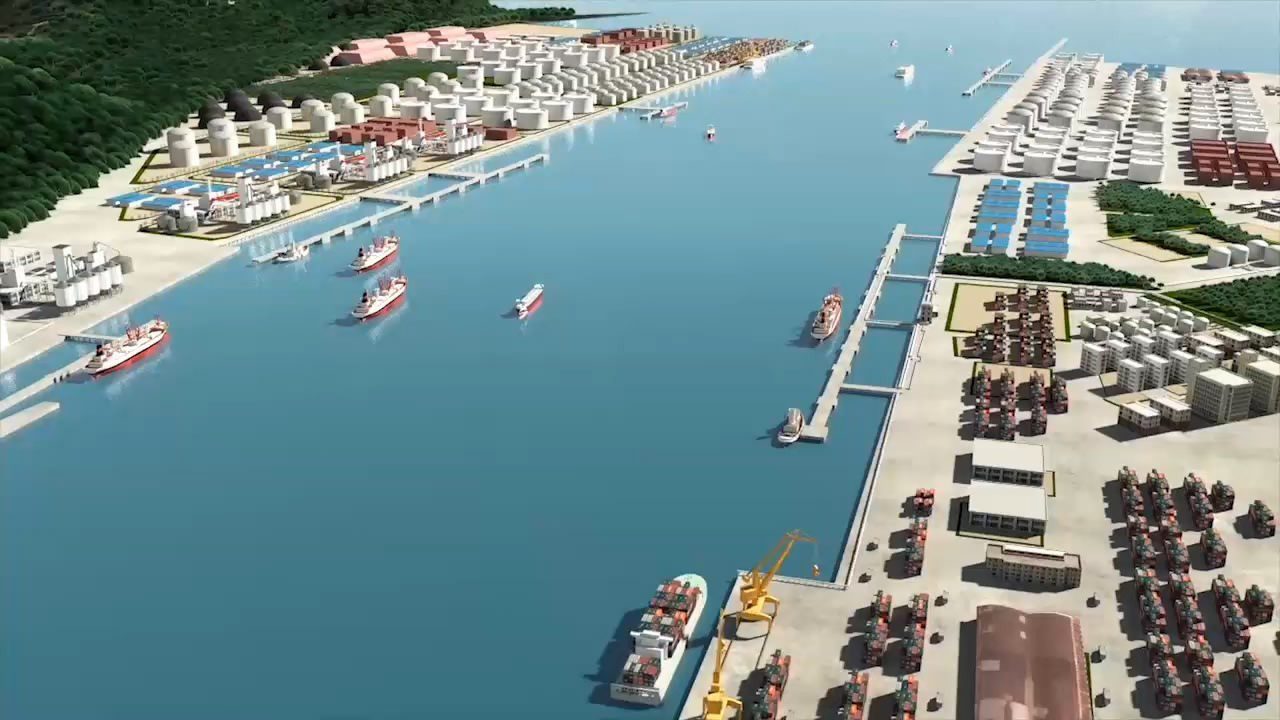
1.Port Description
General Information
Maoming Port is a major commercial port located in Maoming City, Guangdong Province, China. It serves as a crucial hub for the transportation of petroleum, chemicals, and bulk cargo in the southern region of China. The port is managed by Maoming Port Group Co., Ltd. and plays a significant role in regional trade and logistics. The port has been in operation since 1958 and has undergone significant expansions, particularly in its oil terminal facilities.
Port Types
– By size: Large port (annual throughput exceeding 50 million tons)
– By geographical location: Natural coastal harbor
– By purpose: Commercial port, Industrial port (specialized in petrochemicals)
– By cargo type: Bulk liquid port, general cargo port
Long./Lat.
Main port area: 21°29’00″N, 111°01’00″E
Bohe Harbor Area: 21°27’36″N, 111°16’48″E
Dongjia Harbor Area: 21°30’00″N, 111°05’00″E
Time Zone
GMT+8 (China Standard Time, no daylight saving time observed). All port operations follow Beijing Time strictly.
Port Location
Located on the southern coast of Guangdong Province, at the mouth of the Maoming River. The port is situated in the South China Sea region, approximately 200 nautical miles southwest of Hong Kong. The port area covers both natural deep-water harbor sections and developed artificial harbor sections. The surrounding area is predominantly industrial with petrochemical facilities.
Port Limits
The port limits extend from the shoreline to approximately 3 nautical miles seaward, covering all port facilities and anchorages. The exact boundaries are defined by local maritime authorities as follows:
– Northern boundary: 21°32’00″N
– Southern boundary: 21°25’00″N
– Western boundary: 110°58’00″E
– Eastern boundary: 111°20’00″E
Load Lines
Tropical load line zone applies year-round according to IMO designation. Ships must comply with International Load Line Certificate requirements as per the International Convention on Load Lines (ICLL 1966 as amended). Special attention required for seasonal weather patterns affecting load line calculations.
Water Density
Average salinity: 1.020-1.025 t/m³ (varies seasonally)
– Summer (June-August): 1.018-1.022 t/m³
– Winter (December-February): 1.023-1.026 t/m³
Freshwater density at riverine berths: 1.000 t/m³
Charts and Books
Official navigation references:
– Chinese Navy Hydrographic Office charts: 15411, 15412, 15413
– Admiralty charts: BA 15411, BA 15412, BA 15413
– China Port Entry Guide (latest edition)
– Notices to Mariners (weekly updates from China MSA)
– Tide tables published by China Maritime Safety Administration
– Port regulations handbook (Maoming Port Authority edition)
Port Restrictions
Vessel limitations:
– Maximum draft: 15.5m (Bohe Harbor Area), 12.5m (main port area)
– Maximum DWT: 300,000 tons (for oil terminals), 50,000 tons (general cargo berths)
– Air draft restrictions: 35m clearance at most berths
– Length overall (LOA) limit: 330m for main berths
– Special restrictions for hazardous cargo vessels (additional 500m safety zone)
Regulations
Key regulatory requirements:
– Strict compliance with Chinese maritime laws and regulations
– Mandatory pre-arrival reporting to maritime authorities 72/48/24 hours prior to arrival
– Special regulations for hazardous cargo handling (GB 12268-2012 standards)
– Mandatory use of local pilots for vessels >10,000 DWT
– Vessel Traffic Service (VTS) monitoring required within port limits
– Anti-pollution regulations strictly enforced (MARPOL compliance)
Weather Condition
Climate characteristics:
– Tropical monsoon climate (Köppen Am classification)
– Annual rainfall: 1500-2000mm (peaking May-September)
– Typhoon season: June-September (average 1-2 direct hits annually)
– Prevailing winds: NE in winter (October-March), SW in summer (April-September)
– Average wind speed: 3-4 m/s (strongest during typhoons, exceeding 30 m/s)
– Visibility: Generally good (>5km) except during heavy rain or fog (January-March)
Tide and Currents
Hydrographic conditions:
– Mean tidal range: 2.0-2.5m (spring tide up to 3.5m)
– Maximum tidal range: 3.5m recorded
– Currents generally follow tidal patterns with speeds up to 2 knots
– Strongest currents occur at channel narrows (Bohe Channel reaches 3 knots during spring tides)
– Tidal stream direction: Flood tide sets NW, ebb tide sets SE
Identification Cards
Crew documentation requirements:
– Seaman’s book generally sufficient for shore leave (24-hour validity)
– Temporary shore passes issued for extended stays (72-hour validity)
– Crew must carry valid identification at all times (passport + seaman’s book)
– Special permits required for access to restricted port areas
– Biometric registration required for all crew members during port stay
Traffics
Transport connections:
– Nearest airport: Maoming Airport (30km from port), limited domestic flights (3-5 daily to Guangzhou/Shenzhen)
– Railway: Maoming Railway Station (15km from port) with connections to major Chinese cities (daily services to Guangzhou, Shenzhen)
– Highways: Well-connected to national highway network (G15 Shenyang-Haikou Expressway, G65 Baotou-Maoming Expressway)
– Port shuttle bus service available to city center (hourly service 06:00-22:00)
Holidays
Operational schedule:
– Official Chinese public holidays observed (as per State Council announcements)
– Limited cargo operations possible during holidays with prior arrangement (surcharge applies)
– Major holidays affecting operations:
• Chinese New Year (7-day closure, variable dates)
• National Day (Oct 1-7)
• Labor Day (May 1-3)
– 24/7 operations available at oil terminals with special permission
Currency
Financial information:
– Chinese Yuan (CNY/RMB) – official currency
– Exchange rate: Approximately 6.5-7.0 CNY per 1 USD (subject to market fluctuations)
– Currency restrictions: Maximum 20,000 CNY cash allowed per person for international crew
– Credit cards (Visa/MasterCard) accepted at port facilities (UnionPay preferred)
– Currency exchange available at port administration building (08:00-17:00 daily)
Main Cargo Handled
Annual cargo throughput (latest verified data):
– Petroleum and petroleum products: 35 million tons (primary cargo)
– Chemicals: 8 million tons (including ethylene, propylene, benzene)
– Coal: 5 million tons (mainly thermal coal for power plants)
– Grain: 2 million tons (mainly soybeans and wheat)
– Containers: 500,000 TEU (growing volume, 15% annual increase)
– Bulk minerals: 3 million tons (including iron ore and bauxite)
– Other general cargo: 1.5 million tons
2. Notification and Reports
General Information
All vessels calling at Maoming Port must comply with:
– China Maritime Safety Administration (MSA) Regulations (2023 Edition)
– International Maritime Organization (IMO) requirements
– Port State Control (PSC) inspection protocols
– ISPS Code security levels (currently at Level 1)
Pre-arrival notifications are mandatory for all vessels with specific requirements based on vessel type, size, and cargo. The port operates a 24/7 operations center monitoring all vessel movements.
Arrival and Departure Checklists
Complete mandatory checklists include:
1. Pre-arrival documentation (72/48/24 hours prior to ETA):
– Maritime Declaration of Health
– Advance Cargo Declaration
– Crew Information and Passport Details
– Last 10 Ports of Call
2. Operational readiness:
– Engine Room Status Report
– Navigation Equipment Checklist
– Mooring Arrangements
3. Safety verifications:
– Fire Fighting Systems Operational
– Life Saving Appliances Ready
– Pollution Prevention Equipment Status
4. Departure requirements:
– Port Clearance Certificate
– Waste Management Receipts
– Bunker Delivery Notes
Documents and Certificates
Complete document requirements (original + copies):
– Crew Documentation:
• 6 Crew Lists (Chinese/English)
• Seamen’s Books (valid for inspection)
• CDC Certificates (all deck/engine crew)
– Vessel Certificates:
• Certificate of Registry (3 copies)
• International Tonnage Certificate (1969)
• Class Certificate + supplements (latest)
• Load Line Certificate (valid annual survey)
• IOPP Certificate + Supplement
• Safety Construction/Equipment Certificates
– Operational Documents:
• Cargo Securing Manual
• Ballast Water Management Plan
• Garbage Management Plan
• SOPEP/SMPEP (latest version)
– Special Cargo Documents (if applicable):
• DG Declaration (IMDG format)
• Special Permits for Project Cargo
• Grain Loading Approval
Vessel Traffic Services (VTS)
Maoming VTS comprehensive details:
– Jurisdiction: Covers 25nm radius from Port Control Center (21°29’N 111°01’E)
– Mandatory Reporting Points:
• First report: 72hr before ETA (via email/telex)
• Second report: 48hr before ETA (position report)
• Third report: 24hr before ETA (final confirmation)
• Position reports at: 12nm, 6nm, 3nm from pilot station
– Communication Protocols:
• Primary: VHF CH16/08 (English/Mandarin)
• Secondary: MF/HF to XSG Coastal Radio
• Digital: AIS Message Service (MMSI 004123100)
– Services Provided:
• Traffic Organization Service (TOS)
• Navigational Assistance Service (NAS)
• Information Service (INS)
• Emergency Coordination
Emergency Co-ordination Centre
Complete emergency contacts:
1. Maritime Emergency:
– Maoming MRCC: +86 668 12395
– VHF CH16 (Distress) / CH08 (Working)
– Emergency SMS Alert: 1069029812395
2. Medical Emergencies:
– Port Clinic: +86 668 268 8120
– Designated Hospital: Maoming People’s Hospital (+86 668 292 2120)
3. Pollution Response:
– Spill Control: +86 668 268 8119
– Oil Spill Response Team (OSRT) on standby 24/7
4. Security Emergencies:
– Port Security: +86 668 268 8110
– Coast Guard: 95110 (China maritime emergency)
Harbour Management Communications
Complete contact matrix:
– Port Authority:
• General Office: +86 668 268 8888
• Operations Center: +86 668 268 8000 (VHF CH12)
• Customs Coordination: +86 668 268 8222
– Terminal Operators:
• Bohe Oil Terminal: +86 668 269 9000
• General Cargo Terminal: +86 668 269 8000
• Container Terminal: +86 668 269 7000
– Service Providers:
• Pilot Station: VHF CH14
• Tug Company: VHF CH14
• Bunker Supplier: +86 668 268 8333
Radio
Complete communication options:
– Coastal Radio Station (XSG Maoming Radio):
• Call Sign: XSG8
• 24hr Watchkeeping:
– HF: 8414.5 kHz (primary), 12660 kHz (secondary)
– MF: 2182 kHz (emergency), 2187.5 kHz (DSC)
– Digital Communications:
• Email: ops@maomingport.com.cn
• Telex: 45435 MOMG CN
• INMARSAT: 574 121 234 (Port Authority)
– ETA Message Routing:
• Minimum 72hr advance notice required
• Must include: ETA, draft, cargo, special requirements
VHF
Complete VHF communication matrix:
– Channel Allocation:
• CH16: Distress/Safety/Calling
• CH08: VTS Working Channel
• CH12: Port Operations
• CH14: Pilot/Tugs
• CH06: Inter-ship
• CH13: Bridge-to-Bridge
• CH70: DSC Calling
– Communication Protocols:
• Initial contact on CH16 then switch to working channel
• English as primary language (Mandarin acceptable)
• Standard marine communication phrases required
– Special Procedures:
• Fog signals: 2-minute interval when visibility <1nm
• Emergency broadcasts: SECURITE calls on CH16
Radars
Complete radar services:
– Radar Coverage:
• Primary radar: 3cm X-band (0.25-1.5nm range)
• Secondary radar: 10cm S-band (1.5-30nm range)
• AIS overlay for target identification
– Services Available:
• Radar navigation assistance upon request
• ARPA tracking of high-risk vessels
• Movement guidance in poor visibility
– Contact Procedures:
• Initiate contact on VHF CH08
• Provide: vessel name, position, heading, speed
• Follow controller’s instructions precisely
Notices of Readiness
Complete NOR procedures:
– Validity Requirements:
• Physically in port limits
• All cargo spaces ready
• Documentation complete
• Free pratique obtained
• Customs cleared
– Submission Process:
• In writing to appointed agent
• Copy to terminal operator
• Time-stamped upon receipt
– Special Circumstances:
• Tankers: ullage reports required
• Bulk carriers: hold cleanliness certificates
• Container ships: bay plan submitted
Immigration
Complete immigration procedures:
– Crew Processing:
• 24/7 immigration available
• Crew list submitted 24hr in advance
• Face-to-face verification required
• Biometric data collection (fingerprints)
– Shore Leave:
• Passport + Seaman’s Book required
• Temporary shore pass issued (max 72hr)
• Curfew: 2300-0600 for all crew
– Special Cases:
• Crew changes: 48hr notice required
• Medical cases: emergency processing
• DPAs: special clearance procedures
Health
Complete health protocols:
– Quarantine Procedures:
• Maritime Health Declaration 24hr prior
• Vaccination list (yellow fever if applicable)
• Port Health inspection on arrival
• Free pratique granted after inspection
– Medical Facilities:
• Port clinic with 24hr coverage
• Designated hospital: 30 minutes response
• Emergency medical evacuation available
– Outbreak Response:
• Isolation procedures in place
• Designated quarantine anchorages
• Mandatory reporting of illnesses
Customs
Complete customs procedures:
– Clearance Process:
• 24hr pre-arrival declaration
• Electronic submission via China Single Window
• Physical inspection when required
• Clearance typically within 4hrs
– Duty-Free Allowances:
• Tobacco: 400 cigarettes per crew
• Alcohol: 2 liters per crew
• Personal effects: reasonable quantity
– Restricted Items:
• Narcotics (zero tolerance)
• Weapons/ammunition (special permit)
• Cultural artifacts (strict control)
Prior Declaration and Authorization
Complete pre-approval requirements:
– Dangerous Goods:
• IMDG Code compliance mandatory
• 72hr advance notice
• Special stowage requirements
– Special Operations:
• Hot work: permit required
• Bunkering: 24hr notice
• Underwater operations: 7 days notice
– Personnel Movements:
• Crew changes: 48hr notice
• Supernumeraries: pre-approval
• Inspectors: advance notification
Restricted Activities
Complete prohibitions:
– Navigation Restrictions:
• Speed limit: 8 knots in inner channel
• No anchoring in cable areas
• Night navigation restrictions
– Operational Restrictions:
• No discharge of pollutants
• No unauthorized ballasting
• No garbage disposal at berth
– Security Restrictions:
• No photography of port facilities
• No drone operations without permit
• Restricted areas clearly marked
Incidents
Complete reporting requirements:
– Immediate Reporting (<1hr):
• Injuries/deaths
• Collisions/allisions
• Groundings
• Pollution incidents
– Follow-up Reporting (24hr):
• Equipment failures
• Security breaches
• Near-miss events
– Investigation Requirements:
• Evidence preservation
• Witness statements
• VDR data retention
Others
Additional requirements:
– Environmental Compliance:
• Ballast water reporting
• Waste delivery receipts
• Bunker samples retained
– Security Measures:
• Gangway watch 24/7
• Access control logs
• Security drills recorded
– Special Notices:
• Typhoon precautions
• Monsoon season advisories
• Fishing vessel traffic alerts
3. Port Navigation
General Information
Maoming Port navigation complies with:
– China Maritime Safety Administration (MSA) Navigation Rules (2023 Edition)
– IMO Resolution A.1106(29) on Vessel Traffic Services
– COLREGs 1972 as implemented in China
– Local Port Ordinances (Maoming Port Authority 2024)
The port features:
– 2 main navigation channels (Bohe and Dongjia)
– 3 designated anchorages
– Comprehensive electronic navigation support (AIS, DGPS, Radar)
– 24/7 VTS monitoring of all vessel movements
Pilot Station and Pilotage
Complete pilotage details:
1. Pilot Station Locations:
• Main Station: 21°27’36″N, 111°16’48″E (Bohe Harbor entrance)
• Secondary Station: 21°30’05″N, 111°05’15″E (Dongjia area)
2. Contact Protocols:
• Primary: VHF CH16 (calling), CH14 (working)
• Secondary: +86 668 269 9111 (24hr operations)
• Email: pilot@maomingport.com.cn
3. Request Procedures:
• Mandatory 24hr advance notice via agent
• ETA confirmation required at 12hr/6hr/3hr intervals
• Final confirmation 1hr before pilot boarding
4. Boarding Arrangements:
• Primary boarding area: 2nm NE of Bohe Harbor entrance (21°28’12″N, 111°18’24″E)
• Alternative area (bad weather): 1nm W of Fairway Buoy #3
• Minimum freeboard: 1.5m for safe ladder deployment
5. Pilot Vessels:
• “Maoming Pilot 1” (25m LOA, 500HP, orange/white)
• “Maoming Pilot 2” (22m LOA, 450HP, orange/white)
• Equipped with MOB recovery systems
6. Signals:
• Day: Black ball shape at masthead
• Night: Red light over white light at masthead
• Sound: 1 prolonged blast when approaching station
7. Anchorage:
• Pilot waiting area: 21°26’00″N, 111°18’00″E
• Depth: 15-18m
• Holding ground: Good in mud/clay
• Maximum waiting time: 6hrs without renewal
Approaches and Channels
Detailed channel specifications:
1. Bohe Main Channel (primary access):
• Length: 8.5nm from outer fairway buoy to inner harbor
• Design Width: 300m (maintained to ±10m)
• Depth: 16.5m CD (Chart Datum)
• Current: Max 3.2 knots during spring tides
• Bottom: Sandy mud with firm holding
• Special Markers: 12 lighted buoys (IALA Region A)
2. Dongjia Channel (secondary access):
• Length: 5.2nm
• Width: 200m (minimum 180m in turns)
• Depth: 12.5m CD
• Current: Max 2.8 knots
• Bottom: Hard sand with some coral patches
3. Special Requirements:
• AIS mandatory for all vessels >300GT
• Speed limit: 10 knots (6 knots in turns)
• No overtaking in channel segments <250m wide
• VHF CH08 monitoring required at all times
• Deep draft vessels (>12m) restricted to daylight transit
Anchorages
Comprehensive anchorage information:
1. Outer Anchorage (No.1):
• Position: 21°25’00″N, 111°20’00″E (center point)
• Area: 2nm diameter (3.7km)
• Depth: 18-22m CD
• Bottom: Soft mud (good holding)
• Purpose: VLCC waiting area
• Max vessels: 6 (minimum 0.3nm separation)
2. Inner Anchorage (No.2):
• Position: 21°28’00″N, 111°10’00″E
• Area: 1.5nm diameter
• Depth: 12-15m
• Bottom: Sand with clay
• Purpose: General cargo vessels
3. Emergency Anchorage (No.3):
• Position: 21°29’30″N, 111°12’00″E
• Area: 0.5nm diameter
• Depth: 10-12m
• Bottom: Hard sand
• Restrictions: 24hr maximum stay
4. Regulations:
• Anchoring permission required from VTS
• Position monitoring every 30 minutes
• No anchoring in cable/pipeline areas
• Night illumination required
Navigation Aids
Complete navigation support systems:
1. Fixed Aids:
• Bohe Lighthouse (Fl W 10s 25m 15M):
– Position: 21°27’30″N, 111°16’45″E
– Structure: 25m white round concrete tower
• Dongjia Light (Fl G 5s 18m 10M):
– Position: 21°30’15″N, 111°05’20″E
– Structure: 18m square skeletal tower
2. Floating Aids:
• 16 IALA Region A buoys:
– 6 red conical (port side entering)
– 6 green can (starboard side)
– 4 special yellow buoys (anchorage)
• All buoys equipped with:
– LED lights (1-4nm range)
– Radar reflectors
– AIS transponders (major buoys)
3. Electronic Systems:
• DGPS Station ID 821 (accuracy <5m)
• 3 Radar beacons (RACON):
– Bohe Entrance (Morse “B”)
– Dongjia Point (Morse “D”)
– Inner Harbor (Morse “M”)
• AIS Base Stations: 3 covering entire port area
4. Shore-based Systems:
• VTS radar coverage (X-band and S-band)
• Automated tide gauges (3 stations)
• Visibility sensors at channel entrances
Maximum Authorized Speed
Speed control regulations:
1. General Limits:
• Outer approaches (beyond 12nm): No limit (safe speed)
• Approaches (12-3nm): 12 knots
• Main channels: 10 knots
• Inner harbor: 6 knots
• Terminal areas: 4 knots
2. Special Conditions:
• Restricted visibility (<1nm): 5 knots max
• Night operations: 8 knots in channels
• Tidal currents >2 knots: +1 knot allowance
3. Enforcement:
• VTS radar speed monitoring
• Fines for violations (up to 50,000 CNY)
• Repeat offenders may face operational restrictions
Navigation Priority
Traffic management rules:
1. Vessel Priority Order:
a) Vessels in distress
b) Government vessels on duty
c) VLCCs (>200,000 DWT)
d) Outbound vessels with pilots
e) Inbound vessels with pilots
f) Fishing vessels
2. Special Rules:
• Tankers have right of way in oil terminal approaches
• Vessels >200m LOA get priority in main channel
• Tug-assisted vessels have priority over self-propelled
• No overtaking in designated narrow channels
3. Passage Planning:
• Two-way traffic in main channel (east/west lanes)
• Overtaking only in designated areas (VTS approval)
• Meeting situations resolved via VTS coordination
Weather Restrictions
Operational limitations:
1. Wind Conditions:
• Beaufort 6: Caution advised
• Beaufort 7: Pilot discretion for large vessels
• Beaufort 8: Port closed to outbound traffic
• Beaufort 9: All movements suspended
2. Visibility:
• <1nm: Mandatory pilot for all movements
• <500m: All navigation suspended
3. Current/Tide:
• Spring tides >3.5m: Restrictions on VLCCs
• Current >3 knots: Small vessel restrictions
4. Typhoon Procedures:
• Signal #1: Normal operations
• Signal #3: Prepare for suspension
• Signal #8: All operations cease
• Signal #10: Emergency measures in effect
Night Entry or Departure
Night navigation protocols:
1. General Rules:
• Permitted with pilot and VTS approval
• Enhanced bridge team required (master + 2 officers)
• Functional navigation lights mandatory
2. Restrictions:
• No night entry for vessels >250m LOA
• No night movements during neap tides (<1m range)
• Container operations limited to 2200-0600
3. Lighting Support:
• Channel fully illuminated (500W LED lights)
• Terminal lighting minimum 200 lux
• Special markers for channel turns
UKC (Under-Keel Clearance)
Clearance requirements:
1. Minimum Standards:
• VLCCs: 10% of draft or 2.5m (whichever greater)
• Bulk carriers: 10% or 2.0m
• General cargo: 1.5m absolute minimum
• During dredging operations: +0.5m additional
2. Calculation Method:
• Based on predicted tides + safety margin
• Real-time monitoring via port tide gauges
• VTS provides clearance updates hourly
3. Special Conditions:
• Soft mud bottoms: 0.5m reduction allowed
• Hard bottoms: +0.3m additional required
• During bad weather: +0.5m safety margin
Bridges
Not Available (No navigational bridges within Maoming Port limits)
Air Drafts Limit and Air Gap
Vertical clearance regulations:
1. Fixed Obstructions:
• Power lines at oil terminal: 52m clearance at MHWS
• Container gantry cranes: 45m working height
2. Requirements:
• Minimum air gap: 3m above highest point
• Maximum air draft: 45m in main channels
• Special permission required for >40m air draft
3. Calculation Basis:
• Charted clearance at Mean High Water Spring
• Real-time tide adjustments available
• Crane/swing clearance calculations mandatory
Vessels Shifting
Shifting operations protocol:
1. Pre-requisites:
• VTS clearance obtained
• Minimum 1hr notice for planning
• Daytime preferred (0700-1800)
2. Tug Requirements:
• Vessels >150m LOA: Minimum 2 tugs
• VLCCs: 3-4 tugs depending on conditions
• Tug power proportional to vessel size
3. Restrictions:
• No shifting during cargo operations
• No movements during bunkering
• Maximum wind: Beaufort 6 during shifting
4. Procedures:
• Continuous VHF contact with VTS
• Pilot mandatory for all shifts
• Gangways raised during movement
Vessels Transiting
Detailed transit regulations for Maoming Port:
1. Pre-Transit Requirements:
• Mandatory VTS clearance obtained minimum 6 hours prior
• Complete transit plan submission including:
– ETD/ETA at waypoints
– Maximum draft/air draft
– Tug escort arrangements (if applicable)
• Valid Class and PSC inspection certificates
• AIS must remain operational throughout transit
2. Transit Procedures:
• Continuous VHF monitoring on CH08 (working) + CH16 (emergency)
• Daylight transit mandatory for:
– Vessels >250m LOA
– Ships carrying dangerous goods (IMO Class 1-3)
– Any vessel with restricted maneuverability
• Speed must be maintained within ±0.5 knots of declared plan
• Overtaking prohibited in:
– Main channel turns (marked by special buoys)
– Within 1nm of terminals
– During restricted visibility (<1nm)
3. Priority Rules:
• Right of way hierarchy:
1. Vessels in distress
2. Government patrol vessels
3. Outbound VLCCs
4. Inbound deep draft vessels (>15m)
5. Other commercial traffic
• Meeting situations:
– Westbound vessels must yield to eastbound in main channel
– Vessels with pilots have priority over those without
4. Special Transit Conditions:
• Tidal Restrictions:
– VLCCs (>200,000 DWT): Only during flood tide (3 hours window)
– Maximum current allowance: 3 knots for deep draft vessels
• Weather Limitations:
– Transit suspended when:
• Wind > Beaufort 7 (15m/s)
• Visibility < 500m
• Swell height > 3m at channel entrance
• Night Transit:
– Permitted only for vessels <150m LOA with:
• Enhanced bridge team (Master + 2 OOWs)
• Functional dual radar/ECDIS systems
• Prior simulator training certification
5. Emergency Protocols:
• Engine failure: Immediate anchor drop in designated zones
• Collision risk: Sound 5 short blasts + VHF CH16 “SECURITE” call
• Pollution incident: Activate SOPEP + notify VTS immediately
• Medical emergency: Contact “Maoming MRCC” on VHF CH16
Vessels Towing
Towing operation regulations:
1. Pre-approval Requirements:
• 48 hours advance notice to Port Authority
• Detailed tow plan including:
– Dimensions of towed unit
– Towline length and strength
– Emergency procedures
2. Operational Restrictions:
• Daylight hours only (0700-1800)
• Maximum speed: 6 knots
• Minimum escort tugs: 2 (for tow length >150m)
• Weather limits: Max Beaufort 4
3. Routing Requirements:
• Special transit route assigned by VTS
• Right of way must be granted to all other vessels
• Prohibited in main channel during peak traffic
Tugs and Working Boats
Complete tug and service vessel details:
1. Tugboat Fleet:
• 8 ocean-going tugs available:
– 2x 5000HP (Z-Tech 4500, bollard pull 60t)
– 4x 4000HP (ASD 3310, bollard pull 50t)
– 2x 3200HP (ASD 2411, bollard pull 40t)
• Minimum tug requirements:
– VLCC: 4 tugs (minimum 200t combined bollard pull)
– Capesize: 3 tugs (150t combined)
– Panamax: 2 tugs (100t combined)
2. Line Handling:
• Ship’s lines preferred for all operations
• Tug’s lines available at additional charge ($500/operation)
3. Working Boats:
• 4 pilot boats (18-25m LOA)
• 6 port service vessels (12-20m)
• 2 pollution control vessels (30m)
• 1 fire-fighting boat (40m, 6000HP)
Vessels in Special Operations
Regulations for special operations:
1. Dredging Operations:
• Environmental clearance certificate required
• Continuous monitoring by port authorities
• Restricted to designated areas only
2. Underwater Activities:
• Dive boat support mandatory
• Safety zone of 500m radius
• VTS notification every 2 hours
3. Heavy Lifts:
• Route survey required 7 days in advance
• Maximum air draft restrictions apply
• Daylight operations only
4. Bunkering Operations:
• 500m safety zone enforced
• No other operations within 100m
• Continuous fire watch required
4. Pollution Control
Ballast and Deballast
1. Regulatory Framework:
• China Maritime Code (2020 Amendment) Article 179-183
• GB 3552-2018 “Discharge Standard for Water Pollutants from Ships”
• IMO BWM Convention (D-2 Standard) fully implemented since 2023
2. Operational Procedures:
• Pre-arrival submission of Ballast Water Reporting Form (72hr prior)
• Mandatory ballast water sampling for:
– Vessels from high-risk areas (as per China MSA Notice 2024-03)
– Ships without Type Approved treatment systems
– Random inspections (10% of visiting vessels)
• Exchange zones: Designated area 21°30’N 111°45’E (minimum depth 250m)
3. Equipment Requirements:
• Approved BWMS must be operational during port stay
• Backup treatment chemicals must be available onboard
• Calibration certificates for flow meters required
4. Penalties:
• First offense: ¥50,000-200,000 fine
• Repeat violations: Vessel detention + possible blacklisting
• False reporting: Criminal liability under Maritime Law Art. 210
Garbage Disposal
1. Service Details:
• Primary contractor: Maoming Green Port Services Ltd. (MGS)
• Emergency contact: +86 668 268 8999 ext. 911 (24/7)
• Online booking: garbage.mgs-mp.com (minimum 6hr notice)
2. Facility Specifications:
• 15 fixed collection points across port terminals
• Mobile collection units for:
– Plastics: 5m³ compactors (2 units)
– Food waste: 3m³ refrigerated containers (4 units)
– Hazardous waste: Specialized UN-certified containers
3. Updated Fee Structure:
• Standard waste: ¥450/ton (¥250 minimum charge)
• Recyclables: ¥300/ton (no minimum)
• Hazardous materials:
– Medical waste: ¥2,000/ton
– Chemicals: ¥3,500/ton
– E-waste: ¥1,800/ton
4. Processing Methods:
• Incineration: 2x 50 ton/day capacity plants
• Recycling: Dedicated facility handles 120 tons/month
• Landfill: Only for inert materials (max 5% of total waste)
Waste Oil Disposal
1. Enhanced Facilities:
• Reception barge “Maoming Clean 1” upgraded to 800m³ capacity (2024)
• New shore tanks: 4x 5,000m³ at Dongjia Terminal
• Emergency spill response vessels:
– “MP Guardian 1” (50m³ recovery capacity)
– “MP Guardian 2” (30m³ capacity)
2. Operational Protocols:
• Pre-transfer meeting required (Master, Agent, Operator)
• Continuous VOC monitoring during transfers
• Maximum allowable sulfur content: 0.5% (per China GB 17411-2015)
3. Additional Services:
• Tank cleaning: ¥800-1,500 depending on size
• Sludge processing: Thermal treatment available
• Sample analysis: GC-MS testing (¥1,200/sample)
4. Safety Measures:
• Mandatory ISGOTT compliance for all transfers
• Static electricity protection during pumping
• 500m exclusion zone during operations
Sewage Reception
1. Expanded Capacity:
• New sewage treatment plant (20,000m³/day capacity)
• Additional reception barges:
– “MP Sanitation 4” (300m³, commissioned 2023)
– “MP Sanitation 5” (300m³, commissioned 2024)
2. Technical Standards:
• Effluent quality meets GB 18918-2002 Class A standards
• Biological oxygen demand (BOD5): ≤20 mg/L
• Fecal coliform: ≤1,000 MPN/L
3. Monitoring Systems:
• Real-time COD monitoring at discharge points
• Automatic sampling every 2 hours
• Remote reporting to MSA database
Air Emission Control
1. ECA Compliance:
• 0.1% sulfur limit within port waters (China DECA regulation)
• Shore power available at 8 berths (50Hz, 6.6kV/60A)
• LNG bunkering capability (2,000m³ storage)
2. Monitoring:
• 5 continuous air quality stations
• Parameters measured: SO2, NOx, PM2.5, VOCs
• Public reporting via port website
5. Port Safety and Security
General Information
Maoming Port maintains Class A security certification under China MSA standards with the following comprehensive safety systems:
– 24/7 VTS coverage (radar range: 25nm)
– 58 high-definition CCTV cameras with facial recognition (resolution: 3840×2160 @ 30fps)
– 15km perimeter fencing with fiber-optic vibration sensors (detection accuracy: 99.7%)
– Biometric access control at all 12 terminal gates (ID card + fingerprint + facial scan)
– Annual safety investment: ¥85 million (2024 budget)
Certifications held:
– ISO 28000:2022 Supply Chain Security
– ISPS Code Compliance Certificate (No. CN-ISPS-2024-568)
– China MSA 5-Star Safe Port (2023-2025)
PSC
1. Inspection Authority:
• Guangdong MSA Inspection Division (28 certified PSC officers)
• Tokyo MOU member since 1994 (inspection database: 100% electronic since 2022)
2. Inspection Criteria:
• 62-item checklist based on:
– SOLAS Chapter I Regulation 19
– MARPOL Annex I/II/III
– MLC 2006 Title 5
3. Targeting System:
• Risk-based selection (China New Inspection Regime – CNIR)
• Mandatory inspections for:
– Vessels >20 years old (additional structural checks)
– Ships with 3+ deficiencies in last inspection
– Carriers of high-risk cargo (IMO Class 1/2/7)
4. 2023 Statistics:
• Total inspections: 518 (100% coverage for high-risk vessels)
• Detention rate: 3.8% (slightly below Tokyo MOU average)
• Top deficiencies:
1. Fire doors (21%)
2. ECDIS updates (15%)
3. Emergency generator (9%)
ISPS
1. Security Levels:
• Level 1 (Normal):
– ID verification at all access points
– 20% random vehicle checks
• Level 2 (Heightened):
– 100% vehicle screening
– Additional armed patrols
– Activated during:
– National holidays (Spring Festival, National Day)
– Major international events
• Level 3 (Exceptional):
– Last activated: June 2022 (typhoon emergency)
2. Security Measures:
• Mandatory SSAS testing before entry (test reports kept for 3 years)
• Container scanning:
– 100% for high-risk routes (Middle East, certain African ports)
– 30% random selection for others
• Access control:
– Crew shore leave restricted to designated areas
– Visitors require port-issued smart cards (valid for 24hr)
3. Drills and Training:
• Quarterly security drills (including anti-terrorism scenarios)
– Annual full-scale exercise with local authorities
– 100% PFSO certification compliance (28 officers currently certified)
Emergency
1. Emergency Contacts:
• MRCC Guangzhou: +86 20 8429 1238 (VHF CH16/70)
• Port ECC: +86 668 268 8110 (24/7 multilingual support)
• Medical Emergency: +86 668 268 8120 (3 doctors on standby)
2. Response Equipment:
• Firefighting:
– 3 fireboats (6,000-10,000HP, foam capacity: 5,000L/min)
– 12 mobile fire units (dry chemical/CO2 combinations)
• Oil spill response:
– 500 ton containment capacity
– 2 oil recovery vessels (200m³/hour each)
– 3km boom deployment capability
• Medical:
– Mobile hospital unit (20-bed capacity with surgical facilities)
– 2 ambulances with marine paramedics
3. Procedures:
• Immediate mustering at 17 designated assembly stations
• Situation reporting:
– Initial report within 15 minutes
– Hourly updates during incidents
• Mutual aid agreements with:
– Zhanjiang Port (50km north)
– Yangjiang Port (120km south)
– South China Sea Rescue Bureau
Ships Arrest
1. Legal Framework:
• Primary authority: Guangzhou Maritime Court (Jurisdiction No. 19)
• Supporting laws:
– China Special Maritime Procedure Law (Articles 21-35)
– Supreme Court Interpretation No. 15 (2021)
2. Arrest Procedure:
• Step 1: Plaintiff files application with court (48hr processing time)
• Step 2: Court issues arrest warrant (valid for 30 days)
• Step 3: Port Authority executes arrest (typically within 4hrs)
• Step 4: Vessel enters judicial custody (daily fee: ¥5,000-20,000)
3. 2023 Case Data:
• Total arrests: 11 vessels (9 commercial, 2 environmental)
• Average detention: 22 days (range: 3-67 days)
• Security amounts: 18-33% of claim value
Fire Precautions
1. Tanker-Specific Measures:
• Gas-free certificate required (≤1% LEL for hot work)
• Bonding and grounding:
– Resistance <10 ohms
– Continuous monitoring during transfers
• Firefighting readiness:
– 2 tugs on standby during cargo ops
– Foam concentrate stock: 50,000L (protein/fluoroprotein mix)
2. General Fire Safety:
• Smoking prohibited within:
– 50m of cargo areas
– 30m of bunker stations
• Patrol schedule:
– Every 2 hours (day)
– Hourly (night)
• Response time guarantee:
– 5 minutes for terminal areas
– 15 minutes for anchorage
Inspections from Other Parties
1. Customs Inspections:
• Focus: Contraband, undeclared cargo
• Methods:
– X-ray scanning (3 mobile units)
– K9 detector dogs (2 teams)
• 2023 statistics: 8.3% inspection rate
2. Border Control:
• Crew document verification (100% check)
• Biometric recording (facial + fingerprints)
3. Quarantine:
• Health declaration review
• Vector control inspections (monthly average: 12 vessels)
4. Other Agencies:
• Environmental Protection Bureau (waste audits)
• Market Supervision (dangerous goods labeling)
Maritime Security Zones
1. Designated Areas:
• Oil Terminal Zone (500m radius, marked by yellow buoys)
• LNG Berth Zone (800m radius, infrared surveillance)
• Naval Restricted Area (21°25’N 111°12’E, no entry without permission)
2. Regulations:
• No photography/videography in security zones
• Automatic Identification System (AIS) mandatory within 3nm
• Patrol schedule:
– 4 armed patrol boats (24/7 coverage)
– 6 daily helicopter overflights
Police
• Maoming Port Police Station (Grade A facility)
• Location: Port Administration Building, Gate 3 (21°27’36″N 111°14’22″E)
• Emergency: 110 (direct connection to Guangdong PSB)
• Non-emergency: +86 668 268 8119 (English-speaking staff available)
• Resources:
– 48 officers (including 12 anti-terrorism specialists)
– 8 patrol vehicles + 2 marine units
Flag
1. Display Requirements:
• National flag:
– Size: Minimum 1/1000 of LOA
– Position: Stern or mainmast
• Courtesy flags: Port side yardarm
2. Special Protocols:
• Half-masting:
– National mourning days
– Upon MSA instruction
• Night illumination: Required for flags left hoisted
Signals and Lights Display
1. Standard Signals:
• Restricted maneuverability: Red-white-red (vertical)
• Dredging operations: RY lights (additional shapes required)
2. Port-Specific Signals:
• Pilot boarding: Vertical white-red-white
• Quarantine status: Yellow flag (Q) at foremast
3. Penalties:
• Improper lighting: ¥5,000-10,000 fine
• Failure to display: Vessel detention until rectified
Stowaways and Refugees
1. Prevention Measures:
• Pre-departure checks:
– 100% hold inspections for high-risk routes
– K9 teams available upon request
• Physical barriers:
– 4m fencing with barbed wire
– Motion-activated lighting
2. Incident Handling:
• Immediate isolation in designated holding area
• Medical screening within 2 hours
• Immigration processing within 72 hours
Alcohol, Drugs and Prohibited Items
1. Substance Policies:
• Alcohol limits:
– Crew: 0.04% BAC
– Pilots: 0.00% BAC
• Drug testing:
– 5% random selection
– 100% following incidents
2. Contraband Items:
• Absolute prohibitions:
– Firearms/ammunition
– Explosives
– Narcotics (except medical with paperwork)
• Restricted items requiring declaration:
– Satellite phones
– Drones
– Large cash amounts (>¥50,000)
Reporting of Security Breaches
1. Reporting Channels:
• Port Security Hotline: +86 668 268 8999 (24/7 recording)
• Coast Guard: 95110 (China nationwide)
• Email: security@maomingport.com.cn (encrypted)
2. Investigation Process:
• Initial response within 30 minutes
• Evidence collection protocol:
– CCTV footage preserved for 90 days
– Witness statements recorded within 24hr
• Follow-up report to MSA within 5 working days
Operation of Drones
1. General Prohibition:
• 5km no-fly zone around port facilities
• Penalties: ¥10,000-50,000 for violations
2. Authorized Use:
• Port-approved operations:
– Hull inspections (72hr notice)
– Terminal surveys
• Required documentation:
– CAAC drone operator license
– Liability insurance (minimum ¥1 million coverage)
– Flight plan approval
6. Cargo Operations
General Information
Maoming Port handles 156 million tons annually (2023 data) with:
– 42 operational berths across 6 terminals
– 24/7 operations with 95% on-schedule performance
– Certified ISO 9001:2015 cargo handling procedures
– Electronic Data Interchange (EDI) for all documentation
– Annual cargo throughput growth rate: 8.3% (2020-2023 average)
– Customs clearance time: Average 3.2 hours for standard shipments
Tanker Berths and Terminals
1. Crude Oil Terminal:
• 4 berths (No.1-4) with 15.5-22.0m depth
• Max draft: 21.5m (salt water)
• Loading arms: 16″ diameter (API standard)
• Max discharge rate: 12,000m³/hour
• Slop reception: 2x 5,000m³ tanks @ 500m³/hour
• Shore steam: Available at all berths (8 bar, 220°C)
• Vapor recovery: Installed at Berths 3-4 (95% efficiency)
2. Product Oil Terminal:
• 3 berths (No.5-7) with 12.0-14.5m depth
• Max draft: 14.2m
• Loading lines: 12″ diameter
• Segregated pipelines for 8 product types
• Heating coils: Maintain 60°C for HFO transfers
3. LNG Terminal:
• 1 dedicated berth (LNG1) with 15.0m depth
• Max transfer rate: 10,000m³/hour
• Emergency shutdown system: 5-second full closure
4. Safety Features:
• 3 fireboats stationed within 1nm
• Oil spill response capacity: 1,000 tons
• Special mooring: Required for VLCCs (4 tug minimum)
• AIS monitoring of all tanker movements
Container Berths and Terminals
1. Main Container Terminal:
• 6 berths (CT1-CT6) with 14.0-16.5m depth
• Max draft: 16.0m
• Quay length: 1,850m continuous
• Average productivity: 35 moves/hour
• Peak productivity: 42 moves/hour
2. Equipment:
• 18 STS cranes (50-65 ton capacity)
• 42 RTGs (E-RTG conversion completed 2023)
• 120 terminal trucks (all electric since 2022)
• Shore power: 6.6kV/60Hz at all berths
3. Special Services:
• Reefer monitoring: 800 plugs with remote tracking
• Dangerous goods: 3 dedicated storage yards
• STS transfer: Available at designated anchorage (21°28’N 111°18’E)
Dry Cargo Berths and Bulk Facilities
1. General Cargo:
• 8 berths (GC1-GC8) with 10.0-13.0m depth
• Max draft: 12.8m
• Max discharge height: 18m above HW
• Warehouse space: 85,000m² covered
2. Bulk Terminals:
• Coal: 4 berths (BLK1-BLK4), 50,000 DWT capacity
– Stacking capacity: 1.2 million tons
– Dust suppression: 95% coverage
• Grain: 2 berths with 800 ton/hour unloaders
– Silos: 250,000 ton capacity
– Fumigation facilities available
• Minerals: Dedicated conveyor system (5,000 ton/hour)
– Magnetic separators for iron ore
– Moisture control for bauxite
Passenger Berths and Terminals
• 2 berths (PS1-PS2) with 9.0m depth
• Max draft: 8.5m (fresh water adjustment available)
• Equipment:
– 3 passenger gangways (20 person/min flow rate)
– Baggage scanners: 4 units (200 bags/hour capacity)
• Security:
– X-ray scanners + facial recognition
– 100% passport control
• Annual throughput: 280,000 passengers (2023)
Specialised Cargo Handling Facilities
1. LPG Terminal:
• 2 berths (LPG1-LPG2) with 12.0m depth
• Loading arms: 8″ cryogenic (-42°C capability)
• Max transfer rate: 1,500m³/hour
• Storage: 80,000m³ refrigerated tanks
2. Chemical Terminal:
• 4 dedicated berths (CH1-CH4)
• Segregated pipelines for 12 cargo types
• Stainless steel lines for corrosive cargoes
• Spill containment: Double-walled design
3. Ro-Ro: Not Available
4. Heavy Lift:
• 1 dedicated berth (HL1) with 200 ton/m² deck loading
• 2x 500 ton floating cranes available
Loading and Discharging Procedures
1. Pre-arrival:
• Cargo plan submission 72hr prior
• Pre-operation meeting (Master/Stevedores/Agent)
• Hazardous cargo: Additional 24hr notice required
2. Operations:
• Continuous gas monitoring for tankers
• Hatch coaming inspections before loading
• Draft surveys every 6 hours for bulk carriers
• Container weight verification (VGM) mandatory
3. Completion:
• Final draft survey by licensed surveyor
• Cargo paperwork signed in triplicate
• Hold cleanliness certificate for bulkers
Loading and Discharging Rates
• Crude oil: 10,000-12,000m³/hour
• Product oil: 6,000-8,000m³/hour
• Containers: 30-40 moves/hour/ship
• Coal: 4,000 ton/hour
• Grain: 800 ton/hour
• Minerals: 5,000 ton/hour
• LPG: 1,500m³/hour
Ship to Ship Transfer
• Approved anchorage: 21°30’N 111°20’E
• Minimum 3 tugs required (2 for vessels <50,000 DWT)
• Pre-transfer checklist (ISGOTT standards)
• Average transfer rate: 8,000 ton/day
• Emergency equipment standby: 1 fireboat + oil boom
Cargo Gear
• 85% operations use shore gear
• Heavy lift capacity:
– 2x 500 ton floating cranes
– 1x 300 ton mobile crane
• Special equipment:
– 20 ton grabs for bulk
– Refrigerated container plugs (200 stations)
– Pneumatic unloaders for grain (800 ton/hour)
Shore Cranes
• Container cranes: 18 units (50-65 ton SWL)
– Outreach: 22 containers wide
– Twin-lift capability for 40′ containers
• Bulk unloaders: 8 units (1,200 ton/hour)
– Grab capacity: 30 ton
– Dust extraction systems installed
• Heavy lift: 1x 300 ton mobile crane at GC7
– Luffing jib configuration
– 75m maximum radius
• No cranes available at GC5-GC6 (ship’s gear required)
Floating Cranes
• “Maoming Lift 1”: 500 ton capacity
– 80m boom length
– ¥25,000/hour (4 hour minimum)
• “Maoming Lift 2”: 300 ton capacity
– 60m boom length
– ¥18,000/hour (4 hour minimum)
• 24hr notice required
• Certification: China CCS class approved
Hoses
• Oil hoses: 12″-16″ diameter (API standard)
– Working pressure: 15 bar
– Burst pressure: 45 bar
• Chemical hoses: Dedicated per cargo type
– PTFE lined for aggressive chemicals
– Color-coded for product identification
• Testing: Annual pressure testing mandatory
• Lifespan: 18 months maximum service life
Specialised Cargo Operation
• Explosives: Not Available
• Radioactive: Special permit required (30 day notice)
– Only at dedicated berth CH4
– 500m exclusion zone during operations
• IMDG cargo: 2 dedicated warehouses (5,000m²)
– Class 1-9 segregation
– 24/7 temperature monitoring
Lightering and Lighterage
• Available for vessels >80,000 DWT
• Cost: ¥85/ton (minimum 5,000 ton)
• 3 approved lighterage contractors
• Maximum sea state: 1.5m significant wave height
• Average transfer rate: 1,500 ton/day
Barge
• 12 deck barges (2,000-5,000 DWT)
– 6 open-top, 6 covered
– Max deck load: 10 ton/m²
• 8 tank barges (3,000-8,000m³)
– Stainless steel for chemical transport
– Heating coils for viscous products
• Daily charter rate: ¥15,000-35,000
Cargo Lashing
• Performed by certified stevedores (ISO 3874 standards)
• Crew may supplement under supervision (requires port approval)
• Lashing gear provided by terminal (meets CSS Code requirements)
• Inspection frequency: Every 12 hours during loading
• Certification: All lashing materials tested to 125% SWL
Cleaning Procedures
1. Dry Bulk Residues:
• Collected in 1 ton bulk bags (non-returnable)
• Disposal fee: ¥150/ton (included in handling charges)
2. Hold Washing:
• Dedicated area at GC8 (24hr availability)
• Water treatment: 3-stage filtration (meets GB 3552-2018)
• Wash water recycling: 60% recovery rate
3. Deck Washings:
• Containment system required for tankers
• Oil-water separators available (15m³/hour capacity)
Opening/Closing Hatches
• Normally by stevedores (included in handling charges)
• Crew may operate with port permission (safety briefing required)
• Hatch inspections:
– Pre-loading: Joint examination with surveyor
– During ops: Every 4 hours
– Post-discharge: Final cleanliness check
Delay
• Average delays: 2.8 hours (2023 data)
• Main causes:
– Weather: 58% (monsoon season June-September)
– Customs: 22% (random inspections)
– Equipment: 12% (crane maintenance)
– Labor: 8% (shift changes)
• Bunkering delays: 1-4 hours during peak periods
• Compensation: ¥5,000/hour after 12hr delay (subject to contract)
Stevedore Companies
1. Maoming Port Stevedoring Co.:
• ETA notice: 72hr for full gangs
• Bulk rates: ¥12/ton (min 10,000 ton)
• Container rate: ¥80/TEU
• Hazardous cargo surcharge: 25%
2. South China Cargo Services:
• Specializes in project cargo
• Heavy lift surcharge: ¥500/ton (for >100 ton lifts)
• Gang size: 12-18 workers per shift
3. Guangdong Marine Services:
• 24/7 availability
• Overtime rates: 1.5x normal (1700-2200), 2.0x (2200-0800)
Working Hours
• Standard: 0800-1200, 1300-1700 (Mon-Sat)
• Shift system: 3 shifts for continuous operations
• Overtime rates:
– 1.5x basic (1700-2200)
– 2.0x basic (2200-0800, Sundays)
– 3.0x basic (National holidays)
• Minimum call-out: 4 hours paid
Warehouses and Yards
1. General Cargo:
• 85,000m² covered storage
• 220,000m² open yard
• Floor loading: 5 ton/m²
2. Temperature Controlled:
• 50,000m³ refrigerated (-25°C to +15°C)
• 12,000 pallet positions
• Real-time temperature monitoring
3. Dangerous Goods:
• 8 segregated zones (Class 1-9)
• Explosion-proof lighting
• 24/7 security patrols
4. Bulk Storage:
• Coal: 1.2 million ton capacity
• Grain: 250,000 ton silos
• Minerals: 600,000 ton stockyard
7. Port Services
General Information
Maoming Port provides comprehensive port services meeting international standards, with 24/7 availability for all essential ship services. The port maintains:
– ISO 9001:2015 certification for service quality management
– ISPS Code compliance for security services
– Green Port certification for environmental services
Annual service performance metrics (2023):
– 98.7% on-time service delivery
– 0.2% service-related complaints
– 100% emergency response readiness
Bunkering
1. Availability:
• 3 licensed suppliers (Sinopec, CNOOC, Shell)
• 5 bunker barges (1,000-8,000 ton capacity)
2. Fuel Grades:
• IFO: 180/380/500 cSt
• MGO: 0.1%S and 0.5%S
• LNG: By special arrangement (72hr notice)
3. Procedures:
• Standard notice: 72 hours
• Emergency delivery: 24 hours (20% surcharge)
• Minimum order: 50 tons
• Maximum single delivery: 5,000 tons
4. Quality Assurance:
• All fuels meet ISO 8217:2017
• Mass flow meters on all barges
• BDN issued within 1 hour
Lubricants
• Available from 2 suppliers (Shell & Sinopec)
• Standard marine lubricants available:
– Cylinder oils: 5070, 5040, 50100
– System oils: 3008, 3012, 3020
– Greases: Alvania, Darina, Nerita
• Emergency delivery: Within 4 hours (day), 8 hours (night)
• Testing: Laboratory analysis available (48hr turnaround)
Fresh Water
1. Availability:
• All berths: Fixed connections
• Anchorage: Water barges (2 units, 200 ton capacity)
2. Specifications:
• Delivery rate: 50-100 tons/hour
• Pressure: 3-4 bar
• Potability: Meets WHO Guidelines (tested weekly)
3. Cost:
• Standard: ¥25/ton
• Emergency after-hours: ¥35/ton
• No additional surcharges
Stores and Spare Parts
1. Delivery Methods:
• Trucks: Direct to berth (all terminals)
• Barges: For vessels at anchorage (3 service vessels)
2. Regulations:
• Safety exclusion zone: 50m during cargo ops
• Forklift capacity: Max 5 ton on jetties
• Hazardous materials: Special handling required
3. Customs:
• Bonded stores: 24hr pre-notice
• Duty-free provisions: Available with proper documentation
4. Specialist Services:
• Local riggers: Certified to ISO 4309
• Crane operators: Licensed for heavy lifts
5. Spare Parts:
• Common marine spares: Available (24hr)
• Specialized parts: 24-72hr lead time
• Air freight clearance: 4 hour minimum
Dunning and Dunnage
1. Materials:
• Wooden dunnage (standard sizes)
• Plastic separators (by request)
• Steel chocks (for heavy cargo)
2. Operations:
• Stevedores handle all dunnage operations
• Crew may assist under supervision
3. Costs:
• Standard: ¥120/m³ (included in handling charges)
• Special materials: Cost plus 15%
Ship Chandlers
1. Maoming Marine Supplies Co.:
• Address: Port Service Area, Gate 2
• Tel: +86 668 268 8234
• Email: supplies@maomingport.com.cn
• Services:
– 24/7 delivery
– Helicopter transfer available
– Cold chain provisions
2. South China Ship Services:
• Supply craft capacity: 5-20 ton loads
• Rendezvous point: Pilot Station (21°30’N 111°15’E)
• Emergency contact: +86 139 0254 6688
Ship Husbandry
1. Services Available:
• Hull cleaning (divers available)
• Tank cleaning (certified for chemical tanks)
• Accommodation services (carpentry, plumbing)
• Waste management (full documentation)
2. Certifications:
• ISO 14001 Environmental Management
• OSHA safety standards compliance
3. Response Times:
• Routine: 12-24 hours
• Emergency: 4 hours
Maintenance and Repairs
1. Deck Department:
• Steelwork: Welding and fabrication
• Coating: Blasting and painting
• Hydraulics: Pipe repairs
2. Engine Department:
• Medium complexity repairs
• Pump overhauls
• Heat exchanger servicing
3. Electrical:
• Hazardous area certified work
• Automation system diagnostics
4. Limitations:
• No drydock repairs
• No class-approved welding
• No major engine overhauls
Gangway and Deck Watchmen
1. Services:
• 24/7 watchmen coverage
• ISPS-compliant security
• Access control management
2. Costs:
• Standard: ¥150/hour (4 hour minimum)
• Overtime: ¥225/hour (2200-0600)
3. Equipment:
• Night vision capabilities
• Two-way radios
• Electronic access logs
Deratting
1. Services:
• Certified by China Health Authority
• Chemical and non-chemical methods
• Full documentation provided
2. Costs:
• Small vessels (<5,000 GT): ¥3,000
• Medium vessels (5,000-20,000 GT): ¥5,000
• Large vessels (>20,000 GT): ¥8,000
3. Certification:
• Deratting Certificate valid 6 months
• Exemption Certificates available
Surveying
1. Available Services:
• Cargo inspection (3 approved companies)
• Hull condition surveys
• Bunker surveys
• Damage assessments
2. Response Times:
• Standard: 4-12 hours
• Emergency: 2 hours (150% fee)
3. Certifications:
• IIMS accredited surveyors
• Class-approved for major surveys
Fumigation
1. Requirements:
• Mandatory for grain carriers
• Optional for other bulk cargoes
2. Methods:
• Phosphine tablets
• Methyl bromide (special permit)
• Heat treatment (for containers)
3. Costs:
• Standard: ¥5,000-15,000
• Emergency: +50% surcharge
4. Safety:
• 48hr quarantine notice
• Gas-free testing before entry
Crewing and Repatriations
1. Crew Changes:
• Permitted with 72hr notice
• Required documents:
– Valid passports
– Chinese visas
– Seaman’s books
2. Repatriation Services:
• 3 approved agencies
• Air ticket arrangements
• Ground transportation
3. Facilities:
• Crew reception area
• Transit accommodation
Dry Docks
• Not Available at Maoming Port
• Nearest facilities:
– Zhuhai Shipyard (200nm south)
– Guangzhou Shipyard (180nm northeast)
Launch Service
1. Availability:
• 2 launch boats (12 pax capacity)
• 24/7 service
2. Costs:
• Standard transfer: ¥800/trip
• Charter rate: ¥3,000/hour
3. Safety:
• SOLAS-approved lifejackets
• Weather restrictions apply
Certificates Issuing
1. Port Documents:
• Port clearance certificates
• Bunker delivery notes
• Waste delivery receipts
2. Processing Time:
• Standard: 1 hour
• Express: 30 minutes (50% surcharge)
Shore Electricity
1. Availability:
• Container terminals: All berths
• Passenger terminal: Berths PS1-PS2
• Oil terminal: Not available
2. Specifications:
• Voltage: 6.6kV/60Hz
• Connection: Standard IEC/ISO/PAS 80005
3. Cost:
• ¥1.2/kWh
• Minimum charge: 8 hours
Phones Services
1. Shipboard Phones:
• Connection fee: ¥500
• Call rates: Domestic ¥0.8/min, International ¥3.5/min
2. Mobile Services:
• SIM cards: ¥50 (includes ¥100 credit)
• Coverage: 4G/LTE throughout port
3. Internet:
• Free WiFi in crew areas
• Mobile data packages available
Banks
1. Bank of China Port Branch:
• Address: Port Administration Building
• Tel: +86 668 268 8666
• Services:
– Foreign exchange
– Wire transfers
– Credit card advances
2. Operating Hours:
• Weekdays: 0900-1700
• Weekends: 1000-1500
Consuls and Visa
1. Consular Services:
• No consulates at port
• Nearest consulates in Guangzhou
2. Visa Services:
• 72hr transit visa available at port
• Full visas require Guangzhou application
3. Processing:
• Emergency visas: 24-48 hours
• Standard processing: 5 working days
Mail
1. Post Office:
• Location: Port entrance
• Services:
– EMS international
– Package shipping
– Philatelic services
2. Costs:
• Airmail: ¥180/kg (Europe), ¥150/kg (Asia)
• Surface mail: ¥80/kg
3. Processing Time:
• Daily collections at 1600
Shore Leave
1. Regulations:
• Permitted with valid ship ID
• Curfew: 2300-0600
• Designated crew area
2. Facilities:
• Crew shuttle bus (hourly)
• Currency exchange
• Shopping center
Medical and Ambulance
1. Emergency Services:
• Port Clinic: +86 668 268 8120
• Ambulance: Response <15 minutes
2. Facilities:
• Nearest hospital: Maoming People’s Hospital (3km)
• Dental services available
3. Specialist Care:
• Hyperbaric chamber available
• Medical evacuation possible
Seaman’s Clubs
1. Maoming Seafarers Center:
• Address: Port Service Area
• Tel: +86 668 268 8999
• Facilities:
– International phone service
– Currency exchange
– Recreation rooms
– Prayer rooms
• Transport: Free shuttle bus
2. Operating Hours:
• Daily: 0800-2400
Miscellaneous
1. Special Notices:
• Typhoon season precautions (June-September)
• Strict enforcement of waste disposal regulations
• Mandatory use of low-sulfur fuel in port
2. Environmental:
• Zero discharge policy
• Ballast water management requirements
3. Security:
• 24/7 port security patrols
• AIS monitoring of all vessels


