1.Port Description
General Information
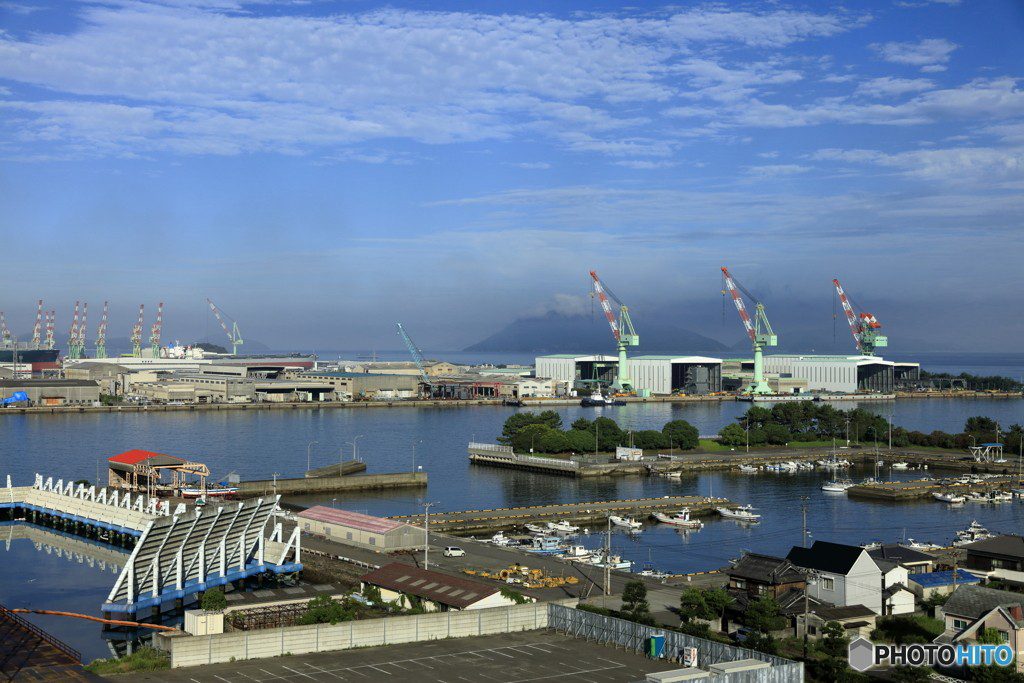
Marugame Port is a Class 2 regional port designated by the Japanese Ministry of Land, Infrastructure, Transport and Tourism (MLIT). It serves as a key hub for Seto Inland Sea coastal shipping and regional fisheries. The port is administered by Kagawa Prefectural Government under the Ports and Harbors Act (Act No. 218 of 1950).
Port Types
– Size Classification: Small port (annual cargo throughput < 10 million tons)
- Geographical Classification: Natural coastal harbor
- Functional Classification:
- Commercial port (MLIT designation)
- Fishing port (Fisheries Agency designation No. Kagawa-14)
- Disaster relief port (Kagawa Prefecture designation)
Long./Lat.
Main Breakwater Head: 34°17’24″N 133°48’00″E (JGD2011 datum)
Port Office: 34°17’06″N 133°47’42″E
Time Zone
Japan Standard Time (JST) – UTC+9 (no daylight saving time)
Year-round timekeeping per Japan Standard Time Act (Act No. 141 of 2001)
Port Location
Located on the northwest coast of Shikoku Island in Marugame City, Kagawa Prefecture. The port faces the Seto Inland Sea National Park with:
– Eastern boundary: Kanzaki River mouth (134°48’15″E)
– Western boundary: Marugame Castle coastal line (133°47’30″E)
– Landside: Connected to National Route 11 and Takamatsu Expressway
Port Limits
Defined by Kagawa Prefectural Ordinance No. 32 (2018 revision):
– Northern boundary: 34°17’36″N latitude line
– Southern boundary: Port breakwater line
– Total area: 1.82 km² (land and water)
Load Lines
All vessels must comply with:
– International Load Line Convention 1966 (Japan accession)
– Japanese Load Line Regulations (MLIT Notice No. 356)
– Summer zone designation (April 16 – October 15)
– Winter zone designation (October 16 – April 15)
Water Density
Annual average: 1.023-1.025 g/cm³ (Seto Inland Sea Hydrographic Survey Report 2022)
Freshwater density at docks: 1.000-1.005 g/cm³ (Kanzaki River influence)
Charts and Books
Mandatory navigation documents:
– JP-121A (Seto Inland Sea Western Part) – 1:50,000
– JP-121B (Marugame Approach) – 1:25,000
– MLIT Port Regulations Handbook (2023 ed.)
– Tide Tables: Japan Coast Guard Publication Vol. 3
Port Restrictions
– Maximum DWT: 10,000 (West Wharf), 5,000 (East Wharf)
– Beam: 22m (West Wharf), 18m (East Wharf)
– Draft: 7.5m (Spring tide), 6.2m (Neap tide)
– Air draft: 28m (crane clearance)
– Night navigation prohibited for vessels >5,000 DWT
Regulations
– Port Regulations Act (Act No. 174 of 1948)
– Seto Inland Sea Special Measures Act (No. 110 of 1973)
– Mandatory AIS transmission within 3nm
– Sulfur content limit: 0.1% (ECA compliance)
– Ballast water management required
Weather Condition
– Annual precipitation: 1,200mm (Kagawa AMeDAS data)
– Prevailing winds: NW (winter), SE (summer)
– Typhoon season: July-October (average 1.2 direct hits/year)
– Fog occurrence: 12 days/year (mainly spring)
Tide and Currents
– MHHW: +2.1m (Kagurazaki Tide Station)
– MLLW: -0.3m
– Max current: 2.1 knots (spring tide)
– Eddy currents near West Breakwater
– Tidal window: 3 hours before/after high tide for large vessels
Identification Cards
– Seaman’s Book + passport required
– Shore passes issued by Marugame Port Office (24h notice)
– ISPS Code compliant access control
Traffics
– Airport: Takamatsu Airport (32km) – 18 daily flights to Tokyo/Osaka
– Railway: JR Yosan Line (Marugame Station) – 2 trains/hour to Okayama
– Highway: Takamatsu Expressway (4km) – Connects to Shikoku Expressway
– Ferry: Regular service to Naoshima Island (3 departures/day)
Holidays
– National holidays per Japanese law (15 days/year)
– Local festival closures: Marugame Castle Festival (April 1-3)
– Emergency cargo operations possible (+30% fee)
Currency
– JPY only (no foreign exchange at port)
– Credit cards accepted at terminal offices
– Crew cash allowance: ¥100,000/person max
Main Cargo Handled
– Exports:
– Processed seafood (12,000t/year)
– Granite stone (8,000t/year)
– Machinery parts (5,000t/year)
– Imports:
– Construction materials (25,000t/year)
– Fertilizers (7,000t/year)
– Consumer goods (3,000 TEU/year)
2. Notification and Reports
General Information
All vessels entering Marugame Port must comply with:
1. Japan’s Port Regulations Act (Act No. 174 of 1948)
2. Kagawa Prefecture Maritime Safety Ordinance (2023 Revision)
3. ISPS Code requirements
4. Seto Inland Sea Special Measures Act
Procedures must be completed through:
– Marugame Port Management System (MPMS) electronic platform
– Japan Coast Guard’s e-MARIS system
– Physical submission to Port Authority when required
Arrival and Departure Checklists
Mandatory items (per MLIT Notice No. 1587):
1. Pre-arrival notifications:
– 72h: Preliminary ETA and vessel particulars
– 48h: Crew/passenger health declarations
– 24h: Final ETA confirmation
2. Dangerous goods manifest (IMO Form DG)
3. Bunker declaration (including sulfur content)
4. Waste management plan (JAPAN P&I Club Form WM-3)
5. Security pre-arrival information (ISPS Form 1)
6. Port entry application (Kagawa Prefecture Form PE-102)
Documents and Certificates
Required documents (original + 2 certified copies):
– Crew list (MLIT Form P-101, stamped by Master)
– Passenger manifest (if applicable, Form PM-22)
– Maritime Health Declaration (WHO Form 2022)
– Certificate of Registry (current)
– International Tonnage Certificate
– Class Certificate (valid for 5 years)
– Safety Equipment Certificate (SOLAS compliant)
– Load Line Certificate (with latest survey)
– IOPP Certificate (including supplements)
– Cargo Securing Manual (approved version)
– Garbage Management Plan (Record Book Part I/II)
– Ballast Water Management Plan (Record Book)
– Continuous Synopsis Record (CSR)
– Insurance Certificates (P&I, H&M)
Vessel Traffic Services (VTS)
– VTS Area: 5nm radius from port entrance (34°17’24″N 133°48’00″E)
– Monitoring: 24/7 radar/AIS coverage (JCG Takamatsu Station)
– Mandatory reporting points:
1. 34°20’N 133°50’E (12nm out) – Initial report
2. 34°18’N 133°48’E (5nm out) – Intermediate report
3. Breakwater entrance (final position)
– Required information:
– Vessel name/call sign/IMO
– Position/course/speed
– ETA at pilot station
– Dangerous goods (if any)
– Defects affecting navigation
Emergency Co-ordination Centre
1. Marugame Maritime Disaster Prevention Center
– Address: 2-1 Minatomachi, Marugame City
– Phone: +81-877-22-0119 (24h emergency line)
– VHF Channels: 16 (distress), 70 (DSC)
– Coordinates: 34°17’10″N 133°47’45″E
2. Japan Coast Guard Takamatsu Office
– Phone: +81-87-851-0119
– MARSAR contact: VHF Ch 16/27.88 MHz
Harbour Management Communications
– Marugame Port Authority
– Address: 1-1 Minatomachi, Marugame City, Kagawa 763-8501
– Phone: +81-877-24-8800 (08:00-17:00 JST)
– After-hours: +81-877-22-0119
– Email: Not Available (official communications via MPMS)
– Fax: Not Available
Radio
– Primary station: JMJ (Takamatsu Coast Radio)
– Frequencies:
– 2182 kHz (HF distress)
– 156.8 MHz (VHF Ch16)
– 2187.5 kHz (DSC)
– ETA messages must include:
1. Vessel name/flag/call sign/IMO
2. ETA (UTC+9) and berth assignment
3. Present draft F/A
4. Dangerous goods (IMO class/quantity)
5. Last port of call
6. Crew/passenger numbers
VHF
Operational channels (per JCG Notice 12/2023):
– Ch 12: Port Control (primary working)
– Ch 14: VTS (movement monitoring)
– Ch 16: Safety (distress only)
– Ch 67: Tugs (assistance coordination)
– Ch 72: Pilots (boarding operations)
– Ch 13: Bridge-to-bridge (vessel coordination)
– Ch 09: Port operations (secondary)
Radars
– Port radar coverage: 10nm range (JCG Takamatsu Station)
– Contact procedures:
1. Initial call: Marugame VTS on Ch 14
2. Identification: Provide vessel particulars
3. Request: State required assistance
– Radar assistance available for:
– Vessels >5,000 GT (mandatory)
– Visibility <1nm (mandatory)
- Emergency situations (on request)
- Special operations (bunkering/dangerous cargo)
Notices of Readiness
Submission requirements:
1. Electronically via MPMS (preferred)
2. In writing to port authority (Form NOR-2)
3. To charterer’s agent (commercial copy)
Validity conditions:
1. Vessel safely anchored/berthed
2. All documents submitted and approved
3. Free pratique granted
4. Cargo gear ready (if loading/discharging)
5. No outstanding port dues
Immigration
– Immigration Office:
– Location: Port Administration Building 1F
– Hours: 08:00-17:00 (Mon-Fri)
– Contact: +81-877-24-8811
– Required documents:
1. Passport/Seaman’s book (original)
2. Landing permit application (Form L-3)
3. Crew list (stamped by Master)
4. Vaccination certificates (if applicable)
– Off-hours procedures:
1. Prior notification required (72h)
2. Temporary clearance possible
3. Full inspection next working day
Health
Quarantine procedures (per Quarantine Act):
1. Pre-arrival health declaration (Form Q-1)
2. Yellow Fever vaccination check
3. Ship sanitation inspection
Free pratique:
– Automatic: Coming from Japanese port (radio clearance)
– Inspection required: From foreign ports
Emergency contacts:
– Kagawa Quarantine Station: +81-87-822-0001
– Port Health Officer: VHF Ch 12/14
Disease reporting:
– Immediate notification for:
– Fever >38°C
– Diarrhea (3+ episodes/day)
– Rash/hemorrhagic symptoms
Customs
Clearance procedures:
1. Electronic manifest submission (NACCS system)
2. Physical inspection (if selected by customs)
3. Duty payment (for taxable goods)
Crew allowances (per Customs Law Art. 67):
1. Tobacco: 200 cigarettes or equivalent
2. Alcohol: 3 bottles (max 760ml each)
3. Goods: ¥200,000 total value
Prohibited items:
1. Narcotics
2. Weapons/ammunition
3. Counterfeit goods
4. Certain agricultural products
Prior Declaration and Authorization
Required for (minimum 72h notice):
1. Dangerous goods (Class 1-9):
– IMDG Code compliance required
– Stowage plan submission
2. Waste discharge:
– Type/quantity/processing method
3. Bunkering operations:
– Bunker plan approval
– Safety checklist
4. Hot work:
– Permit-to-work system
5. Underwater operations:
– Diving plan approval
6. Special cargo:
– Oversized/heavy lift certificates
– Securing arrangements
Restricted Activities
Prohibited (Port Ordinance Art. 15):
1. Anchoring in fairway (except emergencies)
2. Discharging pollutants (oil/sewage/chemicals)
3. Unauthorized photography of port facilities
4. Speeding (>8 knots in port area)
5. Fishing in commercial zones
6. Unauthorized drone operations
7. Discharging ballast water without treatment
Incidents
Reporting requirements (per Marine Accident Inquiry Act):
Immediate notification (within 1h) for:
1. Pollution incidents (oil/chemical spill)
2. Personal injuries (requiring medical attention)
3. Collisions/allisions (regardless of damage)
4. Machinery failures affecting navigation
Within 24h for:
1. Near-miss situations
2. Equipment malfunctions
3. Security breaches
Reporting to:
1. Japan Coast Guard (Ch 16/phone)
2. Port Authority (Ch 12/Form IR-1)
3. P&I Correspondent (Tokyo Club)
4. Flag State (if required)
Others
Additional requirements:
1. Gangway watch:
– 24/7 when alongside
– Logbook maintained
2. ISPS security:
– SSP implementation
– Access control
3. Environmental compliance:
– SOx/NOx monitoring
– Ballast water records
4. COVID-19 measures (current as of 2024):
– Health questionnaires
– Temperature monitoring
– Isolation procedures if needed
3.Port Navigation
General Information
Marugame Port navigation complies with:
1. Japan Coast Guard Navigation Rules (Ordinance No. 25 of 1977)
2. Seto Inland Sea Traffic Route System (MLIT Notice No. 412)
3. IMO COLREGs 1972 (Japan’s Instrument of Accession 1977)
4. Local Port Regulations (Kagawa Prefecture Ordinance No. 32-2023)
5. SOLAS Chapter V (Safety of Navigation)
6. Maritime Traffic Safety Act (Act No. 115 of 1972)
Pilot Station and Pilotage
– Pilot Station:
– Primary: 34°17’30″N 133°47’45″E (West Breakwater)
– Secondary: 34°18’00″N 133°48’00″E (Emergency)
– Contact Procedures:
– VHF Ch 12/14 (24h monitoring)
– Phone: +81-877-24-8812 (06:00-22:00 JST)
– Email: Not Available
– Pilot Request Requirements:
– Initial notice: 24h before ETA
– Confirmation: 6h before arrival
– Final update: 1h before pilot boarding
– Pilot Boat Specifications:
– “Marugame Pilot No.1”:
– Length: 12.5m
– Color: International orange
– Identification:
– Day: White flag with “PILOT” in black
– Night: Flashing blue light (60 flashes/min)
– “Marugame Pilot No.2”:
– Length: 10.8m
– Same color/identification scheme
– Boarding Arrangements:
– Primary boarding area: 1nm NW of breakwater (34°18’N 133°47’E)
– Depth: 15m
– Shelter from prevailing winds
– Alternate boarding area: 2nm NE of port (34°19’N 133°49’E)
– Used during SW winds >15m/s
– Pilot Transfer Requirements:
– SOLAS-compliant pilot ladder:
– Minimum length: 1.5m above water
– Spreaders every 2m
– Proper lighting at night
– Required freeboard: 1.5m to 9m
– Deck safety equipment:
– Lifebuoy with light
– Heaving line
– Anchorage for Waiting:
– Designated Area A (34°17’48″N 133°47’12″E)
– Holding ground: Clay/mud (good holding)
– Swing radius: 500m
– Maximum stay: 48h without permission
Approaches and Channels
1. Main Approach Channel:
– Length: 3.2nm (from sea buoy to breakwater)
– Width: 200m (minimum)
– Depth:
– Chart Datum: 9.5m
– Dredged depth: 10.0m
– Alignment: 145°-325° true
– Currents:
– Flood tide: NW setting, 1.5 knots max
– Ebb tide: SE setting, 2.0 knots max
2. West Channel:
– Width: 150m
– Depth: 7.0m (CD)
– Special notes:
– Strong cross-currents near bend
– Restricted to vessels <150m LOA
3. Navigation Rules:
- Mandatory:
- AIS transmission
- VHF Ch 14 monitoring
- Prohibited:
- Overtaking in narrow sections (marked zones)
- Crossing traffic lanes
- Special Requirements:
- Vessels >10,000 GT must have tug escort
– Night navigation restrictions (see below)
Anchorages
1. Commercial Anchorage (Area A):
– Boundaries:
– NE: 34°18’00″N 133°47’00″E
– SW: 34°17’36″N 133°46’48″E
– Depth: 10-15m
– Bottom: Clay with shell fragments
– Anchoring pattern:
– Minimum spacing: 3x vessel length
– Swing circle: 500m radius
2. Emergency Anchorage (Area B):
– Position: 34°17’24″N 133°48’36″E
– Depth: 8-12m
– Usage restrictions:
– Maximum 12h stay
– Must maintain engine readiness
3. Prohibited Areas:
– Within 0.5nm of breakwaters
– Submarine cable zones (marked on charts)
– Fishing reserve areas
Navigation Aids
1. Fixed Lights:
– Main Breakwater Light:
– Character: Fl(3)G 15s
– Height: 12m
– Range: 10M
– Structure: White concrete tower
– East Pier Light:
– Character: Q(6)+LFl 15s
– Height: 8m
– Range: 7M
2. Buoyage System (IALA Region A):
– Port hand: Red conical (odd numbers)
– Topmark: Red cone
– Light: Red, any rhythm
– Starboard hand: Green can (even numbers)
– Topmark: Green cylinder
– Light: Green, any rhythm
– Special marks:
– Yellow buoys for prohibited areas
3. Electronic Aids:
– DGPS: MSAS coverage (accuracy <5m)
- AIS Base Station: 34°17'18"N 133°47'30"E
4. Fog Signals:
- Breakwater horn: 2 blasts every 30s
- Range: 2nm
- VTS advisories:
- Broadcast on Ch 14 during visibility <1nm
- Updated every 15 minutes
Maximum Authorized Speed
– Speed limits (per Port Ordinance Art. 18):
| Area | Speed Limit | Enforcement |
|——|————-|————-|
| Entrance channel | 8 knots | Radar monitored |
| Inner harbor | 5 knots | VTS controlled |
| Berthing areas | 3 knots | Patrol boats |
| Restricted zones | 5 knots | Automatic sensors |
– Special conditions:
– During poor visibility (<1nm): 5 knots max
- When passing fishing boats: 3 knots
- During bunkering operations: 3 knots
Navigation Priority
Priority sequence (Maritime Traffic Safety Act Art. 23):
1. Vessels in distress
2. Government patrol vessels
3. Vessels >10,000 GT
4. Tankers carrying dangerous goods (IMO Class 1-3)
5. Passenger vessels on schedule
6. Fishing vessels engaged in operations
7. All others by arrival time
– Crossing rules:
– Starboard side passing in channels
– Special areas marked for overtaking
Weather Restrictions
1. Wind restrictions:
– >15m/s: Tug escort mandatory
– >20m/s: Movement restrictions
– >25m/s: Port closed
2. Visibility:
– <1nm: VTS guidance required
- <500m: Movement restricted
- <200m: All navigation suspended
3. Wave height:
- >1.5m: Pilot discretion
– >2.0m: Small craft restrictions
– >2.5m: Pilotage suspended
4. Typhoon measures:
– Stage 1 warning (200nm): Prepare
– Stage 2 warning (100nm): Secure cargo
– Stage 3 warning (50nm): Evacuate port
Night Entry or Departure
– Permitted with conditions:
1. Vessels <150m LOA
2. Minimum 2 tugs (for vessels >5,000 GT)
3. VTS approval required (minimum 6h notice)
4. Navigation lights:
– Properly functioning
– Additional deck lighting
5. Bridge team:
– Master on bridge
– Additional lookout
– Prohibited for:
1. Vessels carrying Class 1 dangerous goods
2. First-time visiting vessels
3. Vessels with navigation equipment defects
4. During extreme weather (see above)
UKC (Under-Keel Clearance)
– Minimum requirements (Port Ordinance Art. 22):
| Condition | Static UKC | Dynamic UKC |
|———–|————|————-|
| Spring tide | 0.5m | 1.0m |
| Neap tide | 1.0m | 1.5m |
| High wind | +0.3m | +0.5m |
– Calculation method:
1. Charted depth
2. Plus tide height
3. Minus vessel draft
4. Minus squat (0.1m per knot >5 knots)
5. Minus swell effect (if applicable)
– Monitoring:
– VTS verifies UKC calculations
– Mandatory reporting if <10% margin
Bridges
Not Available (no navigable bridges within port limits)
Air Drafts Limit and Air Gap
1. Overhead Obstructions:
– Power Lines (West Wharf approach):
– Height: 32m at MHW
– Clearance: 30m at MHHW
– Markings: Red/white checkerboard
– Port Cranes:
– Maximum working height: 28m
– Clearance lights: Red obstruction lights
2. Air Draft Management:
– Declaration required if >25m
– VTS clearance required if >30m
– Monitoring:
– Tidal calculations mandatory
– Real-time clearance checks via VTS
3. Special Procedures:
– High-air-draft vessels:
– Restricted to daylight hours
– Tug escort mandatory
– No operations during strong winds (>10m/s)
Vessels Shifting
– Procedures:
1. VTS permission required (minimum 1h notice)
2. Pre-shift meeting (Master/Pilot/Tugs)
3. Equipment check:
– Mooring lines
– Engine readiness
– Communication systems
4. Tug requirements:
– <5,000 GT: 1 tug
- 5,000-10,000 GT: 2 tugs
- >10,000 GT: 3 tugs
– Restrictions:
1. No shifting during:
– Cargo operations
– Bunkering
– Extreme weather
2. Daytime only for:
– Hazardous cargo
– First-time visitors
3. Speed limit: 3 knots
Vessels Transiting
– Requirements:
1. Prior notice:
– 24h for scheduled transit
– 6h for unscheduled
2. Documentation:
– Transit plan
– Crew list
– Safety certificates
3. Escort:
– VTS escort for >150m LOA
– Tug escort for >200m LOA
4. Speed limit: 5 knots
– Prohibited:
1. During:
– Fishing boat operations (05:00-08:00)
– Dredging operations
2. For:
– Vessels with propulsion defects
– Night transit for >200m LOA
Vessels Towing
– Regulations:
1. Maximum dimensions:
– Length: 200m (including tow)
– Beam: 32m
– Draft: 7.5m
2. Operational restrictions:
– Daylight only
– Weather window: winds <15m/s
- Sea state: waves <1.5m
3. Equipment:
- Emergency tow package
- Spare tow lines
- Special Requirements:
1. Towing plan submission:
- 72h prior for approval
- Including:
- Route survey
- Risk assessment
- Emergency procedures
2. VTS routing:
- Mandatory for >100m length
– Continuous monitoring
Tugs and Working Boats
1. Tug Resources:
– “Marugame Tug No.1”:
– Bollard pull: 40t
– Length: 32m
– Engines: 2x 2,500kW
– “Marugame Tug No.2”:
– Bollard pull: 25t
– Length: 28m
– Engines: 2x 1,800kW
– “Marugame Tug No.3”:
– Bollard pull: 15t
– Length: 24m
– Engines: 2x 1,200kW
2. Operational Requirements:
– Minimum tug numbers:
| Vessel Size | Berthing | Unberthing |
|————-|———-|————|
| <5,000 GT | 1 | 1 |
| 5,000-10,000 GT | 2 | 2 |
| >10,000 GT | 3 | 3 |
– Connection:
– Tugs use own lines
– Standard connection points:
– Bow/stern quarters
– Spring lines if required
3. Working Boats:
– Supply boats:
– 2 units (12m length)
– Capacity: 5t cargo
– Garbage barge:
– 15m length
– 10m³ capacity
– Oil skimmer:
– 18m length
– 50m³/hour capacity
Vessels in Special Operations
1. Bunkering:
– Prior approval:
– 72h notice
– Safety checklist
– Requirements:
– Stand-by tug
– Oil spill equipment ready
– Fire watch
2. Diving Operations:
– Restricted zones:
– Within 100m of fairways
– Near submarine cables
– Requirements:
– VTS notification
– Diver down flag
– Support boat
3. Hot Work:
– Permit system:
– Fire inspection
– Gas-free certificate
– Requirements:
– Fire watch
– Extinguishers ready
4. Military Operations:
– Notice:
– 48h for routine
– Immediate for emergencies
– Exclusion zones:
– 500m radius standard
– Adjustable per mission
4.Pollution Control
Ballast and Deballast
1. Legal Framework:
– Japan’s Ballast Water Management Act (Act No. 66 of 2014)
– IMO Ballast Water Management Convention (BWM 2004)
– Kagawa Prefecture Marine Environment Protection Ordinance (No. 12-2023)
– Seto Inland Sea Special Measures Act (Article 18-3)
2. Pre-arrival Requirements:
– Notification:
– 72h preliminary notice (Form BWM-1)
– 24h final confirmation (Form BWM-2)
– Recipients:
– Marugame Port Authority (MPA)
– Kagawa Environmental Office
– Japan Coast Guard (Takamatsu Station)
3. Operational Procedures:
– Prohibited Activities:
– Exchange within 12nm of coastline
– Discharge without treatment in port limits
– Mandatory Compliance:
– Vessels >400 GT
– Ballast capacity >8m³
– Valid IMO Type Approval Certificate
4. Treatment Standards:
– D-2 Standard required:
– <10 viable organisms/m³ (≥50μm)
- <10 viable organisms/mL (<50μm & ≥10μm)
- Toxicogenic Vibrio cholerae: <1 cfu/100mL
- Approved Systems:
- UV treatment (at least 40mJ/cm²)
- Electrolysis (residual TRO 0.1-0.2mg/L)
5. Documentation:
- Required Records:
- Ballast Water Management Plan (approved)
- Ballast Water Record Book
- Treatment system maintenance logs
- Inspection Items:
- Sampling points accessibility
- Crew training certificates
- Calibration records
6. Facilities:
- Reception/Processing:
- West Wharf (berths W1-W3):
- Capacity: 5,000m³/day
- Processing: Filtration + UV
- Emergency discharge point:
- East Wharf E5 (500m³/hr capacity)
- Testing:
- Kagawa Environmental Laboratory:
- Flow cytometry analysis
- MPN method for bacteria
- Rapid test kits available (5min results)
Garbage Disposal
1. Regulatory Basis:
– MARPOL Annex V (as implemented by Japan)
– Waste Management Act (Act No. 137 of 2000)
– Port Regulations Law (Article 24-2)
2. Service Providers:
– Primary: “Marugame Clean Sea Service”
– License: Kagawa WM-2023-0456
– Operating hours: 06:00-18:00 daily
– Emergency: Japan Coast Guard
– After-hours contact: VHF Ch 16
3. Collection Systems:
– Fixed Facilities:
– Type A skips (general waste):
– 10m³ capacity (20 units)
– Locations: All commercial berths
– Type B containers (plastics):
– 5m³ capacity (15 units)
– Special handling required
– Mobile Services:
– Barge collection (100m³ capacity)
– Truck collection (5m³ capacity)
4. Operational Procedures:
– Pre-disposal Requirements:
– Complete Garbage Record Book (Part I/II)
– Submit Port Waste Reception Form
– Segregate into:
– Food/domestic (Black bags)
– Plastics (Blue bags)
– Operational (Yellow bags)
– Hazardous (Red bags)
– Collection Process:
– Request via VHF Ch 09
– Weighing at transfer point
– Issuance of receipt (Form GR-3)
5. Fee Structure (2024):
| Waste Type | Rate (¥/m³) | Minimum Charge |
|————|————|—————-|
| General | 5,000 | ¥20,000 |
| Plastics | 8,000 | ¥25,000 |
| Hazardous | 15,000 | ¥50,000 |
| Bulk | 3,000 | ¥15,000 |
6. Special Requirements:
– Food waste: Must be macerated
– Plastics: No incineration residues
– Cargo residues: Separate declaration
– Medical waste: Special handling
Waste Oil Disposal
1. Legal Requirements:
– MARPOL Annex I
– Japan’s Law Relating to Prevention of Marine Pollution
– Kagawa Oil Waste Handling Regulations
2. Service Infrastructure:
– Operator: “Setouchi Oil Recovery Co.”
– License: ORC-2023-889
– 24h emergency: +81-877-24-9900
– Facilities:
– Shore tanks: 2,000m³ total
– Sludge tank: 500m³
– Bilge tank: 1,500m³
– Barges:
– “Setouchi No.1”: 500m³
– “Setouchi No.2”: 300m³
– Tank trucks: 5 units (20m³ each)
– Special berth: East Wharf E4
– Dedicated piping system
– Explosion-proof lighting
3. Operational Protocols:
– Pre-transfer:
– 24h notice (Form OR-1)
– Sample analysis (3 replicates)
– Safety meeting
– During transfer:
– Continuous monitoring
– Secondary containment
– Stand-by fire boat
– Post-transfer:
– Equipment flushing
– Waste tracking form
4. Technical Specifications:
– Connections:
– Standard 150mm flange (ISO 13710)
– Pressure: max 4 bar
– Purity standards:
– Water content: <5%
- Sediments: <1%
- Prohibited mixtures:
- PCBs >50ppm
– Chemical residues
5. Pricing (2024):
| Product | Rate | Notes |
|———|——|——-|
| Sludge | ¥30,000/m³ | Min 2m³ |
| Bilge | ¥15,000/m³ | Free if <1% oil |
| Tank wash | ¥40,000/m³ | Pre-approval |
| Emergency | ¥500,000 | First hour |
Sewage Reception
1. Regulatory Framework:
– MARPOL Annex IV
– Japan Sewage Law (Article 19)
– Port Hygiene Regulations
2. Service Details:
– Operator: “Marugame Sanitation Service”
– License: MSS-2024-112
– Contact: VHF Ch 08
– Equipment:
– Tanker trucks (3 units, 20m³ each)
– Barges (2 units, 50m³ each)
– Fixed points at main piers
3. Operational Requirements:
– Notification:
– 12h standard notice
– 2h emergency service
– Documentation:
– ISPP Certificate
– Sewage Record Book
– Disinfection records
– Health Checks:
– Coliform testing
– BOD5 <50mg/L
4. Technical Standards:
- Connections:
- 150mm ISO standard
- Camlock fittings
- Treatment Levels:
- Primary: Sedimentation
- Secondary: Biological
- Tertiary: UV disinfection
- Discharge Limits:
- TSS <35mg/L
- BOD5 <25mg/L
- Residual chlorine <0.5mg/L
5. Fee Schedule:
- Black water: ¥10,000/m³ (min ¥50,000)
- Grey water: ¥5,000/m³ (min ¥25,000)
- Emergency: ¥100,000 flat rate
- Testing: ¥15,000/sample
5.Port Safety and Security
General Information
1. Regulatory Framework:
– ISPS Code (Japan implementation 2004)
– Port Facility Security Plan (PFSP Rev.2024)
– Maritime Security Act (Act No. 31 of 2004)
– Kagawa Prefecture Port Security Ordinance
2. Security Levels:
– Level 1 (Normal): Standard measures
– Level 2 (Heightened): Additional patrols
– Level 3 (Exceptional): Full lockdown
3. Security Infrastructure:
– 24/7 monitored CCTV (78 cameras)
– Biometric access gates (12 locations)
– Radiation detection portals (3 units)
4. Safety Certifications:
– ISO 28000:2022 (Supply chain security)
– ISPS Code Compliance Certificate
– Japan Coast Guard Security Audit (2023)
PSC
1. Inspection Authority:
– Japan Coast Guard (Takamatsu Station)
– PSC Officers: 8 certified inspectors
– Inspection vessels: 2 dedicated units
– Tokyo MOU member since 1994
2. Inspection Criteria:
– Risk-based targeting system:
– Age >15 years: +5 points
– High-risk flag: +3 points
– Prior deficiencies: +2 per item
– Threshold for inspection: 10+ points
3. Inspection Focus Areas:
– Structural integrity
– Life-saving appliances
– Fire safety systems
– Pollution prevention
– Working conditions
4. Inspection Process:
– Phase 1: Document review (2h)
– Certificates
– Maintenance records
– Crew documents
– Phase 2: Physical inspection (4-6h)
– Hull examination
– Equipment testing
– Crew interviews
5. Deficiency Management:
– Code 17 (Major deficiency):
– Rectification before departure
– Possible detention
– Code 30 (Critical deficiency):
– Ban from Japanese ports
– Flag state notification
ISPS
1. Security Levels:
– Current: Level 1 (as of July 2024)
– Level Changes:
– 24h notice for Level 2
– Immediate for Level 3
2. Access Control:
– Restricted Areas:
– Oil Terminal Zone A
– Container Yard Zone B
– Passenger Terminal
– Access Requirements:
– ISPS ID card
– Biometric verification
– Escort for visitors
3. Ship Requirements:
– Mandatory:
– SSAS activation in port
– Continuous gangway watch
– Visitor log maintenance
– Prohibited:
– Unauthorized transfers
– Unlogged access
4. Documentation:
– Required:
– Valid ISSC
– Updated SSP
– Completed DOS
– Verification:
– JCG database check
– Flag state confirmation
Emergency
1. Emergency Contacts:
– Port ECC: +81-877-22-0119 (24h)
– JCG Emergency: 118 (VHF Ch 16)
– Medical Emergency: 119
– Fire Department: +81-877-22-0118
2. Response Equipment:
– Oil Spill:
– 2 skimmer vessels (50m³/hr)
– 1,000m containment boom
– Firefighting:
– 3 fireboats (5,000L/min)
– Mobile foam units
– Medical:
– Decontamination station
– Emergency clinic
3. Reporting Procedures:
– Immediate Reporting:
– Oil spills >1 ton
– Security incidents
– Serious injuries
– Timeframe:
– Verbal: Immediately
– Written: Within 2h (Form ER-1)
4. Emergency Coordination:
– ECC Location:
– Port Admin Building, 2F
– Coordinates: 34°17’10″N 133°47’45″E
– Response Teams:
– First responders: 15 min
– Full deployment: 30 min
Ships Arrest
1. Legal Basis:
– Civil Execution Act (Art. 112-115)
– Special Maritime Claims Procedure
2. Arrest Process:
– Court Order:
– Issued by Kagawa District Court
– Served by court bailiff
– Port Authority Role:
– Notification of arrest
– Movement restrictions
– Security provision
3. Arrest Conditions:
– Prohibited:
– Bunkering
– Cargo operations
– Crew changes (without approval)
– Required:
– 24h security guard
– Daily position reports
4. Release Process:
– Court order required
– Security payment
– Port clearance procedures
Fire Precautions
1. General Requirements:
– Smoking:
– Designated areas only
– Prohibited within 50m of cargo
– Hot Work:
– Permit system
– Fire watch mandatory
2. Tanker Specifics:
– Inert Gas Systems:
– Minimum 8% oxygen
– Continuous monitoring
– Bonding:
– 25mm cables
– Verified before transfer
– Emergency Shutdown:
– Tested weekly
– Remote activation points
3. Firefighting Systems:
– Deck Foam:
– Minimum 6L/min/m²
– 30 min capacity
– Water Spray:
– Full deck coverage
– Independent pumps
Inspections from Other Parties
1. Available Inspections:
– Classification Societies:
– Annual surveys
– Special surveys
– Flag State:
– Safety inspections
– ISM audits
– P&I Clubs:
– Condition surveys
– Risk assessments
2. Inspection Process:
– Notification:
– 24h prior notice
– Inspector credentials
– Conduct:
– Port authority escort
– Restricted areas
– Reporting:
– Copies to JCG
– Deficiency tracking
Maritime Security Zones
1. Designated Zones:
– Zone A (Oil Terminal):
– 500m radius
– Access level 2
– Zone B (Container Terminal):
– 300m radius
– Access level 1
– Zone C (Passenger Terminal):
– 200m radius
– Access level 2
2. Security Measures:
– Physical Barriers:
– Fencing
– Boom gates
– Monitoring:
– CCTV coverage
– Patrols (every 2h)
– Access Control:
– Biometric checks
– Vehicle screening
Police
1. Marugame Minato Police Box:
– Location: Main Gate, Port Area
– Contact:
– Phone: +81-877-22-0110
– Emergency: 110
– Jurisdiction:
– Port area crimes
– Maritime incidents
2. Capabilities:
– Armed officers: 6
– Patrol vessels: 2
– Response time: <10 min
Flag
1. Display Requirements:
– National Flag:
– Stern staff
– Daylight hours
– Courtesy Flags:
– Optional
– Proper sizing
2. Prohibitions:
– Offensive symbols
– Unauthorized signals
– Improper illumination
Signals and Lights Display
1. Navigation Lights:
– Requirements:
– Sunset to sunrise
– Proper visibility
– Specifications:
– 2nm visibility
– Correct sectors
2. Day Signals:
– Anchored:
– Ball-diamond-ball
– Restricted Maneuverability:
– Ball-ball-diamond
– Dredging:
– Two black balls
Stowaways and Refuges
1. Prevention Measures:
– Pre-departure:
– Full searches
– Seal checks
– In-port:
– Gangway watch
– Restricted access
2. Handling Procedures:
– Discovery:
– Immediate JCG notification
– Confinement
– Documentation:
– Form SR-1 (within 6h)
– Interview records
– Disposition:
– Immigration processing
– No shore access
Alcohol, Drugs and Prohibited Items
1. Policies:
– Alcohol:
– Blood limit: 0.03%
– No consumption on duty
– Drugs:
– Zero tolerance
– Mandatory testing
– Weapons:
– Declaration required
– Secure storage
2. Enforcement:
– Random testing
– K9 units (weekly patrols)
– Port entry screening
Reporting of Security Breaches
1. Reporting Channels:
– Immediate:
– VHF Ch 14/16
– Phone: +81-877-22-0119
– Follow-up:
– Form SB-1 (within 24h)
– Evidence preservation
2. Response Protocol:
– Initial assessment
– Threat classification
– Resource deployment
Operation of drones
1. Regulations:
– Flight Restrictions:
– 5km exclusion zone
– Max altitude 150m
– Daylight only
– Prohibited:
– Over vessels
– Near terminals
2. Authorization Process:
– Application:
– 14-day notice
– Flight plan
– Requirements:
– JPY 50,000 fee
– 100M liability insurance
– Operator certification
6.Cargo Operations
General Information
1. Port Authority: Marugame Port Authority (MPA)
– Established: 1952 under Port Law No.218
– Jurisdiction: Kagawa Prefecture
2. Operating Hours:
– Core: 0800-1700 JST (Mon-Fri)
– Extended: 0800-1200 (Sat)
– Closed: National holidays
3. Cargo Volume (2023):
– Total: 8.7 million MT
– Liquid bulk: 65%
– Dry bulk: 25%
– Containers: 8%
– General: 2%
4. Regulatory Framework:
– Port Regulations Law (Art.24)
– ISPS Code compliance
– IMO MSC/Circ.1176 (cargo handling)
– Japan Industrial Standards (JIS)
Tanker Berths and Terminals
1. East Oil Terminal:
– Berths: E1-E3
– E1: Depth 15m CD, LOA 250m
– E2: Depth 14m, LOA 200m
– E3: Depth 12m, LOA 180m
– Max Draft: 14.5m (E1)
– Loading Arms:
– Diameter: 16″ (406mm)
– Max Pressure: 10 bar
– Temperature range: -20°C to 150°C
– Receiving Capacity:
– Slops: 500m³/day (max 200m³/hr)
– Shore tanks: 50,000m³ total
– Cargo Specifications:
– API: 28-42
– Temp Range: 30-60°C
– Sulfur content: <3.5%
- Safety Systems:
- 2 fireboats (5,000L/min capacity)
- 1,000m containment boom
- Vapor recovery (E1 only)
- Shore Steam:
- Available at E1 (5 ton/hr capacity)
- Pressure: 7 bar
- Mooring:
- 4 headlines, 4 sternlines
- 2 breastlines each side
- Synthetic tails required
- STS Transfer: Prohibited
2. West Chemical Terminal:
- Berths: W1-W2
- W1: Depth 10m, LOA 150m
- W2: Depth 9m, LOA 120m
- Max Draft: 9.8m
- Special Requirements:
- Inert gas mandatory (O2 <8%)
- Bonding cables (25mm² min)
- Chemical compatibility list
- Prohibited Cargoes:
- Class 1 explosives
- Radioactive materials
Container Berths and Terminals
1. Main Container Terminal:
– Berths: C1-C3
– C1: Depth 14m, LOA 300m
– C2: Depth 13m, LOA 250m
– C3: Depth 12m, LOA 200m
– Max Draft: 13.5m
– Productivity:
– Average: 25 moves/hr
– Peak: 35 moves/hr
– Gantry crane cycle time: 2.5 min
– Equipment:
– 4 STS cranes (50t SWL)
– Outreach: 45m
– Backreach: 15m
– 12 RTGs (40t SWL)
– 30 terminal trucks
– Wind Restrictions:
– >15m/s: operations stop
– >10m/s: speed limits
– Shore Power:
– Available at C1-C2
– Voltage: 6.6kV
– Frequency: 60Hz
– Storage Capacity:
– Yard: 8,000 TEU
– Reefer plugs: 200
Dry Cargo Berths and Bulk Facilities
1. North Bulk Terminal:
– Berths: N1-N4
– Total length: 800m
– Depth: 9-11m CD
– Max Draft: 10.5m (salt water)
– Equipment:
– 2 grab cranes (25t SWL)
– Grab capacity: 12m³
– Outreach: 28m
– Conveyor system (1,000t/hr)
– 5 payloaders (8m³ bucket)
– Handling Rates:
– Coal: 5,000 MT/day
– Grain: 3,500 MT/day
– Cement: 3,000 MT/day
– Storage:
– Coal yard: 50,000m²
– Grain silos: 30,000MT
– Cement dome: 15,000MT
2. General Cargo Wharf:
– Berths: G1-G2
– G1: Length 180m, Depth 8m
– G2: Length 120m, Depth 7.5m
– Max Draft: 7.8m
– Main Cargoes:
– Steel products (coils, plates)
– Project cargo
– Bagged commodities
– Equipment:
– 2 mobile cranes (50t)
– Forklifts (3-15t capacity)
Passenger Berths and Terminals
Not Available (Marugame Port does not currently handle passenger vessels)
Specialised Cargo Handling Facilities
1. Ro-Ro Facilities:
– Not Available
2. LPG Terminal:
– Not Available
3. Chemical Handling:
– West Terminal only (W1-W2)
– IMO Class 3-8 chemicals
– Specialized equipment:
– Stainless steel pumps
– Dedicated pipelines
– Prohibited:
– Class 1 explosives
– Radioactive materials (Class 7)
Loading and Discharging Procedures
1. Pre-arrival Requirements:
– Submit cargo plan 24h prior (Form CP-1)
– Safety meeting before operations
– Surveyor appointment confirmation
2. Operational Phase:
– Continuous monitoring by:
– Terminal supervisor
– Ship’s officers
– Independent surveyor
– Documentation:
– Time sheets
– Quantity records
– Quality samples
3. Completion:
– Final measurements
– Documentation signing:
– Statement of Facts
– Cargo documents
– Hold/compartment inspection
Loading and Discharging Rates
1. Liquid Bulk:
– Crude Oil: 3,000m³/hr (max)
– Chemicals: 1,500m³/hr (max)
– Product oil: 2,500m³/hr
2. Dry Bulk:
– Coal: 5,000 MT/day (avg)
– Cement: 3,000 MT/day
– Grain: 3,500 MT/day
3. Containers:
– 25 TEU/hr (average)
– 35 TEU/hr (peak)
4. General Cargo:
– Steel coils: 500 MT/day
– Project cargo: Case by case
Ship to Ship Transfer
Not Available (prohibited within port limits by Kagawa Prefecture Ordinance No.45)
Cargo Gear
1. Shore Gear:
– Container cranes (50t SWL)
– Bulk cranes (25t SWL)
– Mobile cranes (50-100t)
2. Ship’s Gear:
– Permitted at G1-G2 berths
– Requirements:
– Valid test certificates
– SWL markings visible
– Japanese standards compliance
3. Specialized Equipment:
– Coil handling frames
– Plate lifting beams
– Project cargo rigging
Shore Cranes
1. Container Cranes:
– 4 units (50t SWL)
– Outreach: 45m
– Backreach: 15m
– Hoist speed: 90m/min
2. Bulk Cranes:
– 2 units (25t SWL)
– Grab capacity: 12m³
– Outreach: 28m
3. Mobile Cranes:
– 3 units (50t)
– 2 units (100t)
4. Heavy Lift:
– Not Available (max 100t)
Floating Cranes
Not Available
Hoses
1. Oil Terminals:
– Diameter: 16″ (406mm)
– Length: 15m
– Working pressure: 10 bar
– Material: Steel wire reinforced
– Testing: Annual hydrostatic
2. Chemical Terminal:
– Specialized hoses (Class 3-8)
– No inter-use with oil hoses
– Flushing system available
Specialised Cargo Operation
1. Dangerous Goods:
– Class 3-8 only
– Special berthing required
– Segregation per IMDG Code
2. Prohibited:
– Class 1 explosives
– Radioactive materials
3. Documentation:
– DG declaration
– MSDS required
– Emergency plans
Lightering and Lighterage
Not Available
Barge
1. Available:
– 5 cargo barges (500DWT)
– Dimensions: 50m x 10m
– Deck area: 400m²
– 2 tank barges (1,000DWT)
– Capacity: 1,200m³
– Segregated tanks
2. Operations:
– Daylight only
– Max sea state: 1.5m
– Speed: 6 knots max
Cargo Lashing
1. Responsibility:
– Containers: Stevedores
– General cargo: Crew
2. Materials:
– Provided by terminal
– Certified lashing gear
3. Standards:
– CSC plates required
– Regular inspections
Cleaning Procedures
1. Bulk Residues:
– Must be disposed ashore
– Special bins provided
– Documentation required
2. Hold Cleaning:
– Water treatment required
– No discharge in port
– Certified cleaners
Opening/Closing Hatches
1. Standard Practice:
– Crew responsibility
– Safety harnesses required
2. Exceptions:
– Special cargo operations
– Hired labor available
Delay
1. Average Waiting Time:
– Tankers: 12-24h
– Containers: 6-12h
– Bulk: 8-16h
2. Common Causes:
– Weather (30%)
– Customs (20%)
– Labor (15%)
Stevedore Companies
1. Main Operators:
– Marugame Stevedoring Co.
– License: MSC-2024-01
– Contact: +81-877-22-1234
– Crew: 150 trained stevedores
– Setouchi Cargo Services
– License: SCS-2024-05
– Contact: +81-877-25-5678
2. ETA Requirements:
– 72h preliminary notice
– 24h final confirmation
– Gang requirements
Working Hours
1. Standard:
– 0800-1700 (Mon-Fri)
– 0800-1200 (Sat)
2. Overtime:
– Weekdays: 150% rate
– Saturdays: 175%
– Sundays/Holidays: 200%
3. Shift System:
– Day: 0800-1700
– Evening: 1700-0100 (+20%)
– Night: 0100-0800 (+30%)
Warehouses and Yards
1. Covered Storage:
– 5 warehouses (total 20,000m²)
– W1: 5,000m² (general)
– W2: 3,000m² (climate)
– W3: 6,000m² (bulk)
– W4: 4,000m² (hazardous)
– W5: 2,000m² (reefer)
2. Open Yards:
– 8 areas (total 50,000m²)
– Container yard: 15,000m²
– Bulk storage: 25,000m²
– Project cargo: 10,000m²
3. Special Facilities:
– Grain silos (30,000MT)
– Temperature control
– Fumigation system
– Cement dome (15,000MT)
– Dust suppression
– Automated loading
7.Port Services
General Information
1. Service Providers:
– Port Authority: Marugame Port Authority (MPA)
– Established: 1952 under Port Law No.218
– Jurisdiction: Kagawa Prefecture
2. Operating Hours:
– Core: 0800-1700 JST (Mon-Fri)
– Extended: 0800-1200 (Sat)
– Closed: National holidays
3. Regulatory Framework:
– Japan Port Services Law (2023)
– ISPS Code compliance
– Customs and Immigration Regulations
4. Service Areas:
– Port-wide coverage
– Priority zones:
– East Terminal
– Container Terminal
Bunkering
1. Availability:
– Available at East Oil Terminal (E1-E3)
– 24/7 operations with notice
2. Fuel Grades:
– IFO 380 (ISO 8217:2017)
– MGO (DMA grade, 0.1% sulfur)
– ULSFO (0.1% sulfur max)
3. Procedures:
– Advance Notice:
– 48h for standard delivery
– 72h for large quantities (>2,000MT)
– Delivery Method:
– Dedicated bunker barges (2 available)
– No direct pipeline supply
– Quantity Limits:
– Minimum: 50MT per grade
– Maximum: 3,000MT per vessel
4. Quality Assurance:
– ISO 8217 compliance
– Sampling per MARPOL Annex VI
5. Providers:
– Setouchi Bunker Co. (License SB-2024-01)
– Contact: +81-877-25-6789
– Barge capacity: 1,500MT
– Marugame Fuel Services (License MFS-2024-03)
Lubricants
1. Availability:
– Limited to basic grades:
– Cylinder oil (5070)
– System oil (3008)
– Grease (Almasol)
2. Suppliers:
– Nippon Oil Marine
– Delivery: 24h notice
– Packaging: 20L drums
3. Special Orders:
– 7-day lead time
– Pre-payment required
Fresh Water
1. Availability:
– All berths equipped
– Potable water certified
2. Delivery:
– Pipeline diameter: 50mm
– Pressure: 3 bar
– Flow rate: 30m³/hr
3. Cost Structure:
– Standard rate: ¥500/m³
– Overtime surcharge: +20%
– Minimum charge: 50m³
4. Testing:
– Monthly quality checks
– IMO standards compliance
Stores and Spare Parts
1. Delivery Methods:
– Truck to berth (direct)
– Access permitted 0600-2200
– Security screening required
– Barge delivery: Not Available
2. Regulations:
– Customs clearance:
– 2h processing time
– Documentation required
– Hazardous materials:
– Special permits needed
3. Equipment:
– Forklifts: Not permitted on jetties
– Cranes: Available (max 5t)
4. Spare Parts:
– Marine electronics: Limited
– Engine parts: 72h lead time
– Local contacts:
– Mitsubishi Marine Parts
– Yanmar Service Center
Dunnage
1. Availability:
– Not Available
2. Operations:
– Crew responsibility
– Disposal:
– Designated areas only
– Fee: ¥10,000/ton
Ship Chandlers
1. Main Providers:
– Marugame Marine Supplies
– Address: 3-1 Minato-machi, Marugame
– Phone: +81-877-22-3344
– Services: 24h delivery
– Setouchi Ship Services
– License: SSS-2024-07
2. Product Range:
– Food provisions
– Deck supplies
– Safety equipment
3. Restrictions:
– Alcohol: Special permit
– Pharmaceuticals: Not available
Ship Husbandry
1. Services:
– Hull cleaning
– Tank cleaning
– Accommodation services
2. Providers:
– Setouchi Marine Services
– License: SMS-2024-05
– Crew: 15 certified staff
3. Equipment:
– High-pressure washers
– Vacuum systems
Maintenance and Repairs
1. Available Services:
– Deck:
– Steel repairs
– Painting
– Engine:
– Minor overhauls
– Pump repairs
2. Limitations:
– No dry dock
– No major engine work
3. Certified Workshops:
– Marugame Ship Repair Co.
– ClassNK approved
– Diesel Power Services
Gangway and Deck Watchmen
1. Requirements:
– Mandatory 1800-0600
– Minimum 2 watchmen
2. Providers:
– Port Security Services
– Rate: ¥5,000/hour
– Min 4 hours
Deratting
1. Service:
– Available on 24h notice
2. Certified Provider:
– Kagawa Pest Control
– License: KPC-2024-02
3. Process:
– Inspection first
– Treatment options:
– Fumigation
– Trapping
4. Documentation:
– Deratting Certificate
– Port Health clearance
Surveying
1. Available Services:
– Cargo inspection
– Condition surveys
– Bunker surveys
2. Classification Societies:
– ClassNK (local office)
– ABS (visiting surveyor)
– BV (by appointment)
3. Response Time:
– 24h for standard surveys
– 6h for emergencies
Fumigation
1. Availability:
– Agricultural cargo only
2. Certified Provider:
– Setouchi Fumigation Co.
– License: SFC-2024-01
3. Process:
– 48h notice
– Gas-free testing
4. Safety:
– Exclusion zone
– Medical standby
Crewing and Repatriations
1. Crew Changes:
– Allowed with:
– Immigration approval
– Negative PCR test
2. Repatriation:
– Airport transfers:
– Takamatsu (1h)
– Osaka (3h)
3. Agencies:
– Marugame Crew Services
– Visa processing
Dry Docks
Not Available (nearest in Takamatsu)
Launch Service
Not Available
Certificates Issuing
1. Available:
– Port clearance
– Safety certificates
2. Issuing Authority:
– Japan Coast Guard
– Office in port
3. Processing:
– 4h standard
– 1h express (+50% fee)
Shore Electricity
1. Availability:
– Container berths (C1-C3)
2. Technical:
– Voltage: 440V
– Frequency: 60Hz
– Capacity: 200A
3. Connection:
– Standard IEC 62613
– Fee: ¥10,000/day
Phone Services
1. Onboard Phones:
– Not Available
2. Mobile:
– SIM cards:
– Docomo
– Softbank
– Cost: ¥3,000 (1GB data)
Banks
1. Nearest:
– Marugame Minato Bank
– Address: 2-5 Port Road
– Phone: +81-877-22-1122
– Hours: 0900-1500
2. Services:
– Currency exchange
– Wire transfers
Consuls and Visa
1. Consulates:
– Not Available
2. Visa Services:
– Immigration Bureau:
– Takamatsu office
– Processing: 3-5 days
Mail
1. Post Office:
– Location: Port Admin Bldg
– Hours: 0900-1700
2. Services:
– International mail
– EMS available
3. Restrictions:
– No dangerous goods
– Customs declaration
Shore Leave
1. Policy:
– Allowed with:
– Seaman’s book
– Port pass
2. Curfew:
– 2300-0500
3. Restrictions:
– No alcohol ashore
– Designated areas only
Medical and Ambulance
1. Emergency:
– Dial 119
– English interpreter
2. Facilities:
– Port Clinic:
– Basic treatment
– Open 0800-2000
– Marugame City Hospital:
– 15 min by ambulance
– 24h emergency
Seaman’s Clubs
Not Available
Miscellaneous
1. Waste Disposal:
– MARPOL compliance
– Certified contractors
2. Security:
– ISPS Level 1
– Restricted areas
3. Contacts:
– Port Authority: +81-877-22-0119
– Coast Guard: 118