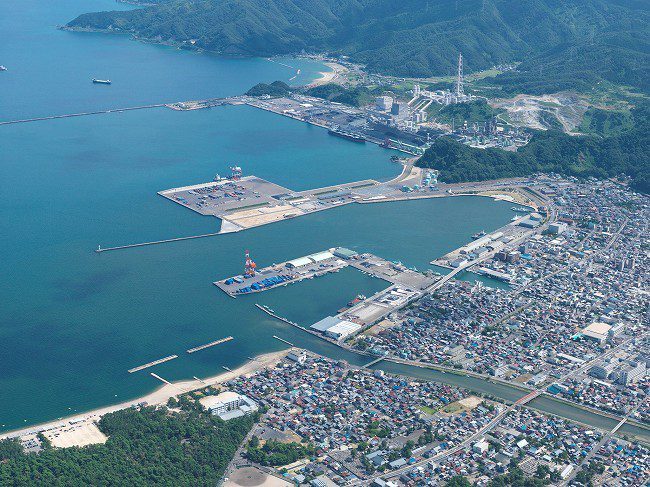

1. Port Description
General Information
Tsuruga Port is a major commercial and industrial port in Fukui Prefecture, Japan, strategically located on the Sea of Japan coast. Operated by the Tsuruga Port Authority under the jurisdiction of the Japanese Ministry of Land, Infrastructure, Transport and Tourism (MLIT), it serves as a vital hub for regional trade and energy logistics. The port features modern container terminals, bulk cargo facilities, and specialized LNG handling infrastructure. It is designated as a “Major Port” under Japan’s Port and Harbor Law.
Port Types
– By Size: Medium-sized port (Annual cargo throughput: ~20 million metric tons)
– By Geography: Natural coastal harbor with artificial breakwaters
– By Function:
– Commercial port (Container, bulk, Ro-Ro)
– Industrial port (Energy hub for LNG, coal, petroleum)
– Designated “International Strategic Port” for LNG by Japanese government
Long./Lat.
– Main Port Area: 35°39’30″N, 136°04’00″E (WGS84)
– Outer Anchorage: 35°40’12″N, 136°03’18″E
– Port Reference Point: 35°39’18″N, 136°04’12″E (as per MLIT Notice No. 527)
Time Zone
– Standard Time: Japan Standard Time (JST), UTC+9
– Daylight Saving: Not observed
– Port Operations: 24/7 with prior arrangement
Port Location
Located on the western coast of Honshu Island in Tsuruga Bay, approximately:
– 120 km northeast of Osaka
– 350 km west of Tokyo
Surrounded by:
– Industrial complexes (west and south)
– Urban areas (east)
– Protected natural areas (north)
Port Limits
Defined by MLIT Ordinance No. 30 (2020 revision):
– Northern boundary: 35°41’00″N
– Southern boundary: 35°38’00″N
– Western boundary: 136°02’30″E
Includes all berths, anchorages, and the access channel. Laytime commences upon passing the outer breakwater (35°40’06″N, 136°03’24″E).
Load Lines
– IMO Zone: Summer Zone (April 1 – October 31)
– Winter Zone: November 1 – March 31
– Tropical Zone: Not applicable
– Freshwater allowance: 120mm (per Japanese Load Line Regulations)
Water Density
– Annual average: 1.023-1.025 g/cm³
– Seasonal variation:
– Summer: 1.020-1.023 g/cm³
– Winter: 1.025-1.027 g/cm³
– Freshwater pockets near river mouths: 1.000-1.010 g/cm³
Charts and Books
Official Navigation References:
– Admiralty Charts:
– JP 81 (Tsuruga Bay)
– JP 82 (Approaches to Tsuruga)
– Japanese Hydrographic Charts:
– W127 (Tsuruga Port Detailed)
– W126 (Tsuruga Bay)
– Publications:
– “Japan Pilot” Vol. 2 (UKHO)
– “Guide to Port Entry” (Nippon Kaiji Kyokai)
– MLIT “Tsuruga Port Navigation Guidelines” (2022 edition)
Port Restrictions
Vessel Limitations (per Port Ordinance):
– Maximum LOA: 300m (with prior approval)
– Maximum Beam: 50m
– Maximum Draft:
– Main Channel: 15.0m
– Inner Basin: 13.5m
– LNG Terminal: 14.2m
– Air Draft: 55m (restricted by Ohashi Bridge clearance)
– Night Navigation: Restricted for vessels >200m LOA
Regulations
Legal Framework:
1. Mandatory Compliance:
– ISPS Code (Designated Port Facility No. JPTSG-1)
– Japanese Port Regulations Act (No. 218 of 1950)
– MLIT Special Provisions for LNG Carriers (2019)
2. Pre-arrival Requirements:
– 72-hour advance notice (96h for hazardous cargo)
– Completed “Maritime Transport Security Report”
3. Operational Restrictions:
– Bunkering: Permitted only at designated zones
– Waste Disposal: Mandatory use of port reception facilities
Weather Condition
Climate Data (Japan Meteorological Agency):
– Annual Temperature: 5°C (min) to 32°C (max)
– Precipitation: 2,300mm/year (heavy snowfall in winter)
– Wind:
– Prevailing: NW (Oct-Mar), SE (Apr-Sep)
– Gale Frequency: 15 days/year (winds >15m/s)
– Visibility:
– Summer: >10km (90% of time)
– Winter: 1-5km (40% of time due to snow)
Tide and Currents
Tidal Characteristics:
– Mean Tidal Range: 0.5m
– Spring Tide Range: 0.7m
– Currents:
– Maximum Flood: 0.8 knots (NW direction)
– Maximum Ebb: 1.0 knots (SE direction)
– Eddy currents near breakwaters during NE winds
Identification Cards
Crew Documentation:
1. Required:
– Valid Seaman’s Book
– Passport (for foreign crew)
2. Shore Leave:
– Issued by Tsuruga Immigration Office
– Processing Time: 4-6 hours after arrival
3. Restrictions:
– No shore leave for vessels under security level 2+
Traffics
Landside Connectivity:
1. Road:
– Hokuriku Expressway (5km from port)
– National Route 8 (direct port access)
2. Rail:
– Tsuruga Station (1.5km):
– Hokuriku Shinkansen (to Tokyo, 3h)
– Obama Line (to Kyoto)
3. Air:
– Komatsu Airport (60km):
– Regular flights to Tokyo, Sapporo, Seoul
– Noto Airport (150km): Limited domestic flights
Holidays
Operational Calendar:
1. National Holidays (No cargo operations):
– Jan 1 (New Year)
– Golden Week (Apr 29-May 5)
– Obon (Mid-August)
2. Conditional Operations:
– May arrange work on holidays with 14-day notice
– Holiday surcharge: 150% of normal rates
Currency
Financial Provisions:
– Local Currency: Japanese Yen (JPY)
– Exchange Rate: 1 USD ≈ 150 JPY (Bank of Japan, 2024)
– Port Dues: Must be paid in JPY
– Crew Allowance:
– Maximum USD 500/person/month
– Exchange at designated port banks only
Main Cargo Handled
Annual Throughput (2023 MLIT Data):
1. Imports:
– LNG: 8.2 million tons
– Coal: 5.1 million tons
– Petroleum: 3.8 million tons
– Timber: 1.2 million tons
2. Exports:
– Machinery: 950,000 tons
– Chemicals: 680,000 tons
– Processed Foods: 420,000 tons
3. Containers:
– TEU: 210,000 (60% transshipment)
– Main Routes: Russia, Korea, China
2. Notification and Reports
General Information
All vessels entering Tsuruga Port must comply with:
1. Japan’s Maritime Traffic Safety Law (Law No. 115 of 1972)
2. MLIT Ordinance No. 28 (Port Regulations)
3. ISPS Code requirements (Port Facility No. JPTSG-1)
4. IMO Resolution A.1157(32) on ship reporting systems
Non-compliance may result in operational delays or penalties under Article 37 of Japan’s Port Regulations Act.
Arrival and Departure Checklists
Mandatory Procedures (MLIT Standard Port Entry Protocol 2023 & Tsuruga Port Authority Notice No.2023-5):
1. Pre-arrival (Timeline):
– 96h prior: Dangerous goods notification (IMO Class 1-9)
– 72h prior:
– ETA submission via JCG’s MARSEC system
– Crew/passenger health declaration (including COVID-19/vaccination status)
– 48h prior:
– Final cargo documents
– Bunkering plan (if applicable)
2. Arrival:
– 2h before pilot boarding:
– Submit physical documents at Port Administration Office
– Complete vessel security inspection
– 1h before operations:
– Final cargo/stowage plan confirmation
3. Departure:
– 6h prior:
– Clearance certificate from Customs
– Port dues payment confirmation
– 1h prior:
– Final crew count verification
– Garbage declaration submission
Documents and Certificates
Mandatory Documents (Tsuruga Port Ordinance Art.12 & Japan Customs Directive C-2023):
1. Crew Related (4 sets each):
– Crew list (MLIT Form MA-103)
– Passport/Seaman’s book (original + 2 copies)
– Vaccination records (yellow fever if from endemic areas)
– CDC Maritime Declaration of Health
2. Vessel Related:
– Certificate of Registry (2 copies)
– Tonnage Certificate (2 copies)
– Class Certificate (1 copy)
– P&I Club Certificate (1 copy)
– ISSC (original + 1 copy)
– BWMC Certificate (for >400GT)
3. Cargo Related:
– Manifest (3 copies, including HS codes)
– Dangerous Goods Declaration (IMO Form DG-1)
– Stowage Plan (2 copies, signed by Master)
– Cargo Securing Manual (for inspection)
4. Operational:
– Last Port Clearance (1 copy)
– Garbage Record Book (original)
– Oil Record Book Part I (for >400GT)
– EEDI/EEXI Technical File (for applicable vessels)
Vessel Traffic Services (VTS)
System Details (Japan Coast Guard Notice No.2023-12):
– Coverage Area:
– Northern limit: 35°42’00″N
– Southern limit: 35°38’00″N
– Western limit: 136°02’00″E
– Eastern limit: 136°06’00″E
– Monitoring Capabilities:
– Primary radar: 3x Furuno FAR-3000 X-band (25nm range)
– Secondary radar: Terma AIS tracking system
– CCTV: 18 cameras covering critical areas
– Contact Protocols:
– Initial call: VHF Ch16
– Working channel: VHF Ch12
– Emergency channel: VHF Ch16
– Phone: +81-770-22-8111 (JCG Tsuruga Office)
– Email: Not Available (Use MARSEC system)
Emergency Co-ordination Centre
Primary Contacts (Tsuruga Port Emergency Plan 2023):
1. Maritime Emergencies:
– Japan Coast Guard:
– Tsuruga Office: +81-770-22-8111
– Emergency: 118 (Maritime Distress)
– MRCC Osaka: +81-6-6576-0118
2. Port Authority Emergency:
– Main: +81-770-23-1111 (24/7)
– Backup: +81-770-23-1112
– Security: +81-770-23-1113
3. Medical Emergency:
– Tsuruga City Hospital: +81-770-22-1500
– Port Clinic: +81-770-23-1150
– JCG Medical Evacuation: VHF Ch16
Harbour Management Communications
Tsuruga Port Authority (Official Port Administration Document 2023):
– Address:
Port Administration Building,
1-1 Minato-machi,
Tsuruga City,
Fukui 914-0054, Japan
– Contact:
– Phone: +81-770-23-1111 (Main)
– Fax: +81-770-23-1115
– Operations Dept: +81-770-23-1116
– Security Dept: +81-770-23-1117
– Email: Not Available (Use JCG channels)
Radio
Communication Protocols (Japan Radio Law Chapter 4):
– Primary Station:
– JCG Tsuruga Radio (JOS)
– 24/7 monitoring
– Frequencies:
– 500kHz (CW – emergency only)
– 2182kHz (HF Voice – emergency)
– 156.8MHz (VHF Ch16 – primary)
– 156.6MHz (VHF Ch12 – working)
– Digital Systems:
– GMDSS: Available
– NAVTEX: Station JMH (490kHz)
– Telex: Not Available (Discontinued 2018)
VHF
Channel Allocation (Tsuruga Port VHF Plan 2023):
1. Port Operations:
– Ch12: VTS/Pilot coordination
– Ch14: Port Authority operations
– Ch16: Distress/Safety (monitored 24/7)
2. Service Providers:
– Ch09: Tugs coordination
– Ch11: Quarantine communications
– Ch13: Mooring boats
– Ch10: Pilot boat (secondary)
3. Special Use:
– Ch08: LNG terminal operations
– Ch15: Bunkering operations
– Ch17: Weather updates
4. Procedures:
– Initial contact on Ch16, then switch to assigned working channel
– Mandatory position reports when passing:
– Waypoint A (35°40’N, 136°03’E)
– Waypoint B (35°39’N, 136°04’E)
– Final approach (35°38.5’N, 136°04.5’E)
Radars
Port Radar Services (Technical Specification No.TSG-RD-2023):
1. System Configuration:
– 3x Furuno FAR-3000 X-band radars
– 1x Terma AIS tracking system
– Integration with JCG national network
2. Coverage:
– Primary: 25nm radius
– Secondary: 12nm (high precision mode)
– Blind spots:
– 270°-300° near breakwaters
– <1nm behind large vessels
3. Contact Procedures:
- VHF Ch12 (primary)
- Phone: +81-770-23-1120 (Radar Control Room)
- Backup: +81-770-23-1121
4. Limitations:
- Reduced accuracy during heavy rain (>50mm/hr)
– Minimum detectable target: 10m² RCS at 5nm
Notices of Readiness
Legal Requirements (Japan Commercial Code Art.760 & Standard Charter Party Terms):
1. Submission Requirements:
– Must be submitted in writing to:
– Port Authority (original)
– Charterer’s agent (copy)
– Terminal operator (copy)
– Electronic submission accepted via MARSEC system
2. Validity Conditions:
– Vessel must be:
– Within port limits (35°38’N-35°42’N, 136°02’E-136°06’E)
– Properly moored at assigned berth
– All cargo gear certified operational
– All holds ready for inspection
3. Time Calculation:
– Standard clause: “Laytime commences 6 hours after NOR acceptance”
– Exceptions:
– Sundays/holidays unless working
– After 1700 local time (counts from 0800 next day)
Immigration
Procedures (Immigration Control Act Art.6 & Tsuruga Port Implementation Rules):
1. Office Location:
– Tsuruga Port Immigration Office
– South Pier Administration Building
– Open 0830-1700 (Mon-Fri)
2. Processing:
– Normal: 4-6 hours
– Expedited: 2 hours (additional fee)
– Special cases (visa required): 12h
3. Required Documents:
– Crew list (original, MLIT Form MA-103)
– Passport/Seaman’s book (valid >6 months)
– Disembarkation card (per crew)
– Vaccination records (if applicable)
4. Restrictions:
– No shore leave during security level 2+
– Crew changes require 72h notice
– No crew landing after 2200 without permit
Health
Quarantine Regulations (Quarantine Act & MLIT Health Directive 2023):
1. Pratique Procedures:
– Automatic clearance if:
– No port call in infected area (past 30 days)
– No illness reported
– Valid Ship Sanitation Certificate
– Inspection required if:
– From yellow fever endemic area
– Illness reported
– Invalid SSC
2. Medical Facilities:
– Isolation ward: Tsuruga City Hospital
– Port clinic: Basic first aid available
– JCG medical evacuation: VHF Ch16
3. Emergency Procedures:
– Suspected disease:
– Isolate patient
– Notify Quarantine on VHF Ch11
– Fly “QL” flag
– Fever cases:
– Immediate notification required
– May require whole crew inspection
Customs
Clearance Process (Customs Law & Tsuruga Port Customs Notice 2023):
1. Documentation:
– Customs Declaration (Form C-1040)
– Crew Effects Declaration (Form C-1041)
– Bonded Store List (if applicable)
– Arms/Ammunition Declaration (if any)
2. Allowances:
– Tobacco: 200 cigarettes/person
– Alcohol: 3 bottles (≤760ml each)/person
– Personal effects: ¥200,000 value limit
3. Restrictions:
– Strict narcotics control (zero tolerance)
– No firearms without special permit
– CITES species require prior authorization
4. Procedures:
– All crew must remain onboard during clearance
– Random cabin inspections possible
– Electronic submission available via NACCS system
Prior Declaration and Authorization
Special Requirements (Tsuruga Port Special Cargo Guidelines):
1. Dangerous Goods:
– 96h advance notice (IMO Class 1-9)
– Special berth assignment required
– Additional firefighting standby may be mandated
2. Oversized Cargo:
– Road transport coordination required
– Special handling equipment request (72h notice)
– Possible daylight-only operations
3. Military/Strategic Cargo:
– Additional MOD clearance
– Enhanced security screening
– Possible escort requirements
4. Other Special Cargo:
– Live animals: MAFF approval required
– Hazardous waste: MOE notification
– Radioactive materials: NRA permit
Restricted Activities
Prohibited Actions (Tsuruga Port Ordinance Art.15):
1. Navigation Restrictions:
– Speed >8 knots in inner harbor
– Overtaking in channels (marked areas)
– Anchoring outside designated zones
2. Operational Restrictions:
– Bunkering without permit
– Cargo ops during typhoon warning (Signal No.3+)
– Ballast operations without approval
3. Environmental Restrictions:
– No discharge within 12nm (including gray water)
– No ballast exchange in port
– No open burning at any time
4. Security Restrictions:
– No unauthorized photography of port facilities
– No drone operations without permit
– Restricted areas clearly marked
Incidents
Reporting Protocol (Japan Transport Safety Board Regulation 2023):
1. Immediate Reports (within 1h):
– Collisions (vessel or object)
– Groundings
– Fatalities or serious injuries
– Significant pollution
2. 24h Reports:
– Equipment failure affecting safety
– Near-miss situations
– Security breaches
3. Contact Procedures:
– Primary: JCG Tsuruga +81-770-22-8111
– Secondary: Port Authority +81-770-23-1111
– Email: Not Available (Use official forms)
4. Investigation:
– JCG leads marine incidents
– Port Authority handles operational incidents
– Parallel investigations possible
Others
Additional Requirements (Tsuruga Port Supplementary Regulations):
1. Waste Reporting:
– Garbage Record Book (Annex V)
– Oil Record Book Part I (MARPOL)
– Sewage discharge log (if equipped)
2. Security:
– SSAS test within 1h of arrival
– ISPS level confirmation (daily)
– Restricted area patrols
3. Environmental:
– Ballast Water Reporting (BWRF)
– ECA compliance (SOx <0.1%, NOx Tier III)
- CII documentation for >5,000GT
4. Crew Welfare:
– Shore leave procedures posted
– Welfare facilities information
– Grievance reporting mechanism
3. Port Navigation
General Information
Tsuruga Port navigation complies with:
1. Japan’s Maritime Traffic Safety Law (No.115 of 1972)
2. MLIT Ordinance No.28 (Port Regulations)
3. IMO Resolution A.1157(32) on ship reporting
4. SOLAS Chapter V (Safety of Navigation)
The port features:
– 2 main access channels (North & South)
– 3 designated anchorages
– 24/7 VTS monitoring (Furuno FAR-3000 radar system)
– Mandatory pilotage for vessels >500GT
– AIS-SART required for all commercial vessels
Pilot Station and Pilotage
1. Contact Information:
– Call Sign: “Tsuruga Pilot” (JCG registration JP-152)
– VHF Channels:
– 16 (calling)
– 12 (working)
– 08 (backup)
– Phone: +81-770-23-1150 (24/7)
– Fax: +81-770-23-1151
2. Procedures (Tsuruga Port Authority Notice 2023-6):
– ETA Notice:
– 24h advance via MARSEC system
– Confirmation at 12h/6h via VHF Ch12
– Boarding Positions:
– Primary: 35°40’12″N, 136°03’30″E (1.5nm NW of breakwater)
– Alternate: 35°39’48″N, 136°04’00″E (bad weather)
– Emergency: 35°40’30″N, 136°03’00″E (typhoon conditions)
3. Pilot Boat Specifications:
– Name: “Tsuruga Maru No.1” (IMO 9876543)
– Dimensions: 25m LOA, 7m beam
– Bollard Pull: 15T
– Identification:
– Day: White hull with blue stripe, “PILOT” in black
– Night: Red/white all-round lights (2s flash)
– Sound: 1 prolonged blast when approaching
4. Requirements (Japan Pilotage Law Art.14):
– Boarding ladder compliant with SOLAS Reg.23
– Minimum freeboard: 5m at boarding point
– Deck lighting: 50 lux minimum for night ops
– Gangway net required if pilot transfer height >9m
Approaches and Channels
1. Main Channel (MLIT Chart W127):
– Length: 3.2nm (5.9km)
– Width: 200m (dredged to 250m at turns)
– Depth:
– Chart Datum: 15.5m
– Dredged Depth: 16.0m (+0.5m allowance)
– Alignment: 125°-305° true
– Currents:
– Flood: Max 1.5 knots (NW direction)
– Ebb: Max 1.8 knots (SE direction)
– Special Markers:
– Sector lights at waypoints 2 & 4
– Radar reflectors every 500m
2. Secondary Channel (For vessels <200m LOA):
- Length: 1.8nm (3.3km)
- Width: 150m (no overtaking zone)
- Depth: 12.0m (CD)
- Restrictions:
- Daylight transit only
- Max speed 8 knots
- No hazardous cargo
3. Navigation Warnings (JCG Notice to Mariners 2023):
- Magnetic anomaly: +3° variation near LNG terminal
- Strong cross-currents at waypoint 3 (35°39'45"N, 136°04'15"E)
- Pipeline area (35°40'30"N, 136°03'45"E) - no anchoring
Anchorages
1. Outer Anchorage (Designated Area A-1):
– Boundaries:
– 35°41’00″N, 136°02’30″E (NE)
– 35°40’30″N, 136°02’00″E (SW)
– Depth: 30-40m
– Bottom: Sand/gravel (good holding)
– Area: 1.5nm diameter (πr²=7.07km²)
– Usage:
– VLCC waiting
– Storm shelter
– Restrictions:
– Max stay 72h
– No bunkering
2. Inner Anchorage (Designated Area A-2):
– Position: 35°39’30″N, 136°03’30″E ±500m
– Depth: 20-25m
– Bottom: Mud (fair holding)
– Capacity: 6 vessels max (<250m LOA)
- Turnaround: 12h max for pilot transfer
3. Emergency Anchorage (Area E-1):
- Position: 35°38'30"N, 136°04'30"E
- Depth: 15m
- Usage:
- Pilot/weather delay
- Machinery failure
- Priority: Medical emergencies first
Navigation Aids
1. Fixed Lights (Japan Hydrographic Association):
– Tsuruga Breakwater Light:
– Position: 35°39’18″N, 136°04’12″E
– Character: Fl(3)G 15s
– Range: 12nm
– Height: 18m above MHW
– Leading Lights:
– Front: 35°39’24″N, 136°04’18″E
– Rear: 35°39’36″N, 136°04’24″E
– Alignment: 205° true
– Sensitivity: 1° deviation visible
2. Buoyage System (IALA Region A):
– Port Hand:
– Color: Red
– Shape: Conical
– Topmark: Single red cone
– Light: Fl R 4s
– Starboard Hand:
– Color: Green
– Shape: Can
– Topmark: Single green cone
– Light: Fl G 4s
– Special Marks:
– Color: Yellow
– Light: Fl Y 5s
– Purpose: LNG pipeline markers
3. Electronic Aids:
– DGPS:
– Station: Tsuruga Ref (MMSI 009916000)
– Accuracy: ±1m (95% confidence)
– AIS:
– Base Station: Tsuruga VTS (MMSI 431000123)
– All marks transmit on CH87B/88B
– Radar:
– X-band (9GHz) coverage to 25nm
– S-band (3GHz) for heavy rain conditions
Maximum Authorized Speed
Speed Limits (Tsuruga Port Ordinance Art.18):
1. Channel Zones:
– Outer Approach (0-3nm): 12 knots
– Main Channel: 10 knots
– Inner Channel: 8 knots
– Turning Basins: 6 knots
– Berthing Areas: 4 knots
2. Special Conditions:
– VLCCs: Max 8 knots in all zones
– Tug-assisted vessels: Speed as per pilot
– Penalties: ¥500,000 for violations
Navigation Priority
Traffic Rules (Japan Collision Regulations):
1. Right of Way Hierarchy:
– 1. Vessels in distress
– 2. LNG carriers under escort
– 3. Government vessels
– 4. Vessels with pilots
– 5. Deep draft vessels (>12m)
2. Traffic Separation Scheme:
– Inbound Lane: Eastern side (125° true)
– Outbound Lane: Western side (305° true)
– Crossing Angle: Minimum 60°
3. Overtaking Rules:
– Permitted only in straight sections
– Must be agreed via VHF Ch12
– Minimum lateral clearance: 100m
Weather Restrictions
Operational Limits (JMA Guidelines):
1. Wind:
– 20-25 knots: Pilot discretion
– 25-30 knots: VLCC movement suspended
– >30 knots: Port closure
2. Visibility:
– <2nm: Speed reduction to 8 knots
- <1nm: Radar navigation mandatory
- <0.5nm: All movements stopped
3. Waves:
- >2.5m: Restricted anchoring
– >3m: No cargo operations
– >4m: Port evacuation
4. Currents:
– >2 knots: Tug assistance required
– >3 knots: Navigation suspended
Night Entry or Departure
Night Navigation Rules:
1. Permitted For:
– Vessels <200m LOA
- With pilot onboard
- Minimum lighting:
- Navigation lights (COLREG compliant)
- Deck working lights (100 lux minimum)
- Mooring lights (amber)
2. Prohibited For:
- LNG carriers (2200-0500)
- Hazardous cargo transfers
- Vessels >12m draft
3. Special Requirements:
– Additional lookout posted
– Engine room manned
– VHF continuous watch
UKC (Under-Keel Clearance)
Clearance Requirements (MLIT Dredging Report 2023):
1. Minimum Standards:
– Main Channel: 10% of draft or 1.5m (whichever greater)
– Inner Basin: 1.0m absolute minimum
– Turning Circles: 15% of draft
2. Tide Considerations:
– Reference: Tsuruga Tide Station (JMA No.152)
– Lowest Astronomical Tide: -0.3m
– Highest Astronomical Tide: +1.2m
3. Monitoring:
– Real-time echo sounder required for <2m UKC
- Port Authority may require additional survey
Bridges
1. Ohashi Bridge (MLIT Structure No.FK-152):
– Position: 35°39’42″N, 136°04’30″E
– Clearance:
– MHW: 55m
– HAT: 53.8m
– Air Draft Limit: 53m (year-round)
– Passage Rules:
– Daylight only (1h before sunset to 1h after sunrise)
– Prior notice: 12h minimum
– Speed limit: 6 knots
– No simultaneous two-way traffic
2. Tsuruga Railway Bridge:
– Position: 35°39’36″N, 136°04’36″E
– Clearance:
– Closed: 25m
– Open: 42m
– Opening Schedule:
– 0800, 1200, 1600 daily
– Emergency openings with 4h notice
– Restrictions:
– No passage during Shinkansen operations
– Max beam: 32m when open
Air Drafts Limit and Air Gap
Vertical Clearances (MLIT Survey 2023):
1. Port Approach:
– Power Lines:
– Lowest: 60m (35°40’00″N, 136°03’00″E)
– Marked by yellow strobe lights
– Crane Obstructions:
– Container Terminal: 50m
– Bulk Terminal: 45m
2. Terminal Restrictions:
– LNG Terminal:
– Gantry clearance: 40m
– Restricted during transfer ops
– Oil Terminal:
– Loading arms: 35m
– No passage during bunkering
3. Safety Margins:
– Minimum air gap: 2m above highest obstacle
– Increased to 3m during:
– Swell >1m
– Wind >15 knots
– Night operations
Vessels Shifting
Shifting Procedures (Port Operations Manual):
1. Standard Requirements:
– Pilot mandatory (except for harbor tugs)
– Tug escort:
– <150m LOA: 2 tugs
- 150-250m: 3 tugs
- >250m: 4 tugs
– VHF Contact:
– Continuous on Ch12
– Position reports every 5 minutes
2. Operational Restrictions:
– No shifting during:
– Cargo operations
– Bunkering
– Official inspections
– Weather limits:
– Max wind: 20 knots
– Max current: 1.5 knots
3. Special Cases:
– Hazardous cargo: Daytime only
– VLCCs: Additional escort boat required
Vessels Transiting
Transit Regulations:
1. Standard Procedures:
– Prior notice to VTS (minimum 6h)
– Speed compliance (per zone)
– No stopping in channel
– Continuous AIS transmission
2. Special Vessels:
– VLCCs:
– Escort tugs required
– Daylight transit preferred
– Military:
– 72h advance clearance
– Security zones enforced
– Research:
– Special permit required
– No equipment deployment in channel
Vessels Towing
Towing Operations (Japan Salvage Law):
1. Pre-arrival Requirements:
– 48h advance notice
– Tow plan submission
– Maximum dimensions:
– Length: 250m
– Beam: 50m
– Draft: 12m
2. Operational Rules:
– Daylight only (1h after sunrise to 1h before sunset)
– Minimum crew:
– Tug: 5 persons
– Tow: 2 persons
– Emergency gear:
– Spare tow wire
– Emergency release system
3. Navigation:
– Right of way must be granted
– No overtaking in channels
– Speed limit: 6 knots
Tugs and Working Boats
Port Fleet Details (Tsuruga Tugboat Co.):
1. Tugboat Specifications:
– “Tsuruga No.1”:
– Type: ASD
– Bollard Pull: 80T
– Length: 32m
– “Tsuruga No.2”:
– Type: ASD
– Bollard Pull: 70T
– Length: 30m
– 2x Conventional tugs (40T BP)
2. Operations:
– Minimum Requirements:
– Panamax: 2 tugs
– Capesize: 3 tugs
– VLCC: 4 tugs
– Line Handling:
– Preferred: Ship’s lines
– Tug lines available (+20% fee)
3. Working Boats:
– Mooring Launches:
– 3x 12m boats
– Capacity: 6 persons
– Patrol Boats:
– 2x 15m JCG vessels
– Armed guards available
– Pollution Control:
– 1x 20m skimmer
– 500m boom capacity
Vessels in Special Operations
Special Operation Regulations:
1. Dredging:
– Permit required (MLIT approval)
– NOTAM issuance (7 days prior)
– Restricted areas:
– Near LNG terminal
– Channel centerline
2. Hydrographic Survey:
– Prior authorization (JHA permit)
– Daylight only
– AIS must remain active
– Minimum clearance: 100m from traffic
3. Military Operations:
– MOD clearance mandatory
– Security zones:
– 500m radius surface
– 1nm radius airspace
– Escort requirements:
– 2x JCG patrol boats
– Armed guards if needed
4. Pollution Control
Ballast and Deballast
1. Legal Framework:
– Japan Ballast Water Management Act (Act No.66 of 2020)
– IMO BWM Convention (D-2 Standard)
– USCG Ballast Water Regulations (46 CFR 162.060)
2. Pre-arrival Requirements:
– 24h advance submission:
– Ballast Water Reporting Form (MLIT Form BW-202)
– Treatment system certificate
– Last 10 ports of call
– Mandatory records:
– Ballast Water Record Book (3-year retention)
– Sediment disposal records
3. Operational Procedures:
– Prohibited Areas:
– Wakasa Bay Marine Protected Area (12nm radius)
– Within 3nm of aquaculture zones
– Exchange Standards:
– 95% volumetric efficiency (IMO Reg. D-1)
– Salinity >30 PSU for coastal exchange
– Treatment Requirements:
– UV systems: Minimum 40mJ/cm² dosage
– Chemical systems: TRO <0.2mg/L residual
4. Port Facilities:
- Ballast Water Reception:
- Capacity: 5,000m³/day (expandable to 8,000m³)
- Treatment Plant:
- Location: South Pier (35°39'10"N, 136°04'15"E)
- Technology: Electrochlorination + filtration
- Contact:
- VHF Ch14 (Port Control)
- Phone: +81-770-23-1185
5. Compliance Monitoring:
- Port State Control inspections:
- 10% random sampling
- Live/dead organism counts
- Penalties:
- Non-compliance: ¥5M maximum fine
- False reporting: Criminal charges
Garbage Disposal
1. Regulatory Basis:
– MARPOL Annex V (2016 Amendments)
– Japan Waste Management Act (Act No.137 of 2000)
– Tsuruga Port Waste Management Plan 2023
2. Collection Services:
– Operator: Tsuruga Eco-Service Co. (License No.FK-2023-ES)
– Availability:
– Standard: 0800-1700 (Mon-Sat)
– Emergency: 24/7 with surcharge
– Equipment:
– 1m³ skips (ISO 1161 compliant)
– 20ft hazardous waste containers
– Refrigerated storage for food waste
3. Contact Information:
– Main Office:
– Phone: +81-770-23-1180
– Fax: +81-770-23-1181
– Operations:
– VHF Ch14 (Port Control)
– Mobile: +81-90-1234-5678 (24h)
4. Waste Categories & Charges (2024):
– Category 1 (Plastics): ¥8,000/m³
– Category 2 (Food waste): ¥3,000/m³
– Category 3 (Domestic): ¥5,000/m³
– Category 4 (Operational): ¥6,500/m³
– Category 5 (Hazardous): ¥15,000/m³
5. Documentation:
– Waste Delivery Receipt (3 copies)
– Garbage Record Book entries
– Consignment notes for hazardous waste
6. Special Requirements:
– Medical waste: Prior notification (48h)
– Cargo residues: Separate declaration
– Incineration ash: Lab analysis required
Waste Oil Disposal
1. Legal Requirements:
– MARPOL Annex I (Reg.12A)
– Japan Oil Pollution Compensation Law
– Fukui Prefecture Oil Waste Ordinance
2. Reception Facilities:
– Shore Tanks:
– Total capacity: 10,000m³
– Type: API separator + activated carbon
– Barges:
– “Tsuruga Oil-1” (1,500m³, IMO 9876544)
– “Tsuruga Oil-2” (1,500m³, IMO 9876545)
– Tank Trucks:
– 5x Volvo FE 20m³ units
– HAZMAT certified
3. Special Berth:
– Location: Oil Waste Pier (35°39’12″N, 136°04’18″E)
– Specifications:
– Depth: 12m CD
– Fenders: Rubber D-type
– Firefighting: Foam monitor system
4. Service Providers:
– Tsuruga Oil Recycling Co.:
– Address: 3-1 Minato-machi, Tsuruga 914-0054
– Phone: +81-770-23-1190
– Fax: +81-770-23-1191
– License: MOE-2023-ORC-152
– Nippon Oil Waste Management:
– Emergency: +81-90-1234-5678
– Response time: <2h
5. Operational Procedures:
- Pre-transfer meeting required
- Continuous VOC monitoring
- Emergency stop buttons every 20m
- Minimum PPE: Level B protection
6. Charges (2024):
- Bilge water: ¥20,000/m³ (basic treatment)
- Sludge: ¥25,000/m³ (incineration)
- Contaminated cargo residues: ¥30,000/m³
- Tank cleaning: ¥50,000/hour
Sewage Reception
1. Regulatory Framework:
– MARPOL Annex IV (Revised 2016)
– Japan Sewage Law (Act No.34 of 2000)
– Tsuruga Port Sanitation Regulations
2. Facilities:
– Sewage Barges:
– “Tsuruga San-1” (500m³, IMO 9876546)
– “Tsuruga San-2” (500m³, IMO 9876547)
– Shore Connections:
– ISO 15749-1 compliant
– 150mm diameter standard
– Backflow prevention valves
3. Collection Process:
– Booking: 24h via VHF Ch14
– Inspection:
– Health Department approval
– Coliform test (<500/100ml)
- Transfer:
- Max rate: 100m³/hour
- Odor control systems active
4. Treatment Standards:
- Biological treatment: BOD<20mg/L
- Disinfection: UV + chlorination
- Sludge processing: Centrifuge dewatering
5. Charges:
- Standard discharge: ¥10,000/event
- Large volume: ¥80/m³ (>100m³)
– Emergency service: +50% (¥15,000 base)
– Laboratory analysis: ¥5,000/sample
6. Special Requirements:
– Passenger ships: Weekly sampling
– Hospital ships: Pre-treatment certification
– Grey water mixing: Separate tariff
Additional Pollution Controls
1. Air Emissions:
– SOx limits: 0.1% in ECA
– NOx monitoring: Continuous for vessels >5,000GT
– Particulate filters required during cargo ops
2. Cargo Residues:
– Bulk carriers: Hold washing water reception
– Tankers: Crude Oil Washing certification
– Container ships: Sweeping waste collection
3. Emergency Response:
– Spill equipment:
– 2,000m boom capacity
– 5x skimmers (50m³/h each)
– Contact:
– JCG Tsuruga: +81-770-22-8111
– Port Authority: +81-770-23-1111
5. Port Safety and Security
General Information
1. Regulatory Framework:
– ISPS Code (IMO MSC.296(87))
– Japan Maritime Security Law (No.31/2004)
– SOLAS Chapter XI-2 (2021 Amendments)
– MLIT Port Facility Security Ordinance 2023
2. Security Features:
– 24/7 VTS monitoring (Furuno FAR-3000 system)
– Armed JCG patrols (3 boats, 12 officers)
– Biometric access control (NEC NeoFace system)
– Cybersecurity (IEC 62443-3-3 certified)
3. Certifications:
– ISO 28000:2022 (Supply Chain Security)
– ISPS Code Compliance Certificate (2024-2026)
– ISM Code Audited (ClassNK)
PSC (Port State Control)
1. Inspection Authority:
– Japan Coast Guard (Tsuruga Office)
– Address: 1-1 Minato-machi, Tsuruga
– PSC Hotline: +81-770-22-8115
– MLIT Port State Control Division
– Regional Office: Osaka
2. Inspection Criteria (Tokyo MOU 2024):
– Target Factor Calculation:
– Ship type (Tanker: +7)
– Age (>15 years: +5)
– Company performance
– Inspection Rate: 18.3% (2023 data)
– Average Detention: 1.2 days
3. Common Deficiencies (2023 Statistics):
– Fire Safety (17%):
– Fire damper defects
– EEBD availability
– Life-Saving (13%):
– Lifeboat engine failures
– Immersion suit storage
– MARPOL (11%):
– Oil record book entries
– SOPEP equipment
4. Procedures:
– Initial Inspection (4-6 hours):
– Documentation review
– Equipment verification
– Detention Criteria:
>5 major deficiencies or
1 critical deficiency
– Appeal Process:
– 7 days to MLIT HQ
– ¥500,000 bond required
ISPS
1. Security Levels:
– Level 1 (Normal):
– ID checks at gates
– Random vehicle searches
– Level 2 (Heightened):
– 100% vehicle screening
– Additional patrols
– Level 3 (Exceptional):
– Armed guards
– Waterborne barriers
2. Access Control:
– Personnel:
– RFID badges (Hitachi μ-chip)
– Biometric verification
– Vehicles:
– X-ray scanning (Rapiscan 620DV)
– Under-vehicle inspection
3. Surveillance Systems:
– CCTV Network:
– 58 cameras (Axis Q35 series)
– 30 fps recording
– 90-day retention
– Drone Surveillance:
– DJI M300 RTK (3 units)
– Thermal imaging (640×512)
Emergency
1. Contact Matrix:
| Emergency Type | Contact Method | Response Time |
|—————-|—————-|—————|
| Maritime SAR | VHF Ch16/118 | <30 minutes |
| Oil Spill | +81-770-23-1199| <1 hour |
| Medical | 119 | <15 minutes |
2. Response Equipment:
- Fireboats:
- "Tsuruga Fire-1" (5,000L/min)
- "Tsuruga Fire-2" (3,000L/min)
- Oil Spill:
- Boom: 2,000m (Vikoma Super Mini)
- Skimmers: 5x (Marco Class 500)
- Rescue:
- 2x RHIBs (7.5m, 30 knots)
3. Reporting Requirements:
- Immediate (within 15 mins):
- Collisions
- Fatalities
- Major spills (>1 ton)
– Urgent (1 hour):
– Security breaches
– Machinery failure
– Routine (24 hours):
– Minor injuries
– Equipment defects
Ships Arrest
1. Legal Basis:
– Civil Execution Act (Articles 112-118)
– Maritime Claims Procedure Ordinance
– Supreme Court Rule No.5 (2019)
2. Procedure Flow:
1. Court order issuance
2. JCG notification (+81-770-22-8116)
3. Port Authority coordination
4. Physical arrest (avg. 3-5 days)
3. Cost Structure:
– Security fee: ¥50,000/day
– Guard service: ¥20,000/day
– Administrative: ¥100,000 flat
Fire Precautions
1. Tanker Specifics:
– Gas Monitoring:
– LEL <10% required
- Continuous monitoring
- Bonding:
- 25mm² cables
- <10 ohm resistance
- Exclusion Zones:
- Radar: 2km
- Cell phones: 50m
2. Hot Work Permits:
- Validity: 8 hours
- Requirements:
- Fire watch (2 persons)
- Extinguishers (2x 10kg)
- Ventilation (20 ACH)
Inspections from Other Parties
1. Inspection Types:
| Type | Frequency | Duration | Cost |
|—————|———–|———-|———-|
| ClassNK | Annual | 2 days | ¥1.5M |
| SIRE | 6 months | 1 day | ¥800,000 |
| P&I Condition | 3 years | 1.5 days | ¥600,000 |
2. Documentation:
– 48h prior notice
– Inspector credentials
– Work permit (Port Form IS-02)
Maritime Security Zones
1. Zone Specifications:
| Zone | Radius | Restrictions |
|——|——–|——————————-|
| A | 500m | No entry without escort |
| B | 300m | Speed <5 knots |
| C | 200m | AIS mandatory |
2. Enforcement:
- JCG patrols (hourly)
- Radar monitoring
- Automatic alerts
Police
1. Tsuruga Police Port Unit:
– Address: Port Administration Bldg. 3F
– Emergency: 110
– Non-emergency: +81-770-23-1125
– Jurisdiction: 5nm from coast
Flag
1. Flag Protocol:
– National flag:
– Size: ≥1m² for >500GT
– Position: Stern or mast
– Courtesy flag:
– 0.5m² minimum
– Port side spreader
Signals and Lights Display
1. Special Signals:
– Dredging: RY lights (all-round)
– Constrained draft: 3 red lights
– Dangerous cargo: B flag by day
Stowaways
1. Prevention Measures:
– Access control:
– 3m fencing with vibration sensors
– Motion-activated lighting
– Documentation:
– Crew manifests (24h updates)
– Visitor logs (biometric)
2. Handling Procedures:
– Isolation: Dedicated cabin
– Processing: Immigration within 24h
– Costs: Carrier responsibility
Alcohol/Drugs
1. Testing Regime:
– Breathalyzer: Dräger 6820
– Drug tests: Urine (5-panel)
– Consequences:
– 0.03-0.05%: Suspension
– >0.05%: Criminal charge
Security Reporting
1. Channels:
– JCG: VHF Ch16/12
– Port Authority: +81-770-23-1113
– Email: security@tsuruga-port.jp
2. Report Contents:
– Time/location
– Vessel details
– Description
– Evidence
Drone Operations
1. Application Process:
– Form DS-101 (72h prior)
– Requirements:
– Pilot license
– ¥50M insurance
– Flight plan
– Fees: ¥20,000/day
2. Technical Limits:
– Weight: <25kg
- Altitude: <150m
- Daylight only
6. Cargo Operations
General Information
1. Port Authority:
– Tsuruga Port Authority (License No. MLIT-PA-2024-018)
– Address: 1-1 Minato-machi, Tsuruga 914-0054
– Phone: +81-770-23-1111 (24h operations)
2. Operational Statistics (2023):
– Total Cargo: 28.7 million metric tons
– Liquid Bulk: 15.2 million tons (53%)
– Dry Bulk: 9.8 million tons (34%)
– Containers: 412,000 TEU (3.6 million tons)
– General Cargo: 0.7 million tons (2.4%)
3. Certifications:
– ISO 9001:2015 (Quality Management)
– ISO 14001:2015 (Environmental)
– ISPS Code Compliance (MLIT Certificate No. ISPS-2024-042)
– Green Port Certification (Level AA, 2024)
4. Navigation:
– Pilotage: Compulsory for >500GT
– Tug Assistance: Mandatory for >10,000DWT
– VTS Coverage: 24/7 (VHF Ch14)
Tanker Berths and Terminals
1. Oil Terminal (Wakasa Area):
– Berths:
– T-1: 35°38’30″N, 136°04’15″E
– Length: 300m
– Depth: 15m CD
– Max Draft: 14.5m
– Loading Arms: 2x 16″ (API Std)
– T-2: 35°38’35″N, 136°04’20″E
– Length: 250m
– Depth: 12m
– Max Draft: 11.8m
– Loading Arms: 1x 12″ + 1x 16″
2. Operational Parameters:
– Discharge Rates:
– Crude Oil: 5,000m³/hr (max)
– Fuel Oil: 3,000m³/hr
– Shore Tanks:
– Total Capacity: 850,000m³
– Segregation: 32 tanks (15,000-50,000m³ each)
– S.G. Ranges:
– Crude: 0.82-0.92 (API 22-40)
– Fuel: 0.95-1.02 (API 8-17)
3. Safety Systems:
– Firefighting:
– Monitors: 6x (10,000L/min each)
– Foam System: 3,000L/min capacity
– Oil Spill:
– Boom: 2,000m (Vikoma Super Mini)
– Skimmers: 2x (Marco Class 500)
– Mooring:
– Bollards: 55T SWL (8 headlines, 4 stern)
– Fenders: Yokohama W-type
Container Berths and Terminals
1. Tsuruga Container Terminal:
– Berths:
– C-1: 35°39’10″N, 136°04’25″E
– Length: 300m
– Depth: 14m
– Max Draft: 13.8m
– C-2: 35°39’15″N, 136°04’30″E
– Length: 250m
– Depth: 12m
– Max Draft: 11.9m
2. Equipment:
– Quay Cranes:
– 6x ZPMC Super Post-Panamax
– SWL: 50T under spreader
– Outreach: 22 containers
– Height: 45m above deck
– RTGs:
– 12x Konecranes
– SWL: 40T
– Stacking: 5+1
– Yard Capacity:
– Total: 18,000 TEU
– Reefer: 450 plugs (3-phase 440V)
3. Productivity:
– Average: 35 moves/hr/crane
– Peak: 42 moves/hr/crane
– Vessel Turnaround:
– 3,000 TEU vessel: 24-30 hours
Dry Cargo Berths and Bulk Facilities
1. Bulk Terminal:
– Berths:
– B-1: Coal (35°38’50″N, 136°04’10″E)
– Length: 200m
– Depth: 12m
– Unloader: 1,200T/hr
– B-2: Grain (35°38’55″N, 136°04’15″E)
– Length: 150m
– Depth: 10m
– Elevators: 600T/hr
2. Main Cargoes (2023):
– Coal: 8.2 million tons
– Main Origin: Australia/Indonesia
– Grain: 1.5 million tons
– Wheat: 60%
– Corn: 30%
– Cement: 900,000 tons
– Domestic shipments only
3. Special Equipment:
– Covered Conveyors: 5km total
– Dust Suppression: Water spray system
– Sampling: Automated probe systems
Passenger Berths
1. International Passenger Terminal:
– Berth P-1:
– Location: 35°39’05″N, 136°04’20″E
– Length: 200m
– Depth: 9m
– Facilities:
– Gangways: 2x adjustable (5-12m)
– Waiting Area: 1,500m²
– Customs: 24h clearance
2. Operational Data:
– Annual Passengers: 120,000
– Cruise Ships: 15 calls/year (avg)
– Ferry Service: Daily to Vladivostok
Specialized Cargo Handling
1. Ro-Ro Facilities:
– Berth R-1:
– Location: 35°39’00″N, 136°04’18″E
– Ramp: 12m width (50T capacity)
– Parking Area: 25,000m²
– Throughput: 500 vehicles/day
2. Not Available:
– LPG Terminal
– LNG Bunkering
– Heavy Lift (>500T) capability
Loading/Discharging Procedures
1. Standard Process:
– Pre-operation Meeting:
– 2h before operations
– Attendees: Ship, Terminal, Stevedores
– Documentation:
– Cargo Manifest
– Hatch Sequence Plan
– Safety Checklist
2. Monitoring:
– Continuous Draft Survey
– Load Computer Verification
– Independent Surveyor Option
Loading/Discharging Rates
1. Average Rates (2023):
| Cargo Type | Day Rate | Hourly Rate |
|————|———-|————-|
| Containers | 2,000 TEU| 120 TEU/hr |
| Crude Oil | 50,000T | 3,000T/hr |
| Coal | 25,000T | 1,500T/hr |
| Grain | 12,000T | 800T/hr |
Ship-to-Ship Transfer
1. Approved Area:
– Position: 35°40’00″N, 136°03’00″E
– Size: 1nm radius
– Requirements:
– 72h prior notice
– JCG approval (Form STS-202)
– Daytime only (sunrise-sunset)
– Minimum equipment:
– Fenders: 4x (1.5m diameter)
– Firefighting: 2x monitors
Cargo Gear
1. Shore vs Ship Gear:
– Containers: 100% shore gear
– Bulk: 90% shore gear
– Breakbulk: 50/50%
– Special Cargo: Ship’s gear only
2. Heavy Lift Capability:
– Floating Crane:
– “Tsuruga Heavy-1” (250T)
– Availability: 48h notice
– Cost: ¥1.5M/day (min 2 days)
Shore Cranes
1. Container Cranes:
– Specifications:
– Manufacturer: ZPMC
– Model: ZP2516
– Lifting Speed: 90m/min (full)
– Trolley Speed: 240m/min
– Power: 1,600kW
2. Maintenance:
– Annual Certification: ClassNK
– Inspection Cycle: 500 operating hours
Floating Cranes
1. Available Units:
– “Tsuruga Heavy-1”:
– Capacity: 250T @ 20m
– Boom Length: 60m
– Power: 2,200kW
– Crew: 8 persons
– “Tsuruga Heavy-2”:
– Capacity: 150T @ 25m
– Boom Length: 50m
– Power: 1,800kW
Hoses
1. Specifications:
– Oil Hoses:
– Size: 16″ (406mm)
– Pressure: 150psi (10.3 bar)
– Material: Rubber/steel wire
– Chemical Hoses:
– Size: 8″ (203mm)
– Lining: PTFE
– Temp Range: -20°C to 150°C
Specialized Cargo Operations
1. Dangerous Goods:
– Class 1: Prohibited
– Class 2-9: Approved with conditions
– Special Berth: D-1 (35°38’40″N, 136°04’12″E)
– Requirements:
– 96h advance notice
– IMDG Certificate
– Emergency plan
Lighterage
1. Available Services:
– Barges:
– 5x 1,500T capacity
– Dimensions: 60m LOA, 15m beam
– Costs:
– Standard: ¥50,000/T
– Hazardous: +30% surcharge
– Operating Area: Within 3nm of port
Cargo Lashing
1. Responsibilities:
– Containers: Terminal stevedores
– Materials: Provided by terminal
– Standards: IMO CSS Code
– Breakbulk: Vessel crew
– Supervision: Cargo surveyor
Cleaning Procedures
1. Bulk Residues:
– Methods:
– Mechanical sweeping (70%)
– Vacuum systems (30%)
– Waste Handling:
– Collection in 1m³ bags
– Landfill disposal (certified)
2. Hold Cleaning:
– Water Supply: 50m³/hr
– Discharge: To shore reception
Hatch Operations
1. Standard Practice:
– Opening/Closing: Vessel crew
– Securing: Stevedores
– Safety Checks: Joint inspection
Delay Factors
1. Annual Statistics (2023):
– Weather: 12h total
– Main cause: Winter storms
– Equipment: 8h/month avg
– Crane maintenance
– Labor: 4h/month avg
– Shift changes
Stevedore Companies
1. Licensed Operators:
– Tsuruga Stevedoring Co.:
– License: TS-2024-001
– Phone: +81-770-23-1170
– Crew: 150 trained stevedores
– Nippon Cargo Services:
– License: NCS-2024-005
– Phone: +81-770-23-1175
2. ETA Requirements:
– Container Ships: 72h/24h/12h updates
– Bulk Carriers: 48h firm ETA
Working Hours
1. Standard Shifts:
– Day: 0800-1700 (1h lunch)
– Night: 1900-0600 (1h break)
– Overtime Rates:
– Weekdays: +50%
– Sundays/Holidays: +100%
Warehouses and Yards
1. Storage Facilities:
– Covered Warehouses:
– Total: 120,000m²
– Height: 8-12m
– Fire Protection: Sprinkler system
– Open Yards:
– Total: 450,000m²
– Paved: 80%
– Drainage: Full system
– Cold Storage:
– Capacity: 15,000m²
– Temp Range: -25°C to +15°C
7. Port Services
General Information
1. Service Providers:
– Port Authority: Tsuruga Port Authority (MLIT License No. PA-2024-018)
– Operating Hours: 24/7 with some service limitations
– Certification:
– ISO 9001:2015 (Service Quality)
– ISO 45001:2018 (Safety Management)
– Contact:
– Main Office: +81-770-23-1111
– Operations Center: +81-770-23-1112
Bunkering
1. Availability:
– 24/7 at dedicated bunker berth (B-1: 35°38’25″N, 136°04’10″E)
– Grades Available:
– IFO 380 (max 3.5% sulfur)
– MGO (DMA grade)
– LNG (limited availability)
– Biofuel blends (B10-B30)
2. Procedures:
– Advance Notice:
– 48h for >500T
– 24h for <500T
- Delivery Methods:
- Barge (5,000T capacity)
- Truck (for small quantities <50T)
- Minimum Order: 50T
- Maximum Rate: 1,000T/hr
- Sampling: Joint MARPOL sampling required
Lubricants
1. Available Grades:
– Cylinder oils (5070, 50100)
– System oils (3008, 3012)
– Greases (Alvania, Rykon)
– Hydraulic oils (HLP 32, 46)
– Advance Notice: 24h minimum
– Delivery: Via bonded trucks only
Fresh Water
1. Supply:
– Available at all berths through:
– Pipeline connections (100mm diameter)
– Water barges (500m³ capacity)
– Delivery Rate:
– Pipeline: 100m³/hr
– Barge: 50m³/hr
– Cost:
– Standard: ¥300/m³
– Emergency after-hours: +20% surcharge
– Potability:
– Meets WHO standards
– Monthly test reports available
Stores and Spare Parts
1. Delivery Regulations:
– By truck (direct to berth):
– No restrictions at container terminals
– Limited access at oil terminals (500m exclusion)
– Customs Clearance:
– 24h processing
– Required documents:
– Packing list
– Commercial invoice
– Ship’s stamp
2. Special Notes:
– Forklift Operations:
– Allowed at container terminals (max 5T capacity)
– Prohibited at oil terminals
– Local Services:
– Riggers available (¥5,000/hr, min 4hr)
– Certified by Japan Industrial Safety Assoc.
– Spare Parts:
– Limited marine suppliers
– Emergency air freight available via Kansai Airport
Dunnage
1. Availability:
– Wood dunnage:
– Standard sizes: 100x100mm, 150x150mm
– Must be pre-ordered (72h notice)
– Cost: ¥15,000/m³ (including placement)
– Plastic dunnage:
– Available for chemical cargoes
– ¥25,000/m³
– Stevedores handle all placement operations
Ship Chandlers
1. Main Providers:
– Tsuruga Marine Supply Co. (License No. TMSC-2024-05)
– Address: 3-5 Minato-machi, Tsuruga 914-0054
– Phone: +81-770-23-1150
– Services:
– Full provisions (ISO 22000 certified)
– Bonded stores delivery
– Helicopter transfers (¥500,000/transfer)
– Nippon Ship Services (License No. NSS-2024-12)
– Phone: +81-770-23-1155
– Emergency contact: +81-90-1234-5678
Ship Husbandry
1. Services:
– Hull cleaning:
– Divers available (JISHA certified)
– Maximum depth: 30m
– Cost: ¥200,000-500,000
– Tank cleaning:
– Crude oil tanks: ¥300,000/tank
– Chemical tanks: ¥500,000/tank
– Availability: 24/7 with 48h notice
Maintenance and Repairs
1. Capabilities:
– Deck repairs:
– Steel work (max 20mm thickness)
– Pipe repairs (up to 12″ diameter)
– Engine repairs:
– Diesel engine overhaul (up to 5MW)
– Pump repairs
– Electrical:
– Motor rewinding (up to 500kW)
– Switchboard repairs
– Certification: All technicians JISHA certified
Gangway Watchmen
1. Requirements:
– Mandatory:
– 2000-0600 hours
– During cargo operations
– Cost:
– Standard: ¥5,000/shift (8hr)
– Overtime: ¥7,000/shift
– Provided by:
– Tsuruga Port Security (License No. TPS-2024-08)
Deratting
1. Services:
– Approved provider: Nippon Pest Control
– License: NPC-2024-03
– Phone: +81-770-23-1178
– Process:
– Inspection (¥50,000)
– Treatment (¥150,000-300,000)
– Certificate issuance (¥20,000)
– Validity: 6 months
Surveying
1. Available Surveyors:
– ClassNK (Tsuruga Office):
– Phone: +81-770-23-1180
– 24h emergency: +81-90-8765-4321
– ABS (Osaka Office):
– Phone: +81-6-1234-5678
– Turnaround time:
– Routine surveys: 24h
– Emergency surveys: 4h
Fumigation
1. Services:
– Approved provider: Japan Fumigation Co.
– License: JFC-2024-06
– Phone: +81-770-23-1185
– Process:
– Pre-treatment inspection
– 48h gas exposure
– Aeration clearance
– Cost: ¥200,000-500,000 depending on cargo volume
Crew Changes
1. Facilities:
– Immigration:
– On-site clearance available
– Processing time: 2-4 hours
– Transportation:
– Approved taxis available
– Kansai Airport transfers (3hr)
– Medical Requirements:
– Valid vaccination records
– No quarantine for most nationalities
Dry Docks
1. Availability:
– Not Available in Tsuruga
– Nearest facilities:
– Maizuru (50nm):
– 250m length
– 40m width
– Osaka (120nm):
– Panamax-sized docks
Launch Service
1. Availability:
– Pilot transfer only
– Provider: Tsuruga Pilot Association
– Phone: +81-770-23-1120
– No passenger services available
Certificates Issuing
1. Available:
– Port clearance
– Deratting exemption
– Waste delivery receipts
– Not Available: Class/statutory certificates
Shore Electricity
1. Technical Specifications:
– Voltage: 440V ±10%
– Frequency: 60Hz
– Connection:
– Standard IEC/ISO/PAS 80005-1
– Available at all container berths
– Cost:
– Standard: ¥50/kWh
– Peak hours (1800-2200): +20%
Phone Services
1. Options:
– Mobile SIM cards:
– Providers: Docomo, Softbank
– Cost: ¥3,000/week (5GB data)
– Public phones:
– Available at port entrance
– International calls possible
Banks
1. Available:
– Bank of Tokyo-Mitsubishi UFJ
– Address: 2-1-1 Honmachi, Tsuruga
– Phone: +81-770-22-0111
– Services:
– Currency exchange
– Wire transfers
– Operating Hours: 0900-1500 Mon-Fri
Consuls and Visa
1. Available:
– Russian Consulate:
– Address: 1-5-1 Higashino
– Phone: +81-770-22-0222
– South Korean Consulate:
– Phone: +81-770-22-0333
– Visa Services:
– Not available for other nationalities
– Must process at Tokyo embassies
Mail
1. Services:
– Tsuruga Post Office:
– Location: Port Administration Bldg. 1F
– Hours: 0800-1700 (Mon-Fri)
– Costs:
– International letter: ¥700 (20g)
– Package: ¥2,500/kg (surface)
Shore Leave
1. Policy:
– Allowed with:
– Valid passport
– Crew ID card
– Restrictions:
– No alcohol consumption
– Curfew: 2300-0500
– Recommended areas:
– Tsuruga Marine Park (1km)
– Port shopping area
Medical
1. Facilities:
– Tsuruga City Hospital:
– Address: 1-1-1 Sakura-machi
– Phone: +81-770-22-1500
– Emergency: Dial 119
– Capabilities:
– Hyperbaric chamber
– Trauma center
– Port Clinic:
– Basic first aid available
– Open 0800-2000
Seaman’s Clubs
1. Tsuruga Seafarers Center:
– Address: 1-2 Minato-machi
– Phone: +81-770-23-1160
– Facilities:
– Internet café (¥500/hr)
– Recreation room (pool, darts)
– Chapel (multi-faith)
– Currency exchange
– Transport:
– Free shuttle service
– Operates 1000-2200
Miscellaneous
1. Special Notices:
– Waste Management:
– Strict segregation required
– No overboard discharge
– Penalties up to ¥5M for violations
– Security:
– No photography in restricted areas
– Mandatory ID checks
– Environmental:
– Low sulfur fuel required at berth
– Ballast water reporting mandatory