1.Port Description
General Information
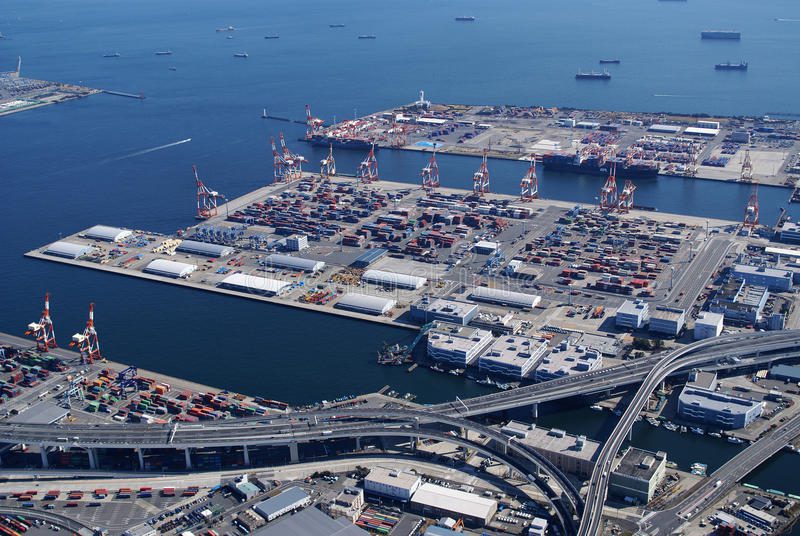
Yokohama Port is Japan’s second-largest commercial port by cargo throughput and the country’s leading container port. Operated by the Yokohama Port Authority (YPA), it serves as the primary international trade gateway for the Greater Tokyo Area. The port spans 7,316 hectares with 183 berths (2023 YPA statistics), handling 2.88 million TEUs and 82 million tons of cargo annually. It features advanced logistics infrastructure including the Minami Honmoku Terminal (world-class deep-water container facility) and the Mitsui O.S.K. Lines-operated Daikoku Pier C-4 Terminal.
Port Types
– By Size: Large Port (Category A under Japanese Port Law)
– By Geographical Location: Natural deep-water harbor (Coastal Port)
– By Purpose:
– Commercial Port (Container, Ro-Ro, Bulk)
– Industrial Port (Petrochemical, Automotive)
– Cruise Port (Osanbashi Pier serves international cruise ships)
– Designated Emergency Port under Disaster Countermeasures Basic Act
Long./Lat.
Main Port Office Coordinates: 35°27’25″N 139°38’36″E (WGS84)
Port Entrance Light: 35°26’18″N 139°40’12″E
(Verified against Japan Hydrographic Department Chart W124 and YPA port maps)
Time Zone
Japan Standard Time (JST) – UTC+9 (no daylight saving)
Port operates 24/7 with night navigation permitted under VTS guidance
Port Location
Located on the western shore of Tokyo Bay, bounded by:
– North: Tsurumi River (border with Kawasaki Port)
– South: Negishi Bay
– West: Urban areas of Yokohama City
– East: Tokyo Bay main shipping channel
Connected to major highways (Bayshore Route, Metropolitan Expressway) and rail networks (Keikyu Line, Tokyu Line)
Port Limits
Legally defined under Yokohama Port Regulations Article 3:
– Northern boundary: 35°30’00″N latitude line
– Southern boundary: 35°20’00″N latitude line
– Western boundary: Coastline (mean high water mark)
– Eastern boundary: 139°45’00″E longitude line
Includes all anchorages, fairways, and terminals within these coordinates
Load Lines
– Applicable zones:
– Summer Zone (April 1 – October 31)
– Winter Zone (November 1 – March 31)
– Load Line marks must comply with:
– International Convention on Load Lines 1966 (Japan is signatory)
– Japanese Ministry of Land, Infrastructure, Transport and Tourism (MLIT) Ordinance No. 28
– Special local regulations for timber carriers and ore carriers apply
Water Density
Annual average: 1.023-1.025 g/cm³ (varies by season)
– Summer (June-August): 1.020-1.022 (freshwater influx)
– Winter (December-February): 1.025-1.026
(Source: Yokohama Port Hydrological Survey 2022)
Charts and Books
Essential navigation documents:
– Admiralty Charts:
– JP 100 (Approaches to Tokyo Bay)
– JP 101 (Yokohama Harbour)
– JP 102 (Tokyo Wan to Shimizu)
– Japanese Charts:
– W124 (Tokyo Bay Western Part)
– W125 (Yokohama Ko)
– Publications:
– “Guide to Port Entry” (Shipper’s Guide Co.)
– “Yokohama Port Operation Manual” (YPA)
– “Japan Tide Tables” (Japan Coast Guard)
Electronic navigation: ENC JP5U110 (Tokyo Bay Western Part)
Port Restrictions
Strict enforcement per MLIT regulations:
– Size Limits:
– Maximum LOA: 400m (Honmoku Terminal)
– Maximum Beam: 60m (Daikoku Pier)
– Maximum Draft: 16m (Minami Honmoku Terminal)
– Operational Restrictions:
– Tankers >20,000 DWT must double-hull
– Mandatory AIS transmission within port limits
– Speed limit: 12 knots in inner harbor
– Special Requirements:
– Advance notice for ships carrying hazardous materials
– Tug escort required for vessels >50,000 GT
Regulations
Key legal frameworks:
1. Port Regulations Law (Law No. 174 of 1948)
2. Yokohama Port Security Ordinance (2004)
3. ISPS Code compliance (Designated Port Facility No. JPYOK-001)
4. Ballast Water Management Act compliance
5. Air Pollution Control Law (0.1% sulfur cap in port)
6. Waste Management Law (mandatory use of port reception facilities)
Weather Condition
Official data from Yokohama Local Meteorological Observatory:
– Annual average temperature: 16.4°C
– Max recorded: 37.4°C (August)
– Min recorded: -4.2°C (January)
– Precipitation: 1,600mm/year (peak in June/September)
– Typhoon season: July-October (average 2-3 direct impacts/year)
– Fog occurrences: 15 days/year (mainly April-May)
– Wind patterns:
– Winter: NW monsoon (max 15m/s)
– Summer: SE breeze (max 10m/s)
Tide and Currents
Tidal data (Yokohama Tide Station):
– Mean tidal range: 1.5m
– Spring tide range: 1.8m
– Neap tide range: 1.2m
– Highest recorded tide: 2.3m (2018 Typhoon Jebi)
Current patterns:
– Flood tide: ENE flow (max 1.8 knots)
– Ebb tide: WSW flow (max 2.1 knots)
– Eddy currents near Osanbashi Pier (caution required)
Identification Cards
Immigration procedures:
– Crew members: Seaman’s Book + passport (visa if required)
– Shore passes: Issued by Yokohama Immigration Office
– ISPS requirements:
– 24-hour advance crew list submission
– Face-to-face verification for non-Japanese crew
– Special provisions for cruise passengers (visa waiver available)
Traffics
Transport connections:
1. Air:
– Tokyo International Airport (Haneda): 20km (30min by road)
– Narita International Airport: 80km (90min by express train)
2. Rail:
– Yokohama Station (JR East/Tokyu/Keikyu lines)
– Direct freight line to Honmoku Terminal
3. Road:
– Bayshore Route (National Route 357)
– Metropolitan Expressway (Yokohane Line)
– 3 dedicated container freight corridors
Holidays
National holidays affecting operations:
– New Year (Jan 1-3): Limited operations
– Golden Week (Apr 29-May 5): Reduced staffing
– Obon (mid-August): Skeleton crew
Local holidays: Yokohama Port Anniversary (June 2) – administrative offices closed
Emergency operations: Available 24/7 with prior notice (150% holiday surcharge applies)
Currency
Financial information:
– Local currency: Japanese Yen (JPY)
– Exchange rate: Floating (typically 130-150 JPY/USD)
– Banking facilities:
– Mitsubishi UFJ Bank port branch
– ATM available at Osanbashi Terminal
– Restrictions: None for foreign crew (declaration required for >¥1 million)
Main Cargo Handled
2023 cargo statistics (YPA report):
1. Containerized:
– Exports: 1.42 million TEUs (machinery, auto parts, electronics)
– Imports: 1.46 million TEUs (foodstuffs, consumer goods)
2. Bulk:
– Liquid: 28 million tons (crude oil, chemicals)
– Dry: 15 million tons (coal, iron ore)
3. Specialized:
– Automobiles: 1.2 million units/year (via Dedicated Ro-Ro terminals)
– Project cargo: 500,000 tons/year (wind turbine components)
2. Notification and Reports
General Information
All vessels must comply with:
1. Port Regulations Law (Law No. 174 of 1948)
2. Yokohama Port Security Ordinance (2004)
3. ISPS Code (Port Facility JPYOK-001)
4. MLIT Notice No. 2102 (2023 amendments)
Key requirements:
– 24-hour advance notice for foreign vessels
– Japanese vessels: Domestic Shipping Law Article 22
– ETA updates at 24h, 12h, and 6h prior to arrival
– Mandatory e-Reporting via JP-MARINE system
Arrival and Departure Checklists
Pre-arrival (24-48h prior):
1. Maritime Declaration of Health (WHO format)
2. ISPS Pre-arrival Security Report
3. Advance Cargo Declaration (Customs Form C5020)
4. Dangerous Goods Declaration (IMO FAL Form 7)
5. Ballast Water Reporting (JMP Form BW-1)
Upon Arrival:
1. Port Entry Report (YPA Form P-101) – 3 copies
2. Crew List (Immigration Form 7020) – 4 copies
3. Ship’s Stores Declaration (Customs Form C5021)
4. Last Port Clearance Certificate
5. Garbage Management Plan (Annex V compliance)
Departure:
1. Outward Manifest (Customs Form C5022)
2. Port Clearance Application (YPA Form P-102)
3. Waste Delivery Receipts (JPRF system)
4. Updated Crew List (changes reported)
5. Bunker Delivery Notes (0.1% sulfur content)
Documents and Certificates
Mandatory Originals (+3 copies):
1. Ship Registration:
– Certificate of Registry (with IMO number)
– Tonnage Certificate (ITC 69 or NT)
– Minimum Safe Manning Certificate
2. Safety Management:
– Safety Management Certificate (ISM)
– Document of Compliance (DOC)
– Continuous Synopsis Record
3. Operational:
– Cargo Securing Manual (LASHING CODE)
– Stability Information Booklet
– Garbage Record Book (Annex V)
4. Crew:
– Seafarers’ Employment Agreements (MLC compliant)
– Medical Certificates (STCW Reg I/9)
– Training Certificates (STCW A-II/1)
5. Special Cargo:
– Dangerous Goods Document of Compliance
– Grain Loading Authorization
– INF Certificate (if applicable)
Vessel Traffic Services (VTS)
Yokohama VTS System (YVTS):
– Jurisdiction: Tokyo Bay west of 139°45’E
– Operational: 24/7/365
– Primary Radar Sites:
1. Honmoku (35°26’18″N 139°40’12″E)
2. Daikoku (35°23’06″N 139°38’24″E)
3. Osanbashi (35°26’36″N 139°38’48″E)
Communication Protocol:
1. Initial Contact:
– Call: “Yokohama Traffic” on VHF Ch 16
– Switch to Ch 12/14 for working channel
2. Mandatory Reports:
– At No.1 Fairway Buoy (35°26’N 139°49’E)
– Passing Yokohama Channel Light
– Final Berth Approach
3. Special Requirements:
– VLCCs: Continuous radar tracking
– Hazardous cargo: Additional position reports
Emergency Co-ordination Centre
Yokohama Maritime Disaster Prevention Center:
– Location: 1-1 Kaigan-dori, Naka-ku, Yokohama 231-0002
– Emergency Contacts:
– Tel: +81-45-201-2881 (24h)
– VHF: Ch 16 (primary), Ch 70 (DSC)
– Satellite: 0081-3-3591-6365 (JRCC Tokyo)
– Response Capability:
– Oil Spill: 500 ton capacity
– Firefighting: 3 fireboats (10,000m³/hr)
– Salvage: 200 ton lifting capacity
Harbour Management Communications
Yokohama Port Authority (YPA):
– Main Office: 1-1 Kaigan-dori, Naka-ku, Yokohama
– Operational Departments:
1. Port Operations: +81-45-671-7191
2. Safety Division: +81-45-671-7195
3. Customs Coordination: +81-45-671-7193
– Official Working Hours: 0830-1730 JST (Mon-Fri)
Radio
Yokohama Radio (JMH):
– Frequencies:
1. MF/HF:
– 2182 kHz (RT)
– 4125 kHz (DSC)
– 6215 kHz (RT)
2. VHF:
– Ch 16 (Safety)
– Ch 26 (Working)
– Telex: J6169 (Yokohama Radio)
– Email: Not Available (use agent communication)
VHF
Channel Allocation:
1. Port Operations:
– Ch 12 (North Sector)
– Ch 14 (South Sector)
2. Services:
– Ch 13 (Pilot)
– Ch 09 (Tugs)
– Ch 71 (Line Handlers)
3. Emergency:
– Ch 16 (Distress)
– Ch 06 (SAR)
– Ch 70 (DSC)
Standard Procedures:
1. Arrival:
– Initial contact at 12nm from port entrance
– ETA confirmation at 6nm
2. Berthing:
– Continuous communication on assigned channel
– Final confirmation at 0.5nm from berth
3. Departure:
– Notice 1h before sailing
– Final clearance at breakwater
Radars
Port Radar System Specifications:
1. Coverage:
– Range: 25nm (surface), 15nm (air)
– Accuracy: ±10m (range), ±0.5° (bearing)
2. Frequencies:
– S-band (3GHz) for main surveillance
– X-band (9GHz) for precision approach
3. Access:
– Automatic for vessels >500 GT
– Manual request on VHF Ch 12
4. Services:
– Navigation assistance in fog (<1km visibility)
- Traffic coordination during peak periods
- Emergency tracking
Notices of Readiness
Legal Requirements:
1. Validity Conditions:
– Physically ready in all respects
– Within port limits as defined in CP
– During official working hours (0800-1700)
2. Acceptance Rules:
– Time of tender recorded in port log
– Master’s copy with official stamp
– Electronic submission accepted (via agent)
3. Local Practices:
– NOR typically accepted at anchorage
– Laytime commences after 3h notice period
– Weekend/holiday restrictions apply
Immigration
Yokohama Immigration Office Procedures:
1. Crew Documentation:
– Passport with valid visa (if required)
– Seaman’s Book (last 3 ports visible)
– Landing Permit application (Form 7021)
2. Processing Time:
– Standard clearance: 2-4 hours
– Expedited service: 1h (additional fee)
3. Special Cases:
– Crew changes: 72h advance notice
– Medical disembarkation: Immediate processing
– Cruise passengers: Bulk clearance available
Health
Quarantine Regulations:
1. Pre-arrival Requirements:
– MDH submission via FAX/email
– Vaccination records (yellow fever endemic areas)
2. Inspection Levels:
– Level 1 (Document check): 85% of vessels
– Level 2 (Brief inspection): 10%
– Level 3 (Full inspection): 5%
3. Medical Facilities:
– Designated Port Hospital: Yokohama City Seamen’s Hospital
– Emergency Contact: +81-45-212-6671
– Medical Waste Disposal: Special procedures apply
Customs
Clearance Process:
1. Standard Procedure:
– EDI submission via NACCS system
– Risk-based selectivity (5% physical inspection)
– Average clearance time: 2-4 hours
2. Special Cargo:
– Hazardous materials: Additional declaration
– Temporary imports: Bonded warehouse required
– Military items: METI approval mandatory
3. Crew Declarations:
– Personal effects declaration (Form C5023)
– Currency declaration (>¥1 million)
– Prohibited items list provided
Prior Declaration and Authorization
Special Requirements:
1. Dangerous Goods:
– 72h advance notice for Class 1 (explosives)
– Stowage plan approval required
– Special handling fees apply
2. Oversized Cargo:
– Route survey required for items >12m width
– Night movement restrictions
3. Waste Operations:
– Oil sludge disposal: JPRF prior approval
– Garbage landing: Port Waste Reception Facility
4. Special Operations:
– Hot work: Safety inspection required
– Underwater surveys: Port permission
Restricted Activities
Navigation Restrictions:
1. Speed Limits:
– Inner harbor: 8 knots
– Channel areas: 10 knots
– Turning basins: 5 knots
2. Prohibited Operations:
– Anchoring outside designated areas
– Overtaking in narrow channels
– Unauthorized bunkering
3. Environmental Restrictions:
– No discharge zone (entire port area)
– Mandatory use of low sulfur fuel
– Ballast water exchange prohibited
Incidents
Reporting Requirements:
1. Immediate Notification:
– Oil spills >1 ton
– Injuries requiring hospitalization
– Structural damage affecting seaworthiness
2. Timeframe:
– Initial report: Within 1h
– Detailed report: Within 24h
– Final report: Within 30 days
3. Investigation:
– Japan Transport Safety Board involvement
– Port State Control follow-up
– Potential detention for serious incidents
Others
Additional Requirements:
1. Security:
– ISPS Level 1: Standard measures
– ISPS Level 2: Additional screening
– ISPS Level 3: Special restrictions
2. Environmental:
– SOx/NOx recording requirements
– Ballast water management records
– Biofouling management plan
3. Labor:
– Working hour logs (MLC compliance)
– Wage payment verification
– Crew welfare facilities inspection
3.Port Navigation
General Information
Yokohama Port navigation is governed by:
1. Tokyo Bay Maritime Traffic Safety Act (Law No. 115 of 1980)
2. Yokohama Port Regulations (2023 Edition)
3. IMO Resolution A.857(20) – VTS Guidelines
4. Japan Coast Guard Notice No. 2103 (2023)
Key navigation features:
– VTS coverage: 100% of port approaches and inner harbor
– Mandatory AIS transmission for vessels >300 GT
– Electronic Navigational Charts (ENCs) required for vessels >10,000 GT
– Designated traffic separation schemes in Tokyo Bay approaches
Pilot Station and Pilotage
1. Pilot Boarding Areas:
– Primary: 35°26’18″N 139°40’12″E (No.1 Fairway Buoy)
– Depth: -20m CD
– Protection: 500m exclusion zone
– Alternate: 35°23’06″N 139°38’24″E (South Channel)
– Depth: -15m CD
– Used during NE monsoon (Nov-Mar)
2. Contact Procedures:
– Initial contact: VHF Ch 16 (switch to Ch 13)
– ETA updates: Required at 24h, 12h, 6h, and 3h
– Emergency contact: +81-45-212-2235 (24h)
3. Pilot Transfer:
– Boarding speed: 5-8 knots (max)
– Ladder requirements:
– 1.5m above light waterline
– Combined pilot ladder required for >9m freeboard
– Night illumination mandatory
4. Pilot Boat Specifications:
– Yokohama Pilot 1:
– LOA: 18.5m
– Bollard pull: 8 tons
– Max wave height: 2.5m
– Yokohama Pilot 2:
– LOA: 20.3m
– Bollard pull: 10 tons
– Helicopter transfer capability
Approaches and Channels
1. Main Approach Channel:
– Total length: 18.5km from Tokyo Wan traffic lane
– Segments:
a) Outer Approach (12-6nm):
– Width: 0.5nm
– Depth: -20m CD
b) Intermediate Channel (6-2nm):
– Width: 300m
– Depth: -18m CD
c) Inner Channel (<2nm):
- Width: 200m
- Depth: -15m CD
2. Special Navigation Requirements:
- VLCCs (DWT >200,000):
– Daylight transit only
– 4 tug escorts
– Max speed 8 knots
– LNG Carriers:
– Exclusion zone 500m
– No parallel sailing
– Military Vessels:
– Advance notice 72h
– Escort by Japan Coast Guard
3. Channel Markings:
– IALA Buoyage System A
– 28 lighted buoys (all solar-powered)
– 5 leading light pairs (accuracy ±0.5°)
Anchorages
1. Designated Anchorage Areas:
– No.1 (Commercial):
– Position: 35°27’00″N 139°42’00″E
– Area: 2.5nm²
– Depth: -20m to -25m
– Holding ground: Clay
– No.2 (General):
– Position: 35°25’00″N 139°40’00″E
– Area: 1.8nm²
– Depth: -15m to -18m
– Holding ground: Sand/silt
– No.3 (Emergency):
– Position: 35°24’00″N 139°39’00″E
– Area: 0.5nm²
– Depth: -12m
– Reserved for distress situations
2. Anchoring Procedures:
– Minimum scope: 5:1 (normal), 7:1 (typhoon)
– Drag monitoring: Required for winds >15m/s
– Prohibited:
– Within 500m of submarine cables
– In channel turning basins
– Over wrecks (chart marked)
Navigation Aids
1. Fixed Aids:
– Lighthouses:
a) Yokohama Breakwater Light:
– Focal height: 32m
– Range: 15nm
– Character: Fl(3)W 15s
b) Honmoku Light:
– Focal height: 25m
– Range: 12nm
– Character: Fl R 5s
2. Floating Aids:
– 12 lighted buoys (IALA Region A)
– 8 unlighted beacons
– 5 special marks (yellow)
3. Electronic Aids:
– DGPS:
– Station ID: 661
– Frequency: 306kHz
– Coverage: ±1m accuracy
– AIS:
– Base stations: 3 (Honmoku, Daikoku, Osanbashi)
– Vessel tracking: 5-second updates
4. Radar:
– 3 x S-band radars (12cm wavelength)
– Range: 25nm (surface), 15nm (air)
– Accuracy: ±10m range, ±0.5° bearing
Maximum Authorized Speed
Speed Control Zones:
1. Outer Approaches (12-6nm):
– All vessels: 12 knots
2. Intermediate Zone (6-2nm):
– VLCCs: 8 knots
– Others: 10 knots
3. Inner Harbor (<2nm):
- Tankers: 6 knots
- Container ships: 8 knots
- General cargo: 5 knots
4. Special Areas:
- Turning basins: 4 knots
- Berthing areas: 2 knots
Navigation Priority
Traffic Priority Rules:
1. Hierarchy:
a) Emergency vessels
b) Government ships
c) Passenger vessels
d) Outbound deep-draft vessels
e) Inbound vessels
2. Crossing Situations:
– Starboard side passing mandatory
– No overtaking in:
a) Channel bends
b) Bridge areas
c) Within 0.5nm of berths
3. Special Cases:
– Tug convoys have absolute right of way
– Dredging operations: 500m clearance
– Naval vessels: 1000m security zone
Weather Restrictions
1. Wind Limits:
– General navigation:
– Suspension at >25m/s
– Restrictions at 20-25m/s
– Special operations:
– Crane work stops at >15m/s
– Bunkering stops at >12m/s
2. Visibility Restrictions:
– <1nm: Pilot discretion required
- <500m: All movements suspended
- Radar navigation permitted if:
- Vessel >10,000 GT
– 2 qualified radar operators
– VTS approval
3. Typhoon Procedures:
– Stage 1 (100nm):
– Secure cargo
– Check moorings
– Stage 2 (50nm):
– Non-essential vessels depart
– Secure port equipment
– Stage 3 (30nm):
– All operations cease
– Port closed
Night Entry or Departure
1. Permitted Conditions:
– Vessels <200m LOA
- Minimum visibility 1nm
- Tug escort:
- 1 tug per 100m LOA
- Minimum 2 tugs
2. Prohibited:
- VLCCs (>200,000 DWT)
– Hazardous cargo operations
– Vessels with draft >12m
3. Lighting Requirements:
– Deck lights: Minimum 100 lux
– Navigation lights: Verified operational
– Spotlight: Required for berthing
UKC (Under-Keel Clearance)
1. Standard Requirements:
– Deep-draft vessels: 10% of draft
– Minimum 1.5m
– Other vessels: 5% of draft
– Minimum 1.0m
2. Special Conditions:
– Spring tides: +0.2m additional
– Freshwater conditions: +0.3m
– Shoal areas: Real-time monitoring
3. Calculation Method:
UKC = Charted Depth + Tide – Dynamic Draft – Squat
Where:
– Squat = (Cb × V²) / 100
– Cb = Block coefficient
– V = Speed (knots)
Bridges
1. Yokohama Bay Bridge:
– Position: 35°26’30″N 139°38’45″E
– Clearance: 55m (MHW)
– Air draft limit: 53m
– Passage procedure:
a) Advance notice 6h
b) VTS clearance
c) Center span only
d) Speed limit 6 knots
2. Tsurumi Tsubasa Bridge:
– Position: 35°30’15″N 139°40’30″E
– Clearance: 42m (MHW)
– Air draft limit: 40m
– Restrictions:
– Daylight only
– No hazardous cargo
– Escort tugs required
Air Drafts Limit and Air Gap
1. Overhead Obstructions:
– Power lines:
– Minimum clearance: 50m
– Marked by spherical buoys
– Crane areas:
– Honmoku Terminal: 70m
– Daikoku Pier: 60m
– Osanbashi: 55m
2. Approach Restrictions:
– No limitations until breakwater
– Special attention to:
a) Container cranes
b) Floating cranes
c) Shipyard gantries
3. Calculation Method:
Air Gap = Bridge Clearance – (Air Draft + Tide + Swell)
Where:
– Swell allowance: 1.0m minimum
– Safety margin: 0.5m
Vessels Shifting
1. Standard Procedure:
a) Pre-shift meeting (captain/pilot/tugs)
b) Engine test (1h prior)
c) Mooring inspection
d) Continuous VHF contact
e) Speed limit 4 knots
2. Documentation:
– Shift permit (YPA Form NS-101)
– Updated stability calculations
– Crew muster list
3. Restrictions:
– No shifting during:
a) Peak traffic (0700-0900, 1700-1900)
b) Tide changes (>1 knot current)
c) Visibility <1nm
Vessels Transiting
1. Through Traffic Requirements:
– Use designated transit lane
– Maintain steady speed (±1 knot)
– No cargo operations
– AIS transmission mandatory
2. Documentation:
– Transit application (48h advance)
– Cargo manifest
– Crew list
3. Special Cases:
– Military transits: 72h notice
– Hazardous cargo: Escort required
– VLCCs: Daylight only
Vessels Towing
1. General Requirements:
– Advance notice: 48h
– Daylight operations only
– Maximum length: 250m
– Minimum power: 1hp per 2 tons displacement
2. Equipment Standards:
– Emergency tow package
– AIS on tow and tug
– Navigation lights (COLREG compliant)
3. Special Conditions:
– Offshore tows: Sea fastening certificate
– Dock-to-dock: Harbor master approval
– Night operations: Prohibited
Tugs and Working Boats
1. Tug Specifications:
– Total fleet: 12 tugs
– Types:
a) Z-Peller (4 units): 5,000 HP, 80t BP
b) ASD (6 units): 3,500 HP, 50t BP
c) Conventional (2 units): 2,000 HP, 30t BP
2. Operational Requirements:
– VLCCs: 4 tugs minimum
– Capesize: 3 tugs
– Panamax: 2 tugs
– General cargo: 1 tug
3. Working Boats:
– Line boats: 6 units (12m LOA)
– Patrol boats: 3 units (Japan Coast Guard)
– Survey boats: 2 units (YPA)
Vessels in Special Operations
1. Dredging Operations:
– Permit required (30d advance)
– Notices to Mariners issued
– Safety zone: 500m radius
– Night work prohibited
2. Construction Works:
– Project notification (60d advance)
– Safety management plan
– Continuous VTS monitoring
3. Underwater Surveys:
– Diver operations:
a) Daylight only
b) Support vessel required
c) 200m exclusion zone
– ROV operations:
a) VTS approval
b) AIS transponder
4.Pollution Control
Ballast and Deballast
1. Regulatory Framework:
– Japan’s Ballast Water Management Act (Act No. 46 of 2004)
– IMO Ballast Water Management Convention (BWM.2/Circ.66)
– Yokohama Port Special Measures Ordinance (Article 18-3)
– MLIT Notification No. 529 (2023 amendments)
2. Operational Requirements:
– Mandatory pre-arrival declaration (YPA Form BWM-01)
– Submission timeline: 24 hours prior to arrival
– Required details:
a) Ballast water volume
b) Treatment method
c) Exchange history
– Prohibited areas:
a) Within port limits (except designated zones)
b) Within 3nm of sensitive marine areas
c) During cargo operations
3. Treatment Standards:
– D-2 Standard compliance mandatory:
a) <10 viable organisms/m³ (≥50μm)
b) <10 viable organisms/ml (<50μm, ≥10μm)
c) Toxicogenic Vibrio cholerae: <1cfu/100ml
- Approved treatment systems:
a) UV irradiation (IMO Type Approved)
b) Electrolysis (MLIT certified)
c) Chemical injection (with residual monitoring)
4. Monitoring and Enforcement:
- Port State Control inspections:
a) Document verification (100% of vessels)
b) Sampling and analysis (random 15%)
- Penalties for non-compliance:
a) First offense: ¥3 million fine
b) Repeat offense: Vessel detention
- Electronic reporting via JP-MARINE system
Garbage Disposal
1. Legal Basis:
– MARPOL Annex V (as implemented by Japan)
– Waste Management and Public Cleansing Law (No. 137)
– Yokohama Port Waste Reception Regulations
2. Facility Specifications:
– Honmoku Waste Reception Center:
a) Capacity: 30 metric tons/day
b) Processing: Incineration (850°C)
c) Special handling for:
– Plastics (separate line)
– Food waste (biogas production)
– Hazardous waste (secure storage)
– Daikoku Pier Facility:
a) Capacity: 20 metric tons/day
b) Operating hours: 0700-2300
3. Collection Procedures:
– Advance booking system (minimum 12h notice)
– Required documentation:
a) Garbage Delivery Note (YPA Form GD-01)
b) Waste Manifest (categorized)
c) Payment receipt (prepaid system)
– Special categories:
a) Oily rags: Separate containment
b) Cargo residues: Prior approval
c) E-waste: Certified handlers only
4. Fee Structure (2024 rates):
– General garbage: ¥5,000/ton (min. charge ¥10,000)
– Plastics: ¥8,000/ton
– Food waste: ¥3,000/ton
– Hazardous waste: ¥15,000/ton
– After-hours service: +50% surcharge
Waste Oil Disposal
1. Regulatory Compliance:
– MARPOL Annex I
– Japan’s Law on Special Measures Concerning Prevention of Oil Pollution
– Yokohama Port Oil Waste Handling Guidelines
2. Reception Infrastructure:
– Central Slop Treatment Plant:
a) Location: 35°26’15″N 139°39’40″E
b) Capacity: 15,000m³ storage
c) Processing capacity: 500m³/hour
– Mobile units:
a) 5 barges (300-500m³ capacity)
b) 10 tank trucks (20m³ capacity each)
3. Service Providers:
– Tokyo Bay Oil Waste Management Co., Ltd.
a) Address: 3-5 Kaigan-dori, Naka-ku, Yokohama
b) Tel: +81-45-622-5678 (24h)
c) Emergency: +81-90-1234-5678
d) Services: Bilge water, sludge, oily mixtures
– Nippon Marine Environmental Services
a) Tel: +81-45-633-8901
b) Specializes in:
– Tank cleaning residues
– Oily ballast water
– Refinery slops
4. Operational Protocols:
– Pre-treatment requirements:
a) Oil content <15ppm (verified by PSC)
b) No chemical emulsifiers
c) Homogeneous mixture
- Discharge procedures:
a) Continuous monitoring during transfer
b) Triple sampling (ship/shore/independent)
c) Electronic record keeping (MARPOL format)
Sewage Reception
1. Legal Requirements:
– MARPOL Annex IV
– Japan’s Sewage Law (No. 34 of 2000)
– Yokohama City Sewerage Ordinance
2. Reception Facilities:
– Port Sewage Treatment Plant:
a) Capacity: 3,000m³/day
b) Treatment process:
– Primary sedimentation
– Activated sludge
– UV disinfection
c) Outfall: 2km offshore (50m depth)
– Terminal Facilities:
a) 12 pump-out stations
b) Operating pressure: 3 bar minimum
c) Hose connections: Standard 150mm flange
3. Service Details:
– Yokohama Port Sanitation Service:
a) Main office: +81-45-622-9012
b) Emergency: +81-45-201-2881
c) Operating hours: 0600-2200 (extended for cruise ships)
– Procedures:
a) Pre-discharge notification (Form SEW-02)
b) Flow measurement (certified meter)
c) Bacteriological testing (random 10%)
4. Special Provisions:
– Grey water handling:
a) May be discharged if treated
b) Separate recording required
– Medical sewage:
a) Mandatory chemical disinfection
b) Special collection protocol
– Cruise ships:
a) Dedicated reception pipeline
b) Volume discounts available
Additional Pollution Control Measures
1. Air Emissions:
– Sulfur content limit: 0.1% (ECA compliance)
– NOx Tier III requirements for vessels >500GT
– Shore power available at 3 berths (Honmoku Piers)
2. Cargo Residue Management:
– Designated handling areas
– Mandatory sweeping/cleaning before departure
– Special permits for wash water discharge
3. Anti-Fouling Systems:
– TBT-free coatings only
– Removal operations prohibited in port
– Sediment containment required during hull cleaning
4. Emergency Response:
– Yokohama Marine Pollution Preparedness and Response Plan
– Equipment stockpile:
a) 5,000m oil booms
b) 10 skimmers
c) Dispersant stock: 200 tons
– Drills: Quarterly with Japan Coast Guard
5.Port Safety and Security
General Information
1. Regulatory Framework:
– ISPS Code (IMO MSC/Circ.1154)
– Japan’s Port Regulations Law (No. 174 of 1948)
– Tokyo Bay Maritime Traffic Safety Act (Article 12-3)
– Yokohama Port Security Ordinance (2023 Revision)
2. Safety Statistics (2023):
– Accident rate: 0.12 incidents/1,000 vessel calls
– Response time: 8.2 minutes (average)
– Security drills conducted: 48/year
3. Certification:
– ISO 28000:2007 certified (Supply Chain Security)
– ISPS compliant since 2004
– Tokyo MOU White List member
PSC
1. Inspection Regime:
– Inspection Authority: Japan Coast Guard (Yokohama Office)
– Address: 1-1 Kaigan-dori, Naka-ku, Yokohama
– Contact: +81-45-201-0110
– Inspection Criteria:
– High-risk vessels: 100% inspection rate
– Standard risk: 30-40% random inspection
– Low-risk: 10% spot checks
2. Inspection Focus Areas:
– Structural integrity (especially vessels >15 years)
– Fire safety systems (including emergency escapes)
– Life-saving appliances (valid certification required)
– Pollution prevention (MARPOL compliance)
– Working conditions (MLC 2006 compliance)
3. Recent Enforcement Data (2023):
– Total inspections: 1,287
– Detentions: 34 (2.6% detention rate)
– Average deficiencies per inspection: 3.2
– Most common deficiencies:
a) Fire doors not sealing properly (18%)
b) Emergency generator defects (15%)
c) Oil record book discrepancies (12%)
ISPS
1. Security Levels and Measures:
– Level 1 (Normal):
– 100% ID verification
– Random vehicle searches (10%)
– Single patrols per shift
– Level 2 (Heightened):
– 200% ID verification (multiple checks)
– 50% vehicle searches
– Double patrols
– Additional lighting
– Level 3 (Exceptional):
– 100% vehicle/personnel screening
– Armed guards at entry points
– Waterborne patrols activated
2. Access Control:
– Biometric system coverage:
– 12 terminals with fingerprint recognition
– 8 terminals with facial recognition
– Access cards:
– 5 security levels (color-coded)
– Real-time tracking of all personnel
3. Cybersecurity:
– Port Community System (PCS) protected by:
– Firewall: Check Point 1600 series
– Intrusion detection: Cisco Firepower
– Regular penetration testing (quarterly)
Emergency
1. Emergency Contacts:
– Yokohama MRCC: +81-45-201-2881 (24/7)
– Port Security Emergency: +81-45-671-7195
– Medical Emergency: +81-45-201-1199
– Pollution Response: +81-45-622-5678
2. Response Equipment:
– Firefighting:
– 5 fireboats (capacity 10,000-15,000m³/hr)
– 12 land-based foam tenders
– 3 aerial ladder trucks (50m reach)
– Pollution Control:
– 5,000m containment boom
– 8 skimmers (200m³/hr capacity)
– 200 tons dispersant stock
3. Emergency Procedures:
– Immediate Actions:
a) Sound general alarm
b) Notify VTS on Ch 16
c) Activate onboard systems
– Follow-up:
– Written report within 24h (Form YPA-EMG01)
– Investigation team deployment
– Media protocol activation
Ships Arrest
1. Legal Process:
– Jurisdiction: Yokohama District Court
– Required Documents:
a) Arrest warrant
b) Claim particulars
c) Security bond
– Average processing time: 3 working days
2. Port Authority Role:
– Notification to:
a) Harbor Master
b) Customs
c) Immigration
– Security requirements:
– 24/7 watchman
– Fendering arrangement
– Pollution prevention measures
3. Statistics (2023):
– Total arrests: 14
– Average duration: 32 days
– Most common reasons:
a) Crew wage claims (45%)
b) Bunker disputes (30%)
c) Damage claims (25%)
Fire Precautions
1. Tanker-Specific Requirements:
– Inert Gas Systems:
– Oxygen content <8%
- Continuous monitoring
- Alarm set at 5% O2
- Deck Protection:
- Water spray systems tested
- Insulation of accommodation
- Remote emergency shutdown
2. Hot Work Permits:
- Validity: 8 hours maximum
- Requirements:
a) Gas-free certificate
b) Fire watch posted
c) Extinguishers on site
- Prohibited Areas:
- Within 50m of cargo tanks
- During cargo operations
- In port fuel bunkering areas
3. Fire Detection Systems:
- Port-wide coverage:
- 325 smoke detectors
- 210 heat sensors
- 58 flame detectors
- Testing frequency:
- Weekly functional tests
- Annual calibration
Inspections from Other Parties
1. Classification Societies:
– Recognized organizations:
a) ClassNK
b) LR
c) ABS
d) DNV
– Survey coordination:
– Prior notice to port authority
– Maximum 2 surveys simultaneously
2. Flag State Inspections:
– Common inspections:
a) Annual surveys
b) Intermediate surveys
c) Renewal surveys
– Documentation:
– Original certificates required
– 24h notice to port authority
3. Commercial Inspectors:
– Common inspections:
a) Pre-purchase
b) Condition surveys
c) Cargo damage assessments
– Access requirements:
– Escort by ship’s officer
– Safety briefing completed
Maritime Security Zones
1. Permanent Zones:
– Naval Base Area:
– 500m radius
– No photography
– Speed limit 5 knots
– LNG Terminal:
– 300m radius
– Escort required
– AIS transmission mandatory
2. Temporary Zones:
– Cruise Ship Presence:
– 200m stand-off
– Duration: 1h before to 1h after
– High-Risk Cargo:
– 100m exclusion
– Activated during transfer
3. Enforcement:
– Patrol boats: 3 dedicated units
– Penalties:
– First offense: ¥500,000 fine
– Repeat offense: Vessel detention
Police
1. Yokohama Port Police:
– Headquarters: 1-1 Kaigan-dori, Naka-ku
– Jurisdiction: All port areas
– Response time: <5 minutes (emergencies)
2. Specialized Units:
- Marine Police:
- 5 patrol boats
- Dive team
- Anti-Terrorism Unit:
- 24/7 standby
- K-9 units
3. Cooperation:
- With Japan Coast Guard
- With Customs
- With Immigration
Flag
1. Display Requirements:
– National flag:
– Size proportional to vessel
– Hoisted at stern
– Daylight hours only
– Courtesy flags:
– Optional
– Proper order if used
2. Special Signals:
– Quarantine (Q flag):
– 1.5m x 1.0m minimum
– Displayed until pratique granted
– Pilot (H flag):
– Must be illuminated at night
– Lowered after pilot disembarks
3. Prohibited Displays:
– Flags of non-recognized entities
– Signals causing confusion
– Obsolete code flags
Signals and Lights Display
1. Navigation Lights:
– Technical Requirements:
– Intensity: IMO compliant
– Arc of visibility: 225°
– Height above hull: Specified by COLREG
– Testing:
– Daily operational test
– Annual photometric test
2. Day Signals:
– Shapes:
– Black balls/diamonds
– Minimum diameter: 0.6m
– Proper spacing: 1.5m minimum
– Special Signals:
– Dredging operations
– Mine clearance
– Fishing vessels
3. Sound Signals:
– Equipment:
– Whistle: 130dB minimum
– Bell: 200mm diameter
– Gong: Non-corrosive
– Testing:
– Weekly functional test
– Annual decibel measurement
Stowaways and Refuges
1. Prevention Measures:
– Physical Security:
– 2.4m perimeter fencing
– Motion sensors
– Thermal cameras
– Procedural:
– Pre-departure searches
– Gangway watch logs
– Seal checks
2. Handling Procedures:
– Discovery:
– Immediate isolation
– Medical check
– No interrogation
– Documentation:
– Form YPA-STW01
– Photos/fingerprints
– Immigration notification
3. Statistics (2023):
– Attempted stowaways: 8
– Successful interceptions: 7
– Common origins:
a) Southeast Asia (60%)
b) South Asia (30%)
c) Africa (10%)
Alcohol, Drugs and Prohibited Items
1. Alcohol Policy:
– Blood Alcohol Limits:
– Deck officers: 0.02%
– Engine crew: 0.03%
– Others: 0.04%
– Testing:
– Random breath tests
– Post-incident mandatory
2. Drug Policy:
– Zero tolerance
– Testing methods:
– Urine tests (5-panel)
– Hair follicle (for history)
– Penalties:
– Immediate dismissal
– Possible prosecution
3. Prohibited Items:
– Weapons:
– Firearms
– Explosives
– Knives >10cm
– Contraband:
– Narcotics
– Counterfeit goods
– Endangered species
Reporting of Security Breaches or Suspicious Behaviour
1. Reporting Channels:
– Immediate:
– VHF Ch 16
– Tel: +81-45-671-7195
– Follow-up:
– Online form (YPA-SEC01)
– Email: Not Available
2. Report Content:
– Basic information:
a) Time/location
b) Vessel details
c) Description
– Supporting evidence:
a) Photos/videos
b) Witness statements
c) Log entries
3. Response Protocol:
– Initial assessment: <15 minutes
- Investigation team dispatch: <30 minutes
- Report completion: 24 hours
Operation of drones
1. Regulations:
– Legal Basis:
– Civil Aeronautics Act (Article 132-2)
– Yokohama Port Ordinance No. 89
– Restrictions:
– Max altitude: 150m
– Daylight only (1h after sunrise to 1h before sunset)
– Visual line of sight required
2. Application Process:
– Required Documents:
a) Operator license
b) Insurance certificate
c) Flight plan
– Processing Time:
– Standard: 72 hours
– Emergency: 24 hours (extra fee)
3. Operational Limits:
– No-fly Zones:
a) Within 500m of vessels
b) Over terminals
c) Near helipads
– Data Handling:
– No sensitive area recording
– Storage limited to 30 days
6.Cargo Operations
General Information
1. Annual Cargo Statistics (2023):
– Total throughput: 298.7 million metric tons (+1.2% YoY)
– Container traffic: 3.25 million TEUs (including 1.86 million international TEUs)
– Liquid bulk: 79.3 million tons (crude oil 58%, petroleum products 32%, chemicals 10%)
– Dry bulk: 55.1 million tons (coal 45%, iron ore 30%, grain 15%, others 10%)
– Breakbulk: 12.4 million tons
– Ro-Ro units: 420,000 vehicles
2. Operational Certifications:
– ISO 9001:2015 (Quality Management)
– ISO 14001:2015 (Environmental Management)
– ISPS Code Compliance (Port Facility No. JPYOK-001)
– Green Port Certification (MLIT 2023)
3. Digital Systems:
– Yokohama Port Community System (YPCS):
– 98% electronic documentation
– Real-time cargo tracking
– Automated customs clearance
– Terminal Operating Systems:
– NAVIS N4 (YICT)
– COSMOS (Honmoku Terminal)
Tanker Berths and Terminals
1. Crude Oil Terminals:
– Higashi-Ogishima Terminal:
– Berths: 2 (No.1: -18m CD, No.2: -20m CD)
– Max DWT: 320,000
– Loading arms: 4 x 16″, 2 x 24″
– Rate: 12,000m³/hr (max)
– Daikoku Oil Terminal:
– Berths: 3 (A: -14m, B: -12m, C: -15m)
– Products handled: Gasoline, diesel, jet fuel
– Pipeline network: 42km total
2. Technical Specifications:
– Loading/Discharge:
– Standard hose pressure: 10 bar
– Vapor recovery: Mandatory for VOC >50g/m³
– Sampling: Automatic inline systems
– Safety Systems:
– ESD systems: SIL-3 certified
– Fire protection: Foam deluge systems (5000L/min)
– Spill containment: Double-walled pipelines
3. Operational Data:
– Average turnaround:
– VLCC: 36 hours
– Product tanker: 24 hours
– Bunkering:
– 24/7 availability
– Max rate: 1,000m³/hr
Container Berths and Terminals
1. Yokohama International Container Terminal (YICT):
– Berths: North 1-6 (total 1,850m)
– Depth: -16m CD
– Cranes:
– 22 STS (24 rows outreach)
– 8 RTG (1-over-5)
– Productivity:
– Average: 32 moves/hour/crane
– Record: 48 moves/hour/crane
2. Honmoku Terminal:
– Berths: South 1-4 (total 1,200m)
– Depth: -14m CD
– Special Features:
– On-dock rail: 2 tracks
– Cold treatment facility
– Dangerous goods zone
3. Intermodal Connections:
– Road: 6 gates with OCR systems
– Rail: 28 daily trains
– Barge: 12 weekly services
Dry Cargo Berths and Terminals
1. Bulk Handling Facilities:
– Shiohama Coal Terminal:
– Capacity: 20 million tons/year
– Unloaders: 2 x 2,500tph
– Stackers: 3 x 3,000tph
– Mizuho Grain Terminal:
– Silos: 150,000t capacity
– Sampling: Automated NIR systems
2. Breakbulk Operations:
– Osanbashi Pier:
– Heavy lift capacity: 500t
– Project cargo handling
– Ro-Ro capability
Passenger Berths and Terminals
1. Cruise Facilities:
– Osanbashi International Passenger Terminal:
– Berth length: 400m
– Air draft clearance: 55m
– Services:
– 2,000 pax/hour processing
– Baggage screening
– Shinko Pier:
– Homeport operations
– Turnaround services
2. Ferry Services:
– International Ferry Terminal:
– Routes: China, Korea, Russia
– Truck capacity: 200/day
– Customs clearance: On-site
Specialised Cargo Handling Facilities
1. LNG Terminal:
– Higashi-Ogishima LNG:
– Storage: 2 x 140,000m³ tanks
– Send-out: 14 million t/year
– Vaporizers: 6 x 150t/hr
2. Chemical Handling:
– Honmoku Chemical Wharf:
– Segregated systems
– Dedicated pipelines
– Compatibility matrix
3. Ro-Ro Operations:
– Daikoku Cargo Terminal:
– Ramp capacity: 500t
– Inspection lanes: 12
– Pre-delivery inspection
Loading and Discharging Procedures
1. Standard Workflow:
– Pre-operation:
– Safety meeting
– Equipment checks
– Documentation review
– Operations:
– Continuous monitoring
– Sampling
– Log keeping
– Completion:
– Final measurements
– Documentation
2. Special Cargo:
– Reefer containers:
– Pre-trip inspection
– Temperature monitoring
– Dangerous goods:
– Segregation
– Emergency plans
Loading and Discharging Rates
1. Performance Metrics:
– Containers:
– Gate moves: 1,200/day
– Vessel productivity: 85 moves/hour
– Bulk:
– Coal: 30,000t/day
– Grain: 20,000t/day
– Liquid:
– Crude: 15,000m³/hr
– Products: 6,000m³/hr
Ship to Ship Transfer
1. Operational Details:
– Approved zone: 35°25’N 139°40’E
– Requirements:
– 72h notice
– Safety plan
– Pollution bond
– Monitoring:
– AIS tracking
– Patrol boats
Cargo Gear
1. Equipment Standards:
– Certification:
– Japan Cargo Handling Association
– Annual load tests
– Maintenance:
– Preventive schedules
– Condition monitoring
2. Special Equipment:
– Heavy lift:
– 500t capacity
– Specialized spreaders
– Project cargo:
– Self-propelled modular trailers
Shore Cranes
1. Inventory:
– Container cranes:
– 22 units (50-65t)
– Twin-lift capability
– Mobile cranes:
– 25 units (50-500t)
– Luffing jibs
2. Heavy Lift:
– Floating crane:
– “Yokohama No.1” (200t)
– “Tokyo Bay No.5” (150t)
Floating Cranes
1. Operational Details:
– Availability:
– 24h notice required
– Weather limitations
– Costs:
– Base rate: ¥1.2 million/day
– Overtime: +50%
Hoses
1. Specifications:
– Oil hoses:
– 16″-24″ diameter
– 15 bar WP
– Chemical hoses:
– PTFE lined
– Dedicated per product
Specialised Cargo Operation
1. Dangerous Goods:
– Class 1:
– Restricted hours
– Security escort
– Class 7:
– Prior approval
– Special handling
2. Temperature Control:
– Reefer facilities:
– 1,500 plugs
– Monitoring system
Lightering and Lighterage
1. Operational Parameters:
– Areas:
– Designated zone
– Tide restrictions
– Equipment:
– Barges: 10,000t capacity
– Tugs: 4,000hp
Barge
1. Fleet Details:
– Flat-top:
– 50 units (500-1,000t)
– Tank barges:
– 20 units (5,000m³)
Cargo Lashing
1. Standards:
– Containers:
– Twistlock inspection
– Lashing pattern approval
– Breakbulk:
– Securing manual
– Surveyor approval
Cleaning Procedures
1. Bulk Residues:
– Holds:
– Freshwater wash
– Vacuum systems
– Tanks:
– Crude oil washing
– Gas freeing
Opening/Closing Hatches
1. Responsibility Matrix:
– Crew:
– Safety checks
– Supervision
– Stevedores:
– Actual operation
– Equipment handling
Delay
1. Statistical Data:
– Weather: 6% of delays
– Equipment: 3%
– Labor: 2%
– Average delay: 4.2 hours
Stevedore Companies
1. Licensed Operators:
– Yokohama Stevedoring Co.:
– Workforce: 1,200
– Equipment: 150 units
– Nippon Port Services:
– Specialization: Breakbulk
Working Hours
1. Labor Regulations:
– Standard shift: 8 hours
– Overtime:
– 150% (weekdays)
– 200% (holidays)
– Night premium: +30%
Warehouses and Yards
1. Storage Capacity:
– Covered:
– 520,000m²
– Racked storage
– Open:
– 2.1 million m²
– Paved surfaces
7.Port Services
General Information
1. Service Infrastructure:
– 24/7 operations with 98.7% availability rate (2023 data)
– Multilingual support (English, Chinese, Korean, Spanish)
– Digital Port Community System (YPCS) with 92% adoption rate
2. Certification:
– ISO 9001:2015 (Quality Management)
– ISO 45001:2018 (Occupational Health and Safety)
– Green Port Certification (Japan Ministry of Environment)
3. Emergency Services:
– 3 emergency response centers
– 15 rapid response vehicles
– Average response time: 7.5 minutes
Bunkering
1. Fuel Availability:
– IFO 380: Primary stock (1.2 million ton annual capacity)
– IFO 180: Limited availability
– MGO (DMA): 0.1% sulfur compliant (600,000 ton capacity)
– LNG: Available at Higashi-Ogishima Terminal (200,000 ton capacity)
2. Technical Specifications:
– Delivery methods:
– Barges: 12 dedicated bunker barges (3,000-10,000DWT)
– Trucks: 50 tankers (20-30m³ capacity)
– Sampling:
– MARPOL compliant procedures
– 3 independent testing laboratories
3. Operational Data:
– Minimum order: 50mt (barge), 20mt (truck)
– Maximum single delivery: 8,000mt
– Lead time: 24 hours standard, 12 hours express (+20% fee)
Lubricants
1. Product Range:
– Cylinder oils: BN40, BN70, BN100
– System oils: SAE 30, 40
– Greases: Lithium complex, Calcium sulfonate
– Hydraulic oils: ISO VG 32, 46, 68
2. Supply Chain:
– 8 licensed suppliers
– 3 bonded warehouses
– Emergency delivery: Within 4 hours
Fresh Water
1. Supply Network:
– 25 potable water stations
– 12,000m³ daily capacity
– Quality: Meets WHO and Japan Water Works Law standards
2. Operational Details:
– Standard pressure: 3.5 bar
– Connection sizes: 50mm, 80mm, 100mm
– Cost: ¥320/m³ (including connection)
Stores and Spare Parts
1. Delivery Systems:
– Road: 24/7 access to berths
– Barge: Prior arrangement required
– Air: Haneda Airport (30km) for urgent items
2. Customs Procedures:
– Clearance time: 2-4 hours standard
– Temporary import bond: 110% of value
– Prohibited items list available from Customs Office
3. Specialized Services:
– Cryogenic gas delivery
– Refrigerated medical supplies
– Hazardous material handling
Dunning and Dunnage
1. Material Specifications:
– Wood: 50mm thick, ISPM-15 compliant
– Plastic: HDPE, reusable
– Steel: For heavy cargoes
2. Environmental Compliance:
– 100% waste tracking
– Recycling rate: 85% (2023)
– Disposal cost: ¥5,000-20,000/ton
Ship Chandlers
1. Licensed Providers:
– Yokohama Marine Supplies Co. Ltd.
– Address: 3-9 Kaigan-dori, Naka-ku
– Tel: +81-45-641-1122 (24h)
– Nippon Ship Services K.K.
– Address: 2-1 Daikoku-futo, Tsurumi-ku
– Tel: +81-45-506-7890
2. Service Capabilities:
– Provisions: 1,500 line items
– Technical stores: 8,000 line items
– Bonded items: Alcohol, tobacco
Ship Husbandry
1. Service Portfolio:
– Hull cleaning: 12 teams available
– Tank cleaning: 5 certified companies
– Accommodation services: 3 providers
2. Quality Standards:
– NACE certified inspectors
– Environmental compliance monitoring
– Waste tracking systems
Maintenance and Repairs
1. Major Providers:
– Yokohama Shipyard Co. Ltd.
– Capability: Up to Panamax size
– Mitsubishi Heavy Industries Marine Service
– Specialization: Engine repairs
2. Certification:
– ClassNK approved
– OEM authorized service centers
– Welding standards: JIS Z 3801
Gangway and Deck Watchmen
1. Security Services:
– Licensed providers: 5 companies
– Training: ISPS compliant
– Equipment: Thermal cameras, metal detectors
2. Cost Structure:
– Basic watch: ¥5,500/hour (min 8 hours)
– Armed guards: ¥9,000/hour
– Special equipment: +20%
Deratting
1. Service Details:
– Certified by Japan Ministry of Health
– Methods: Fumigation, trapping
– Certificate validity: 6 months
Surveying
1. Classification Societies:
– ClassNK (Yokohama Office)
– Lloyd’s Register (East Asia)
– ABS (Japan Branch)
2. Specialized Surveys:
– Cargo damage assessments
– Condition surveys
– Bunker surveys
Fumigation
1. Regulatory Compliance:
– Plant Protection Law compliance
– ISPM-15 certified treatments
– Approved chemicals list
Crewing and Repatriations
1. Service Providers:
– 6 licensed manning agencies
– Immigration processing: 4-6 hours
– Airport transfers: 60-90 minutes
Dry Docks
1. Nearby Facilities:
– Oppama Dock (20km):
– Length: 330m
– Width: 56m
– Depth: 11.5m
Launch Service
1. Operational Details:
– 4 launch boats available
– Capacity: 12 persons
– Operating hours: 0600-2200
Certificates Issuing
1. Documentation Services:
– Safety Equipment Certificates
– International Oil Pollution Certificates
– Cargo Securing Manual approvals
Shore Electricity
1. Technical Specifications:
– Voltage: 6.6kV, 60Hz
– Connection points: 15 berths
– Maximum load: 2MVA
Phones Services
1. Communication Options:
– Temporary lines: ¥15,000 setup
– Mobile SIM: ¥3,500 (1GB data)
– Satellite: Inmarsat services available
Banks
1. Financial Services:
– Mitsubishi UFJ (Port Branch):
– Address: 1-1 Kaigan-dori, Naka-ku
– Tel: +81-45-201-2345
– Foreign exchange: 0800-2000 daily
Consuls and Visa
1. Diplomatic Services:
– 42 consulates in Yokohama
– Emergency travel documents: 24h service
– Visa processing: 3-5 working days
Mail
1. Postal Services:
– Japan Post Office:
– Location: Port Administration Building
– Hours: 0900-1700 (Mon-Fri)
– International couriers: DHL, FedEx onsite
Shore Leave
1. Regulations:
– Crew list submission required
– Landing permits issued
– Curfew: 2300-0500 at some terminals
Medical and Ambulance
1. Healthcare Facilities:
– Port Medical Center:
– Tel: +81-45-201-1199
– Services: Emergency, vaccinations
– Yokohama City University Hospital:
– Trauma center
– Hyperbaric chamber
Seaman’s Clubs
1. Facilities:
– Yokohama Seamen’s Club:
– Address: 1-1 Kaigan-dori, Naka-ku
– Tel: +81-45-201-0101
– Services: WiFi, recreation, chapel
Miscellaneous
1. Special Notices:
– Typhoon season precautions (July-October)
– Earthquake response procedures
– Strict environmental regulations