/Agencia Andina
The Minister of Transport and Communications, Aldo Prieto, stated that Private Special Economic Zones (Zeep) are becoming a strategic engine for industrial development and job creation, which is why he called for the modernization and strengthening of ports and roads to consolidate logistics corridors in Peru.
The recent approval of Law 32449, the Zeep Law, is a strategic decision by the Peruvian State that opens a new stage of development to establish the South American country as a relevant actor in world trade. “This law allows us to take a decisive step towards a new cycle of growth, based on modern infrastructure and the expansion of our exports,” the authority specified.
Prieto stated that the Zeep are becoming a strategic engine for industrial development and the generation of quality employment, while strengthening Peru as a supplier of goods with added value to the world.
“Therefore, we must modernize infrastructure, strengthen ports, roads, and airports; as well as consolidate logistics corridors that guarantee our production reaches global markets quickly and efficiently,” the minister added.
In this sense, Prieto assured that his portfolio has fully and convincingly assumed the responsibility that corresponds to it in this objective. “We are convinced that the Callao Chancay axis is called to become a genuine engine of economic and logistical development, capable of driving Peru to strengthen its position within the global economic dynamic,” he emphasized.
Investments
The head of the MTC stated that this vision responds to a clear objective: to efficiently integrate the national logistics system, consolidate logistics as a State policy, and promote modern, safe, and sustainable multimodal transport in Callao.
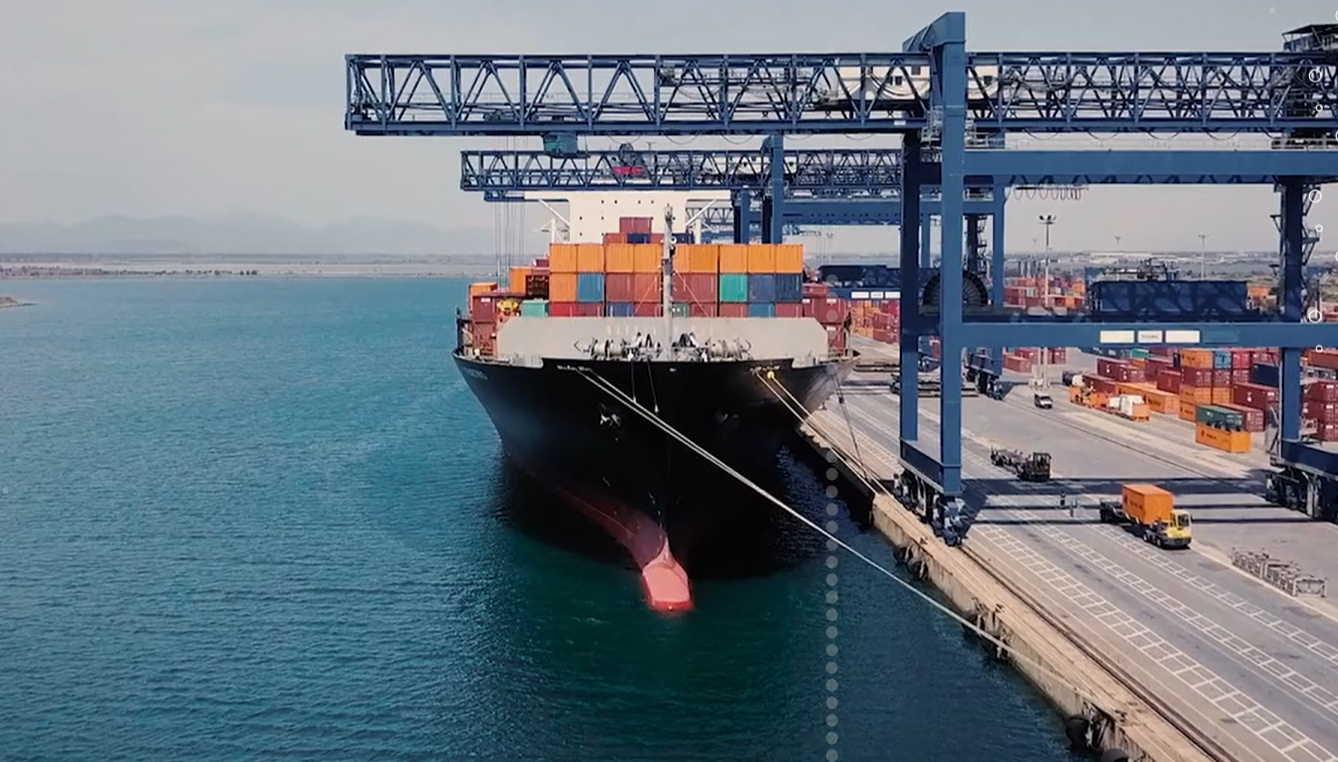
In that aspect, he highlighted that the South Zone Container Terminal reflects its expansion with an investment exceeding 732 million dollars, extending the pier by 1,050 square meters, incorporating new cranes, and increasing its capacity to 2.7 million TEUs annually.
“Likewise, the Multipurpose Terminal of the North Pier, with an investment of 520 million dollars, is modernizing the handling of general and bulk cargo. In parallel, in Chancay, the State continues to coordinate the complementary infrastructure that will make possible the full operation of the new multipurpose terminal, connecting it with logistics corridors and improving regional mobility to absorb the new demand,” detailed Prieto.
He added that this logistical coordination is expanding with a long-term railway vision. “Thus, there are plans for the development of the Chancay-Pucallpa railway or the Lima-Barranca railway, to name a few examples,” the minister noted.
In the Road sector, the authority highlighted the development of the Peripheral Ring Road, with an investment of more than 3,000 million dollars, which is progressing in the review of studies and engineering adjustments to ensure interference-free development.
“This megaproject will decongest Lima and improve connectivity with the logistical hubs of Callao and Chancay,” he specified.
Regarding airport infrastructure, he highlighted the expansion of the Jorge Chávez International Airport, which will allow it to serve up to 40 million passengers per year, as well as the expansion of runways, boarding lounges, and a new inspection system, which will strengthen Callao as an integrated logistics node: port, airport, and complementary services on a single territorial platform.
“All this set of works and projects constitute the structural basis of what will be the Callao Chancay logistical hub, that is, an industrial and port economic corridor that will change the way Peru participates in international trade,” he concluded.