PIL was preparing to sell 10-15 vessels in order to bring in liquidity when the container market took a u-turn, completely changing the premises. Today, the carrier has increased the number of employees. WPO tells the story of a very unusual restructuring.
SINGAPORE
Usually, a company reappears from a restructuring with reduced weight, a bit skinnier or in some cases as a shadow of its former self.
Therefore, the story of the restructuring of Singapore-based container line Pacific International Lines (PIL) is first and foremost the story of how timing is crucial, both for those who stand to lose their assets and those who are owed money.
If one has to point out the decisive moment for the carrier, which for years had been fully owned by the local Teo family, it is undoubtedly the middle of 2020. Here, a furious development on the global container market completely changed the premises for the company’s future.
Work on the restructuring was already well along in the process, and the state of Singapore’s official investment arm Temasek’s unit Heliconia Capital Management had supported the appointment of the former Maersk employee Lars Kastrup to spearhead the task together with Gan Chee Yen, former CFO and CIO of Temasek.
Today, these two, both with the co-president title, together with S.S. Teo, who is Executive Chairman, make up the top management.
Of course we have benefited from the development. What we are doing now will make PIL stronger for the future
LARS KASTRUP, PIL
Besides decades of knowledge of the container market, Kastrup also had local insight on Singapore as CMA CGM had made him head of NOL, which the French carrier bought just ahead of Maersk in 2016. He just got to establish his own consultancy firm when he accepted a task that did not leave time for other customers.
The restructuring of PIL came after a couple of years, in which the carrier had suffered financially, debts had increased to almost USD 4bn, and the surrounding world began to doubt whether he company could pay creditors what they were owed.
At one point, the situation was so critical that the bunker firms didn’t dare fuel sales to PIL’s fleet of roughly 120 ships, meaning 40 vessels lay still around the world. Therefore, one of the most urgent tasks was to get liquidity and trustworthiness on the market and have the ships back in the water.
That was in the beginning of 2020.
Feared decline due to Covid
As such, PIL’s financial crisis collided with the horrifying scenario that the entire container industry projected when the Covid pandemic broke out.
Namely, that the world economy would come to a halt, since customers would stop buying goods and the business sector investments, meaning the carriers would have less to do.
Panic started to spread in the industry, which canceled orders on ships and postponed the delivery of containers. Expectations for the financial year 2020 were downscaled and rating agencies warned of the development.
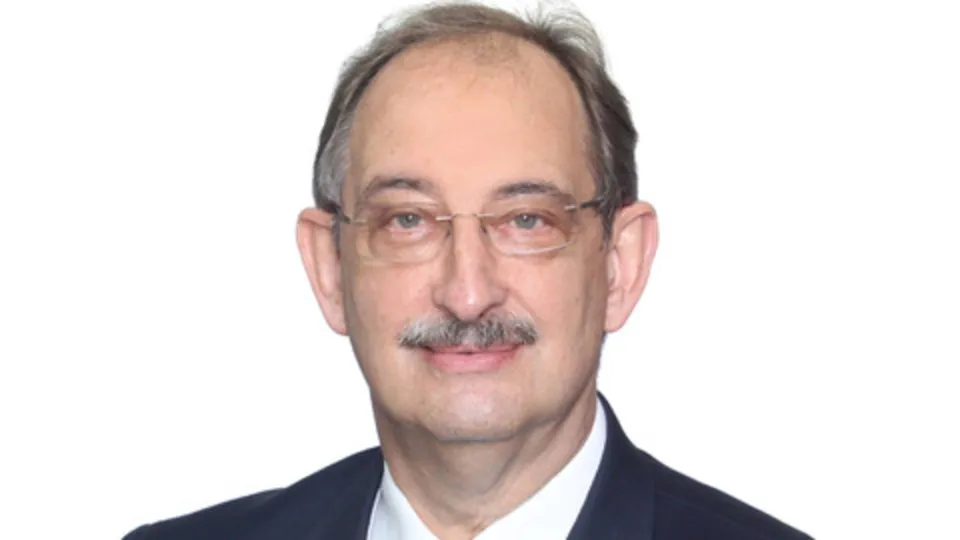
Danish Lars Kastrup stepped in as president roughly a year ago together with Gan Chee Yen. | Photo: PIL
It was from this background it became obvious that PIL’s troubles were so wide-ranging that drastic measures were needed, including the possibility of new owners for the company, which has a special status as ”Singapore’s own container carrier”, owned and led by the Teo family.
So while the pandemic sank its weight over the world and stirred enormous uncertainty in the container sector, the carrier landed a exclusive deal with Heliconia Capital Management, a unit of Temasek, which is one the world’s largest investment firms, owned by the Singapore state.
It was to get things under control and promote trust in the carrier, which thereby also opened up for the current ownership. Parallel to this, negotiations with banks and creditors began.
Pessimism characterized the market
The starting point and the expectations for the carrier’s future and the possibilities seen at the market at the time were therefore highly affected by the world pessimism.
Due to that, the restructuring plan that came together in the spring of 2020 worked with a seven-year horizon, meaning it was assumed that creditors wouldn’t be paid off before sometime in 2027. Besides the financial deals, the network was adjusted so that 16 ships, for instance, was no longer present on the Asia-West Africa line, which is normally covered by 12 ships.
On several areas, PIL had operated in its own way.
Most of all as an independent, global, however, regionally anchored container line not part of one of the three alliances. This, the carrier held strongly on to.
For example, when WPO in May 2017 interviewed the executive director and second-generation member of the Teo family, Lisa Teo, who could see the challenges in being part of the B division – as she phrased it – but refused that the carrier was up for sale.
Because such were the rumors back then.
Number 12 in the world
But having stood outside the alliances, PIL has not benefited from the synergy advantages, which the alliance carriers have praised in recent years.
While PIL negotiated with creditors and loan providers in the fall of 2020, the Covid pandemic began to change from a black to a white swan for the container sector.
Lockdowns globally simply meant that consumers could not travel or attend restaurants, beginning to buy goods instead like never before. The container market had entered a historic upswing, which before long would alter the premises for PIL’s restructuring radically.
According to Kastrup, it actually went so fast that it was decided to change a decision to sell 10-15 ships in order to bring in liquidity, because the upturn had an immediate effect and because it became clear that the crisis instead was a question of having enough ships in the fleet.
Market has accelerated
However, it was not until Feb. 1 last year before the creditors accepted the rescue plan. Heliconia put USD 600m into a financing package, and the plan was approved by the courts in March last year.
Since then, the red-hot market, which has caused record results among container carriers, has only accelerated, and PIL’s upturn has parallel to this only gained strength. The u-turn that occurred in 2020 was so strong that the carrier in November last year told the Option B creditors that they would receive 200 percent of their receivables as ”it was only right that we reciprocate the support shown to us by our creditors and partners.”
Today, the Teo family’s share in PIL is 15 percent. Teo Siong Seng, whose father Chang Yun Chung founded the carrier in 1967, is the current executive chair of PIL. Lisa Teo is no longer part of management.
Normally, companies are smaller following a restructuring, but not PIL, at least not the headquarters, which have more than the 550 staff working there prior to the crisis. However, timing was the crucial factor in PIL’s case.
Kastrup is sure, though, that the restructuring would have succeeded without the extraordinary container upswing.