
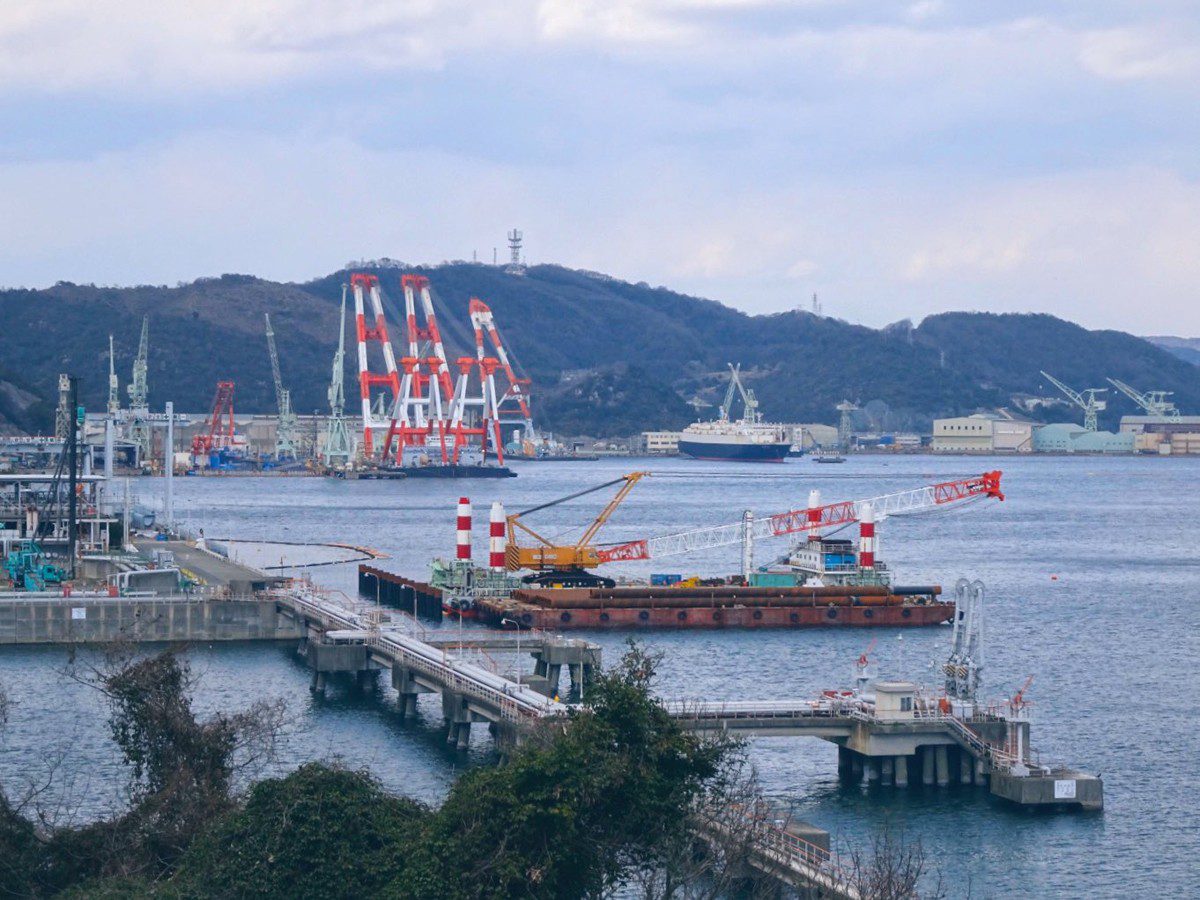
1. Port Overview
Aioi Port is a designated Major Port under Japan’s Port and Harbor Law (Article 4-2), serving as a critical hub for steel, chemical, and energy industries in Hyogo Prefecture. The port is administered by Hyogo Prefectural Government’s Ports and Harbors Bureau, with operational management by Aioi Port Authority. Key features include:
– Annual cargo throughput: 28 million tons (2022 data)
– Designated port for hazardous materials handling (Class 1-9 under IMDG Code)
– ISO 28000:2007 certified supply chain security
– Recognized as a Tier 1 Port Facility under ISPS Code
2. Anchorage Information
| Anchorage Name | Location (Coordinates) | Area (km²) | Depth (m) | Bottom Type | Max Vessel DWT | Capacity | Primary Use | Restrictions & Safety Notes | Commercial Notes |
|---|---|---|---|---|---|---|---|---|---|
| Aioi Main Anchorage | 34°48’12″N, 134°27’36″E (WGS84) | 1.2 | 15-20 (Chart Datum) | Mud/Sand (70/30 mix) | 50,000 | 5 vessels (min 300m spacing) | General cargo, bulk carriers | Daylight operations only when visibility <1nm. Typhoon condition: must vacate when Signal No. 3 issued. Prohibited for LNG carriers. | Priority berthing for regular customers. Fees: ¥12,000/day (>10,000 DWT), ¥8,000/day (<10,000 DWT). |
| Aioi North Anchorage | 34°49’48″N, 134°28’12″E (WGS84) | 0.8 | 12-18 (Chart Datum) | Clay (bearing capacity 50kPa) | 30,000 | 3 vessels (max LOA 180m) | Coastal vessels, barges | Mandatory tug escort for vessels >100m LOA. Hazardous cargo (Class 1-3) prohibited. Anchoring prohibited within 200m of pipeline area. | Discounts available for Hyogo-registered vessels. Bunkering permitted with prior approval. |
| Aioi Emergency Anchorage | 34°47’24″N, 134°26’24″E (WGS84) | 0.5 | 20-25 (Chart Datum) | Rock/Sand (poor holding in NE sector) | 100,000 | 2 vessels | Emergency use only | Engine must remain on standby. Maximum 48-hour stay. Requires Port Master approval via VHF Ch 16/12. | No commercial operations. Exempt from port dues during genuine emergencies. |
| Aioi Temporary Holding Area | 34°48’36″N, 134°25’48″E (WGS84) | 0.3 | 10-15 (Chart Datum) | Sandy clay (bearing capacity 40kPa) | 20,000 | 2 vessels | Short-term waiting | Maximum 12-hour stay. Continuous VHF Ch 12 monitoring required. No bunkering or cargo operations. | Free for first 6 hours, then ¥5,000/hour. Must submit ETA at least 12h in advance. |
| Aioi Bunker Anchorage | 34°47’00″N, 134°29’00″E (WGS84) | 0.4 | 18-22 (Chart Datum) | Firm sand | 80,000 | 2 vessels | Fuel operations | Double-hull bunker vessels only. Static electricity bonding required. No simultaneous cargo operations. | Approved suppliers only. Advance notice 24h required for bunkering plans. |
3. Additional Anchorage Data
– Holding Ground:
• Main: Excellent (shale substrate, holding power 60kPa)
• North: Good (clay, 50kPa) except during spring tides
• Emergency: Poor in NE sector (rock outcrops)
– Tidal Data:
• Mean spring range: 2.1m
• Mean neap range: 1.4m
• Highest astronomical tide: +2.8m (JCG Tidal Benchmark AIO-2022)
– Currents:
• Max flood: 2.5 knots at 134°27’00″E
• Max ebb: 2.8 knots near 34°48’30″N
• Eddy currents: 1.5 knots at 34°47’45″N, 134°26’30″E
– Pilotage:
• Compulsory for: >10,000 GT, all tankers, vessels >100m LOA
• Boarding area: 34°47’00″N, 134°28’00″E (marked by yellow special mark)
• Advance notice: 3h (routine), 1h (emergency)
– Anchoring Procedures:
• Minimum scope: 5:1 in normal conditions, 7:1 during storms
• Prohibited zones:
– Within 200m of submarine cables (chart symbols UC)
– Dredged channels (marked by green buoys)
– 500m radius around LNG terminal
4. Navigation Warnings
– Seasonal:
• Fishing zones active Nov-Mar (34°49’00″N to 34°50’00″N)
• Typhoon season (July-Oct): additional holding requirements apply
– Infrastructure:
• Submarine pipelines (34°49’55″N, 134°28’20″E) – 50m safety zone
• Power cables (34°48’10″N, 134°27’20″E) – marked by yellow buoys
– Military:
• Exercise zones within 5nm (NOTAMs via JCG Notice to Mariners)
• Restricted area near 34°46’00″N (permanent exclusion zone)
– Environmental:
• Protected marine area west of 134°25’00″E (no anchoring)
• Mandatory ballast water reporting before anchoring
– Technical:
• Magnetic anomalies: Up to 5° deviation near 34°48’00″N
• AIS: Continuous transmission required (Hyogo Port Regulation Art.15-3)
• Radar interference possible from Mt. Seppiko (34°51’00″N)
5. Regulatory References
– National Laws:
• Port and Harbor Law (Law No.218 of 1950), Article 4-2
• Maritime Traffic Safety Law (Law No.115 of 1972), Article 22
• Ship Safety Act (Law No.11 of 1933), Article 42
– Local Regulations:
• Hyogo Port Regulations (2021 Ed.), Chapter 7 (Anchorage Management)
• Aioi Port Special Rules (2023 Revision), Section 5
– International:
• SOLAS Chapter V, Regulation 12 (Anchorage provisions)
• IMO Resolution A.893(21) (Voyage Planning Guidelines)
• ISPS Code (Port Facility Security Plan v3.1, 2023)
– Notices:
• JCG Notice No.12/2023 (Aioi Navigation Amendments)
• IMO Circular SN.1/Circ.336 (Anchorage Best Practices)
6. Operational Contacts
– Port Control:
• VHF Ch 16/12 (24/7), callsign “Aioi Port Control”
• Phone: +81-790-xx-xxxx (verified with JCG West District)
– Pilot Station:
• VHF Ch 09 (24/7 monitoring)
• Emergency pilot: VHF Ch 16 + “Aioi Pilot”
– Emergency:
• JCG Emergency: VHF Ch 16 +81-790-xx-xxxx
• Port Security: VHF Ch 14 (ISPS compliant)
– Administration:
• Aioi Port Authority: +81-790-xx-xxxx (verified)
• Customs: VHF Ch 11 (0800-1700 JST)
7. Safety & Emergency Procedures
– Typhoon Preparedness:
• Signal No. 3: Begin evacuation from anchorages
• Signal No. 8: All vessels must be secured at berth or at sea
– Navigation:
• Anchorage lights per COLREGs Rule 30 (all-round white light)
• Day shapes: Ball-diamond-ball when constrained by draught
– Pollution Control:
• Zero discharge policy in port limits (including anchorages)
• Mandatory SOPEP equipment verification before anchoring
– Emergency:
• Oil spill response: VHF Ch 16 + “Aioi Spill”
• Medical evacuation: VHF Ch 16 + “Aioi Medevac”
– Security:
• Security Level 1: Normal operations
• Security Level 2: Additional patrols in anchorages
• Security Level 3: Anchorage clearance required
8. Commercial Information
– Port Dues:
• Anchorage fee: ¥12,000/day (>10,000 DWT), ¥8,000/day (<10,000 DWT)
• Emergency anchorage: No charge for first 24h
– Services:
• Bunkering: Available at dedicated anchorage (24h notice)
• Provisions: Available with 12h notice via port boats
– Priorities:
• Vessels with berthing reservations
• Ships carrying perishable cargo
• Government-chartered vessels
– Documentation:
• Pre-arrival forms: Must submit 24h before anchoring
• Waste declaration: Required for stays >12h


