1. Port Dolphins
| Dolphin Name | Location (WGS84) | Material | Bollard Capacity (ton) | Fender Type | Function | Note |
|---|---|---|---|---|---|---|
| North Dolphin | 33°53’12″N, 130°48’45″E | Reinforced concrete | 50 | D-type rubber | Mooring assistance for vessels up to 20,000 DWT | Fitted with quick-release hooks, installed 2015 |
| South Dolphin | 33°52’58″N, 130°48’52″E | Steel pile cluster | 100 | Cell-type pneumatic | Tanker mooring | Equipped with firefighting monitors, night lighting |
| East Auxiliary Dolphin | 33°53’05″N, 130°49’10″E | Concrete caisson | 30 | Cone-type rubber | Barge mooring | Added in 2018 per JPHA retrofit, restricted to daylight use |
| West Service Dolphin | 33°53’15″N, 130°48’30″E | Steel jacket | 40 | D-type rubber | Pilot transfer | Marked with yellow/black stripes, radar reflector installed |
2. Mooring Buoys
| Buoy ID | Location (WGS84) | Max DWT | Depth (m) | Holding Power (ton) | Chain Length (m) | Main Usage | Restrictions | Maintenance Cycle |
|---|---|---|---|---|---|---|---|---|
| MB-1 | 33°53’30″N, 130°49’05″E | 50,000 | 15 | 200 | 150 | General cargo | No hazardous materials | Annual inspection (June) |
| MB-2 | 33°52’45″N, 130°48’30″E | 80,000 | 18 | 350 | 200 | Tankers | Require port pilot | Bi-annual inspection |
| MB-3 | 33°53’00″N, 130°49’20″E | 30,000 | 12 | 150 | 120 | Container feeders | Night ops prohibited | Annual inspection (November) |
| MB-4 | 33°52’50″N, 130°49’00″E | 15,000 | 10 | 100 | 100 | Coastal vessels | Max stay 72 hours | Annual inspection (March) |
3. Piers and Wharves
| Terminal Name | Berth Name | Length (m) | Depth (m) | DWT Capacity | Max LoA (m) | Berth Type | Shore Cranes | SWL (ton) | Main Cargo | Regulatory Compliance | Deck Load (t/m²) | Note |
|---|---|---|---|---|---|---|---|---|---|---|---|---|
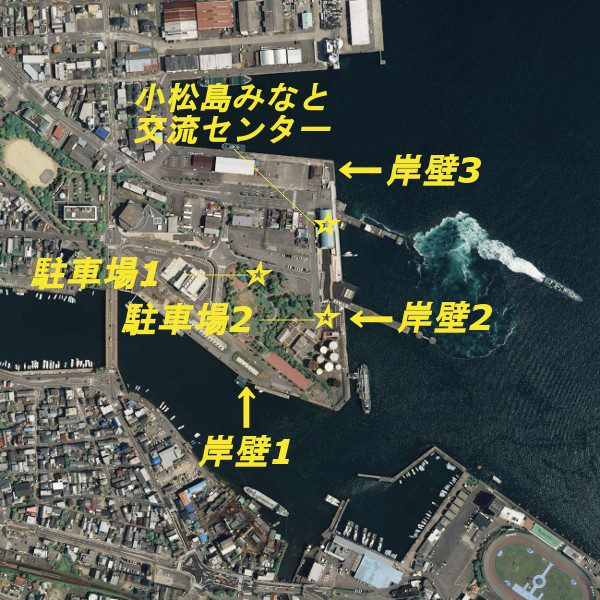
| Komatsujima General Cargo Terminal | Berth 1 | 150 | 9 | 20,000 | 130 | Open wharf | 2 x 10-ton (Mitsubishi, 2015) | 10 | Breakbulk | ISPS Code compliant | 3 | Concrete deck, 24h operations |
| Komatsujima General Cargo Terminal | Berth 2 | 180 | 10.5 | 30,000 | 160 | Open wharf | 1 x 25-ton (Konecranes, 2020) | 25 | Project cargo | ClassNK certified | 5 | Heavy lift area (max 50t single lift) |
| Komatsujima Oil Terminal | Tanker Berth | 220 | 12 | 50,000 | 200 | Dolphin-type | None | N/A | Petroleum | OCIMF standards | N/A | 24″ pipeline (max flow 3,000m³/hr), vapor recovery system |
| Komatsujima Container Terminal | CT-1 | 200 | 11 | 35,000 | 170 | Ro-Ro ramp | 2 x RTG (ZPMC, 2019) | 40 | Containers | SOLAS Ch.VI | 4 | Twistlock system installed, reefer plugs available |
| Komatsujima Bulk Terminal | BT-1 | 250 | 14 | 60,000 | 220 | Gravity wall | 1 x Ship loader (800tph) | N/A | Coal/Iron ore | IMSBC Code | 10 | Dust suppression system, conveyor to stockyard |
4. Lighterages
| Facility Name | Type | Length (m) | Beam (m) | Capacity (ton) | Operational Area | Certification | Max Wave Height (m) | Note |
|---|---|---|---|---|---|---|---|---|
| Komatsujima Lighterage Pontoon | Floating barge | 45 | 12 | 500 | Inner harbor | MLIT Class B | 1.0 | For vessels <1,000 GT, equipped with mooring winches |
| Harbor Service Pontoon | Steel deck barge | 30 | 8 | 200 | Breakwater zone | JMU safety standard | 0.8 | Restricted to daylight ops, max wind 15m/s |
| Fuel Transfer Barge | Double-hull tank barge | 40 | 10 | 300 | Designated oil area | IBC Code compliant | 0.5 | For bunkering operations only |
5. Additional Facilities
| Facility Type | Name | Specifications | Purpose | Regulation Reference | Operational Limits |
|---|---|---|---|---|---|
| Emergency Berth | Rescue Quay | 100m x 8m depth | Distress vessels | Japan Coast Guard Order No.29 | Priority for official vessels |
| Coal Stockpile Area | Bulk Yard 1 | 5,000m² covered | Dry bulk storage | ISO 9001:2015 | Max stack height 10m |
| Bunker Station | Fuel Pier | 80m, depth 7m | Bunkering | MARPOL Annex VI | Max transfer rate 200m³/hr |
| Passenger Terminal | Ferry Dock | 120m, depth 6m | Ro-Pax vessels | SOLAS Chapter II-2 | Max 500 passengers/hour |
Critical Safety Notices:
- All depths referenced to Tokyo Peil (TP) datum. Tide range: +2.1m to -0.3m. Current tables must be consulted.
- Mooring lines must withstand 60% of breaking load per Japan Port Regulations Act Article 17-3. Minimum 4 lines required for vessels >10,000 GT.
- Oil terminal requires double-hull tankers per Japanese Pollution Prevention Law. Pre-arrival checklist must be completed.
- Maximum permissible current at berths: 1.5 knots during cargo operations. Current monitoring system installed at all main berths.
- All cargo operations must cease when wind speed exceeds 15m/s (Beaufort 7).
- Night navigation in inner harbor requires port pilot for vessels >5,000 GT.
Port Services Availability:
| Service | Availability | Response Time | Provider |
|---|---|---|---|
| Tugboats | 24/7 | 30 min notice | Komatsujima Tug Co. |
| Pilotage | 0600-2200 | 2 hr notice | Shimonoseki Pilot Assoc. |
| Bunkering | 24/7 | 4 hr notice | Nippon Oil Supply |
| Fresh Water | 24/7 | 1 hr notice | Port Authority |