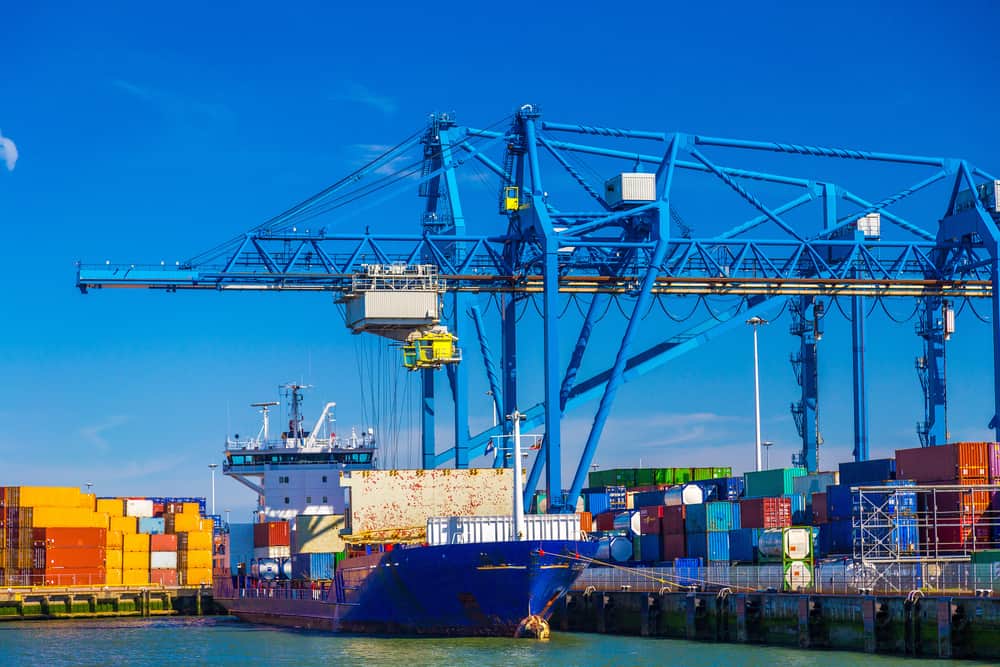
Under the dual influence of changes in the international trade landscape and natural constraints, the Port of Halifax in Canada is ushering in new development opportunities.
Orient Overseas Container Line (OOCL) recently announced that it will add the Port of Halifax to its Trans-Atlantic Mediterranean service. This will be the first time the shipping company has launched a direct service to this port, coinciding with Canada’s efforts to expand trade beyond the United States. Simultaneously, falling water levels in the St. Lawrence River are prompting the Port of Halifax to become a transshipment hub for cargo destined for Montreal. This not only marks its first direct service to the port but also reflects Canada’s long-term strategy of actively seeking trade diversification and reducing dependence on the U.S. market.
OOCL’s new “West Mediterranean – Americas” service will call at the Port of Halifax before calling at ports on the US East Coast. OOCL emphasized that this arrangement “opens up direct access to Montreal and Toronto.”
The route adjustment has driven significant growth in port cargo volumes. In the first half of 2025, the Port of Halifax’s import container volume reached 131,980 TEU, an increase of 13.6% compared to the same period in 2024; export container volume also rose by 8.9% to 126,937 TEU. Although the total cargo volume has not yet returned to the peak level of 2022, the positive growth trend indicates that the Port of Halifax is gradually becoming an important node in regional trade.
A key driver of the current route adjustments is the historic low water level challenge facing the St. Lawrence Seaway. According to a report from the International Lake Ontario–St. Lawrence River Board (ILOSLRB), since last September, the water depth in some areas of the Port of Montreal has been maintained at only about 17 feet, a record low for the region.
Paul Bird, Chief Commercial Officer of the Montreal Port Authority, explained that the low water conditions are related to the La Niña weather cycle, which occurs approximately every 12 years. To cope with draft restrictions, container ships must offload some cargo at the Port of Saint John or the Port of Halifax before entering the seaway. Bird stated: “Shipping companies must perform ‘light-loading’ operations before entering Montreal, but this is cyclical. We do not expect such low water conditions to recur for the next 10 to 12 years.”
From a broader perspective, this route change also aligns with the long-term restructuring trend of Canada’s international trade structure. As early as March of this year, Canadian Prime Minister Carney pointed out that the era of Canada’s traditional reliance on the U.S. export market is over, due to tariff policies implemented by the Trump administration in the United States.
To this end, the Carney government proposed in its 2025 budget an allocation of 5 billion Canadian dollars to Transport Canada, specifically for developing new trade and infrastructure projects, along with other funds to support Canadian businesses in exploring overseas markets. These measures indicate that Canada is actively adapting to the changing global trade landscape by enhancing port coverage and infrastructure construction.
With the launch of new services and continued government investment, the port is expected to play an increasingly important role in the logistics network of the North American East Coast.