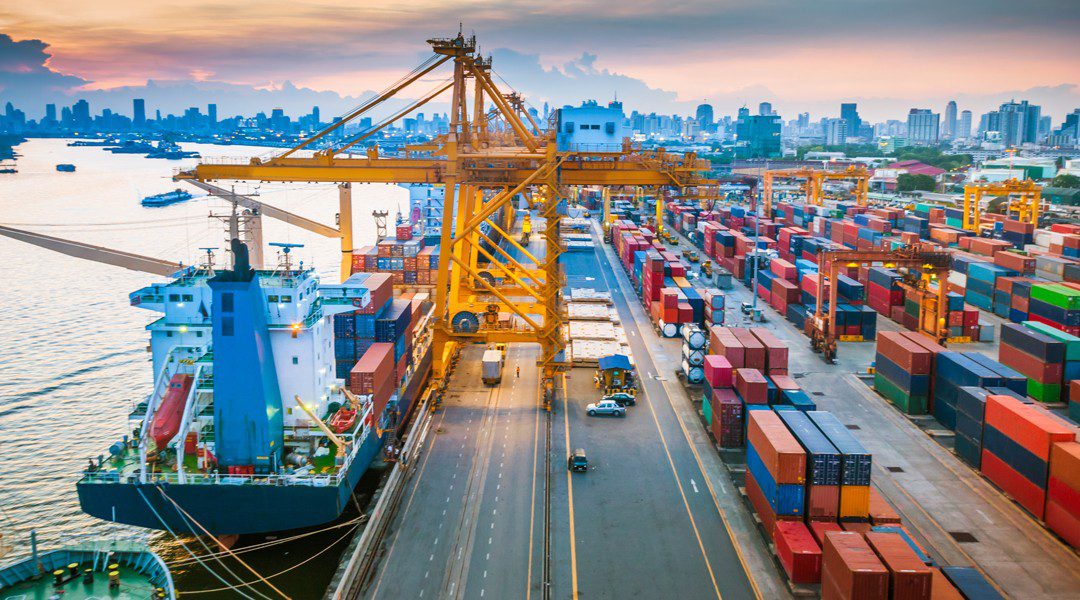
After months of commissionership, how will the organization of the Giuliano terminal be structured in 2026?
The port of Trieste, after months of commissionership, is moving towards “normalization”. Here are some of the challenges the new Authority will have to face in 2026.
The organization
The port of Trieste is unique among port authorities because in recent years a true business organization providing services of general interest has been structured, made up of various subsidiary companies, which is in addition to the main public regulatory administrative function of the Authority. A “business”, certainly far from the original version of law 84, which also benefits from collaboration with Ferrovie dello Stato and with the Fvg Region, and which works well. However, this organization struggles when traffic levels are not what they used to be (due to competition from the
port of Koper – on which the Slovenian government has invested heavily – but also from the port of Rijeka). Also considering the government’s orientations, which today seem to be towards concentrating the Authorities’ activity on public administration, as well as the upcoming amendment of law 84, which provides for a central body responsible for the implementation and management of strategic port works in-house with respect to the Presidency of the Council, the Mef and the Mit. How is this Trieste organization structured?
Non-customs free port
The port of Trieste is also characterized by the existence of an international regime provided for in annex VIII to the 1947 peace treaty, which provides for its exemption from national regulation, not only regarding customs aspects, but also regarding free access and market regulation. A regime that has never been implemented (despite a 2017 Mit decree) except for customs aspects. This regime, which, pre-existing, has the potential to remain in force despite community law, can it be an opportunity for the port of Trieste or will we continue as always to talk about free points without addressing the real issue of content?
Upper Adriatic ports
It is evident that in the upper Adriatic, between Ravenna, Venice, Trieste, Koper and Rijeka, the ports are so close that they cannibalize each other, while it might make sense to create a coordinated port system. Not doing so means that the states that invest the most in their national backyard, like Slovenia and Croatia, grow, while the Italian ports suffer greatly. And the traffic data is relentless. How to address this issue? With a single system among the three concerned states, perhaps regulated by a common authority, which however guarantees competition among the different operators wherever they are located, or continue with a policy of competition among ports?
Traffic corridors
The port of Trieste is potentially the strategic node on the route between China and Central Europe, although it is in strong competition both with other nearby ports, such as Koper and Rijeka, and with the Tyrrhenian ports. However, the crisis of the Suez Canal, due to conflicts, as well as the policies of major countries towards the Red Sea, risks isolating the Mediterranean from the context of traffic: and Trieste more than any other. With the prevalence, therefore, of the African route, which also serves Africa, the true expanding continent which, via Morocco and Spanish ports, establishes itself on the northern European ports.
Furthermore, under the aegis of China and Russia, the Arctic corridor is also establishing itself, which, again, aims to strengthen Europe’s supply from the north with a very good transit time. For the Italian port system, and for Trieste in particular, a strong and constant oversight by the Italian government in favor of the Mediterranean is therefore essential to ensure the application of the rules regarding freedom of the seas (the UNCLOS convention), which is currently at risk, and in particular those regulating transit in straits and innocent passage. A commitment that must also extend to alliances with large container shipping companies but also short sea shipping.
The industrial policy of the FVG Region
Finally, let us not forget that the FVG Region is developing an ambitious industrial policy action in close contact with American funds, but perhaps also with the Chinese government. And the port of Trieste – which includes not only Monfalcone, but also Cervignano, Fernetti (which, bordering with Sezana, is served by the upcoming Koper Divaca doubling) and Gorizia – benefits from the Alpe Adria relations towards Europe and, if ever implemented, the aforementioned special international tax regime, is an essential part of this regional strategy.