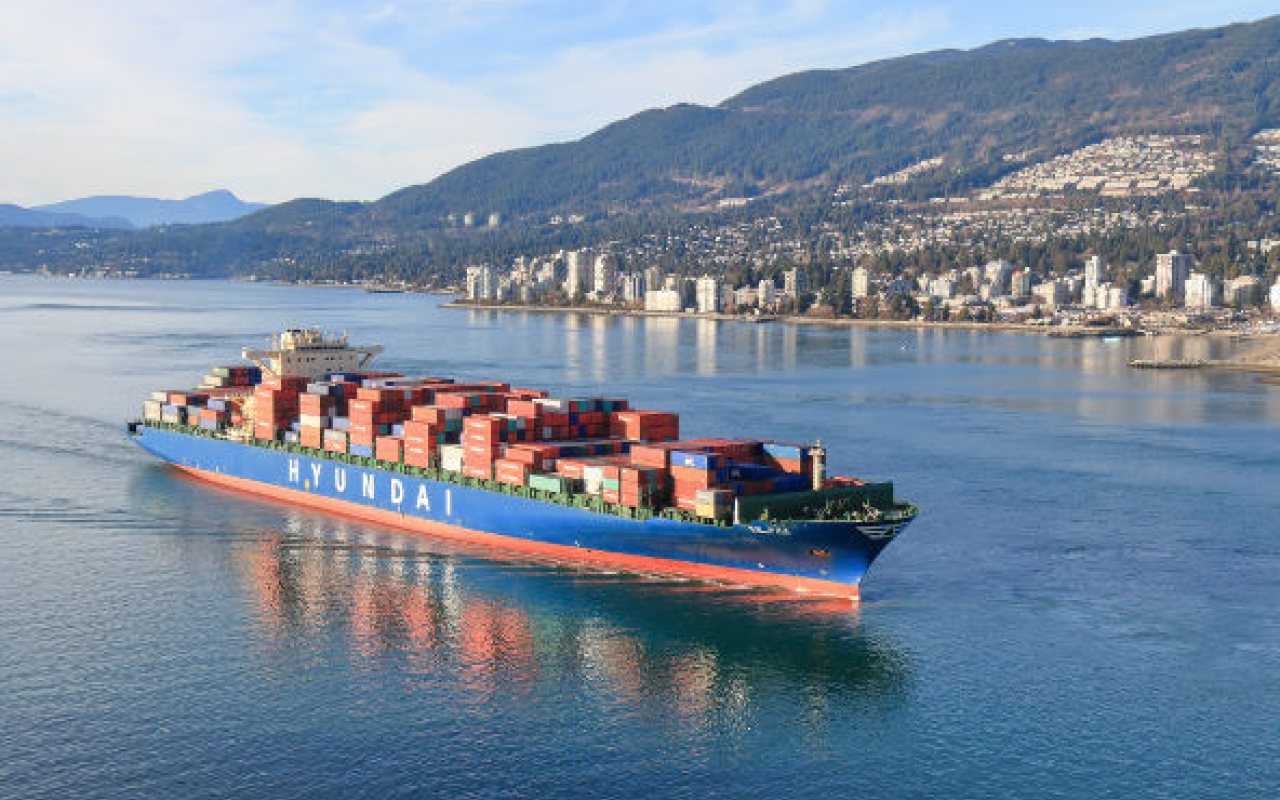
Weak cargo volume and continued capacity growth lead to continued decline in container shipping rates due to supply-demand imbalance.
According to the latest data released by the Shanghai Shipping Exchange on November 21, the Shanghai Containerized Freight Index (SCFI) fell by 57.82 points to 1393.56 points last week, a weekly decrease of 3.98%. The decline expanded, marking three consecutive weeks of decline, bringing it back to the starting point of the mid-October rally. Among the four major ocean routes, except for the Mediterranean route where freight rates increased, freight rates on the other three major ocean routes all fell, with the US West Coast route experiencing a larger decline.
Last week, the freight rate per FEU from the Far East to the US West Coast fell by $178 to $1645, a weekly decrease of 9.76%; the freight rate per FEU from the Far East to the US East Coast fell by $216 to $2384, a weekly decrease of 8.31%; the freight rate per TEU from the Far East to Europe fell by $50 to $1367, a weekly decrease of 3.53%; the freight rate per TEU from the Far East to the Mediterranean increased by $26 compared to the previous week to $2055, a weekly increase of 1.28%.
On the regional routes, the freight rate per TEU from the Far East to Japan Kansai remained unchanged from the previous week at $312; the freight rate per TEU from the Far East to Japan Kanto remained unchanged from the previous week at $321; the freight rate per TEU from the Far East to Southeast Asia increased by $9 compared to the previous week to $540; the freight rate per TEU from the Far East to South Korea increased by $4 compared to the previous week to $145.
Industry insiders stated that over the cumulative three weeks, the decline in US route freight rates has reached 30-40%, and the current US West Coast rate is approaching the break-even point for container shipping companies. Currently, the overall shipment momentum from Asia to the US routes remains weak. It is expected that before the Chinese New Year in mid-to-late December and January next year, there will be Asian shipments and /American stockpiling. If the shipment volume is sufficient at that time, freight rates have a chance to bottom out and rebound.
At the same time, cargo volume on the European routes has increased, but new capacity continues to pour in. Coupled with varying load factors among container shipping companies – some have good load factors supporting rates, while others, failing to meet expected load factors, offer special rates to attract cargo – this has led to volatile freight rates.
Looking ahead, the fourth quarter is traditionally a low season. Combined with the limited changes in Sino-US tariffs, which have a limited stimulating effect on transportation demand, freight rates are expected to fluctuate near the break-even line in the short term. Subsequent observations will focus on whether the year-end European route contract renewals and the pre-Chinese New Year period can provide opportunities for rate increases.
Furthermore, some analysts point out that considering the current average load factor on US routes is only about 70%, and goods for the first quarter of next year are expected to start shipping only in mid-to-late December, coupled with the fact that the Chinese New Year next year falls in mid-February, later than usual, it is expected that freight demand will remain sluggish until the end of this year.