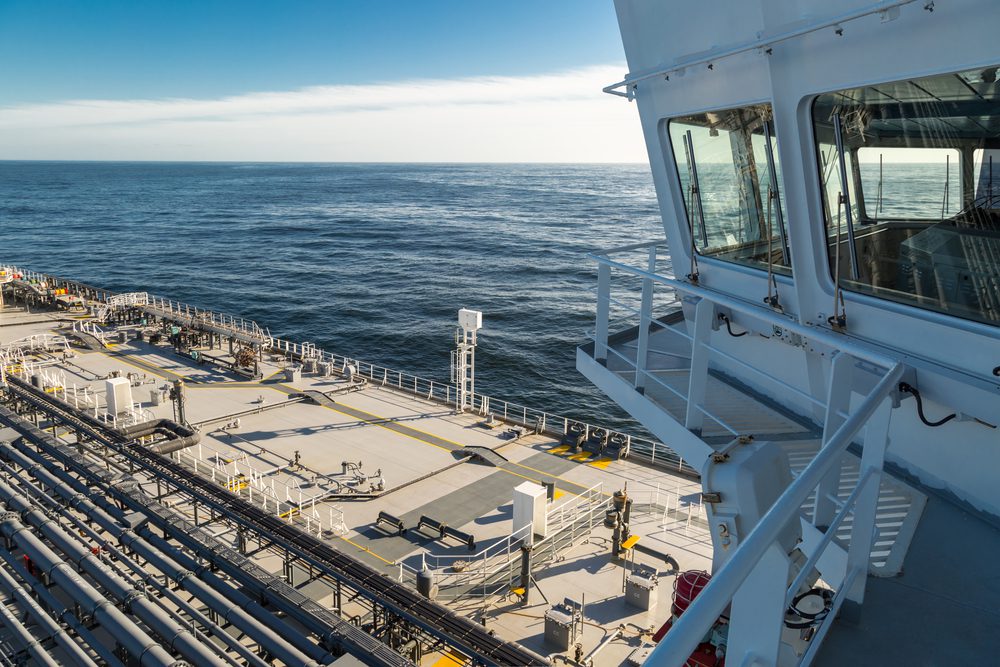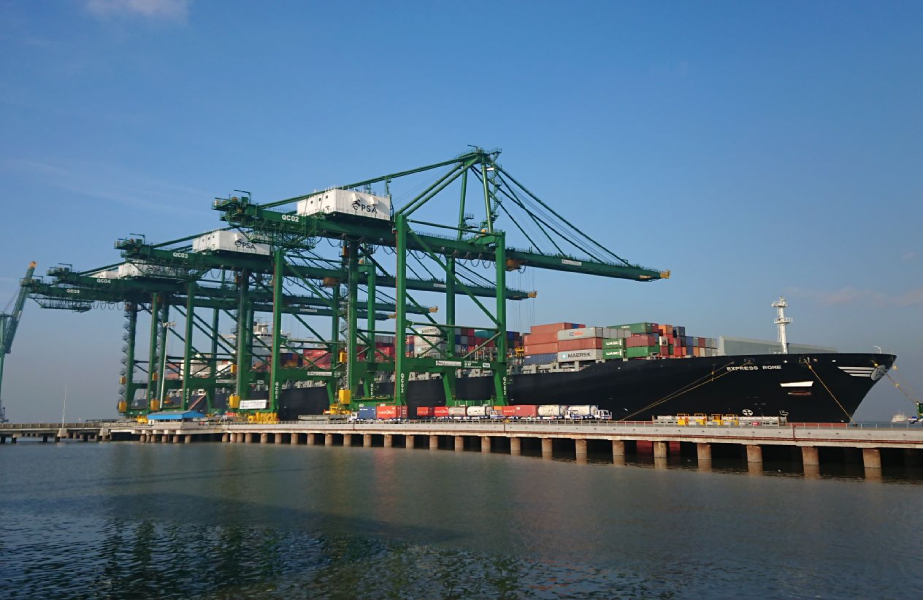
Recently, the sixth very large ethane carrier (VLEC) “PACIFIC INEOS MIO” (H2648), built by Jiangnan Shipbuilding for Shandong Marine Energy, a subsidiary of Shandong Marine Group, successfully completed its sea trial, laying a solid foundation for its subsequent on-schedule delivery and operational deployment.
The vessel commenced construction at Jiangnan Shipbuilding (Group) Co., Ltd. in June 2024. During the construction period, the site supervision team from Shandong Marine Energy and Jiangnan Shipbuilding, building upon the experience from previous ships in the series, collaborated to upgrade construction techniques, supervision standards, and ship inspection processes. This promoted optimization and iteration across the entire process and chain, overcoming to the greatest extent the adverse effects of complex sea conditions during the peak typhoon season and fully achieving the sea trial objectives. The sea trials verified that all performance indicators of the vessel meet first-class international standards.
After delivery and entering operation, this vessel will provide ethane transportation services for INEOS Group, further enhancing Shandong Marine Energy’s industry influence in the global ethane transportation market and injecting new momentum into the stable operation of the global energy transportation industry chain.
It is understood that this ship type adopts the BrilliancE cargo containment system, an original Type B tank independently developed by Jiangnan Shipbuilding. The vessel has an overall length of 230 meters, a beam of 36.6 meters, a depth of 22.5 meters, and a tank capacity of 98,000 cubic meters. It is equipped with a dual-fuel main engine and a shaft generator that can use ethane as fuel. As a low-carbon ship type utilizing green alternative energy, it meets the requirements of the Energy Efficiency Design Index (EEDI) Phase IV, capable of reducing sulfide emissions by 99% and carbon oxide emissions by 18%, maintaining optimal economics while complying with the most stringent emission requirements.