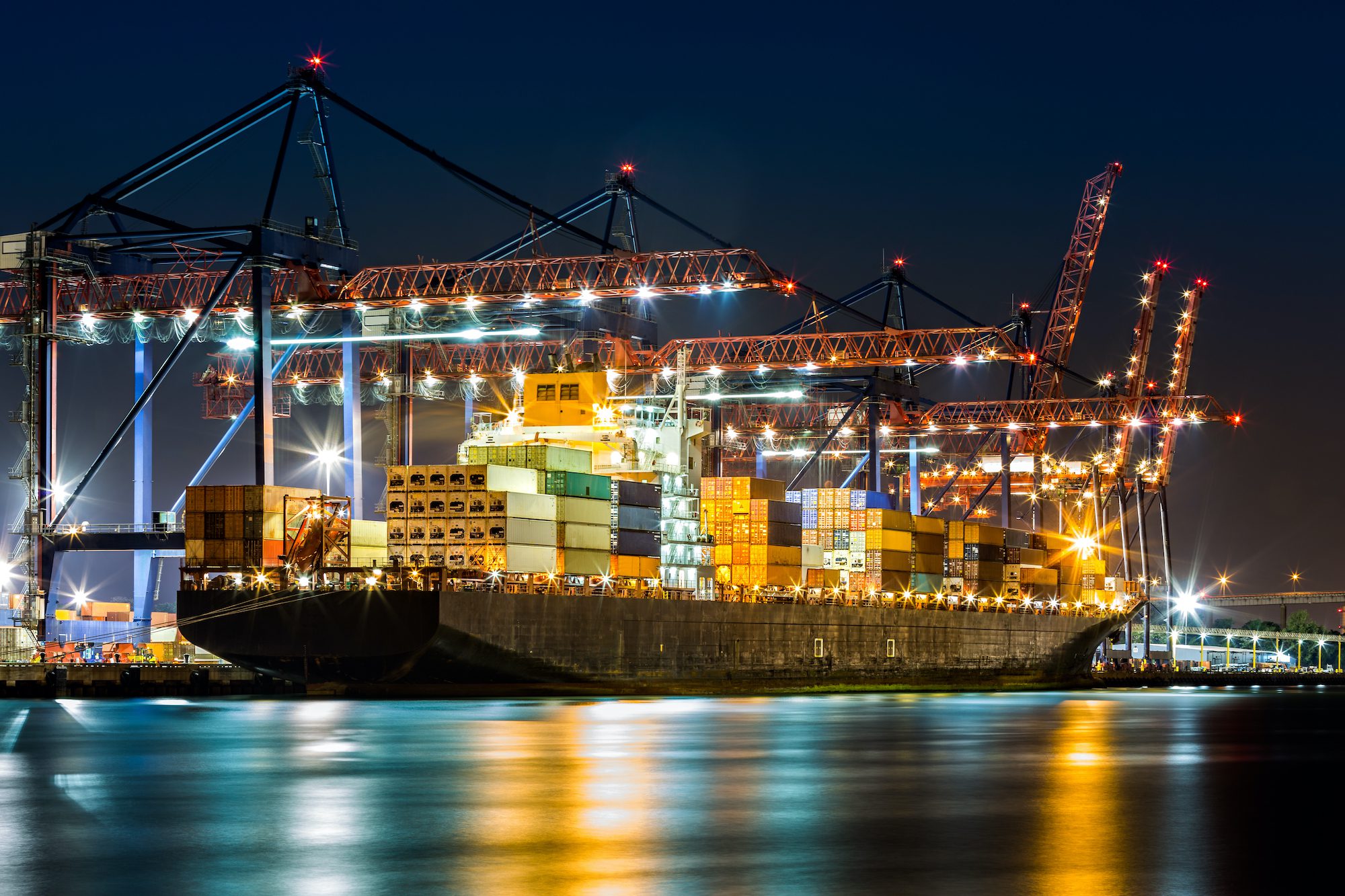
Shanghai, Nov 24 (Xie Mengyuan) Reporters learned from the Shanghai Port and Yangshan Port on the 24th that in the first ten months of this year, the container throughput of Shanghai Port exceeded 46 million TEUs, a year-on-year increase of 6.5%. Among them, the container throughput of Yangshan Port reached 23.8426 million TEUs, a year-on-year increase of 8.9%, and the export volume of the “new three” maritime goods (electric vehicles, lithium batteries, solar cells) continues to rise.
Last year, Shanghai Port became the world’s first major port with an annual throughput exceeding 50 million TEUs. In this regard, some industry insiders were concerned that the port’s annual throughput had already reached a high level, and the pressure for subsequent growth was relatively high. However, current data shows that the monthly container throughput and cargo throughput of Shanghai Port have no significant fluctuations and generally maintain a growth trend.
Tang Yunyi, Deputy Director of the Institute of Applied Economics at the Shanghai Academy of Social Sciences, said in an exclusive interview with China News Service that the positive growth of various data reflects the enhanced comprehensive strength of Shanghai Port. In addition to the continuous efforts of hardware equipment such as the Phase IV automated terminal of Shanghai Yangshan, which attracts more logistics flow, a batch of “shipping software” innovations have also injected momentum into the functional upgrade of the port.
Reporters noted that at the end of September this year, Shanghai piloted the operation of the country’s first maritime automated approval system for the declaration of “new three” dangerous goods based on blockchain foundational technology. Utilizing the technical characteristics of blockchain such as immutability, data transparency, and traceability, it provides new possibilities for the supervision of maritime dangerous goods transportation and facilitated customs clearance.
“It can be seen that the export of new energy vehicles occupies a large share of the growth in port container throughput, indicating that the market competitiveness of new energy vehicles in Shanghai and even the whole country is getting stronger and stronger.” Tang Yunyi believes that the growth behind the relevant data also reflects the tremendous changes in the structure of Shanghai’s foreign trade products and the enhanced core competitiveness of China’s high-end equipment sector. (End)