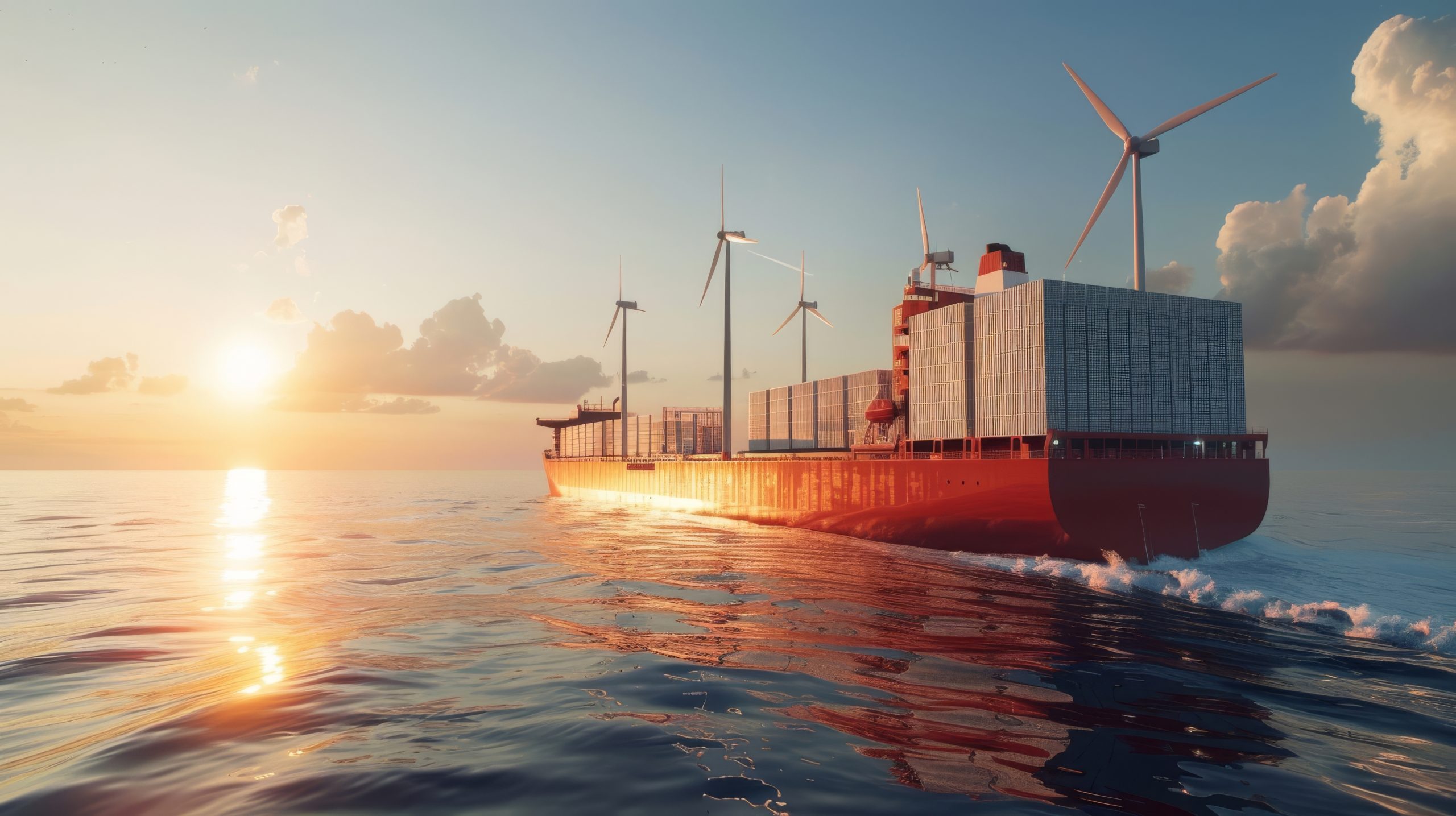
Despite the appeal of time, most global shipowners consider the Arctic bet a premature gamble
The seasonal opening of the Northern Sea Route (NSR), made accessible by the acceleration of climate change, is outlining a new frontier for global maritime transport, placing shipowners before a complex strategic dilemma that balances pure efficiency and systemic risk. While Western container giants, led by the Aponte family’s MSC and Denmark’s Maersk, maintain an explicit distance, citing the fragile ecology and infrastructural shortage, China is making a bold commercial move, transforming the NSR into a state-driven logistics corridor. The activation by Chinese operators like Haijie Shipping Company of the first regular container service, named “Arctic Express”, which promises to connect the Far East (Ningbo-Zhoushan) to key European ports (such as Rotterdam and Hamburg) in just 18 days, cuts transit time by about three weeks compared to the traditional route via Suez and the Panama Canal. This potential saving, quantifiable as a 30-40% reduction in distance sailed, constitutes an irresistible call for Asian supply chains, determined to bypass geopolitical choke points and the instability of the Red Sea.
Despite the appeal of time, most global shipowners consider the Arctic bet a premature, if not unsustainable, gamble, basing their calculation on operational costs and systemic risks that neutralize the distance advantage. The NSR, fully operational only for a limited seasonal window (July-November), cannot guarantee the just-in-time reliability essential for liner services. Above all, access requires costly investments: the mandatory use of ice-class reinforced ships (more expensive to build and maintain) and the constant need for Russian icebreaker assistance entail additional operational costs estimated between $100,000 and $300,000 per voyage. Insurance premiums, due to extreme weather conditions, isolation, and the absence of adequate rescue infrastructure, are up to three times higher than on conventional routes. Further economic factors are discouraging: the route is not suitable for the 20,000 TEU mega-ships that maximize economies of scale at Suez, forcing the use of smaller ships. The imposed logistics model is, moreover, purely point-to-point, excluding the intermediate port calls that are vital for the loading and unloading strategy of a global liner service.
Finally, the Russia factor dominates the strategic plan. The NSR is entirely managed and controlled by Moscow, creating a strategic dependency for icebreaker assistance and transit authorizations. For Western shipowners, sailing a corridor dominated by an actor under sanctions and geopolitical tension triggers an unacceptable reputational and financial risk, pushing, for example, Cosco, the Chinese state company, to drastically reduce transits in some sections of the route. The ideological positioning of entities like MSC, which refuses the route also due to environmental concerns related to the potential use of Heavy Fuel Oil (HFO) and the emission of black carbon into the fragile Arctic ecosystem, reflects a growing regulatory and stakeholder pressure towards sustainability.
Shipowners planning for 2030 must consider not only bunker savings, but also the validity of the business model in an Arctic where commercial profit is inextricably linked to environmental risk and Russian sovereignty.
The NSR, for now, remains a maneuvering space reserved for Chinese geopolitical ambition, more than an economically and logistically sustainable alternative for the Western commercial fleet. Russia’s commitment, which boasts 60% of the Arctic coasts and manages key extraction projects like Yamal Lng and Arctic Gate, goes beyond mere commercial cooperation. The Russian government has invested a 29-billion-dollar development plan in the NSR, aiming to channel an overall traffic (dominated by LNG, crude oil, coal, and raw minerals) that reached 31 million tons of goods in 2019 and, according to estimates, is projected to grow to 117 million tons by 2031, confirming the Arctic as the central pillar of its future economic and strategic projection.