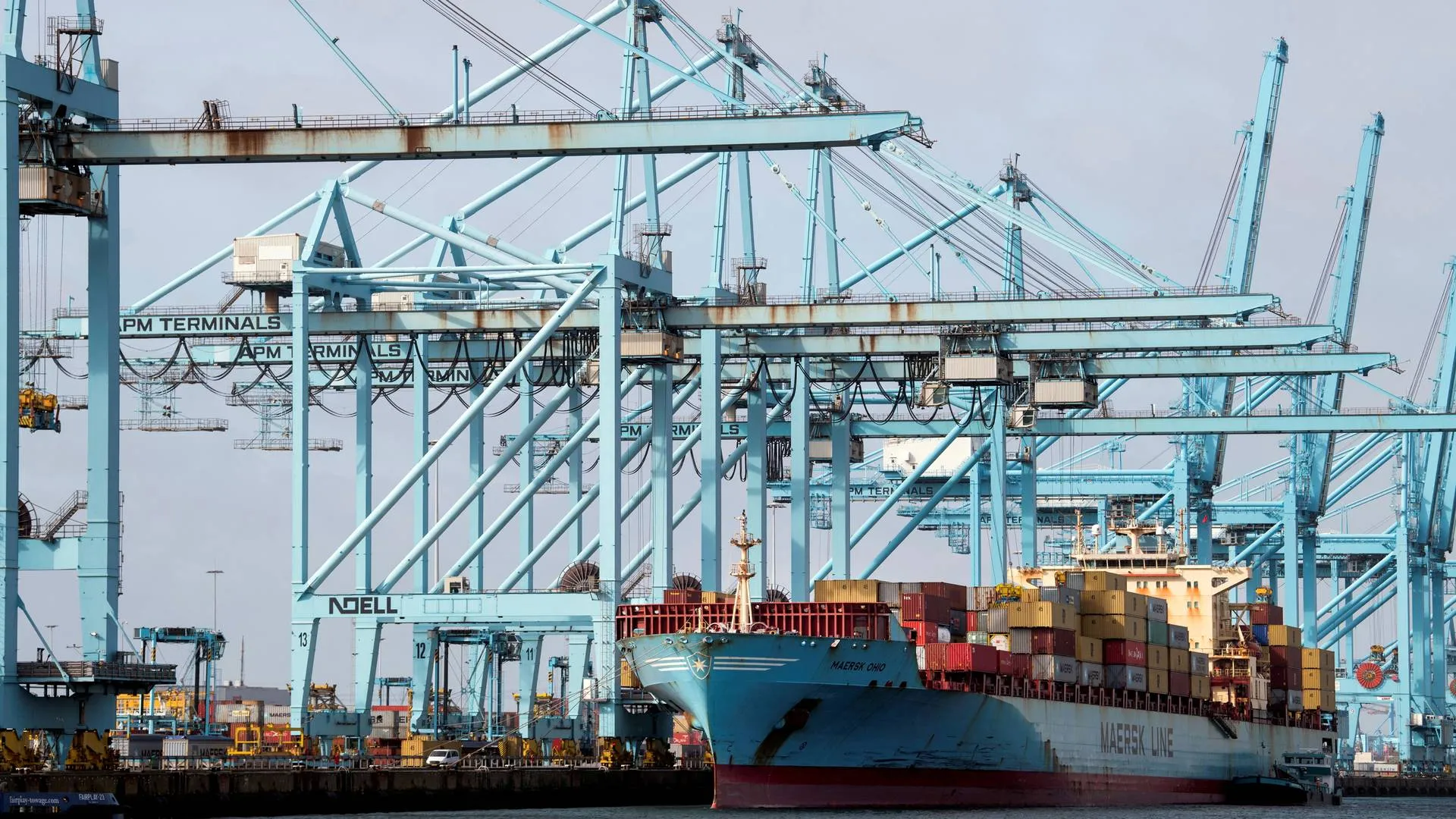
“Even if shipping costs were to rise by up to 10%, this would barely affect consumer prices,” says ING transport and logistics economist Rico Luman
A senior transport and logistics economist at ING has dubbed statements coming from the White House, relating to the effects of a global carbon price on shipping, ’weak’ and senseless.
US President Donald Trump’s administration has taken aim at decarbonisation measures under discussion at the United Nations’ specialised agency for shipping the International Maritime Organization (IMO) with open letters that include arguments against the so-called Net-Zero Framework (NZF) and threats against countries that do not side with the US in the matter.
But ING senior economist Rico Luman said in a LinkedIn post that tariffs imposed by the US President would have a far greater impact on the global economy and would result in higher prices for consumers than the IMO NZF.
“The US objects [to the IMO climate framework] and pressures other nations to reject it as well. But its arguments make no sense,” Mr Luman said. “If the framework were to push shipping costs up 10%, it will only translate into a fractional consumer prices increase. At least far less than the glut of tariffs [the US] is currently imposing. As such, it won’t pose a significant risk to the global economy.”
A joint statement from President Trump’s appointees, the US Secretaries of State, Energy and Transportation, claimed, “The economic impacts from [IMO NZF] could be disastrous, with some estimates forecasting global shipping costs increasing as much as 10% or more,” but then went on to threaten port fees and other ’financial penalties’ and ’commercial penalties’ including port fees against countries that did not back the US attempt to prevent the passage of the IMO measure.
In April, following IMO’s approval of the text of the Net-Zero Framework for shipping, Mr Luman saidthe NZF regulation, which is up for adoption at an extraordinary session of IMO during October, is a starting point for the industry and outlined several places where the regulation could go further than it currently does.
“The package introduces carbon pricing for greenhouse gas emissions above a downward sloping target level and redirects the revenues for greening. This pushes shipping companies to act, but ultimately more is needed,” Mr Luman said.
Lauding the work by the international community represented by IMO’s 176 member states to achieve an approved regulation that sets a carbon price on emissions above base target reductions that ratchet from 8% by 2030, Mr Luman said the regulation’s ’fuel agnostic’ approach risks creating high demand for biofuels, which, when not carefully regulated, can result in deforestation that can devastate ecosystems and worsen the impacts of global emissions. Also among Mr Luman’s list of shortcomings for the regulation is lack of greater ambition and a pricing mechanism for all shipping emissions included in other regulations, such as the European Union’s Emissions Trading System (EU ETS).
“Shippers such as Cargill and Trafigura have previously advocated for putting a price on all emissions as this could be a forceful instrument to support decarbonisation. Maersk called for a levy starting from US$150-200 and preferably even significantly higher to support the transition.
However, this also raises the costs of shipping, and adopting this was probably not achievable at the global level at this point,” he said.
“In terms of target setting, IMO previously adopted a goal of reducing greenhouse gas emissions by 20%, striving for 30% by 2030, and 70%, striving for 80% by 2040, both compared to 2008. The adopted framework seems to focus on a reduction of at least 8%-21% by 2030, which looks less ambitious. At the same time, total absolute emissions in shipping have risen in recent years, underscoring the need for more decisive action going forward.”
Despite the perceived shortcomings, Mr Luman said the IMO framework represents a point from which the industry can build.
“All in all, I believe this framework is definitely a step in the right direction, but it should also be seen as a framework to build upon further down the line,” he said.