South Korea’s ruling party has submitted a bill to set up a state-backed corporation and a $350 billion US investment fund tied to a tariff deal with Washington.
Lawmakers from the Democratic Party of Korea filed the “Special Act on the Management of Korea–US Strategic Investment” on Nov. 26, giving legal force to an investment framework agreed earlier this month to meet conditions for lower US import duties on Korean autos and parts.
The plan commits $200 billion in phased cash investment and $150 billion for shipbuilding cooperation. Cash outlays will be capped at $20 billion a year under a capital-call system that officials say is meant to limit strain on foreign-exchange reserves, which are a little over $420 billion.
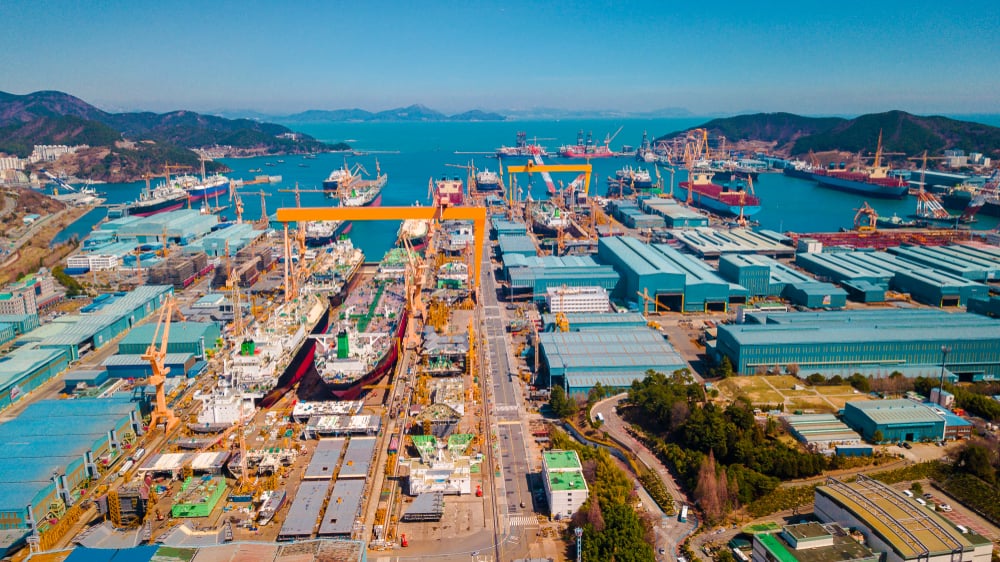
Eligible sectors include shipbuilding, energy, semiconductors, pharmaceuticals, critical minerals, artificial intelligence and quantum computing. Returns from the $150 billion shipbuilding component are intended to accrue entirely to Korean firms.
The bill would create the Korea–US Strategic Investment Corporation with capital of 3 trillion won (about $2.2 billion), and a Korea–US Strategic Investment Fund to manage the program. Funding sources include earnings on entrusted FX reserves and government-guaranteed foreign-currency bonds issued offshore.
A Nov. 14 memorandum of understanding establishes a US-based umbrella SPV to oversee projects, with a 50:50 income split before Korea’s principal and interest are repaid and 10:90 after repayment, subject to adjustment if full repayment within 20 years proves difficult. A two-tier governance system will screen US-proposed projects for commercial viability, legal compliance and strategic considerations.
Industry Minister Kim Jung-kwan has said only projects expected to recover Korea’s investment will proceed. Failure to meet a capital call within at least 45 business days could allow the United States to take Korea’s interest income temporarily and, in the worst case, restore tariffs toward earlier levels. Tariff cuts are closely linked to the investment.
At an October summit, President Lee Jae-myung and US President Donald Trump agreed to cap tariffs at 15%, down from the previous 25% under Section 232. For autos and parts, the bill is drafted so the lower rate applies retroactively from Nov. 1, assuming passage this month, with Korean media estimating savings of billions of dollars for major carmakers. The 15% ceiling also applies to certain wood products, while qualifying pharmaceuticals would face a 15% tariff; steel remains at 50%.
The size of the pledge has sparked debate in Seoul. Opposition lawmakers from the People Power Party argue the government should seek treaty ratification and warn of legal challenges, while supporters say the bill will secure economic gains once tariff reductions take effect. The package traces back to mid-2025, when Trump demanded a $350 billion Korean investment in the United States to avert new tariffs. The Lee administration later restructured the demand into a phased program with a $20 billion annual cap and risk-sharing elements.
A joint fact sheet and a 27-point MOU were released on Nov.
14 alongside US approval for Korea to build nuclear-powered submarines with US industry, linked to the $150 billion shipbuilding element.
President Lee said the negotiations—“one of the biggest variables affecting our economy and security”—had concluded, calling strong partnerships essential. The bill sets the legal framework for raising and managing the funds and embedding safeguards intended to protect financial stability while meeting US tariff conditions.