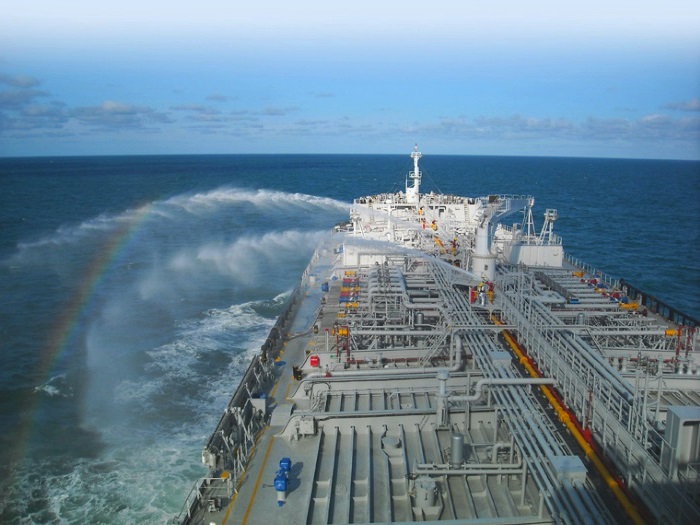
According to Xclusiv, “within tankers, the sanctioned composition underscores how deeply these trades have reshaped global tonnage balance. /LR2s form the core with 320 vessels, equal to 26.8% of the active fleet in that class — the highest exposure among all segments. Suezmaxes follow with 17.1%, and VLCCs with 16.1%, while MR1s, MR2s, and /LR1s show smaller but still material shares between 6% and 13%. Across all tanker classes, sanctioned vessels now represent 12.8% of the total active fleet of 7,820 ships. By age, the distribution has tilted even further toward older units: 335 tankers lie in the 17- to 20-year range and 494 exceed 20 years, meaning roughly 82% of sanctioned tankers fall into vintage territory”.
The shipbroker added that “the age breakdown highlights the structural imbalance. Only 175 sanctioned tankers are 16 years old or younger, compared with 829 aged 17 years or more. In contrast, the active fleet counts 4,814 younger and 3,006 older ships. This means sanctioned vessels make up just 3.6% of the younger fleet but a substantial 27.6% among units older than 17 years — up from 26.1% previously. The concentration is even more pronounced among large crude carriers: for ships above 17 years, sanctioned tonnage accounts for 60.6% of the /LR2 fleet, 51.5% of the Suezmax fleet, and 47% of the VLCC fleet, illustrating how the ageing end of the market is effectively dominated by restricted tonnage. This imbalance far exceeds replacement potential, as the orderbook-to-fleet ratio remains around 15.6%, offering limited offset. The sanctioned fleet thus acts as a hidden buffer that, once removed or idled, cannot quickly be substituted by new capacity”.
Xclusiv added that “flag data reinforce the opacity of this system. Russia, Comoros, and Sierra Leone collectively host more than a quarter of sanctioned tankers, followed closely by Iran, Oman, and Panama. North Korean, Palauan, and Tanzanian (Zanzibar) registries also appear prominently, alongside a long tail of smaller flags from Gambia to Vanuatu. Such clustering in permissive jurisdictions reflects deliberate efforts to evade mainstream compliance and complicates beneficial-ownership tracing, illustrating the fragility of governance across this “shadow” ecosystem”.
Finally, “if sanctions were eventually lifted, re-entry of this fleet into the legitimate market would be far from seamless. The majority of vessels older than 17 years would face significant barriers securing charters, insurance, or class reinstatement. Prolonged operation outside regulated maintenance cycles, opaque dry-dock records, and lenient flag oversight have likely degraded both technical condition and safety standards. Many ships would move directly to lay-up or demolition, shrinking the effective active fleet just as sanctioned cargo volumes shift back into compliant trade. In such a scenario, the global tanker supply would tighten while transport demand rises — a structural setup for stronger freight rates and asset re-pricing. The outcome would be a bifurcated market: modern, insurable vessels commanding premium employment and values, while the ageing grey fleet recedes into obsolescence under the weight of its own past”, Xclusiv concluded.
Nikos Roussanoglou, Hellenic Shipping News Worldwide