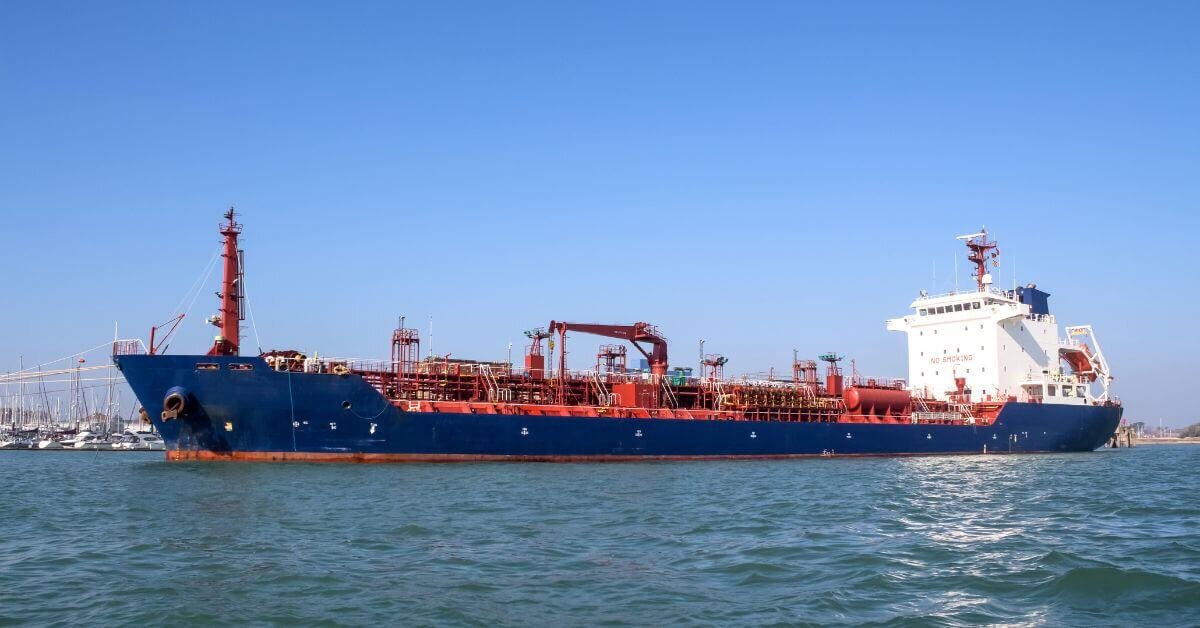
A vessel would have run aground in the Strait of Hormuz while using a route not approved by Iran, according to the Islamic Republic of Iran Broadcasting (IRIB).
Although the state media assured it was a container ship, it did not provide further details about its identity or flag.
The report seemed intended to bolster Tehran’s claims to control this strategic maritime route, a corridor through which – under normal conditions – about a fifth of the world’s traded oil and natural gas transits.
However, the Iranian version was denied by . The independent oil tracking service clarified that the vessel shown by state television is the Arista, a ship sanctioned by the United States and that did not run aground in the strait, but has been stranded since March in Iran’s territorial waters, between its coast and the island of Hormuz.
“This is the Arista (IMO 9348493). It has the flag of Comoros (as far as being foreign), but it is part of Iran’s Shamkhani network. The Arista has been under sanctions from the United States Office of Foreign Assets Control (OFAC) since last summer. In fact, it has been stuck in this same spot since mid-March 2026; at coordinates 27.12845, 56.46221; north of the island of Hormuz, Iran,” the entity detailed.
Since the United States and Israel began the war against Iran on February 28, the Islamic Republic has used its capacity to block the maritime route as a key source of pressure, disrupting global markets for energy and other critical goods.
The Iranian television report was released at the same time that the U.S. envoy for the Middle East, Steve Witkoff, and Jared Kushner, son-in-law of U.S. President Donald Trump, were in Doha, Qatar, to attend talks seeking a permanent end to the conflict.
Iran’s chief negotiator, Kazem Gharibabadi, also traveled to Qatar with a team. Technical talks between diplomats began on Wednesday, July 1, in the sovereign Arab state located in West Asia, according to two regional officials, who spoke on condition of anonymity to discuss the closed-door deliberations.
The negotiators seek to define specific details to pave the way and allow top leaders to seal an agreement, although differences over the strait and Lebanon still loom large.