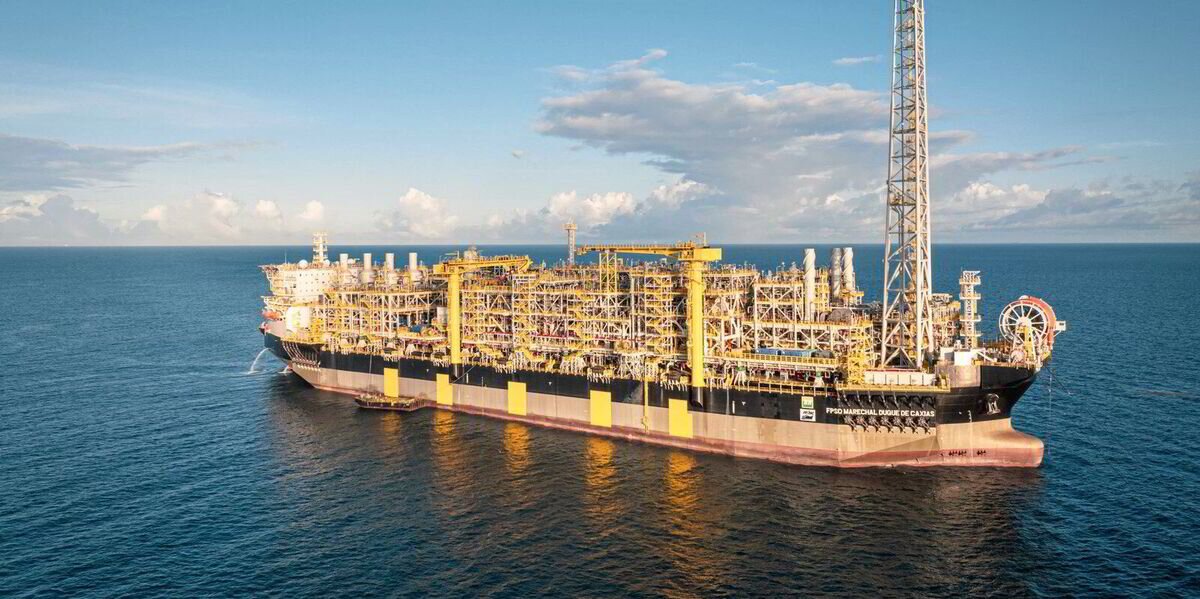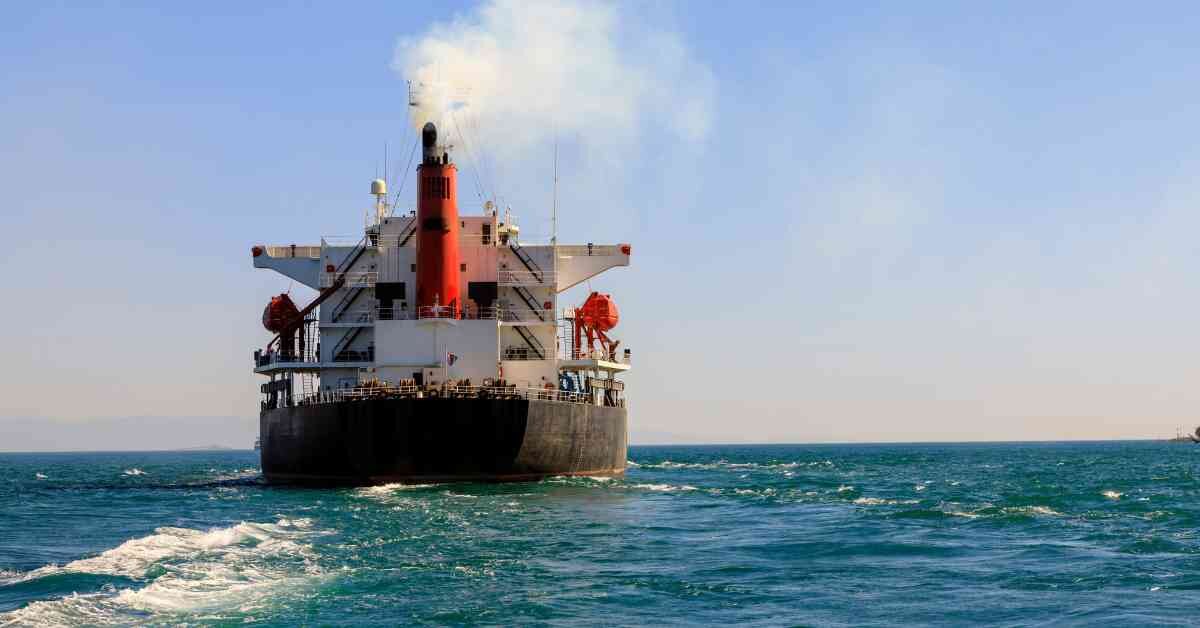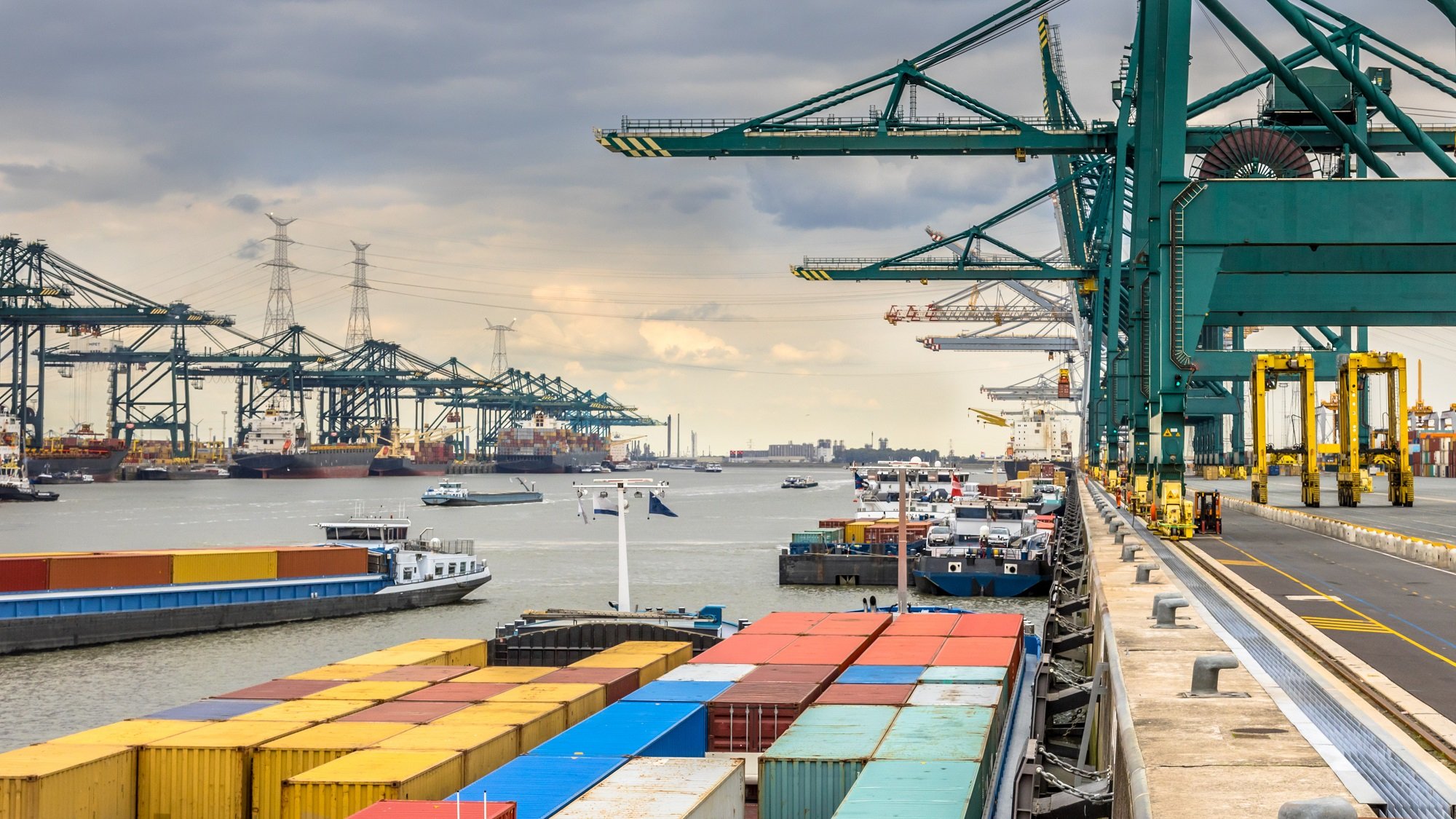
Ensuring the smooth operation of the “North-to-South Coal Transport” corridor, the volume of coal shipped via sea has remained above 700 million tons for many consecutive years, steadily ranking first in the country; as a world-class port, the annual cargo throughput of Tangshan Port consistently holds the second position among global coastal ports; facilitating “Hebei Goods Going Global,” the province has cumulatively opened 73 container shipping routes, with foreign trade routes reaching major ports in South Korea, Southeast Asia, and other countries and regions… In recent years, Hebei’s coastal ports have been vibrant, with a rising tide of maritime development and striving for maritime strength.
Hebei has a 487-kilometer coastline. To transform coastal advantages into development advantages, Hebei Province has continuously promoted port transformation, upgrading, and resource integration, optimized port functional layouts, strengthened port capacity building, accelerated the development of port-proximate industries, and continuously enhanced port radiation and open competitiveness.
How the Full-Process Intelligentization of a Major Coal Port is Achieved
Huanghua Port is currently the largest coal shipping port in China, handling over 600,000 tons of coal daily. However, at the coal loading docks, instead of the traditionally imagined scene of coal dust flying, reporters witnessed an efficient, clean, and intelligent operation.
At 3 PM on October 28, facing the sea breeze, a reporter stood on the trestle of the Phase III coal terminal at Huanghua Port. At that moment, the cargo ship “Zhenxiang 27” was quietly berthed at Pier 301, with no personnel visible at the operation site. In mid-air, the mechanical arm of an orange-red ship loader was aimed at the ship’s hold, steadily conveying a continuous flow of coal within a sealed system.
After waiting a while, Han Wengang, a loading supervisor from CHN Energy Huanghua Port Co., Ltd., appeared before the reporter. He said, “This ship docked at 7 AM this morning, started loading coal at 11 AM, and is expected to finish and depart this evening.”
Looking around, four berths were operating simultaneously. Modern ship loaders automatically adjusted their booms via the BeiDou positioning system, precisely delivering coal into the ship’s holds. Han Wengang said, “We have achieved full-process intelligent operations here. Coal moves within a closed system, ensuring environmental cleanliness and improving operational efficiency.”
During the half-hour conversation with Han Wengang, the loading operation remained steady and orderly. Only after the interview ended did the reporter notice the ship’s waterline had sunk significantly. The operational efficiency of this terminal was truly impressive.
How is full automation achieved?
The reporter went to the production command center, 2 kilometers away from the terminal. On a large electronic screen, flowing data resembled the port’s neural network. The “Zhenxiang 27” ship, seen earlier, appeared as an icon on the screen. A progress bar below the icon showed the loading operation was 69% complete.
Production dispatcher Zhang Yongxu said, “This is known as the central brain of Huanghua Port, capable of displaying real-time information on arriving resources, equipment status, cargo storage, etc.” At that moment, he was closely monitoring the screen, coordinating operations for 17 berths and over 10 ships.
“It’s like a complex math problem,” Zhang Yongxu analogized. “Elementary school math has problems about water filling and draining a pool. Our scheduling plan is an advanced version—not only considering coal inflow and outflow but also coordinating dozens of varieties to ensure each ship loads and departs on time.” In his description, this port, with coal shipments exceeding 200 million tons annually for five consecutive years, operates like a precise clock, with every gear meshing perfectly.
The port’s intelligence is evident not only in dock /unloading but throughout the entire process, including unloading, stacking, retrieving, and loading, all intelligently managed.
How long does it take to unload a train of coal at Huanghua Port? The “coal unloading marvel,” the car dumper, provides the answer: 20 seconds to unload 8 railcars!
At the Phase /IV car dumper house of Huanghua Port, the reporter witnessed the intelligent coal unloading process. A train fully loaded with coal slowly arrived, and long railcars were pulled by a positioning car to the first station upon arrival. In cycles of 4 railcars each, the car dumper clamped and rotated the railcars about 160 degrees. With a “boom,” 320 tons of coal were discharged enveloped by dry mist. Water mist wrapped around the coal flow like a light veil, the entire process taking only about 20 seconds.
Subsequently, the coal was transferred via conveyor belts to silos at the other end of the port. There, unloading trolleys, following dispatch commands, automatically moved to designated silos for operation. Blue canopies fully covered the conveyor belts during transfer, ensuring environmental cleanliness.
In the centralized control room hundreds of meters away, relying on a self-developed intelligent production operating system, unloading 8000 tons of coal was completed in just one and a half hours, with staff only needing to monitor the entire process.
Intelligentization has reshaped operational efficiency and accelerated the green transition.
“In the past, the car dumper house was a heavily polluted area in coal ports, but now it’s a showcase for intelligent operations,” said equipment inspector Zhao Yonghui, pointing to the visitor walkway underfoot. “Look, you can hardly find any dust on this floor.”
The secret lies on the side of the car dumper. Zhao Yonghui explained that dry mist dust suppression devices are installed on the sides, spraying water mist that mixes evenly with the coal, achieving optimal moisture content for natural settlement, effectively suppressing dust from the source throughout the transfer process. “This is our self-developed intrinsic long-term dust suppression system. It achieves over 98% dust suppression efficiency through one-time water spraying for the entire process. This technology has obtained 6 national patents,” Zhao Yonghui said.
As the world’s first coal port to achieve full-process intelligentization in unloading, stacking, retrieving, and loading, Huanghua Port has led “North-to-South Coal Transport” ports in coal shipment volume for six consecutive years. This young port continues to evolve—in the distance, the Phase V project of Huanghua Port’s coal terminal is under vigorous construction, with tower cranes and machinery roaring.
This is an expansion project for the nation’s largest coal transport port. Upon completion, it will achieve full-process automation and digitalization, including intelligent car dumping and ship loading, enabling unmanned operations. Chen Huabin, project representative for the Phase V project of the Engineering Management Center of CHN Energy Huanghua Port Co., Ltd., stated that with modern technology, the storage capacity of Huanghua Port’s coal terminal will increase by 540,000 tons, annual coal throughput capacity will increase by 53.1 million tons, and coal transport capacity will jump from 210 million tons to 260 million tons per year.
The “Circle of Friends” of a World-Class Port Keeps Expanding
Early on the morning of November 14, before the morning fog over Bohai Bay had dissipated, a deep, powerful ship horn pierced the sky. The 300,000-ton “Heping”轮, like a moving mountain of steel, slowly entered the embrace of Caofeidian Port Area in Tangshan Port.
Not far away, on the ore terminal, large ship unloaders tens of meters high stood ready to unload ore from Brazil from the ship’s hold, transporting it to a steel mill inland.
“Lately, our company’s berths have /unloading tasks every day, operating at full capacity,” said Wang Jianli, shift director of the dispatch office of Hebei Port Group Caofeidian Port Ore Terminal Co., Ltd. In the first 10 months of this year, the company handled 183 cargo ships, achieving a cargo throughput of 31.1147 million tons, a year-on-year increase of 0.5%.
Wang Jianli, who has worked in Caofeidian Port Area for many years, has communicated with captains of many international mega-vessels. “In the past, this was a shoal they had to navigate carefully on their charts. Now, it has become a deep-water port bustling with ships, holding a clear and important coordinate on new navigation charts,” Wang Jianli said.
Behind the changing coordinates on the charts lies not only the construction and development of Caofeidian Port Area but also the continuously expanding “circle of friends” of Tangshan Port.
This “circle of friends” exists not in the virtual network but on the vast blue ocean. It is the interweaving of shipping routes, the handshake between cargo ships and terminals, the resonance between goods from around the world and the industrial pulse of the port’s hinterland.
Entering the Vessel Traffic Service Center of Caofeidian Maritime Safety Administration, the reporter saw a large electronic screen displaying dense yet orderly shipping routes in Caofeidian Port Area, with real-time updates on shipping information.
“Facing the sea, there is a deep channel; backing the land, there are shallows. Extending 500 meters from the Caofeidian headland reaches a water depth of 25 meters, with the maximum depth of the frontal deep channel reaching 36 meters, making it a rare natural deep-water area in Bohai Bay,” said Niu Yang, Director of Caofeidian Maritime Safety Administration. This “diamond-grade” deep-water port possesses berths capable of accommodating 400,000-ton bulk carriers, the most solid名片 on Tangshan Port’s “circle of friends” invitation.
This confidence attracts “friends” from around the globe. Now, relying on Jingtang Port Area, Caofeidian Port Area, and Fengnan Port Area, Tangshan Port has built 156 various productive berths. Its “friend list” includes 258 ports in nearly 80 countries and regions.
On the morning of November 14, at the general cargo terminal of Jingtang Port Area, giant ships shuttled, gantry cranes stood tall, and large equipment of various shapes and types awaited loading and shipment.
In the office building not far from the terminal, Tang Bo, Head of the Production Business Department of Hebei Port Group Tangshan Port Group Co., Ltd. (hereinafter “Tanggang Co., Ltd.”), was constantly on the phone. He was communicating with foreign clients about cooperation matters.
“Two months ago, the ‘Omoni’ completed loading 49,000 tons of steel here and set sail for Tartus Port, Syria,” Tang Bo said, pointing to Berth 9 outside the window.
Tang Bo was referring to Tanggang Co., Ltd.’s first direct shipping route to Syria. Behind the route’s opening was six months of “cloud” negotiations by the company’s business team.
In Tang Bo’s view, efficient operations are key to attracting customers. And the General Cargo Intelligent Production Control Center adjacent to the office area is the “smart brain” behind this efficiency.
“The breakbulk intelligent production control platform is like giving us ‘clairvoyance’ and ‘clairaudience,’ enabling real-time monitoring of terminal operations,” said Wu Zhenhui, director of the dispatch office at the Second Harbor Terminals Company of Tang Port Co., Ltd.
By closely monitoring cargo ship movements, precisely executing operational plans, and scientifically arranging ship berthing and departure… relying on this platform, the Second Harbor Terminals Company of Tang Port Co., Ltd. has increased its berth utilization rate by 7.9% and the average monthly handling volume per single piece of equipment by 39.2%.
Since the beginning of this year, Tang Port Co., Ltd. has successively opened several international direct shipping routes from the Jingtang Port Area to Sihanoukville, Cambodia; Cortés, Honduras; Marghera, Italy; and others, gradually building a global breakbulk cargo route network connecting Asia, Europe, Africa, and South America.
Across the shore from the breakbulk cargo terminal, in the container yard of the Jingtang Port Area container terminal, colorful containers are stacked like rolling mountains. These containers, bearing the logos of major shipping companies, resemble messengers from all over the world, converging and transshipping here.
“Relying on the construction of the smart port, the ship-hour efficiency at the Jingtang Port Area container terminal has increased by 7.85% year-on-year, and the number of cargo ships handled has increased by 10.02% year-on-year,” said Zhang Xinliang, deputy director of the Container Production Business Department at the Tang Port Group of Hebei Port Group. He added that while efficiency is crucial, having cargo sources is equally important, making it particularly vital to develop broader hinterland resources.
“Load the ship, set sail!” Not long ago, a full train of 98 wide-body open-top containers, each 35 tons, was loaded onto the container ship “Feihongda 68” and departed from the Jingtang Port Area bound for Qinzhou Port. This also marked the first successfully implemented “Single Document System” multimodal transport business for wide-body open-top containers at Hebei ports.
“The goods departed from Antang Station in Shanxi, arrived at the Jingtang Port Area via rail transport, and then, utilizing our railway container loading conversion platform, were directly loaded onto the ship without needing container exchange, transferred to sea transport, and sent to Qinzhou Port,” Zhang Xinliang said. This platform enables seamless mixed loading of railway containers and sea containers, increasing the actual loading capacity of cargo ships by over 30%, significantly enhancing the economy and convenience of sea-rail intermodal transport.
To elevate its level of opening up, Tangshan City is targeting dual land-sea channels, promoting “Eastern Outreach, Western Connectivity, and Land-Sea Linkage.”
“While accelerating the release of the potential of deep-water major ports, Tangshan Port is deeply integrating into the construction of the New Western Land-Sea Corridor, combining the rich cargo resources of the hinterland with the convenient transportation of the port to achieve resource sharing, interactive development, and mutual benefit and win-win,” said Luo Tongzhen, deputy director of the Tangshan Municipal Ocean, Port, and Shipping Administration.
Qinren Route, operational for over 20 years, remains vibrant
At 5:20 AM on November 16, before dawn, the ship “HE YUAN 1” was already securely berthed at Berth 24 of the Qinhuangdao Port container terminal. Workers from the Hebei Port Group Qinhuangdao Port New Bay Container Terminal Co., Ltd. (hereinafter referred to as “New Bay”) were busy unloading cargo from the ship.
The “HE YUAN 1” is a foreign trade vessel operated by Qinhuangdao Qinren Shipping Co., Ltd. (hereinafter referred to as “Qinren Company”), shuttling between Qinhuangdao and Incheon, South Korea. The Qinren Route is a star route of Qinhuangdao Port, operating twice weekly. Since its launch in 2004, it has handled a throughput of 580,000 TEUs, mainly importing cars and electronic products from South Korea and exporting furniture, fresh vegetables, building materials, and other goods from China.
At this moment, containers were being lifted off and loaded onto container trucks waiting at the dock, to be transported to the cargo yard, awaiting customs clearance.
“All positions at our terminal are staffed 24 hours a day to ensure operations begin immediately after a ship docks,” said Liu Jun, manager of the Business Department at New Bay. Only with fast loading and unloading speeds can the route’s schedule be better guaranteed, making the route more competitive in the market.
“Fast ship speed, punctual schedules, and stable operation are the biggest features and competitive advantages of our route,” said Zhou Hongru, staff member of the Freight Department at Qinren Company. On the afternoon of the 15th, upon receiving news of a potential navigation closure due to strong winds, they instructed the captain to speed up while ensuring safety and coordinated with relevant departments to adjust the port entry plan, ultimately achieving berthing 2 hours ahead of schedule.
At 6:00 that day, just over half an hour after the “HE YUAN 1” berthed, Qinhuangdao Port closed due to strong winds. “The efforts throughout the night were not in vain,” Zhou Hongru said. Because of the punctual schedules, the Qinren Route has gained recognition from many fresh goods customers. Fresh products transported via this route from the Beijing-Tianjin-Hebei region now account for over 40% of the fresh products sent from this region to the Seoul metropolitan area in South Korea.
Around 7:00 AM, as the containers on the ship were nearly unloaded, workers began unloading from the bow while loading at the stern. “Simultaneous loading and unloading saves a lot of time. If things go smoothly, the ship can depart by noon,” Liu Jun said.
As the Qinren Route becomes increasingly popular, the existing cargo ships can no longer meet demand. In response, the “Qinren New Era” ship has begun construction. Upon completion and operation, the route’s transport capacity will double, further enhancing Qinhuangdao Port’s opening-up capabilities.
The “Qinren New Era” has a rated passenger capacity of 748 people. Qinren Company plans to gradually resume passenger services after the new ship enters operation. By then, the route will not only meet the cross-border business travel needs of enterprise personnel but also stimulate two-way tourism consumption, promote cultural exchanges between China and South Korea, attract foreign investment to Qinhuangdao City, and accelerate the city’s opening-up pace.
Around 12:00 noon, the export containers were loaded. Once the navigation closure was lifted, the “HE YUAN 1” would depart for South Korea, while ships like “Huizhong 7”, “Zhen Haize Yang”, and “Bao An Cheng 87” would berth at the container terminal’s respective berths as scheduled.
Since the reorganization and establishment of the Hebei Port Group, Qinhuangdao Port’s connectivity has been further enhanced. Liu Jun said the group has opened a “Sea Shuttle Bus” connecting the three ports and four areas of Hebei, with 60 trips per month. Goods arriving at the port are handled immediately, allowing cargo from Qinhuangdao Port to quickly reach the sea.
The reporter observed that while unloading operations were intensively underway, the cargo from the “HE YUAN 1” had already completed customs clearance procedures. Operational staff from Qinren Company’s Freight Department began notifying consignees to pick up their goods and contacted the railway department to apply for rail cars. “This time, 62 TEUs are transit containers, with their final destination being Ulaanbaatar, Mongolia,” said Yang Mingxin, assistant to the head of the Freight Department at Qinren Company. These goods will be transported to their destination by rail.
“Does the train come directly into the port?” the reporter asked.
“Yes. Relying on the Qinren Route, Qinhuangdao Port began trialing cross-border sea-rail intermodal transport in 2016. It has now opened the ‘Incheon—Qinhuangdao—Ulaanbaatar’ cross-border sea-rail intermodal route,” Yang Mingxin said. Sea-rail intermodal transport achieves seamless connection between sea and rail transport. Goods do not require multiple transfers, which not only reduces losses during loading and unloading but also significantly shortens transport time. Transit goods bound for Mongolia, which previously took about 20 days via other routes, can now arrive in just 12 days using this intermodal route.
Furthermore, last year, Qinren Company also attempted to open the “Incheon—Qinhuangdao—Central Asia” sea-rail intermodal route. “The wider the rail transport reach, the more South Korean merchants the Qinren Route can attract; the more popular the Qinren Route is, the more containers and cargo there are, which lowers the overall transport cost and attracts more shippers. Sea and rail transport mutually promote each other,” Yang Mingxin said. Currently, they are applying to upgrade the existing “Incheon—Qinhuangdao—Ulaanbaatar” route’s rail transport to scheduled train service. By then, stable transport times will not only attract more South Korean and Mongolian merchants but will also serve as a model for the sea-rail intermodal route. (Hebei News Network, Hebei Daily reporters Li Wei, Wang Yumin, Sun Yeda)