Currently, international crude oil prices do not truly reflect the supply and demand fundamentals of Middle Eastern crude oil. Disrupted by geopolitical situations, the global crude oil shipping chain remains under sustained pressure. Multiple factors, including supply chain mismatches, blocked shipping lanes, and lagging vessel turnover, are causing structural contradictions in the oil transportation market to accumulate continuously, potentially leading to a phased concentrated adjustment, which will have a profound impact on the global crude oil trade and tanker operation system.
Recently, the international crude oil price has fallen back to below 90 USD per barrel. This is not due to a substantial improvement in the global crude oil supply side, but rather a phased manifestation of the temporary stabilization of short-term geopolitical military conflicts. Compared to short-term price fluctuations, the logistics transmission of cross-border crude oil trade has a significant lag, and the market supply-demand recovery is far from complete.
As a core crude oil export hub in the Middle East, the normal pace of crude oil loading operations at Saudi Arabia’s Yanbu Port has notably slowed down recently. The batch crude oil loaded a week ago will still take several weeks to arrive at various global consumer terminals successively. The additional crude oil export capacity generated after the implementation of relevant memorandums of understanding has not yet fully formed effective market supply. Meanwhile, to avoid navigation risks in the Bab el-Mandeb Strait, a large number of ocean-going tankers have adjusted their sailing routes, completely altering the traditional logistics system for Middle Eastern crude oil export.
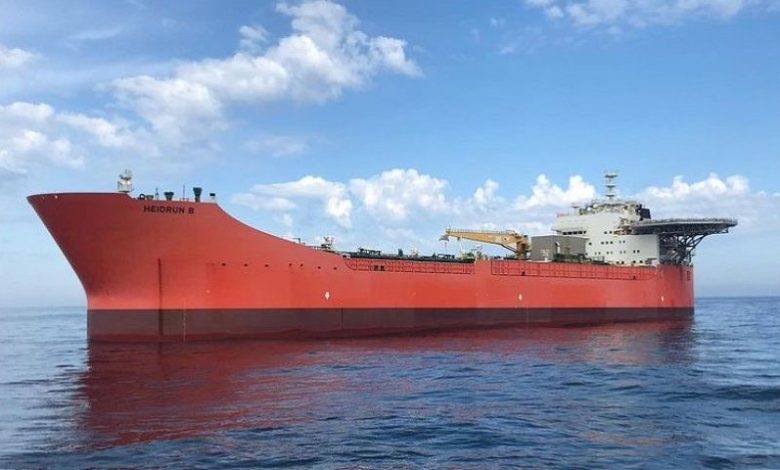
Currently, most ocean-going tankers have abandoned the direct Red Sea route, choosing instead to circumnavigate the Cape of Good Hope in Africa before transiting the Suez Canal to and from the Yanbu port area. The lengthened routes directly increase the single-vessel operating cycle, objectively boosting the operational revenue of tanker companies, but also causing a significant delay in global crude oil delivery cycles and a continuous decline in supply efficiency. Restricted by the navigable dimensions of the Suez Canal, large tankers cannot pass directly and must rely on methods such as transshipment via smaller vessels and ship management relay transfers to complete logistics connections, further exacerbating supply chain congestion and substantially increasing the time and operational costs of cross-border crude oil transportation.
Transit volumes through the two core energy waterways in the Middle East—the Strait of Hormuz and the Bab el-Mandeb Strait—continue to decline, leading to a significant decrease in the efficiency of the main global crude oil transport arteries. The actual current transit scale of the two key waterways, the Red Sea and the Suez Canal, is far below normal operational levels, with shipping congestion issues becoming increasingly prominent. Data shows that the Red Sea waterway carries 12% to 15% of global trade volume, with a daily average crude oil shipping capacity of up to 9 million barrels, making it a veritable global economic shipping artery; the Suez Canal handles approximately 20% of global cross-border trade cargo volume.
The superposition of multiple negative factors continues to tighten the global crude oil supply system. Blocked transit through the Strait of Hormuz has led to a significant reduction in crude oil export volumes. Coupled with the impact of geopolitical conflicts on energy production and storage facilities in multiple regions worldwide, limiting capacity release, the supply gap for global crude oil and refined products continues to widen, forming a market predicament under multiple pressures, and placing sustained strain on the industry’s supply-demand balance system. Industry energy analysts generally believe that the current global oil transportation and crude oil market is characterized by high uncertainty, and the pace of supply chain recovery and the direction of the market landscape remain difficult to predict.
The market currently exhibits a clear two-way game situation. Whether geopolitical disturbances persist will directly determine the pace of crude oil inventory consumption and the trend of oil price fluctuations. On one hand, the industry generally hopes to resolve differences through multilateral coordination, restore normal navigation through the Strait of Hormuz, and unblock global crude oil transportation bottlenecks. On the other hand, the market is highly concerned that prolonged geopolitical disturbances could lead to the continuous depletion of commercial crude oil inventories to their minimum operating thresholds, thereby triggering significant oil price volatility. The duration of disruptions to Middle Eastern energy shipping channels is continuously reshaping the global crude oil supply-demand landscape and market operational rhythm.
Since the onset of geopolitical volatility, Saudi Arabia’s Yanbu Port, with its stable operational capabilities, has become an important pillar of resilience for Middle Eastern crude oil trade. To mitigate regional risks, Saudi Arabia has shifted over 70% of its crude oil export capacity from maritime to overland pipeline transport, concentrating delivery for export to the Red Sea Yanbu port area. However, as geopolitical risks continue to spread, the capacity of this overland transfer channel is nearing saturation. Overall, although Middle Eastern crude oil trade has not been interrupted, the total global crude oil supply can no longer adequately match market demand, and the supply-demand imbalance continues to intensify.
From the perspective of the capacity recovery cycle, the inspection, repair, and restart of damaged refining facilities in the Middle East, as well as the commissioning and operation of new crude oil pipelines, all require a long period. The repair and reconstruction of energy infrastructure have a significant lag. It is noteworthy that key energy facilities such as crude oil pipelines and port storage and transportation facilities face prominent geopolitical risks and are continuously impacted by unstable factors, adding more uncertainty to the medium- and long-term recovery of crude oil supply.
An industry monitoring report released by the U.S. Department of Energy confirms the weak momentum of energy supply recovery in the Middle East. Data shows that in June of this year, the export volume of liquefied petroleum gas and refined products from the Gulf region was less than half of pre-conflict levels, with recovery progress significantly lagging. Although crude oil circulation has recovered to nearly 70% of pre-conflict levels, loading operations at core refineries in the Gulf region have not yet fully resumed, and production operations remain constrained. Meanwhile, energy refining, storage, and transportation facilities in multiple regions worldwide have been impacted by geopolitical disturbances, further tightening the global supply of refined products and continuously weakening market supply resilience.
Considering the overall supply-demand fundamentals, the global crude oil market is generally in a state of tight supply. Industry experts predict that the current situation of crude oil supply chain disruption and recurring shipping congestion may last for about three months, and the phased market pressure cannot be ignored.
The demand trend in the Chinese market and the level of global crude oil inventory reserves are two core keys to stabilizing the current global oil transportation and crude oil market. As the world’s major crude oil consuming market, China’s current crude oil procurement and consumption pace is stable. Sufficient inventory reserves can effectively hedge against a supply gap of 4 million barrels per day, providing a buffer space of about three months for the global market. At the same time, multiple parties in the international community have signaled mediation efforts, which is expected to create favorable conditions for alleviating regional geopolitical conflicts and unblocking energy shipping channels.
Industry experts emphasize that phased inventory buffers are difficult to cure the market’s structural contradictions, and long-term waterway blockages will continue to consume strategic reserve resources. Calculation data shows that a one-month disruption in energy shipping would require the release of 200 million barrels of crude oil inventory, a two-month disruption would require 315 million barrels, and a three-month disruption would see inventory consumption reach 500 million barrels.
Currently, the room for maneuvering global strategic crude oil reserves continues to shrink. The U.S. Strategic Petroleum Reserve has fallen to 311.45 million barrels, a new low since 1983, with a reserve storage capacity utilization rate of only 43.6%. The space and capacity for subsequent large-scale releases are significantly limited, making it difficult to continuously hedge against long-term global supply gaps. Currently, multiple market entities, including energy companies and airlines, have begun to draw on strategic petroleum reserves to ensure production and operations, and the rate of reserve resource consumption is accelerating.
Overall, the current global crude oil trade and oil transportation market remains in a period of deep adjustment, with multiple risks intertwined, including recurring geopolitical disturbances, blocked shipping channels, lagging supply recovery, and shrinking reserve space. Short-term market fluctuations are frequent, and phased supply-demand contradictions continue to accumulate. Global oil transportation companies, especially those with routes in the Middle East, need to continuously strengthen route risk control, optimize capacity deployment, coordinate logistics scheduling, and proactively respond to medium- and long-term market landscape adjustments. In the future, the direction of regional situations, the progress of waterway navigation restoration, and the intensity of global inventory adjustments will continue to dominate the trends of the global crude oil and oil transportation market.