Thank you for the question. As mentioned earlier by my colleague, I will elaborate further from a fiscal perspective. The “zero-tariff” policy is one of the defining features of the Hainan Free Trade Port (FTP) policy framework. In recent years, the Ministry of Finance has earnestly implemented the decisions and arrangements of the CPC Central Committee and the State Council, tailored policies to Hainan’s realities, and collaborated with relevant departments to introduce three “zero-tariff” policies covering raw materials, vehicles and yachts, and self-use production equipment. These early-stage practices have yielded phased results, injecting new momentum into Hainan FTP’s high-level opening and accumulating valuable experience for the island-wide customs closure operation and related management.
To steadily advance the island-wide customs closure of Hainan FTP, the Ministry of Finance has summarized prior practical experience, balanced factors such as FTP construction progress, industrial conditions, and regulatory hardware/software capabilities, and led the formulation of tax policies for goods crossing the “first line” and “second line” as well as circulating within the island. These policies, along with the Hainan FTP Import Taxable Goods Catalog, will take effect upon the island-wide customs closure. At that time, existing “zero-tariff” policies will be integrated into the post-closure goods tax regime, essentially establishing Hainan FTP’s “zero-tariff” import system.
Post-closure, the goods tax policy will include the following arrangements:
– Independent legal entities registered in Hainan FTP, as well as eligible public institutions and private non-enterprise units within the FTP, will be exempt from import taxes on goods imported via the “first line” that are not listed in the Import Taxable Goods Catalog.
– “Zero-tariff” goods and their processed products can circulate among eligible entities on the island without import taxes.
– Goods produced by enterprises in industries encouraged by Hainan FTP will be exempt from import tariffs when entering the mainland via the “second line” after achieving a value-added processing rate of 30% or higher.
Compared to pre-closure policies, there are three notable changes:
1. **Significantly expanded “zero-tariff” coverage**: Post-closure, “zero-tariff” imports will adopt a negative list approach, replacing the previous positive list with the Import Taxable Goods Catalog. The “zero-tariff” scope will expand from the current 1,900 tariff lines to approximately 6,600, covering about 74% of all tariff lines—a nearly 53-percentage-point increase from pre-closure levels. This marks a substantial rise in openness.
2. **Broader eligibility for benefits**: Currently, only independent legal entities and public institutions registered in Hainan FTP qualify for “zero-tariff” benefits. Post-closure, eligibility will extend to nearly all enterprises, public institutions, and private non-enterprise units on the island with actual import needs.
3. **Further relaxed policy restrictions**: Post-closure, “zero-tariff” goods and their processed products will no longer be limited to self-use and can circulate freely among eligible entities without import tax replenishment. This will help extend local industrial chains, enhance competitiveness, and foster industrial clustering.
Overall, these policies will further reduce production costs for market entities, stimulate market vitality, and significantly elevate the liberalization and facilitation of goods trade in Hainan FTP. Moving forward, the Ministry of Finance will monitor policy implementation—particularly market entities’ experience—and optimize adjustments as needed, while collaborating with the Hainan provincial government to improve services. We will also strengthen management to advance Hainan FTP’s development and China’s high-level opening-up. That concludes my response. Thank you.
CCTV (China Media Group):
We understand that after island-wide customs closure, “second-line ports” will be established for the movement of goods, articles, personnel, and transport vehicles between Hainan FTP and the mainland. Some businesses and travelers are concerned about potential inconveniences, such as whether travel to Hainan will require permits. Could you clarify this? Thank you.
Wang Changlin:
This is a pertinent question. As I mentioned earlier, customs closure aims to facilitate openness and development—summarized as “closure for openness, closure for growth.” Post-closure, Hainan’s international connectivity will become freer, while ties with the mainland will remain efficient. Under the current design, most goods, as well as all personnel, articles, and transport vehicles, will continue to follow existing regulations for entering/exiting Hainan Island, with no changes pre- and post-closure. Traveling to Hainan for business or leisure will remain the same, with no additional permits required.
For goods subject to inspection (to prevent “first-line” openness from impacting the mainland market), “second-line” precision management will apply to three categories:
1. “Zero-tariff” goods
2. Goods benefiting from value-added processing policies
3. Goods under relaxed trade measures
To ensure clearance efficiency, the following measures will be implemented:
1. **”One-stop clearance”**: Enterprises can pre-declare goods’ exit information online, with customs and security agencies collaborating at “second-line ports” for “single declaration, single inspection, single release.”
2. **”Front-loaded/back-shifted” procedures**: Certain checks (e.g., agricultural product inspections, toll collection) will be moved outside ports to avoid congestion.
3. **Smart supervision**: Big data and AI will enhance coordination among customs, maritime, border control, and port operators.
4. **Credit-based management**: Entities with high credit ratings will face fewer inspections.
In summary, Hainan FTP will maintain seamless connectivity with the mainland post-closure. Travelers and businesses will experience no disruptions—only improved services. Thank you.
Da Xiang News:
The Hainan FTP Construction Master Plan and Hainan FTP Law propose a “List of Goods and Articles Prohibited or Restricted from Import/Export in Hainan FTP.” Could you elaborate on this list? Thank you.
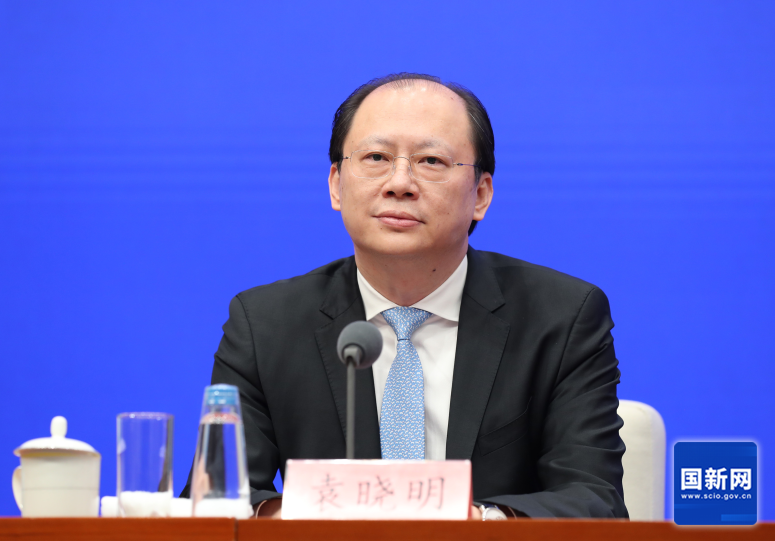
Yuan Xiaoming (Assistant Minister of Commerce, photo by Xu Xiang):
Thank you. Trade liberalization is one of the five pillars of Hainan FTP’s policy design. Under President Xi Jinping’s guidance, the Ministry of Commerce and other departments formulated the List as a core policy, innovating beyond China’s current trade management model. The List is a key institutional arrangement to enhance Hainan FTP’s trade liberalization. Let me highlight two aspects:
1. **Transparency**: Based on the Hainan FTP Law and Foreign Trade Law, the List systematically details all nationally prohibited/restricted goods/articles, clarifying boundaries for businesses.
2. **Openness**: [Content truncated due to length].
On the other hand, the “List” significantly enhances the openness of goods trade. Under the premise of fulfilling international convention obligations, safeguarding national security, and maintaining ecological and environmental bottom lines, the “List” relaxes management measures for certain imported goods in line with the development needs of the Hainan Free Trade Port. In short, it eases restrictions and expands pilot openings. Import license management has been abolished for used mechanical and electrical products under 60 commodity codes, covering approximately 80% of such products previously subject to import licenses, which largely meets the production needs of Hainan enterprises for self-use. Additionally, building on existing policies for free trade pilot zones and comprehensive bonded zones, the “List” allows products under 38 commodity codes to undergo bonded maintenance in the Hainan Free Trade Port, achieving the highest level of openness in this field nationwide.
The full text of the “List” will be published later on the Ministry of Commerce website. The introduction of the “List” will help optimize the trade development environment in the Hainan Free Trade Port and strengthen its trade development momentum. In the next step, the Ministry of Commerce will work with relevant parties to ensure the effective implementation of the “List,” allowing policy benefits to directly reach market entities. Thank you!
21st Century Business Herald reporter:
The pilot policy for exempting domestic sales of processed and value-added goods from tariffs has been in place for over four years. What adjustments and optimizations have been made to this newly introduced policy compared to the current pilot policy? Thank you.
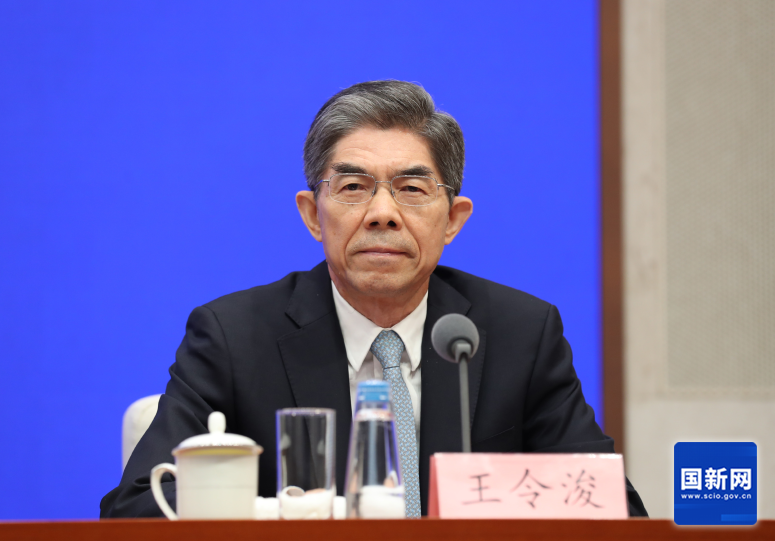
Wang Lingjun (photo by Xu Xiang)
Wang Lingjun, Deputy Director General of the General Administration of Customs:
Thank you for your question. This is an important issue related to customs policies in the construction of the Hainan Free Trade Port. The policy of exempting domestic sales of processed and value-added goods from tariffs refers to the exemption of import tariffs for goods produced by encouraged industries in the Hainan Free Trade Port that contain imported materials and achieve a processing value-added rate of 30% or more when entering the mainland from the Hainan Free Trade Port, while import VAT and consumption tax are levied as usual. In July 2021, this policy was first piloted in the Yangpu Bonded Port Area. Over the past four years, the pilot policy has undergone multiple optimizations and adjustments, with the pilot scope expanding from the 2.3-square-kilometer Yangpu Bonded Port Area to the entire Hainan Free Trade Port. Based on an in-depth review of the pilot experience, the General Administration of Customs, together with relevant departments and Hainan Province, further optimized and improved the post-customs-closure processing value-added tariff exemption policy, formulating the “Interim Measures of the Customs of the People’s Republic of China on the Tax Collection and Management of Processing Value-Added Tariff-Free Goods in the Hainan Free Trade Port.” Compared to the current pilot policy, the post-customs-closure processing value-added tariff exemption policy has been optimized in the following aspects:
1. Relaxing the eligibility threshold for enterprises by removing the requirement that encouraged industries must account for 60% or more of the total revenue of the benefiting enterprise.
2. Expanding the scope of imported materials. In addition to bonded goods, “zero-tariff” imported goods are now included in the policy’s applicability.
3. Optimizing the calculation formula for processing value-added, allowing the value of goods produced in the Hainan Free Trade Port to be included in the value-added portion, making it easier for enterprises to achieve the 30% value-added rate.
4. Expanding the applicability of cumulative processing value-added. For bonded goods processed by different upstream and downstream enterprises, the value-added portions can be cumulatively calculated, encouraging enterprises to extend their industrial chains.
Overall, the post-customs-closure processing value-added policy lowers the eligibility threshold and broadens the scope of benefits, better meeting the production needs of island-based enterprises and facilitating the cultivation and development of industrial chains and clusters. Thank you!
China-Arab TV (Dubai) reporter:
What specific measures has the Hainan Free Trade Port taken to advance economic and trade cooperation with Arab countries? Will more China-Arab cultural and tourism cooperation projects be promoted in the future, such as direct flights or themed economic, trade, and cultural activities? Thank you.
Feng Fei:
Thank you for your question. Hainan Province attaches great importance to economic, trade, and cultural-tourism cooperation with Arab countries. Governor Liu Xiaoming and I have visited Gulf Arab countries. In recent years, economic and trade cooperation between Hainan and Arab countries has continued to warm up. The Yangpu Port in Hainan has established a sister-port relationship with the Abu Dhabi Port, and direct shipping routes between Yangpu Port and Abu Dhabi Port, as well as direct flights between Haikou and Dubai, have been launched. As you mentioned, direct routes—both maritime and air—have already been realized, though these routes will need to be further expanded and intensified. This further strengthens the “Maritime Silk Road” and “Air Silk Road” between China and Arab countries. The Abu Dhabi Khalifa Economic Zone, Dubai International Free Zone, and Dubai Jebel Ali Free Zone are also global free trade zone (port) partners of the Hainan Free Trade Port. We currently have 40 such partnerships, many of which are with influential free trade zones in Arab countries. Over the past three years, the annual growth rate of goods trade between Hainan and the Arab League has exceeded 30%, surpassing 24 billion yuan in 2024.
After customs closure, the Hainan Free Trade Port will leverage its advantage as a nexus for domestic and international dual circulation to deepen open cooperation with Arab countries in economic, trade, tourism, cultural, educational, and clean energy fields with greater intensity. For example, we will prepare to host the World Free Zones Organization Annual Meeting and conduct tourism promotion activities in Jeddah, Saudi Arabia. As cooperation deepens, more direct routes and themed economic, trade, and cultural activities will be launched, fostering mutual opportunities and shared prosperity on the basis of cultural exchanges and people-to-people connectivity. Please also convey our welcome to Arab enterprises to invest and do business in the Free Trade Port. Thank you.
Cover News reporter:
In recent years, Hainan has vigorously promoted the construction of an international tourism consumption center. What achievements have been made so far, and what steps will be taken next? Thank you.
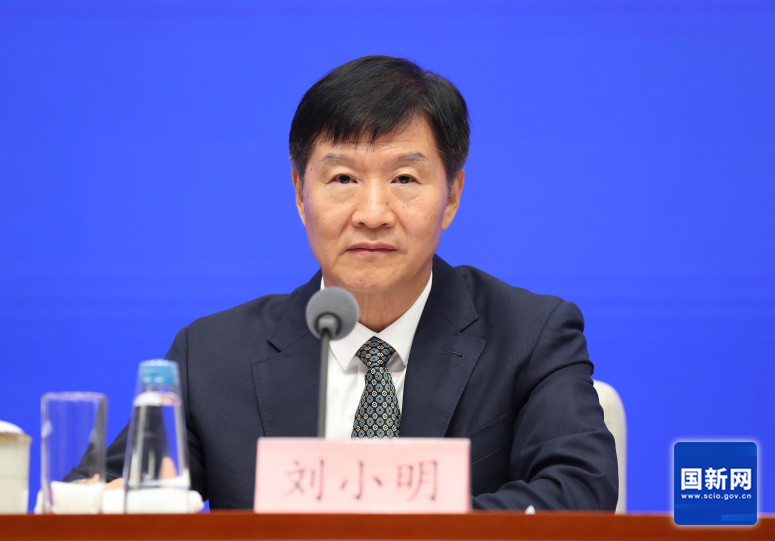
Liu Xiaoming (photo by Xu Xiang)
Liu Xiaoming, Deputy Secretary of the Hainan Provincial Party Committee and Governor of Hainan Province:
Thank you for your question. “Sunny Hainan, a paradise for holidays.” Hainan has long been a dream destination for domestic and international tourists. In recent years, Hainan has made significant strides in building an international tourism consumption center. For instance, we have meticulously developed the “dual-ring” tourism roads. The “outer ring” is the 988-kilometer round-island tourism highway, built along the coast with over 50% sea visibility. The “inner ring” is the 466-kilometer round-tropical-rainforest-national-park tourism highway, winding through mountains and connecting new cultural and tourism landscapes. The dual-ring synergy offers breathtaking views of mountains and seas, with travelers enjoying scenic drives as if moving through a painting. Additionally, we have successfully hosted the China International Consumer Products Expo for five consecutive years, which has become Asia’s largest global consumer goods exhibition and trading platform. This not only supports sustained consumption growth and meets people’s aspirations for a better life but also provides a vital platform for global enterprises to share the Chinese market and for Chinese enterprises to go global. Furthermore, we have accelerated the cultivation of new tourism formats, actively developing niche tourism projects such as cruises, yachting, aerospace, diving, and surfing. “Coming to Hainan for concerts, music festivals, and brand exhibitions” has become a new trend.
In 2024, the province received 97.2 million domestic and international tourists, an 8% increase from the previous year, with inbound tourists more than doubling.
Next, the General Administration of Customs will continue refining customs supervision models tailored to the island-wide customs closure operation based on its progress and Hainan’s practical needs, supporting Hainan’s institutional openness and empowering the high-quality development of the Hainan Free Trade Port. Thank you!
Hainan Radio and Television Reporter:
Earlier, the speaker mentioned that the island-wide customs closure marks the beginning of a new phase in the Hainan Free Trade Port’s development and is a long-term task. Could you elaborate on the measures to be taken post-closure to further expand Hainan’s openness to the outside world? Thank you.
Wang Changlin:
Thank you for your question. As you noted, the island-wide customs closure is a new starting point for the Hainan Free Trade Port. Moving forward, in line with the Master Plan for the Construction of the Hainan Free Trade Port, we will collaborate with Hainan Province and relevant departments to continuously improve the policy and institutional framework for a high-level free trade port. Guided by objectives and problem-solving, we will accelerate the pace of opening up, focusing on the following six areas:
First, accelerate the establishment of a trade management system that ensures free, secure, and convenient movement of goods. On one hand, we will further expand the range of “zero-tariff” goods to strengthen and grow merchandise trade. On the other hand, we will adapt to the demands of service trade development by opening up sectors like tourism, education, and healthcare, enabling “both market access and operational permits.”
Second, strive to create an open, transparent, and predictable investment environment. We will further relax foreign investment access, introduce new special measures for market access, deepen the “commitment-based entry” reform, and expedite the establishment of an investment facilitation system centered on process supervision.
Third, gradually develop financial policies and institutions aligned with open development. We will refine the multi-functional Free Trade Account system, expanding its functions and application scenarios. We will orderly open the financial sector to domestic and foreign markets, piloting cross-border asset management services.
Fourth, implement more convenient entry-exit management policies. We will further ease restrictions on the free movement of personnel, adopt more flexible temporary entry-exit policies for business personnel, streamline work visa policies, and improve residency systems.
Fifth, establish a more open and liberal shipping regime. We will accelerate the development of the “China Yangpu Port” ship registry, optimize ship inspection policies, and enhance shipping services. Additionally, we will relax airspace controls and flight rights restrictions, actively promoting the opening of the Seventh Freedom of the Air.
Sixth, build an efficient, convenient, and secure cross-border data flow mechanism. This addresses the needs of many businesses and supports digital trade development. We will expand the orderly opening of communication resources and services, adjust the negative list for data export management, accelerate the construction of international communication gateways and cross-border submarine cables, and foster the growth of the digital economy. Thank you!
Shou Xiaoli:
Next question. Two more journalists have raised their hands—last two questions.
National Business Daily Reporter:
In recent years, the Ministry of Finance has introduced a series of tax policies to support the Hainan Free Trade Port. How will tax system reforms be further advanced after the island-wide customs closure? Thank you.
Liao Min:
Thank you for your question, which is of great interest to many. As you know, the construction of the Hainan Free Trade Port involves tax system reforms. The Master Plan outlines a phased approach to implementing zero tariffs, low tax rates, and simplified tax structures—a nine-character guideline—to ultimately establish a globally competitive tax system supporting the Free Trade Port. Since the plan’s release, the Ministry of Finance has rolled out policies such as duty-free shopping for island departures, “zero tariffs” on select imports, and preferential corporate and individual income tax rates.
Post-closure, the Ministry will deepen tax reforms in line with the Free Trade Port’s development and higher-level openness, ensuring continuous policy enhancement and benefit realization. Key areas include:
First, maintain current corporate and individual income tax incentives to attract high-end talent and enterprises aligned with the Free Trade Port’s needs.
Second, expand the “zero-tariff” product range and adjust the import tax list as needed.
Third, continue duty-free shopping policies for departing travelers, optimizing arrangements to meet diverse consumer demands and support Hainan’s role as an international tourism and consumption hub.
Fourth, explore tax policies for residents’ consumption of imported goods, introducing a positive list for duty-free purchases by island residents. This pilot will launch soon to enhance local satisfaction.
Fifth, steadily advance research on sales tax reform, which consolidates VAT, consumption tax, vehicle purchase tax, urban maintenance and construction tax, and education surcharges. Given its complexity, we will proceed cautiously, conducting phased studies and piloting reforms based on Hainan’s development.
I thank the media for their interest in fiscal policies. Thank you!
Shou Xiaoli:
Final question, please.
China News Service Reporter:
Hainan has prioritized institutional innovation. Could you share successful cases and plans for advancing such innovation around customs closure? Thank you.
Liu Xiaoming:
Thank you. Hainan treats institutional innovation as a key driver for high-level openness and reform, having cultivated 166 innovative cases across 20 batches—over 40 endorsed by central authorities and replicated nationwide. Examples include:
– Pioneering a province-wide “one-stop” online credit repair system, enabling businesses to restore credit without physical visits, strengthening incentives and penalties for integrity.
– Reforms like “efficient handling of single matters” for foreign nationals, enterprises, and outbound investment, tailored to the Free Trade Port.
– Launching a unified, transparent land information platform—”Land Supermarket”—allowing online browsing, selection, and purchase, streamlining transactions and resolving mismatches between projects and land.
– Operationalizing multi-functional Free Trade Accounts, cross-border capital management centers, “zero-tariff” import supervision models, e-tags for duty-free cosmetics, and “credit + smart” port oversight, all informing future customs closure models.
Going forward, we will treat institutional innovation as a “golden key” for development. Aligning with customs closure arrangements, we will explore and refine reforms in institutional design, governance, legal safeguards, and supervision, building a globally competitive customs zone. We will benchmark high-standard trade rules, integrate regulations and standards, and plan pre- and post-closure reforms to produce nationally impactful innovations, unleashing Hainan’s new dynamism.
I thank the media for your attention and support. Thank you!
Shou Xiaoli:
Thank you to our speakers and journalists. This concludes today’s press conference. Goodbye!