People’s Daily Online, Qinzhou, July 10 — Recently, 1,062 Changan vehicles were cleared through customs and neatly lined up at the automated container terminal of Qinzhou Port, ready to be loaded onto roll-on/roll-off ships bound for the UAE, Saudi Arabia, and other destinations. This marks another shipment of vehicles to the Middle East market via the New Western Land-Sea Corridor, following the first export of Changan vehicles on April 7 this year through the “Beibu Gulf Port-Jebel Ali Port” roll-on/roll-off route.
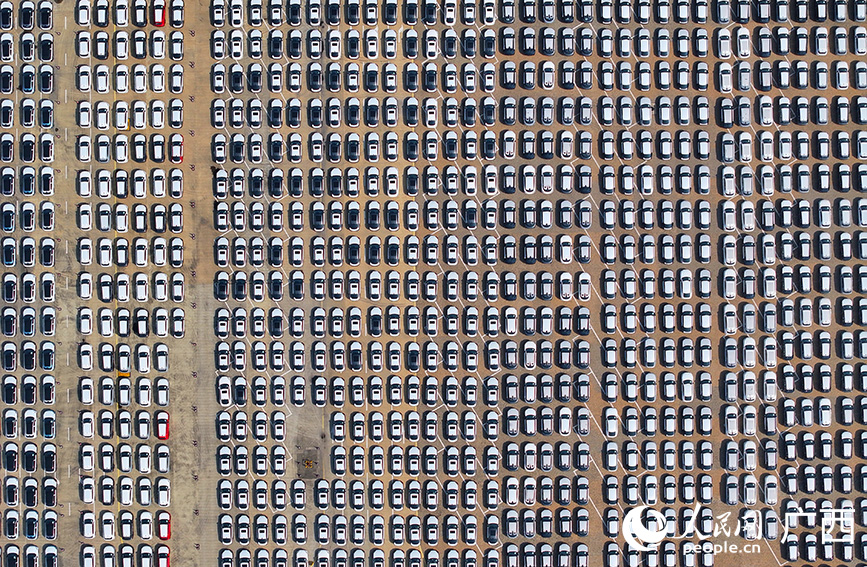
Vehicles awaiting shipment to overseas markets at Qinzhou Port’s automated container terminal. Photo by Fu Huazhou, People’s Daily Online.
“This batch includes a total of 1,272 vehicles for export, with the remaining 210 to be transported from Chongqing’s Yuzui Station via rail-sea intermodal trains to the Qinzhou Port Railway Container Center,” said Liu Fulei, director of the comprehensive department at Qinzhou Beigang Logistics Co., Ltd. He noted that this export batch is larger in scale, includes new energy vehicles, and will maintain regular exports in the future.
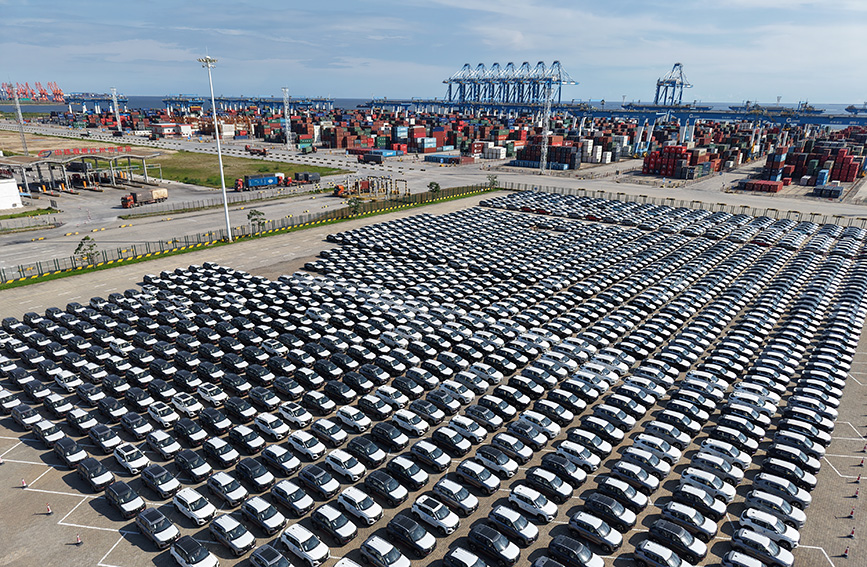
Vehicles awaiting shipment to overseas markets at Qinzhou Port’s automated container terminal. Photo courtesy of Qinzhou Port Customs.
In recent years, China’s automotive industry has flourished, with exports of “Western-made” vehicles from brands like Changan and Seres growing rapidly. The New Western Land-Sea Corridor’s increasingly robust logistics network, combined with the efficiency and cost-effectiveness of rail transport, has enabled more automakers to expand globally through this channel. Meanwhile, Qinzhou Port Customs has focused on meeting the clearance needs of businesses along the corridor, leveraging the port’s role as a key hub. By enhancing collaboration with railway, terminal, and port authorities, the customs has implemented a “pre-declaration + direct port loading + priority inspection” clearance model. Through initiatives like the “Smart Bay” system and other smart customs projects, it has strengthened logistics informatization and boosted the corridor’s efficiency and port development. From January to May this year, 17,000 vehicles were exported via Qinzhou Port, a 12.3% year-on-year increase.
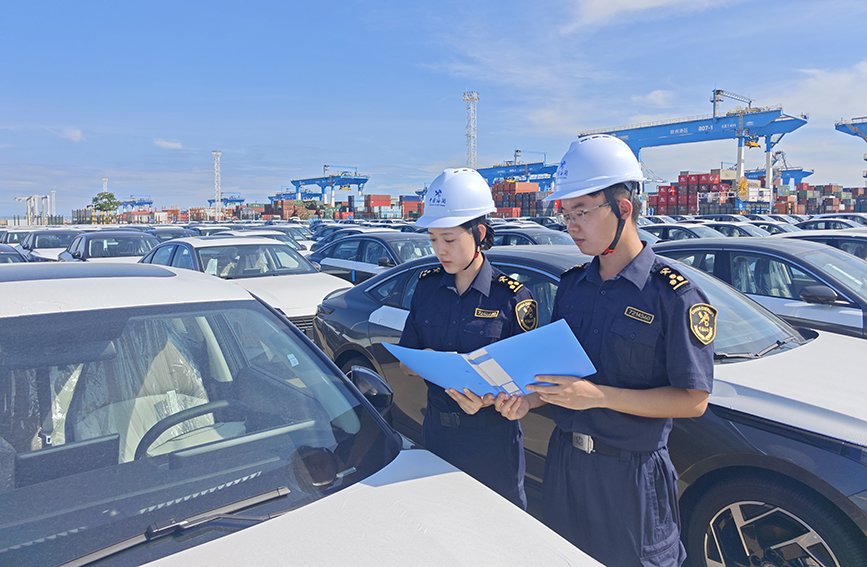
Customs officers inspecting export vehicles. Photo courtesy of Qinzhou Port Customs.
“The rapid growth in vehicle exports demands faster clearance processes. We prioritize logistics efficiency and corridor development, supporting the addition of two new international shipping routes and the opening of seven new berths this year,” said Li Yichun, head of the logistics monitoring division at Qinzhou Port Customs. The customs has streamlined clearance procedures, offering tailored logistics solutions to businesses, and enhanced digital monitoring of shipments via the “Digital New Western Land-Sea Corridor” and “Smart Bay” systems. Terminal upgrades, optimized logistics routes, and staggered scheduling have reduced overall port logistics time by 24.75%.
Moving forward, Qinzhou Port Customs will further leverage regional collaboration, deepen smart customs projects, and optimize operational models to improve port logistics efficiency. The goal is to accelerate the development of Qinzhou as a hub for vehicle distribution and facilitate more “Made in China” and “Western-made” vehicles in reaching global markets. (By Fu Huazhou, Dong Ziyue, and Zhou Xiaoyan)