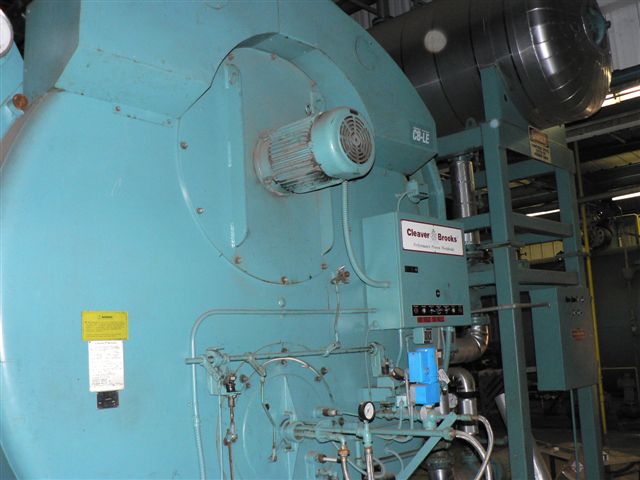
The main purpose of refractory material that is used inside a marine boiler is to contain the heat generated by burning of the fuel in the furnace and to minimise heat losses from the furnace. It is therefore important that these materials have insulating properties and are able to withstand high temperatures. Also, the refractory to be used inside boiler furnace should not contaminate the material with which it is in contact.
Boiler refractory material should have sufficient mechanical strength and be able to withstand various forces like
The material (pure compounds) which are used to make refractory (like MgO, SiC, Fireclay etc.) have high melting point in range of 1800° to 2800 ° C.
The material should be able to expand and contract uniformly with temperature change without cracking. Economically, it is not possible to use a single refractory in the boiler and thus different types are used to together after ascertaining that they are able to withstand the temperatures they are subjected to.
Important Terms defining the Boiler Refractory property:
Refractoriness: It is a property at which a refractory will deform under its own load and it is generally determined by the composition of material used to make a refractory.
Porosity: It is the property to resist against chemical attack ( usually by fuel and water). A low value of porosity means high strength and good thermal conductivity.
Refractory Strength: It is the resistance of the refractory to compressive loads, tension and shear stresses.
Specific gravity: Mostly associated with brick type refractory, the specific gravity is associated with the weight of the brick. A higher specific gravity brink will have more strength.
Spalling: Spalling is a type of defect, also known as fracture of refractory, which is caused by excessive thermal /or mechanical load on the refractory.
Permanent Linear change (PLC) on reheating
Permanent change in the property of the refractory mostly caused by high temperature.
Thermal conductivity:It indicates the general heat flow characteristics of the refractory
Thermal expansion: An important factor determining the ability of refractory product to expand during high temperature and contract during cooling
Bulk density: It is measured as weight of a given volume of the refractory and relates to apparent porosity of the material used. A refractory with higher bulk density is better in quality.
The materials from which the refractories are made are classified into three groups :
Acid materials which consists of clay, silica, quartz, sandstone, gamister.
Neutral material which consists of chromite, graphite, plumbago, alumina.
Alkaline or Base material which consists of lime, magnesia, zirconia.
Special care is to be taken while choosing the refractory material and it must be insured that the acid and alkaline material are kept apart as under high temperatures the two react with each other to form salt, which reduces the effectiveness of refractory.
For installation, the refractory material is available in two forms:-
1) Firebricks
The material is formed into bricks and these bricks are then fired at high temperature in special kilns.
Advantages:
2) Monolithic Refractory
These refractory are supplied in unfired state and installed in the boiler. They are then fired in place or when the boiler is put into service. This type of refractory can be divided into :-
a) Moldable Refractory : This type is used when direct exposure to radiant heat takes place. It must be pounded in place during installation.
Advantages:
b) Castable Refractory: This type of refractory is placed where there is no direct exposure to radiant heat for e.g. behind water walls. It is installed in manner similar to building concrete.
Advantages:
c) Plastic Chrome Core: This type is bonded with the clay and is used in construction of studded water walls. They can withstand very high temperature but have a very low mechanical strength. These are pounded onto the steel studs and welded to the tube. These studs provide addition strength and means of attachment for the refractory.
Advantages:
Precautions to be taken during and after installation of boiler refractory:
1) To prevent undue stresses in the refractory material ample space should be provided for expansion. It is made to ensure that the these spaces does not get blocked in any way and cause refractory to break off from attachment and bulge out, with danger of possible collapse.
2) Refractory material determines the time required for raising steam. So greater amount of refractory slows down the steam raising process to prevent damage to refractory.
3) Air dampers or checks should be closed as soon as boiler is shut down preventing cold air impingement on the hot refractory. This impingement causes surface flaking which is commonly known as Spalling. Spalling causes reduction in wall thickness of the refractory.
4) Flame impingement should be avoided on the refractory as this causes build up of carbon deposit on the surface. The carbon penetrates into the refractory and damages the same.
5) Impurities in fuel like vanadium and sodium salts react with refractory material to form molten slag, which runs down to the furnace floor. This causes reduction of wall thickness and building up of this slag interferes with the shape of the flame. Thus impurities should be prevented from entering the boiler.
Different Causes for boiler refractory damage
The refractory inside the boiler furnace is an important structure to safeguard the boiler structure and to increase the efficiency of it’s operation. The ship engineer responsible for the boiler maintenance must ensure regular visual inspection of refractory to be performed and boiler is correctly operated.