Few companies will go to such lengths to maintain optimal inventory levels. However, the anecdote is instructional, especially in light of recent events: While there’s a price to be paid for building resilience into supply chains, there is an even bigger price for not doing it.
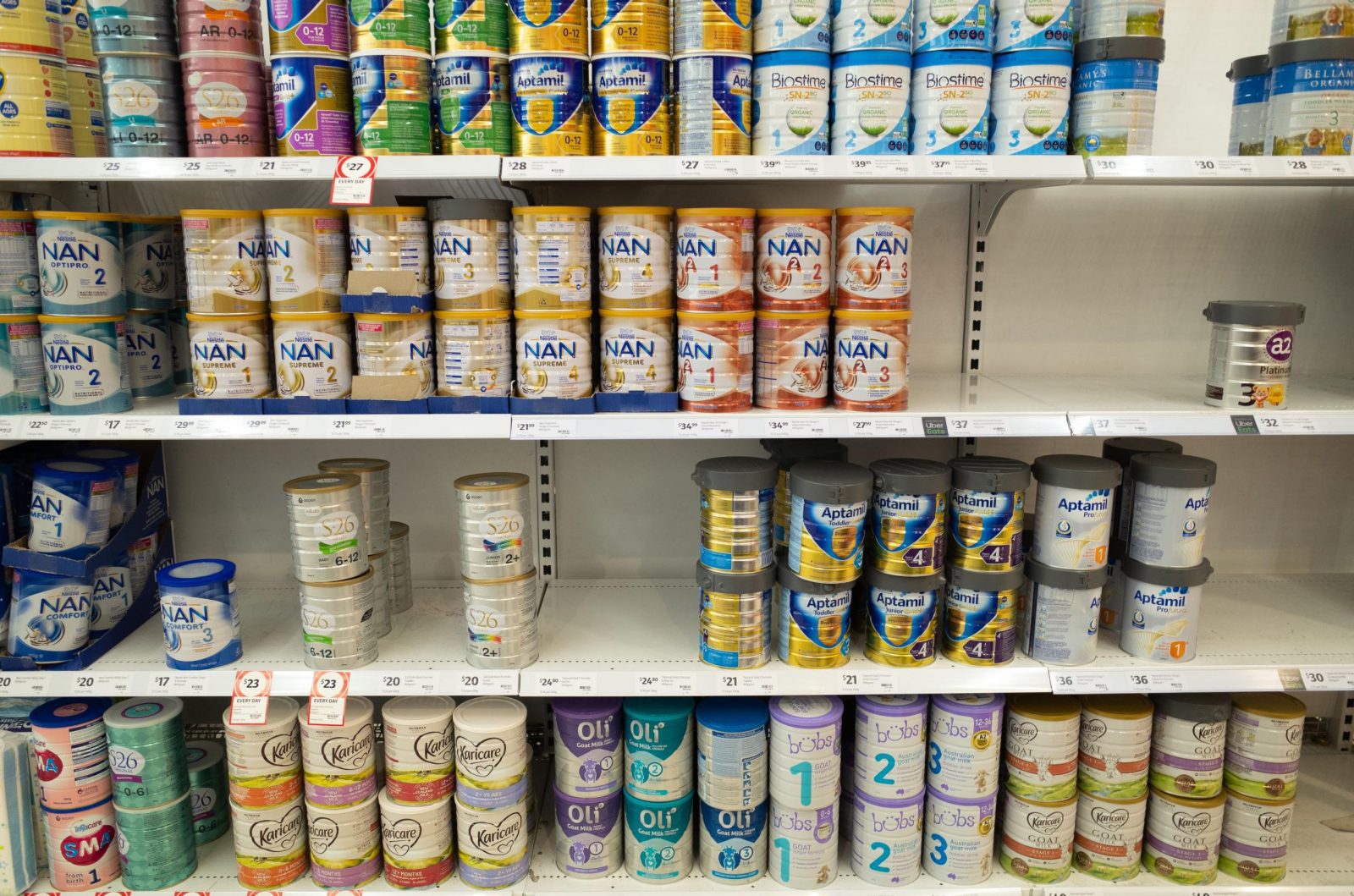
In the meantime, Abbott is airfreighting formula daily to the U.S. from its plant in Ireland. The White House is also looking to ease restrictions on the flow of foreign imports, which are effectively rendered anticompetitive due to high tariffs. About 98% of the U.S.-made formula is consumed domestically. Four companies control about 90% of the U.S. market.
Add to that the supply hits caused by product stockpiling and supply chain disruptions in the wake of the COVID-19 pandemic and it is hard to imagine why alternate production nodes weren’t already in place to prevent one off-line plant from taking so much slack out of the system.
Manufacturers of infant formula “shouldn’t have a single point of failure,” Willy Shih, Robert and Jane Cizik professor of management practice at Harvard Business School, said in an interview Tuesday. “Companies should be able to split production between multiple sites.”
In practice, however, it’s not so cut and dried. Domestic manufacturing is likely to remain concentrated because only a few players have the economies of scale to support high-volume, continuous flow production. Holding buffer inventory of baby formula might be responsible public health practice, but it runs counter to what Shih called the “good operating practice” of lean production and inventory management.
In general, businesses investing in resilient operations face the challenge of pricing in and passing on their increased expense. Companies that stockpile inventory, or that add manufacturing and distribution capabilities to ensure adequate product availability, need to recover the costs of carrying the goods. However, a consumer comparing products on a store shelf is interested in the selling price, not in how much a company spent to hold and distribute the product.
Consumers might absorb the marginal cost of a relatively small investment scaled over high-volume unit production, said Shih, but in an environment of rising prices for almost everything, efforts to recoup a significant resiliency investment will meet with consumer resistance. What’s more, investors will not look kindly on companies tying up their capital for the purposes of creating buffer stock.
“Everything is about price,” said Shih. “We are in a race to the bottom.”
Jason Miller, a logistics professor at Michigan State University’s Eli Broad College of Business, said the dearth of foreign-sourced products is the biggest obstacle to building resilience in the baby formula supply chain. There is nothing that can be done, he said, to change the massive economies of scale on the production side or that distributors continue to hold relatively limited inventories.
Since COVID-19 turned supply chains upside down starting more than two years ago, there has been much discussion over the need to shed long-established just-in-time production techniques in favor of more resilient operations. The needle will be difficult to move. The costs of adding facilities and inventory will be compounded by shortages of warehouse space and various forms of labor. Still, it remains a high-visibility issue in boardrooms and C-suites alike. That is especially the case at Abbott, a 134-year-old company and one of the world’s most respected brands.
“I’m sure they will rethink how they do things after this,” said Shih.