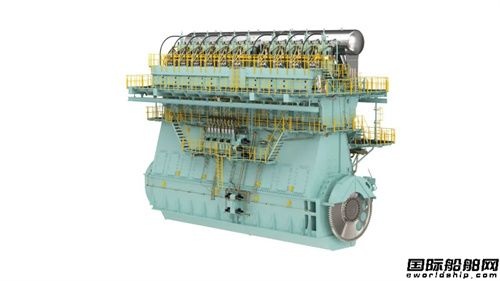
WinGD, a subsidiary of China State Shipbuilding Corporation (CSSC), will supply X-DF-M methanol dual-fuel engines and methanol-ready X-series engine designs for over 30 container ships being built for a Taiwan Area container ship operator. This collaboration not only highlights the market competitiveness of WinGD’s methanol-powered solutions but also reflects the immediate impact of the IMO’s “Net-Zero Framework” and Greenhouse Gas Fuel Intensity (GFI) standards on new vessel orders.
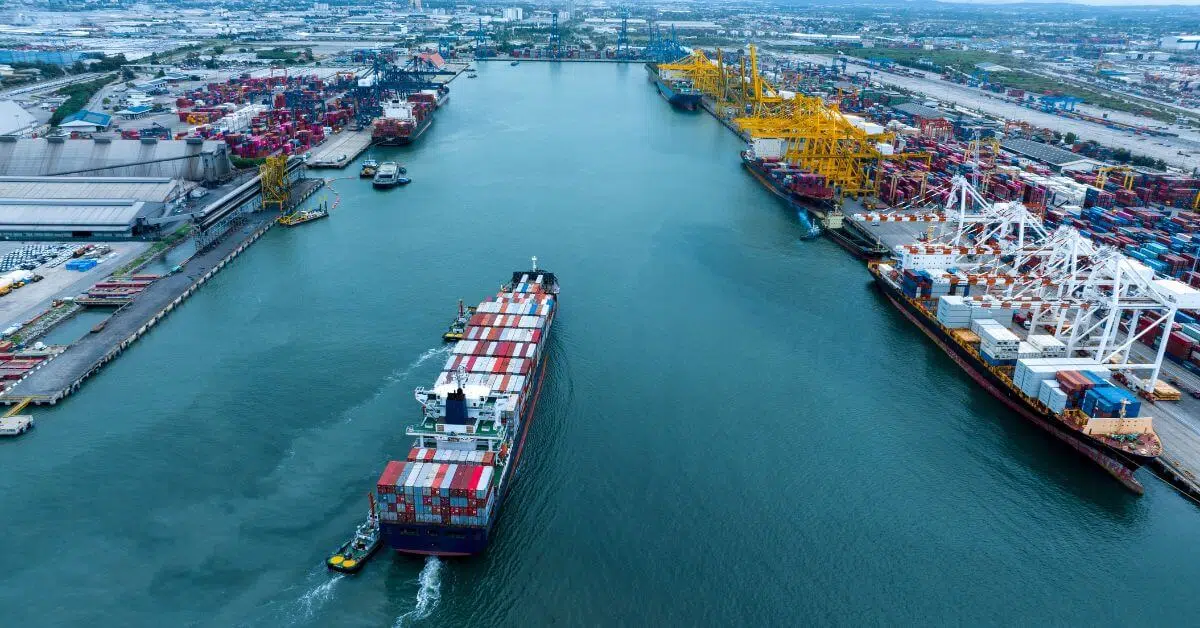
The operator’s latest order involves equipping 12 16,000 TEU container ships with methanol-ready X92-1.1 main engines. Earlier this year, the company placed an order for 20 8,700 TEU container ships, with 14 to be fitted with methanol-ready X82-2.0 main engines and the remaining vessels to receive X82DF-M methanol dual-fuel engines.
Volkmar Galke, WinGD’s Global Sales Director, stated: “Beyond engine investment costs and fuel efficiency, shipowners must now also consider available fuel types to reduce IMO compliance costs. This Taiwan Area customer has optimized its fuel strategy under the new GFI mechanism to control expenses, and we are pleased that WinGD’s engines are part of their successful solution.”
Prior to the IMO MEPC (Marine Environment Protection Committee) meeting in April, the operator had considered LNG dual-fuel engines for its latest batch of newbuilds. However, after the IMO Net-Zero Framework was adopted at the meeting, a reassessment led to the decision to adopt a combination of methanol-ready engines (initially operable with biodiesel, pending future retrofits) and previously ordered methanol-fueled engines.
Dominik Schneiter, CEO of WinGD, commented: “The customer’s strategy of opting for zero- or near-zero-emission fuels fully demonstrates the industry transformation driven by effective regulation—and highlights that the sector must not lose momentum while the final critical components of the GFI pricing mechanism are still being finalized. Bridging the cost gap between conventional and clean fuels through incentive mechanisms is key to achieving the industry’s decarbonization goals.”
WinGD is prepared to support shipowners in choosing any future fuel pathway. Its diesel-powered X-series engines and LNG dual-fuel X-DF engines are compatible with biodiesel and biomethane blends, respectively. Meanwhile, the X-DF-M methanol dual-fuel engines and X-DF-A ammonia dual-fuel engines (both delivered for the first time this year) lay the groundwork for zero- or near-zero-emission fuel applications.
Thanks to a unified, robust engine platform and a modular, retrofit-friendly design philosophy, all WinGD engines can be converted to use zero- or near-zero-emission fuels. The company has also gained hands-on experience in methanol-powered retrofit projects, leveraging its in-house expertise and close collaboration with shipyards and engine manufacturers to provide comprehensive retrofit support for shipowners.