The news of the truce in the war in Gaza between Hamas and Israel could represent negative news (economically speaking) for shipping companies who will almost certainly return to sailing with their ships through the Suez Canal. Osama Mounier Mohamed Rabie, chairman and managing director of the Suez Canal Authority, promptly announced that the Houthi attacks on ships in transit off the coast of Yemen will cease as a result of the truce and the Red Sea will return to being a safe area for navigation.
Since the beginning of 2024, many shipping companies (almost all those active in container transport) have chosen to divert their ships employed on the Asia-Europe trade towards the Cape of Good Hope, choosing to circumnavigate Africa. From the 75 ships that on average crossed Suez daily, this flow had dropped to 32 units every 24 hours due to the attacks in the Red Sea. A factor that lengthened the routes and transit times, contributing to supporting maritime freight rates which also depend on the ton-mile ratio. In the same period, the Suez Canal saw a collapse of up to 60% in both transits and financial revenues derived from maritime traffic passing through its artificial waterway. In addition to maritime freight (especially for containers), in the last two years war risk insurance coverages have also grown significantly, which ships of all types were effectively forced to take out to operate in unsafe sea areas.
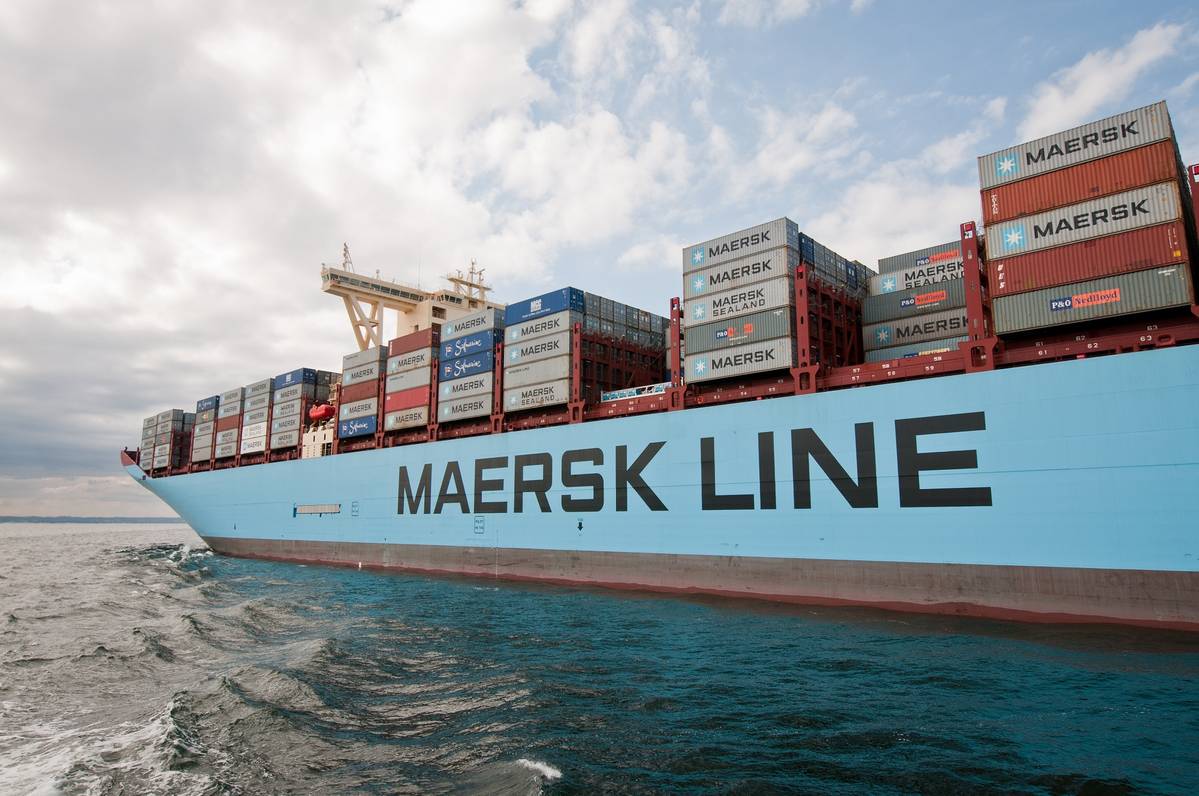
On the stock market, Maersk’s shares have fallen by about 10% since mid-September (they are currently at their lowest in the last three months) with the succession of news that a truce on Gaza could be reached shortly. The return to navigation through the Suez Canal means shorter transit times, greater capacity and available hold space, and therefore downward pressure on sea freight rates.
“Maersk is recording a decline due to forecasts of a further decrease in sea freight rates, linked to the increased probability of safe passage through the Red Sea,” said Mikkel Emil Jensen, an analyst at Sydbank. According to analysts, even if the ceasefire holds, shipping companies could wait months before being certain that the attacks will not resume. A Maersk spokesperson reiterated that the group will consider resuming transit through the Red Sea only once a long-term and practicable security solution has been established.
“There is a clear link between the security risks in the Bab al-Mandab Strait and the conflict in Gaza, although it is still too early to assess how progress in Gaza will influence the situation in the Red Sea,” said the representative of the Danish shipping company.