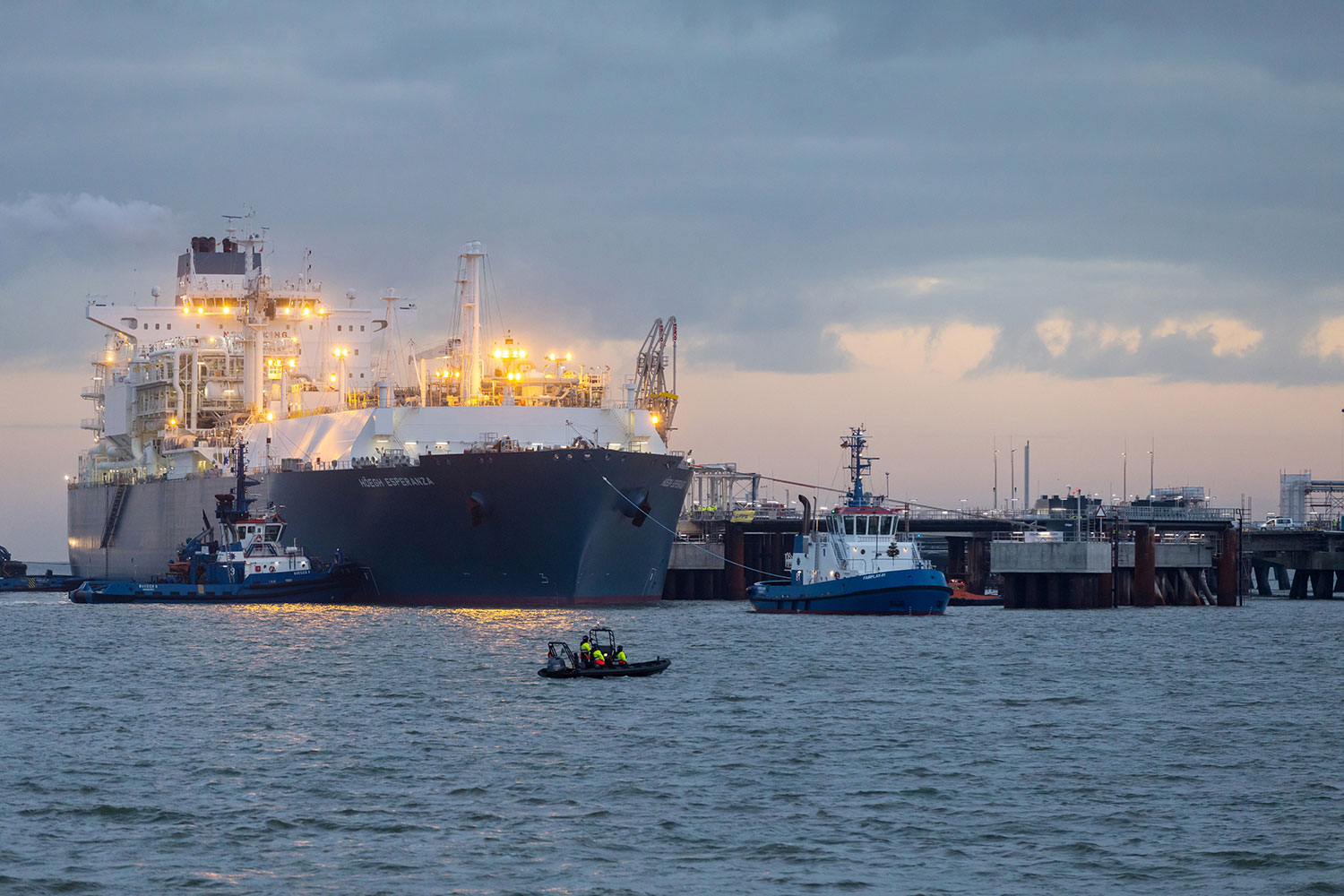
On November 28, the XSI463N, the fourth ship in the 7500-car LNG dual-fuel Pure Car and Truck Carrier (PCTC) series built by Xiamen Shipbuilding Heavy Industry for Santoku Senpaku, smoothly undocked with the coordinated escort of tugboats and accurately berthed at Pier 3, formally entering the critical stage of quayside outfitting and mooring调试.
Throughout the entire dock construction process, the project team closely adhered to the company’s core production principles of “ensuring safety, focusing on quality, and racing against schedule.” They broke through bottlenecks in multi-disciplinary交叉 operations through meticulous coordination. All operational departments united with concerted efforts, overcoming adversities to achieve breakthroughs in both technological innovation and management efficiency. The completeness of the ship at undocking achieved a qualitative improvement compared to previous projects, laying a solid core foundation for the efficient advancement of subsequent调试 work.
The successful undocking of the XSI463N is a remarkable achievement for Xiamen Shipbuilding Heavy Industry, demonstrating its commitment and responsibility through day-and-night奋战 and breaking through construction challenges with robust攻坚. Coinciding with the critical year-end冲刺 period, the successful completion of this milestone gathers strong momentum for the company to fully sprint towards its pre-holiday delivery target.
It is reported that this series of 7500-car LNG dual-fuel Super Panamax Pure Car and Truck Carriers are globally leading clean energy vessels. The ship has an overall length of 199.9 meters, a moulded breadth of 38 meters, a moulded depth of 14.8 meters, and a design draft of 8.65 meters. It features 13 car decks in total, with 9 being fixed and 4 being hoistable. It can flexibly load 7500 various vehicles including passenger cars, trucks, and engineering machinery. Internal connections between decks are achieved via /hoistable ramps.
This vessel is a single-screw, dual-fuel main engine-driven car carrier. It utilizes an LNG dual-fuel power system, equipped with globally leading low-pressure gas supply technology. Its carbon emissions are reduced by over 30% compared to traditional fuel-powered ships, meeting the highest environmental protection standards of the International Maritime Organization (IMO) and contributing to the low-carbon transformation of global shipping.