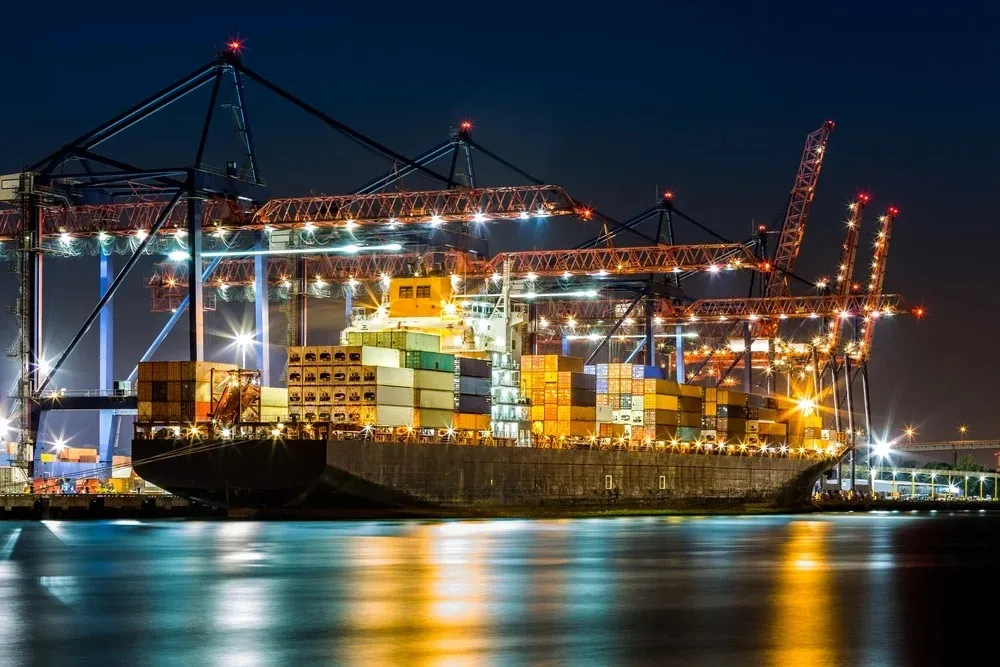
On June 15, with a long blast of the whistle, the large container ship “OOCL CANADA” slowly departed from Zhoushan COSCO Shipping Heavy Industry. This marked the successful completion of the vessel’s scrubber system retrofit and routine repair works. After a 35-day攻坚 by the project team, the “OOCL CANADA” set sail on a new journey of low-carbon navigation with a green retrofit.
The vessel has a length of 335.00 meters and a breadth of 42.80 meters. The main works during this drydocking included scrubber retrofit, routine repair and steel renewal of ballast tanks and oil tanks, stern tube shaft pulling, propeller blade replacement, and installation of a new stern duct. Facing multiple challenges such as a total repair period of only 35 days, heavy workload, and intensive cross-operations, the project team scientifically coordinated production resources and orderly advanced various repair and retrofit tasks.
Before the vessel entered the yard, the team had completed the prefabrication of the scrubber tower house sections and pre-installation of piping systems. After the vessel’s arrival, through continuous process optimization, the lifting of the scrubber tower house sections was completed in just 7 hours. To address the shortage of quayside crane resources, the project team adopted a three-dimensional lifting plan involving “cutting process holes in the funnel + installing a mobile crane on the hatch cover,” effectively ensuring construction continuity.
For the critical component of super duplex stainless steel overboard pipes, the project team strictly controlled welding material selection and process standards, conducted special technical briefings for construction personnel, and strengthened quality control throughout the entire construction process. The welding of six overboard pipes on the port and starboard sides of the engine room achieved a 100% pass rate in UT inspection. The scrubber system was completed and passed inspection on June 11.
Efficiently handling the increase in work scope. After the vessel entered the yard, thickness measurement surveys revealed an additional nearly 300 tons of cargo hold steel structure renewal work, involving挖补 and renewal of ballast tanks, pipe tunnels, and 16 oil tank bulkheads, requiring coordination of tank ventilation, oil cleaning, scaffolding erection, and other supporting works. The project team responded quickly, scientifically allocating resources, and simultaneously advancing oil cleaning, ventilation, scaffolding, and steel renewal. By deploying four sets of compressed air testing tools for parallel operations, all oil tank tightness tests and structural inspections were completed ahead of schedule by June 8. Additionally, the installation of the stern duct and routine repair works were also completed as planned.
Through multi-party collaboration, all repair and retrofit projects for the vessel were completed on schedule, and the vessel departed smoothly. This not only earned high recognition from the shipowner but also laid a solid foundation for further deepening cooperation between both parties.