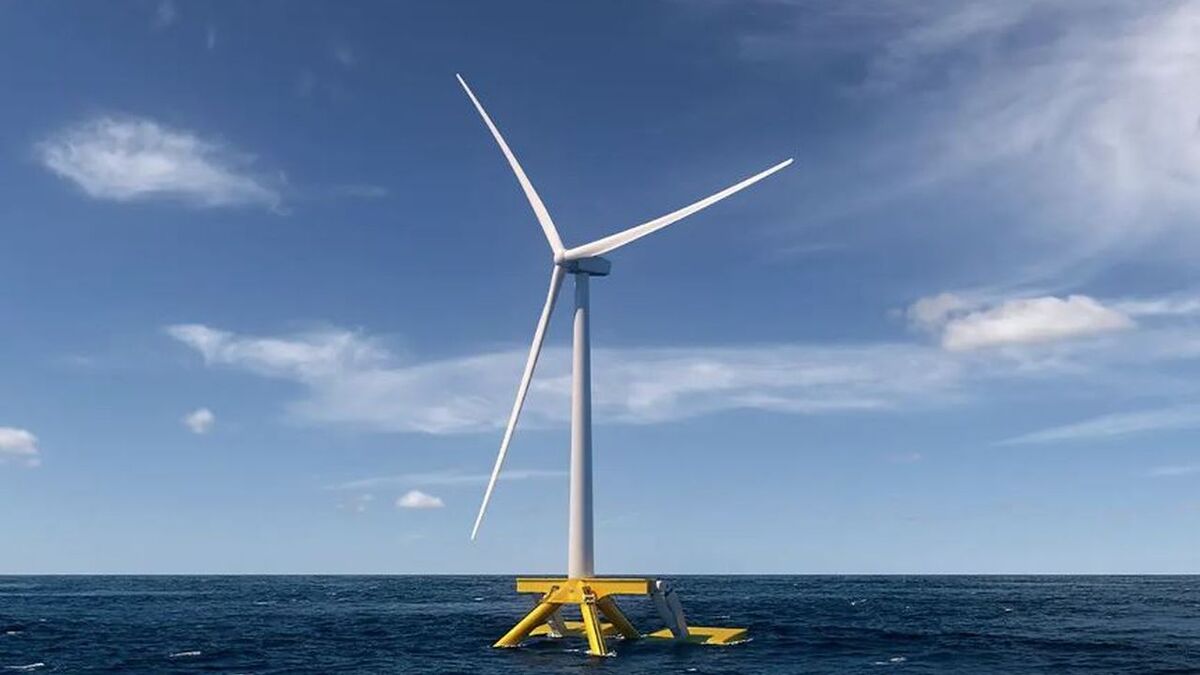
Marine Power Systems and WavEC will use the project to demonstrate the PelaFlex floater (source: MPS)
Marine Power Systems has joined forces with WavEC to deploy a pilot-scale floating offshore windfarm offshore Portugal
WavEC is a co-founder of the OceanACT consortium, which intends to promote offshore testing infrastructure in Portugal. It will support MPS with the licensing and consenting process, the environmental impact assessment and performance monitoring.
Working together, the companies want to identify commercial opportunities for Marine Power Systems’ technology in Portuguese waters, including the future Technological Free Zone at Viana do Castelo, and other potential sites.
Marine Power Systems chief executive Gareth Stockman said the project will demonstrate the company’s modular floating platform technology, PelaFlex, at scale.
“Our technology has been designed to optimise local content through a decentralised logistics model. This helps utility-scale developers minimise costs while maximising local economic benefits and accelerating industrial-scale development. The deepwater zone at Viana do Castelo has an excellent wind resource with a grid connection making it a first-rate site for deployment.”
WavEC chief executive Marco Alves said, “For many years WavEC has been a leader promoting marine renewable energy. We welcome companies to test and demonstrate their technology in a deepwater Atlantic coast environment such as Viana do Castelo.”
The PelaFlex floating platform is structurally efficient, has excellent stability and is straightforward to assemble, deploy and maintain. The PelaFlex foundation is a structurally efficient tetrahedral design developed for low-cost fabrication and assembly and rapid and safe deployment with proprietary deployment hardware. It is also designed to be highly stable, and to have a reduced environmental impact compared to some floaters.
The Portuguese Government stated a commitment to offshore wind and has set a target of 10 GW of capacity by 2030.