
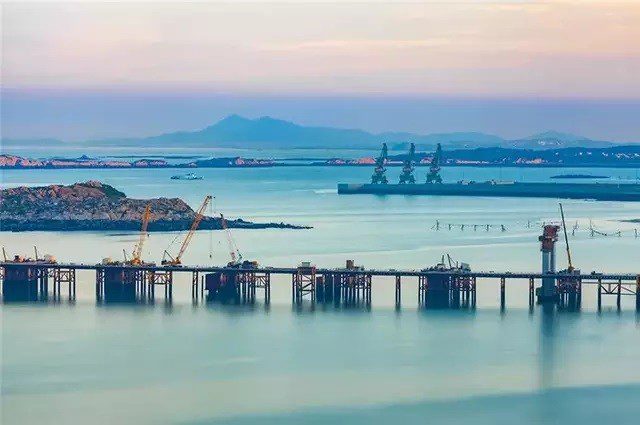
1. Port and Terminal Information
1.1 Zhangzhou Port operates 24/7, with specific terminal operating hours varying by berth. Confirm schedules with port control before arrival.
1.2 Main commercial terminals:
– Gulei Port Area:
– VLCC berths #1-#4 (max draft 22.5m, LOA 330m, max beam 60m)
– Liquid chemical berths #5-#8 (hazard class 1-3 only, vapor recovery systems mandatory)
– Dedicated LNG terminal (berth #9, max capacity 266,000m³)
– Dongshan Port Area:
– Bulk cargo (coal/iron ore, max 150,000DWT, draft 18m)
– Dedicated grain terminal (silo capacity 500,000 tons)
– Zhaoyin Port Area:
– Container terminals (quay cranes: 22 units, max outreach 65m, tandem lift capacity 80 tons)
– Ro-Ro ramp (max gradient 8%, capacity 500 tons)
1.3 Mandatory use of port-approved mooring lines at all terminals. Minimum breaking load: 125% of ship’s calculated mooring force (ISO 10546:2020 standard).
1.4 Shore power available at Gulei berths #1-8 (440V/60Hz, 6.6kV/50Hz). Mandatory for vessels berthing >4hrs (local regulation ZP-2021-09).
1.5 New: Bunker quality control – only EN590-compliant marine fuel permitted (sulfur content ≤0.50% m/m, ISO 8217:2017).
1.6 New: Port dues discount (15%) for vessels using approved emission reduction technologies (SCR/EGR systems).
2. Navigation and Pilotage
2.1 Compulsory pilotage zone extends 3nm from Gulei Breakwater. Pilot boarding area: 23°42’N 117°30’E (Gulei VTS Sector 12).
2.2 Under-keel clearance (UKC) requirements:
– Minimum 10% of draft in fairways (15% if seabed soft clay)
– 15% in harbor basins during spring tides (tidal range 4.2m max)
– 20% for vessels with dynamic positioning systems
2.3 Prohibited navigation during visibility <1,000m. Speed limit: 8 knots within port security zone (3nm radius).
2.4 AIS Class A transponder mandatory for vessels >300GT. Real-time tracking required (IMO Res.A.1106(29)).
2.5 New: ECDIS updates must include latest ENC charts (scale 1:10,000 for harbor approach).
2.6 New: TSS scheme in approach channel – westbound traffic must keep within 200m of northern edge.
3. Anchorage Regulations
3.1 Designated anchorages:
– No.1 (23°45’N 117°28’E): VLCCs only (max 5 vessels simultaneously, min spacing 500m)
– No.2 (23°43’N 117°31’E): General cargo (holding ground: mud, 3.5kg/cm² holding power)
– No.3 (23°40’N 117°33’E): Dangerous goods (Class 1-3 only)
3.2 Anchoring in non-designated areas strictly prohibited due to submarine pipelines (marked on charts ZH-2023-ED).
3.3 Daily anchor position reporting required at 0800 and 2000 LT via VHF Ch 16 (MMSI 004123100).
3.4 Typhoon anchorage (23°47’N 117°25’E) activated when wind > Beaufort 10 (Port Notice 2023/05).
3.5 New: Anchor watch must be maintained with engine ready (minimum 3 officers on duty).
3.6 New: Prohibited to anchor within 0.5nm of aquaculture zones (marked by yellow buoys).
4. Cargo Operations
4.1 Hazardous materials handling:
– IMDG Code compliance mandatory
– Pre-arrival stowage plan submission 24hrs prior (email to zzhazmat@customs.gov.cn)
– Emergency equipment must be stationed during operations (minimum 2 foam monitors)
4.2 Grain cargo:
– Maximum moisture content 12.5% for safe loading (IMO MSC.1/Circ.1395)
– Mandatory fumigation certificate required (CNCA/CP-003-2022)
– Dust suppression system activation mandatory during loading
4.3 Container weight verification:
– VGM must be verified before loading
– Tolerance ±5% of declared weight (SOLAS VI/2)
– Random weight checks conducted by port authorities
4.4 Steel coil loading requires edge protector certification (ISO 12777-3:2021).
4.5 New: Timber cargo must be free from bark and pests (ISPM 15 stamp required).
4.6 New: Breakbulk cargo lashing plans require class society approval.
5. Safety and Emergency
5.1 Mandatory fire drill within 12hrs of berthing. Port Authority may observe unannounced.
5.2 Oil spill response equipment must be deployed during bunkering:
– Minimum: 200m boom for vessels >20,000DWT
– SOPEP kit inspection prior to operations (MARPOL Annex I)
– Dedicated oil spill vessel on standby for VLCC operations
5.3 Emergency contact:
– Gulei VTS on VHF Ch 08/16
– Medical evacuation available 24/7 via port helicopter pad (coordinates 23°41.5’N 117°29.2’E)
– Emergency towing vessel stationed at 23°44’N 117°29’E
5.4 Gangway safety nets mandatory when tide height difference >2m (Port Safety Rule 12.3).
5.5 New: Hot work permits require gas-free certificate for adjacent tanks.
5.6 New: Lifeboat drills prohibited during cargo operations.
6. Environmental Compliance
6.1 Zero discharge policy within 12nm of port. Sewage reception facilities available at all berths (MARPOL Annex IV).
6.2 Open-loop scrubber discharge prohibited in port waters. Closed-loop systems require pre-approval (EPD Notice 2022-004).
6.3 AIS must remain active throughout port stay. Automatic shutdown constitutes violation (China MSA Reg.25).
6.4 Ballast water exchange records subject to random inspection (IMO BWM Convention D-2 standard).
6.5 New: Exhaust gas opacity monitoring conducted during port stay (max 20% opacity).
6.6 New: Plastic waste must be compacted and labeled before disposal.
7. Documentation Requirements
7.1 Original Ship Sanitation Control Certificate (SSCC) must be presented to Quarantine officials before operations (WHO IHR 2005).
7.2 Crew list with passport copies must be submitted 48hrs prior to arrival (Format CQ-01-2023).
7.3 Cargo manifests require notarization for:
– Steel products (GB/T 247-2022)
– Timber (ISPM 15 compliant)
– Hazardous materials (UN number verification)
7.4 Electronic Bills of Lading must include blockchain verification code (Port Circular 2023-11).
7.5 New: Crew vaccination records must show valid yellow fever immunization where applicable.
7.6 New: P&I Club certificate must cover Chinese pollution liability requirements.
8. Special Considerations
8.1 Typhoon season (June-October):
– Mandatory double mooring lines when wind > Beaufort 6
– Port closure when sustained wind > Beaufort 12
– Emergency evacuation plan must be filed for vessels >50,000DWT
8.2 Currents in Gulei Channel exceed 3 knots during spring tides. Tug assistance compulsory for:
– Vessels >50,000DWT
– LPG/LNG carriers regardless of size
– Vessels with maneuvering restrictions
8.3 Night navigation restrictions apply for vessels >250m LOA in inner harbor (2300-0500 LT).
8.4 Prohibited items during port stay:
– Drones without prior authorization (Civil Aviation Law Art.58)
– Shipboard incinerator operation (EPD Notice 2023-07)
– Unauthorized photography of port facilities
8.5 New: Magnetic compass adjustment required before departure if cargo operations exceed 72 hours.
8.6 New: Use of personal watercraft (jet skis, etc.) strictly prohibited in port waters.
9. Additional Operational Notes
9.1 Fresh water supply:
– Available at all berths (max pressure 4 bar, flow rate 50m³/hr)
– Prior notice required for quantities >500 tons
– Water quality certificate provided upon request
9.2 Garbage disposal:
– Segregation into 6 categories (MARPOL Annex V)
– Receipts must be retained for 2 years
– Special handling for medical waste (incineration only)
9.3 Cybersecurity:
– Mandatory antivirus software updates before port entry (IMO MSC-FAL.1/Circ.3)
– Prohibition on USB data transfers with shore personnel
– VPN connections must use port-approved encryption
9.4 New: Ship’s cranes must undergo load test every 2 years (certificate required).
9.5 New: Gangway illumination must meet 100 lux standard during night operations.
10. Port Services
10.1 Ship chandlery services:
– Pre-arrival orders required for controlled items (medicines, chemicals)
– Cashless payment system mandatory (port smart card)
10.2 Crew changes:
– Minimum 12 hours notice for immigration clearance
– COVID-19 testing facilities available (RT-PCR, 4-hour results)
10.3 New: Underwater hull cleaning prohibited without prior EPD approval.
10.4 New: Sludge disposal must be recorded in bilingual (Chinese/English) receipts.


