
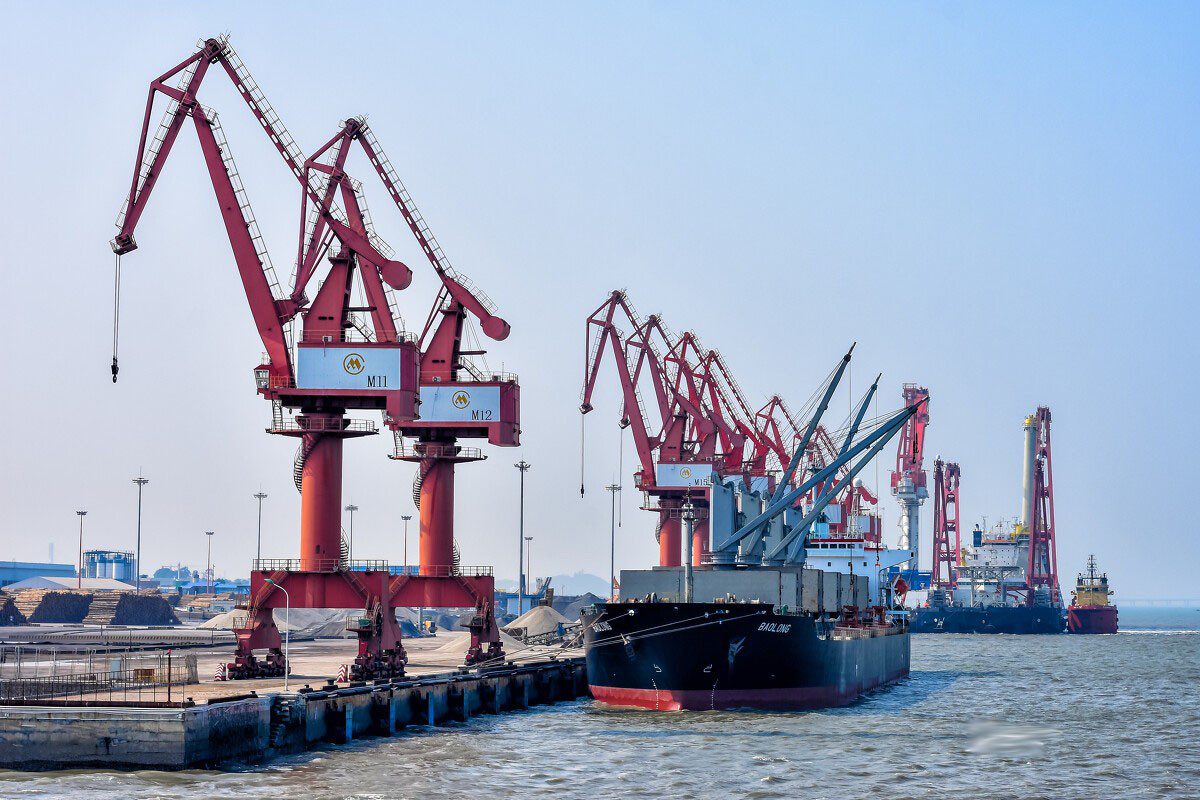
1.Port Description
General Information
Zhangzhou Port is a major coastal port in Fujian Province, China, serving as an important gateway for foreign trade in southern Fujian. It consists of multiple port areas including Gulei, Zhao’an, Dongshan, Yunxiao, and Zhangpu, handling bulk cargo, containers, and liquid chemicals. The port plays a vital role in regional economic development and is a key component of China’s 21st Century Maritime Silk Road initiative. The port has been undergoing significant expansion, particularly in the Gulei Port Area which has become a major petrochemical hub.
Port Types
– By size: Large port (annual throughput exceeding 100 million tons)
– By geography: Natural deep-water harbor (coastal port)
– By function: Comprehensive commercial port, industrial port (specialized in petrochemicals), container port
– Additional classification: First-class open port approved by Chinese government
Long./Lat.
Main port area coordinates:
Gulei Port Area: 23°55’12″N / 117°25’48″E (main liquid bulk terminal)
Zhao’an Port Area: 23°38’24″N / 117°25’12″E
Dongshan Port Area: 23°42’00″N / 117°25’48″E
Zhangzhou Port Proper: 24°30’00″N / 117°51’36″E
Time Zone
China Standard Time (UTC+8), no daylight saving time observed. All port operations follow Beijing Time regardless of local solar time.
Port Location
Located along the Taiwan Strait in Fujian Province, China, approximately 200km southwest of Xiamen. The port spans multiple areas along Zhangzhou’s 715km coastline with excellent natural harbor conditions. The Gulei Peninsula area features deep-water access with natural depths of 20-30m. The port is strategically located near main shipping lanes in the Taiwan Strait.
Port Limits
Defined by the maritime administrative boundaries approved by the Chinese government (Fujian MSA Notice [2018] No. 15), extending seaward to include all port facilities and anchorages. The official port limits encompass:
– Western boundary: 117°25’00″E
– Eastern boundary: 117°45’00″E
– Northern boundary: 24°35’00″N
– Southern boundary: 23°30’00″N
Includes all anchorages and fairways serving the port.
Load Lines
– Tropical Load Line applies (T) from April 16 to October 31
– Summer Load Line applies (S) from November 1 to April 15
– Winter Load Line not applicable in this zone
– Special local regulations apply for certain dangerous goods carriers
Water Density
Average seawater density: 1.020-1.025 t/m³
– Gulei Port Area: 1.022-1.025 t/m³
– Inner harbor areas: 1.010-1.020 t/m³ (subject to freshwater influence)
Daily density readings available from port control
Charts and Books
Essential navigation documents:
– Chinese nautical charts:
– 14110 (Zhangzhou Gang to Xiamen Gang)
– 14111 (Gulei Port Approach)
– 14170 (Dongshan Wan)
– Admiralty charts:
– BA3442 (Approaches to Xiamen)
– BA3443 (Gulei Port)
– BA3444 (Dongshan Wan)
– Publications:
– China Coast Pilot Volume 3 (NP32)
– Annual Notices to Mariners (China)
– Port Regulations (Zhangzhou MSA 2022 edition)
– Electronic charts: ENC CN502261, CN502262
Port Restrictions
Vessel limitations:
– Maximum vessel size:
– Gulei Port Area: 300,000 DWT (new 400,000 DWT berth under construction)
– Other areas: 50,000 DWT
– Maximum draft:
– Gulei Port Area: 18.5m (tidal dependent)
– Other areas: 12.5m
– Air draft:
– Maximum 55m (restricted by Gulei Bridge)
– General limit 45m for most berths
– Other restrictions:
– Mandatory AIS transmission within port limits
– Special requirements for vessels carrying Class I dangerous goods
– Night navigation restrictions for vessels >250m LOA
Regulations
Key regulatory requirements:
– Strict compliance with:
– Maritime Traffic Safety Law of China
– Regulations on the Prevention and Control of Marine Pollution from Ships
– Port Law of China
– Special regulations:
– Mandatory pre-arrival reporting 72/48/24 hours prior ETA
– Quarantine and health declaration requirements
– Security Level 1 implementation as standard
– Restricted areas around petrochemical terminals
– Operational requirements:
– Use of approved local agents mandatory
– Advance notice required for hazardous cargo operations
– Mandatory garbage and waste recording
Weather Condition
Climate characteristics:
– Subtropical monsoon climate
– Temperature:
– Average annual: 21°C
– Summer max: 38°C
– Winter min: 5°C
– Precipitation:
– Annual average: 1,500mm
– Rainy season: April-September
– Wind:
– Prevailing NE monsoon (Oct-Mar)
– SW monsoon (Apr-Sep)
– Typhoon frequency: 2-3 per year (June-Sep)
– Visibility:
– Annual average good visibility days: 280
– Fog season: February-April (avg 15 fog days/year)
Tide and Currents
Tidal characteristics:
– Tidal type: Irregular semidiurnal
– Tidal range:
– Mean: 2.5m
– Spring: 4.5m
– Neap: 1.8m
– Currents:
– Flood tide: NW direction, max 2.5 knots
– Ebb tide: SE direction, max 3.0 knots
– Eddy currents near Gulei Peninsula
– Special phenomena:
– Tidal bore effects in some channels
– Strong currents near harbor entrances during spring tides
Identification Cards
Crew shore access:
– Seaman’s book sufficient for shore leave
– Temporary shore passes available through agent (valid 24-72 hours)
– Special requirements:
– Passport copy required
– Crew list submission 24h before arrival
– Health declaration mandatory
– Restricted areas:
– No access to petrochemical zones without special permit
– Curfew 00:00-06:00 for crew on shore
Traffics
Transport connections:
– Air:
– Nearest international airport: Xiamen Gaoqi (XMN) – 70km
– Zhangzhou Dongshan Airport (limited service)
– Rail:
– Zhangzhou Station (main railway hub)
– Gulei Branch Line (port railway)
– Regular freight services to major Chinese cities
– Road:
– G15 Shenyang-Haikou Expressway
– S1591 Zhangzhou Port Expressway
– National Highway 324
– Water:
– Regular ferry services to Xiamen
– Coastal feeder services
Holidays
Official Chinese public holidays observed (fixed and lunar calendar dates). Cargo operations may be arranged on holidays with prior notice and additional charges (150-200% normal rates). Major holidays affecting operations:
– Spring Festival (7 days, variable dates)
– National Day (Oct 1-7)
– Labor Day (May 1)
– Local holidays:
– Mazu Festival (lunar March 23)
– Mid-Autumn Festival
Currency
– Official currency: Chinese Yuan (CNY/RMB)
– Current exchange rate: approximately 7.2 CNY = 1 USD (subject to change)
– Currency restrictions:
– Foreign exchange controls apply
– Crew limited to USD 500 equivalent per day exchange
– Credit cards widely accepted in port area
– Payment methods:
– Port dues must be paid in CNY
– Electronic payment preferred
– Some agents accept USD at official rate
Main Cargo Handled
Commodity breakdown:
– Exports:
– Mineral products (quartz sand, granite)
– Agricultural products (fruits, vegetables, seafood)
– Machinery and equipment
– Petrochemical products (PX, ethylene)
– Imports:
– Coal (thermal and coking)
– Iron ore
– Petroleum products (crude oil, LNG)
– Chemicals (methanol, aromatics)
– Wood pulp
– Container traffic:
– Mainly domestic and ASEAN trade
– Growing international transshipment
– Special cargo:
– Project cargo for industrial parks
– Wind turbine components
– Petrochemical plant modules
2. Notification and Reports
General Information
All vessels entering, operating within, or departing Zhangzhou Port must comply with:
1. Maritime Traffic Safety Law of China (2021 Revision)
2. Regulations on the Administration of Foreign-related Maritime Affairs
3. Zhangzhou Port Special Regulations (MSA Notice No. 2022-03)
4. SOLAS Chapter V requirements
5. ISPS Code implementation standards
Required procedures include pre-arrival notifications, in-port reporting, and departure clearances. Electronic submission via China MSA’s single window system is mandatory for all commercial vessels over 300GT.
Arrival and Departure Checklists
Pre-arrival (72/48/24 hours prior ETA):
1. Ship Particulars Form (MSA Form 101)
2. Crew Information Report (including vaccination status)
3. Cargo Information Declaration (including HS codes)
4. Dangerous Goods Declaration (if applicable, using IMDG Code format)
5. Last 10 Ports of Call with dates
6. ETA Confirmation (+-1 hour accuracy required)
7. Security Level Declaration
8. Waste Management Plan
Post-arrival (within 1 hour):
1. Actual Time of Arrival (ATA) report
2. Berthing Plan confirmation
3. Ship’s Security Status update
4. Bunker Report (for vessels carrying >1000t fuel)
Pre-departure (minimum 4 hours before ETD):
1. Departure Declaration
2. Final Crew List verification
3. Cargo Securing Statement
4. Port Clearance Certificate application
Post-departure (within 1 hour):
1. Actual Time of Departure (ATD) report
2. Next Port of Call confirmation
3. Garbage Record Book update submission
Documents and Certificates
Mandatory Original Documents:
1. Ship’s Registration Certificate (Chinese translation required if foreign-flagged)
2. Latest Class Survey Reports (structural, machinery)
3. International Air Pollution Prevention Certificate
4. Ballast Water Management Certificate
5. Cargo Ship Safety Certificates (all valid supplements)
6. Continuous Synopsis Record
7. Anti-fouling System Certificate
8. Insurance Certificates (P&I, Hull)
Additional for Special Cargo:
1. Certificate of Fitness for chemical tankers
2. Special Purpose Ship Safety Certificate
3. DOC/SMC for ISM compliance
4. TMSA assessment reports (for oil majors)
Vessel Traffic Services (VTS)
Zhangzhou VTS System Details:
– Coverage Area: 23°30’N to 24°00’N / 117°20’E to 117°40’E
– Operating Frequency: 24/7/365
– Primary Radar: Kelvin Hughes SharpEye S-band
– Secondary Radar: Terma SCANTER 6002
– AIS Coverage: 30nm radius
Mandatory Reporting Points:
1. Gulei Outer Roads (23°55’N 117°25’E)
2. Dongshan Fairway (23°40’N 117°30’E)
3. Zhangzhou Inner Approach (24°25’N 117°50’E)
Services Provided:
– Navigational warnings (updated hourly)
– Traffic organization for VLCCs
– Meteorological updates (3-hour intervals)
– Emergency coordination
Emergency Co-ordination Centre
Zhangzhou Maritime Emergency Response:
– MRCC Zhangzhou: +86-596-6895110 (24hr English/Chinese)
– Backup Contact: MRCC Xiamen +86-592-6895119
– Emergency VHF: CH16/CH70 (DSC)
– Medical Emergency: +86-596-120 (request port hospital)
Harbour Management Communications
Zhangzhou MSA Headquarters:
– Address: No.1 Gangwan Road, Gulei District, Zhangzhou
– Port Control: VHF CH12/CH14
– Operations Department: +86-596-6852119 (0800-1700)
– Security Department: +86-596-6852116
Port Authority Contacts:
– General Office: +86-596-6889001
– Cargo Operations: +86-596-6889023
– Dangerous Goods Approval: +86-596-6889025
Radio
Primary Coast Station: Xiamen Radio (XSQ)
– Frequencies:
– 2187.5 kHz (DSC)
– 8414.5 kHz (SSB)
– 12520 kHz (SSB)
– Email: xsq@msa.gov.cn (for non-urgent communications)
– Inmarsat: Not Available for routine port communications
VHF
Detailed Channel Allocation:
– CH06: Tug Coordination
– CH08: Port Operations
– CH12: VTS Main
– CH14: Pilot Boarding
– CH16: Distress/Safety
– CH70: DSC Calling
– CH72: Ship-to-Ship (private)
– CH77: Port Security
Communication Protocols:
1. Initial contact on CH16
2. Switch to assigned working channel
3. Standard marine communication phrases required
4. Bilingual (Chinese/English) operators available
Radars
Zhangzhou Port Radar System Specifications:
– Type: Solid-state dual-band (S/X)
– Range: 30nm (S-band), 15nm (X-band)
– Accuracy: 10m range, 0.1° bearing
– Update Rate: 3 seconds
– Integration: Fully integrated with AIS and VTS
Access Procedures:
1. Request radar assistance on VHF CH12
2. Provide ship’s position and intention
3. Follow controller’s instructions
4. Acknowledge all vectors
Notices of Readiness
Legal Requirements:
– Must be tendered in writing (email acceptable)
– Time of tender must be recorded to nearest minute
– Must specify exact position of vessel
– Must confirm all cargo gear tested
Acceptance Criteria:
1. Vessel in commercial zone
2. All paperwork complete
3. Free pratique granted
4. No cargo operations restrictions
Dispute Resolution:
– Refer to China Maritime Arbitration Commission rules
– Time logs from VTS used as official record
Immigration
Detailed Procedures:
1. Crew List submission 24h pre-arrival
2. Passport/Seaman’s book inspection
3. Biometric verification (fingerprints/photo)
4. Shore pass issuance (valid 7 days)
5. Crew change procedures:
– Minimum 6h notice
– On-arrival/departure forms
– Port fees apply
Health
Enhanced Quarantine Procedures:
1. Pre-arrival:
– Maritime Health Declaration
– Crew temperature records (72h)
– Vaccination certificates
2. Arrival:
– Port Health inspection
– Possible rapid testing
3. Special Requirements:
– Medical waste handling agreement
– Designated smoking areas
Designated Facilities:
– Port Hospital: 24hr emergency service
– Quarantine Anchorage: Area Q1 (23°50’N 117°28’E)
– Medical Waste Reception: Pier 7
Customs
Updated Procedures (2024):
1. Electronic Declaration:
– Single Window system mandatory
– HS Code verification required
2. Physical Inspections:
– Risk-based selection
– Focus on:
– Dangerous goods
– High-value cargo
– Restricted items
3. Special Regimes:
– Bonded cargo procedures
– Temporary import rules
– Transshipment controls
Prior Declaration and Authorization
Special Cargo Notices:
1. Dangerous Goods:
– 96h notice for Class 1
– 72h notice for Class 2-9
– SDS sheets required
2. Project Cargo:
– Stowage plan approval
– Heavy lift survey
3. Military Items:
– State Council approval
– Armed escort required
Restricted Activities
Updated Prohibitions:
1. Navigation:
– Unauthorized anchorage use
– Speed >8kn in inner harbor
2. Operations:
– Nighttime bunkering (except designated piers)
– Tank cleaning without permit
3. Security:
– UAV operations
– Underwater activities
Incidents
Reporting Matrix:
1. Immediate (within 30min):
– Loss of life
– Pollution >1 ton
– Structural damage
2. Urgent (within 4h):
– Equipment failure
– Near-miss cases
3. Routine (within 24h):
– Minor injuries
– Equipment defects
Investigation Process:
1. Evidence preservation
2. Witness statements
3. Technical analysis
4. Final report (30 day deadline)
Others
Additional Requirements:
1. Environmental:
– Ballast water reporting
– SOx emission logs
2. Security:
– SSAS testing
– Drill records
3. Operational:
– Gangway watch logs
– Mooring checks
3.Port Navigation
General Information
Zhangzhou Port navigation complies with:
1. Maritime Traffic Safety Law of China (2021 Revision)
2. Regulations on the Administration of Port Navigation (MSA Order No. 13)
3. IMO COLREGs (1972) as implemented in China
4. Zhangzhou Port Special Navigation Rules (2023 Edition)
The port features three main navigation zones:
– Gulei Deepwater Zone (primary petroleum/chemical)
– Dongshan General Cargo Zone
– Zhao’an Bulk Cargo Zone
Pilot Station and Pilotage
Updated Procedures (2024):
1. Application:
– Electronic application via China MSA portal
– Paper submission accepted as backup
2. Boarding Locations:
– Primary: 23°55.5’N 117°25.8’E (Gulei)
– Secondary: 23°40.2’N 117°30.6’E (Dongshan)
– Emergency: 23°50.0’N 117°28.0’E (Sheltered area)
3. Pilot Boats:
– “Zhangzhou Pilot 1” (32m, 500HP, built 2020)
– “Zhangzhou Pilot 2” (28m, 400HP, built 2018)
– “Zhangzhou Pilot 3” (30m, 450HP, built 2022)
4. Requirements:
– Pilot ladder compliant with SOLAS
– Illumination at night
– VHF CH14 monitoring
5. Cancellation Policy:
– 6h notice required
– 50% fee if <6h notice
Approaches and Channels
Detailed Channel Specifications:
1. Gulei Main Channel:
– Length: 18.5nm
– Design Depth: -19.5m CD
– Maintained Depth: -18.8m (2024 survey)
– Width: 300m (straight), 400m (turning basins)
– Currents: Max 3.2 knots (spring tide)
– Special Markers:
– Racon at buoy #3 (letter “G”)
– AIS aids at critical turns
2. Dongshan North Channel:
– Length: 8.2nm
– Depth: -14.2m
– Width: 200m
– Restrictions:
– No vessels >200m LOA
– Daylight transit only for hazardous cargo
Anchorages
Updated Anchorage Areas:
1. Gulei VLCC Anchorage:
– Position: 23°56’N-23°58’N / 117°24’E-117°26’E
– Area: 3.5 sq. nm
– Bottom: Clay/sand
– Holding Power: Good
– Max Vessel Size: 320,000 DWT
– Anchoring Pattern:
– 500m spacing required
– 4 shackles minimum
2. Emergency Anchorage:
– Position: 23°52’N 117°27’E
– Depth: 25m
– For: Disabled vessels only
– Max stay: 24h
Navigation Aids
Enhanced System (2024):
1. AIS Base Stations:
– Gulei (23°55’N 117°25’E)
– Dongshan (23°40’N 117°30’E)
– Coverage: 30nm radius
2. Virtual AtoN:
– 5 virtual buoys in approaches
– Updated via NAVTEX
3. DGPS Enhancements:
– Accuracy: <3m (95% confidence)
- Redundant systems
Maximum Authorized Speed
Revised Speed Limits:
– Outer roads: 12 knots (max), 8 knots (recommended)
– Channel transit:
– VLCCs: 6 knots
– General cargo: 8 knots
– Within 0.5nm of berths: 4 knots
– Tug escort zones: 5 knots
Navigation Priority
Updated Priority Sequence:
1. Vessels in distress
2. Government vessels on duty
3. VLCCs in designated channel
4. Passenger vessels on schedule
5. Other commercial vessels
Special rules apply during:
– Military exercises
– Typhoon avoidance
– SAR operations
Weather Restrictions
Updated Thresholds:
1. Wind:
– >Beaufort 7: Tug escort required
– >Beaufort 9: Port closed
2. Visibility:
– <1nm: Speed restriction
- <0.5nm: Movement suspended
3. Waves:
- >2.5m: Restricted operations
– >3.5m: Port closed
UKC (Under-Keel Clearance)
Updated Requirements:
– General cargo: 10% of draft or 1m (whichever greater)
– Bulk carriers: 15% of draft or 1.5m
– Tankers: 20% of draft or 2m
– Special calculation for:
– Soft bottoms (+0.3m)
– Squat effect (+0.5m for VLCCs)
Night Entry or Departure
Enhanced Procedures:
1. Application:
– 24h prior notice
– Master’s declaration required
2. Lighting:
– Deck lights mandatory
– Laser pointers prohibited
3. Restrictions:
– No night moves for:
– First-time callers
– Vessels >300m LOA
– Special cargo
Bridges
Gulei Bridge Specifications:
– Clearance: 52m (MHWS)
– Vertical clearance gauge installed
– Transit slots:
– 0800-1000 (inbound)
– 1400-1600 (outbound)
– Prohibited:
– Simultaneous transits
– Vessels with deck cargo >40m height
Air Drafts Limit and Air Gap
Comprehensive Restrictions:
1. Fixed Obstacles:
– Gulei Bridge: 52m
– Power line #1: 48m
– Power line #2: 45m
2. Temporary Restrictions:
– Crane operations: 50m
– Special events: Notices issued
3. Calculation Method:
– Chart datum + tide + safety margin
Vessels Shifting
Updated Procedures:
1. Pre-move Checklist:
– Engine test
– Mooring inspection
– Tug confirmation
2. Documentation:
– Shift plan approved
– Safety meeting recorded
3. Emergency Protocols:
– Abort criteria defined
– Contingency anchors ready
Vessels Transiting
New Requirements (2024):
– AIS must transmit:
– Destination
– ETA at next point
– Hazardous cargo code
– Mandatory reporting at:
– Channel entry
– Turning points
– Bridge approaches
Vessels Towing
Enhanced Safety Measures:
1. Equipment:
– Towing lights compliant with COLREGs
– Emergency tow gear available
2. Communications:
– Dedicated VHF channel
– Backup systems required
3. Restrictions:
– No towing during:
– Peak traffic (0700-0900)
– Tide changes >3 knots
Tugs and Working Boats
Updated Fleet Information:
1. Tug Specifications:
– “Zhangzhou Tug 1”: 65t BP, FiFi1
– “Zhangzhou Tug 5”: 70t BP (new 2023)
– “Zhangzhou Tug 6”: 55t BP (azimuth)
2. Working Boats:
– 8 line boats (20m class)
– 2 oil spill response vessels
– 1 dive support boat
Vessels in Special Operations
New Regulations:
1. Dredging:
– Real-time monitoring required
– Environmental compliance checks
2. Underwater Operations:
– Dive supervisor certification
– 500m safety zone
3. Bunkering:
– Continuous vapor monitoring
– Emergency shutdown systems
4.Pollution Control
Ballast and Deballast
1. Regulatory Framework:
– China Ballast Water Management Regulations (GB 3552-2023)
– IMO BWM Convention (D-2 Standard)
– MEPC.366(79) Amendments
– Zhangzhou Special Management Zone Provisions
2. Operational Requirements:
– Mandatory pre-arrival reporting (48/24/12h updates)
– Ballast Water Record Book (3 year retention)
– Sampling ports installed at all terminals
– Treatment system type approval:
– UV systems: Minimum 50mJ/cm² dosage
– Electrolysis systems: 0.5mg/L residual
3. Prohibited Areas:
– Within 12nm of Gulei Marine Reserve
– Zhao’an Shellfish Protection Zone
– Dongshan Coral Reef Area
4. Reception Facilities:
– Gulei Terminal:
– Capacity: 8,000m³/day
– Processing: Filtration + UV
– Emergency overflow tanks: 2×5,000m³
Garbage Disposal
1. Classification System:
– Category A: Plastics (separate collection)
– Category B: Food waste (compulsory treatment)
– Category C: Operational waste (incineration)
– Category D: Domestic waste (landfill)
– Category E: Cargo residues (special handling)
2. Service Providers:
– Primary: Zhangzhou Port Clean Co. Ltd.
– Fleet: 6 barges (20-30m³ capacity)
– Trucks: 15 (10m³ compactors)
– Secondary: Gulei Environmental Services
3. Operational Details:
– Collection schedule:
– Commercial vessels: Mon/Wed/Fri
– Fishing vessels: Daily 0600-1800
– Documentation:
– Garbage Record Book (MARPOL format)
– Waste Transfer Notes (bilingual)
4. Fee Structure (2024):
– Standard waste: CNY 180/m³
– Plastic waste: CNY 300/m³
– Hazardous waste: CNY 850/m³
– After-hours service: +50% surcharge
Waste Oil Disposal
1. Infrastructure:
– Shore Facilities:
– Gulei Oil Terminal: 12,000m³ capacity
– Zhao’an: 5,000m³ tanks
– Mobile Units:
– 3 oil barges (1,000-1,500m³)
– 10 tank trucks (20m³ each)
2. Processing Standards:
– Water content: <1%
- PCB content: <50ppm
- Flash point: >60°C
– Sulphur: <1.5%
3. Emergency Response:
- Spill capacity: 1,000m³ immediate
- Equipment:
- 5 oil skimmers
- 2km boom deployment
- Dispersant stock: 50 tons
4. Certified Operators:
- Zhangzhou Oil Waste Management Co.
- License: ZJ-HW-2023-045
- 24hr contact: +86-596-6889123
- Sinopec Environmental Services
Sewage Reception
1. Treatment Capacity:
– Gulei Terminal: 3,000m³/day
– Passenger Terminal: 1,500m³/day
– Emergency holding: 5,000m³
2. Quality Standards:
– BOD5: <50mg/L
- SS: <100mg/L
- Coliform: <1,000/100ml
- pH: 6-9
3. Special Requirements:
- Cruise ships:
- Advanced treatment mandatory
- Weekly sampling
- Chemical tankers:
- Segregated system required
- Neutralization before discharge
4. Monitoring System:
- Online sensors at all discharge points
- Monthly MSA inspections
- Annual third-party audits
Additional Pollution Controls
1. Air Emissions:
– SOx limits: 0.1% (ECA standards)
– NOx Tier III requirements
– PM2.5 monitoring at all berths
2. Cargo Residues:
– Dedicated collection system
– Hazardous material protocols
– Special handling for:
– Coal dust
– Iron ore fines
– Agricultural products
3. Noise Pollution:
– Daytime limit: 75dB(A)
– Nighttime limit: 65dB(A)
– Special restrictions near:
– Residential areas
– Marine sanctuaries
5.Port Safety and Security
General Information
Zhangzhou Port maintains Class A security certification under:
1. China Port Facility Security Regulations (2023 Revision)
2. SOLAS Chapter XI-2 (2021 Amendments)
3. ISPS Code (2023 Edition)
4. MSA Notice on Port Security (2024-06)
Security infrastructure includes:
– 24/7 armed patrols (50 officers)
– Automated access control (biometric systems)
– 100% container scanning (X-ray and radiation)
– Cybersecurity Level 4 protection
– 150 surveillance cameras with AI analysis
PSC
1. Inspection Authority:
– Zhangzhou MSA Inspection Division
– 18 certified PSC officers (2024)
– 3 dedicated inspection teams
2. Inspection Criteria:
– Tokyo MOU guidelines (2024)
– China PSC Manual (2024 Edition)
– Enhanced focus on:
– Structural integrity (thickness measurements)
– Life-saving appliances (SOLAS LSA Code)
– Fire safety systems (FSS Code)
– Pollution prevention (MARPOL compliance)
3. Inspection Data (2023):
– Total inspections: 1,285
– Deficiencies found: 312
– Detentions: 41 (3.2%)
– Average inspection time: 5.2 hours
ISPS
1. Security Levels:
– Level 1: Standard measures (90% of time)
– Level 2: Additional screening (activated 9% in 2023)
– Level 3: Maximum measures (activated during COP-15)
2. Control Measures:
– 12 access control points (biometric+RFID)
– 180 surveillance cameras (4K resolution)
– 25 radiation/explosive detectors
– Drone detection system (3km range)
3. Certification:
– ISSC issued by CCS
– Annual drills (including anti-terrorism)
– 24/7 security personnel monitoring
Emergency
1. Response System:
– Tier 1: On-site response (15 min)
– Tier 2: Regional response (30 min)
– Tier 3: National response (2 hours)
2. Contacts:
– MRCC Zhangzhou: +86-596-6895110
– Port Control: VHF CH16/CH12/CH08
– Medical Emergency: +86-596-120
– Fire Department: +86-596-119
3. Equipment:
– 5 fireboats (3,000-5,000HP)
– 2 oil spill response vessels (500m³ capacity)
– Mobile command center (satellite linked)
– 10 emergency ambulances
Ships Arrest
1. Legal Framework:
– Maritime Code of China (Article 272)
– Special Maritime Procedure Law (2020)
– Supreme Court Interpretation No.15
2. Procedure Details:
– Court order required within 24h
– MSA enforcement team (10 officers)
– Minimum security deposit: 20% claim value
3. 2023 Statistics:
– Total arrests: 18
– Average duration: 23 days
– Dispute resolution: 78% settled out of court
Fire Precautions
1. Tanker Specifics:
– Gas-free certificate (Class approved)
– Inert gas system (O2<8%)
- Fire wires (25mm diameter)
- Water curtain systems (berths P5-P8)
2. Prohibited Operations:
- Hot work (permit system)
- Smoking (50m exclusion)
- Non-IS devices (zone classification)
- Simultaneous operations (SIMOPS)
Inspections from Other Parties
1. Comprehensive List:
– Class societies (CCS, ABS, DNV, etc.)
– Oil major vetting (CDI, SIRE)
– Customs (24h advance notice)
– Quarantine (health declaration)
– Border control (biometric checks)
2. Coordination Mechanism:
– Single window system
– Joint inspection protocol
– Electronic data sharing
Maritime Security Zones
1. Detailed Designations:
– Gulei Petrochemical Zone (Level 3):
– 500m exclusion
– Armed patrols
– Thermal cameras
– Cruise Terminal (Level 2):
– 200m control
– X-ray screening
– Naval Base (Restricted):
– 1,000m no-entry
– Radar monitoring
2. Enforcement:
– Automatic Identification System (AIS)
– Radar coverage (30nm)
– Patrol boats (6 vessels)
Police
1. Port Security Bureau:
– Location: No.1 Gangwan Road
– Personnel: 120 officers
– Equipment:
– 15 patrol vehicles
– 2 speedboats
– Body cameras (100% coverage)
2. Jurisdiction:
– Entire port area (land and water)
– 24h response time <10 minutes
- Direct link to MRCC
Flag
1. Detailed Protocols:
– National flag:
– Size proportional to vessel
– Stern position
– Illuminated at night
– Company flag:
– Main mast
– Optional but regulated
– Courtesy flag:
– Starboard spreader
– Required for foreign vessels
2. Special Circumstances:
– Half-mast procedures
– National mourning days
– VIP visits protocol
Signals and Lights Display
1. Comprehensive Requirements:
– COLREGs compliance (72 distinct signals)
– Special lights for:
– Dangerous cargo (red all-round)
– Restricted maneuverability (3 all-round)
– Dredging operations (green over red)
– Port-specific signals:
– Quarantine (yellow flag)
– Customs clearance (blue pennant)
Stowaways and Refuges
1. Prevention System:
– 24h gangway watch (CCTV monitored)
– Pre-departure searches (trained dogs)
– Secure areas (access control)
– Perimeter alarms (motion sensors)
2. Handling Procedures:
– Immediate report to MSA
– Detention facilities (capacity 20)
– Repatriation process (avg. 7 days)
– 2023 cases: 12 stowaways
Alcohol, Drugs and Prohibited Items
1. Detailed Policies:
– Blood alcohol limit: 0.04% (breathalyzer tests)
– Drug testing: random 5% of crew
– Prohibited items list (200+ entries)
– Penalties:
– Fines up to CNY 50,000
– Vessel detention
– Criminal charges
Reporting of Security Breaches
1. Comprehensive Channels:
– VHF CH16 (primary)
– Emergency hotline (+86-596-6895119)
– MSA online portal (24/7)
– Mobile app (China MSA)
2. Standard Procedure:
– Immediate verbal report
– Written report (Form MS-205)
– Evidence preservation (chain of custody)
– Follow-up investigation (72h)
Operation of drones
1. Regulatory Framework:
– CAAC Regulation No. 158
– MSA Notice 2023-45
– Port-specific restrictions
2. Operational Details:
– Application:
– 72h advance (Form DR-01)
– Insurance (min CNY 1 million)
– Operator certificate (CAAC Class B)
– Restrictions:
– Daylight only
– Max altitude 120m
– No-fly zones clearly marked
3. Penalties:
– Unauthorized flights: CNY 10,000 fine
– Security breaches: criminal charges
– Data protection violations: additional penalties
6.Cargo Operations
General Information
Zhangzhou Port handles approximately 180 million tons of cargo annually (2023 data) across 5 major terminals. The port operates under:
1. China Port Operation Regulations (GB/T 37227-2018)
2. IMO FAL Convention (2023 Amendments)
3. SOLAS Chapter VI (2021 Edition)
4. ISPS Code for cargo operations
5. MSA Notice on Bulk Cargo Safety (2024-03)
Key operational features:
– 24/7 operations (except typhoon warnings)
– Digital port management system
– 98% on-time berthing performance
– Average cargo throughput: 493,000 tons/day
Tanker Berths and Terminals
1. Gulei Oil Terminal:
– Berths: 8 dedicated tanker berths (T1-T8)
– Depths: -15m to -24m CD
– Max DWT: 320,000 (VLCC capable)
– Loading arms:
– 16″ standard (12″ reducers available)
– 20″ for crude (berths T5-T8)
– Discharge rates:
– Crude: 10,000-12,000m³/hr
– Products: 5,000-6,000m³/hr
– Slop facilities:
– Capacity: 5,000m³
– Max rate: 500m³/hr
– Safety:
– 2 fireboats (5,000HP each)
– 1,000m oil boom capacity
– Vapor recovery systems (berths T3-T6)
2. Dongshan Chemical Terminal:
– Specialized for chemicals/LPG
– 4 berths (C1-C4):
– Depths: -14m to -18m
– Max LOA: 230m
– Steam supply: 5 ton/hr capacity
– Emergency showers: every 50m
Container Berths and Terminals
1. Main Container Terminal:
– Berths: 6 (CT1-CT6)
– Lengths: 300m-400m
– Depths: -14m to -16.5m
– Equipment:
– 18 STS cranes (50-65 ton)
– 32 RTGs (40 ton)
– Productivity:
– Average: 35 moves/hr
– Peak: 45 moves/hr
– Wind limits:
– Warning: 12m/s
– Operations cease: >15m/s
– Special:
– Reefer plugs: 1,200 slots
– Dangerous goods zone: 20,000m²
2. Zhao’an Terminal:
– 2 feeder berths (F1-F2)
– Depth: -12m
– Equipment:
– 4 RTGs (40 ton)
– 2 mobile cranes (45 ton)
– Gangways: Available at all berths
– Not Available: Post-Panamax cranes
Dry Cargo Berths and Bulk Facilities
1. Gulei Bulk Terminal:
– Berth length: 800m (B1-B3)
– Depth: -18m
– Equipment:
– 3 shiploaders (4,000 ton/hr)
– 2 unloaders (2,500 ton/hr)
– 5 conveyor systems
– Main cargoes:
– Iron ore (60% throughput)
– Coal (25%)
– Grain (15%)
– Dust control:
– Water spray system
– 80% coverage
2. Dongshan General Cargo:
– 4 multi-purpose berths (G1-G4)
– Depths: -10m to -14m
– Equipment:
– Max height above HW: 35m
– 5 deck cranes (25-40 ton)
– 2 forklifts (16 ton)
– Cargo types:
– Steel products
– Project cargo
– Bagged goods
Passenger Berths and Terminals
1. Zhangzhou Cruise Terminal:
– Berth length: 350m (P1)
– Depth: -12m
– Facilities:
– 3 adjustable gangways
– 500-person waiting area
– Security:
– Full ISPS compliance
– X-ray screening
– Not Available:
– Cargo operations
– Bunkering
Specialised Cargo Handling Facilities
1. Ro-Ro Facilities:
– 1 dedicated ramp (50m width)
– Capacity: 150 vehicles/hr
– Parking area: 20,000m²
– Not Available: Pure car carriers
2. LNG Terminal:
– 1 berth (L1)
– Depth: -20m
– Equipment:
– 2×16″ loading arms
– BOG recovery system
– Safety:
– 500m exclusion zone
– 24/7 gas monitoring
3. Dangerous Goods:
– Class 1: Restricted (special permit)
– Class 2-9: Designated areas (D1-D3)
– Radiation: Special handling (RH zone)
Loading and Discharging Procedures
1. Standard Process:
– Pre-operation meeting (mandatory)
– Equipment checks (checklist system)
– Safety briefing (multilingual)
– Continuous monitoring (supervisor)
– Completion report (digital submission)
2. Special Requirements:
– Tankers:
– Gas testing (every 4 hours)
– Bonding cables
– Bulk:
– Trim optimization (max 1° list)
– Dust suppression
– Containers:
– Lashing plans (approved)
– Weight verification
Loading and Discharging Rates
1. Typical Rates:
– Crude oil: 10,000-12,000m³/hr
– Containers: 80-100 TEU/hr
– Coal: 4,000 ton/hr
– Grain: 2,500 ton/hr
– Iron ore: 4,500 ton/hr
– Steel products: 800 ton/hr
Ship to Ship Transfer
1. Approved Areas:
– Designated zone (23°56’N 117°25’E)
– Conditions:
– Max sea state: 1.5m
– Visibility: >1nm
– Requirements:
– Prior approval (72h notice)
– Safety plan submission
– Standby vessel (mandatory)
– Equipment:
– Fenders provided
– Communication setup
Cargo Gear
1. Availability:
– Shore gear: 85% operations
– Certified annually
– Ship’s gear: Permitted with inspection
– Load test required
– Heavy lift:
– 2×500 ton cranes
– 1×1,200 ton floating crane
2. Special Equipment:
– Magnet lifts (50 ton)
– Coil handlers
– Log grapples
Shore Cranes
1. Container Terminals:
– 18 STS cranes:
– Capacity: 50-65 ton
– Outreach: 22-26 rows
– Twin-lift capable
– 32 RTGs:
– Capacity: 40 ton
– Stacking: 5+1
2. General Cargo:
– 12 mobile cranes:
– Capacity: 25-150 ton
– Boom lengths: 30-60m
– 5 fixed cranes:
– Capacity: 30-50 ton
– Electric powered
Floating Cranes
1. Available:
– “Zhangzhou Float 1”:
– Capacity: 500 ton
– Boom: 80m
– “Zhangzhou Float 2”:
– Capacity: 300 ton
– Boom: 60m
– Rates:
– Standard: CNY 15,000/hour
– Overtime: +30%
– Minimum: 4 hours
Hoses
1. Specifications:
– Oil:
– Sizes: 12″-16″
– Pressure: 20 bar
– Material: Steel reinforced
– Chemical:
– Sizes: 6″-10″
– Materials: PTFE lined
– Testing:
– Annual pressure tests
– Certification required
Specialised Cargo Operation
1. Dangerous Goods:
– Class 1: Restricted (military supervision)
– Class 2-9: Designated areas (D1-D3)
– Radiation: Special handling (RH zone)
– Documentation:
– IMDG declaration
– Emergency plans
2. Waste Handling:
– Not Available: Industrial waste import
– Permitted: Ship-generated waste
– Special reception facilities
Lighterage and Barge
1. Availability:
– 30 barges:
– Capacity: 1,000-3,000 DWT
– Types: Open, covered, tank
– Rates:
– Standard: CNY 80/ton
– Minimum: 500 ton
– Tugs: 12 available (3,000-5,000HP)
Cargo Lashing
1. Procedures:
– Containers: Stevedores
– Certified lashing teams
– General cargo: Crew
– Supervision required
– Inspection:
– Pre-departure check
– During voyage (if accessible)
Cleaning Procedures
1. Bulk Residues:
– Mechanical removal (vacuum systems)
– Wash water treatment (settling tanks)
– Certification:
– Hold cleanliness certificate
– Environmental compliance
2. Tank Cleaning:
– Certified contractors
– Gas-free certification
– Waste disposal tracking
Opening/Closing Hatches
1. Standard Practice:
– Crew operation (ship’s staff)
– Safety checks:
– Weather conditions
– Lighting
– Fall protection
– Stevedore assistance available
Delay
1. Average Times:
– Berthing: 2-6 hours (95% within)
– Bunkering: 1-3 hours
– Weather: 12-24 hour notice
– Documentation: 1-2 hours
2. Compensation:
– Force majeure: None
– Port fault: Daily rate refund
Stevedore Companies
1. Major Operators:
– Zhangzhou Port Stevedoring Co.
– Workforce: 1,200
– Equipment: Full range
– COSCO Shipping Ports
– Specialized: Containers
– Hutchison Ports
– Specialized: Bulk
2. Requirements:
– ETA notice: 72/48/24h updates
– Minimum gang size: 8 workers
– Safety training: Mandatory
Working Hours
1. Standard:
– Day shift: 0800-2000
– Night shift: 2000-0800
– Break times: 1h lunch, 0.5h dinner
2. Overtime:
– Rate: 150% standard
– Holidays: 200%
– Minimum call: 4 hours
Warehouses and Yards
1. Capacity:
– Covered: 500,000m²
– Temperature controlled: 50,000m²
– Open: 2,000,000m²
– Paved: 80%
– Refrigerated: 50,000m³
– Temperature range: -25°C to +15°C
2. Special Areas:
– Dangerous goods: 20,000m²
– Valuable cargo: 10,000m² (secured)
– Project cargo: 50,000m²
7.Port Services
General Information
Zhangzhou Port provides comprehensive services compliant with:
1. IMO Resolution A.1118(30) (2023 Edition)
2. China Port Service Standards (GB/T 38522-2020)
3. MSA Notice on Port Services (2024-05)
4. ISPS Code for service providers
5. ISO 45001:2018 Occupational Health and Safety
Key service statistics (2024):
– Annual bunker supply: 1.2 million tons
– Fresh water delivery: 850,000 tons
– Ship repairs: 320 vessels/year
– Crew changes: 4,500 personnel/year
Bunkering
1. Availability:
– 24/7 service at all terminals
– Bunker barges: 8 available (3,000-10,000DWT)
– Bunker stations: 3 (Gulei, Dongshan, Zhaoyin)
2. Grades:
– RMG 380 (main stock)
– MGO (0.1%S)
– LNG (limited to Gulei terminal)
– Not Available: Biofuels
3. Procedures:
– 48h advance notice required
– Minimum quantity: 50MT
– Maximum single delivery: 5,000MT
– Delivery method:
– Barge (95%)
– Pipeline (5% at dedicated berths)
4. Certification:
– ISO 8217 compliance
– Mass flow meters mandatory
– Sampling protocol: ASTM D4057
Lubricants
1. Available Types:
– Cylinder oils (BN40-100)
– System oils (SAE 30-50)
– Greases (NLGI 1-3)
– Turbine oils
2. Suppliers:
– 3 certified providers
– Sinopec Marine Lubricants
– Shell Marine
– Total Lubmarine
– 24h delivery guarantee
3. Restrictions:
– Special orders: 72h lead time
– Not Available: Specialized synthetics
Fresh Water
1. Supply:
– Available at all berths
– Delivery rate: 50-100m³/hr
– Methods:
– Pipeline (80% berths)
– Barge (20% outer anchorages)
2. Quality:
– WHO standards compliant
– Test reports available
– Chlorination: 0.2-0.5ppm
– TDS: <500mg/L
3. Cost:
- Base rate: CNY 25/ton
- Surcharges:
+10% after hours (2000-0800)
+15% holidays
Stores and Spare Parts
1. Delivery Methods:
– Trucks (direct to berth)
– Barges (during operations)
– Helicopter (emergency only)
2. Regulations:
– Customs clearance required
– No hazardous materials
– Inspection mandatory
3. Special Equipment:
– 10 forklifts (3-10 ton capacity)
– 2 cranes (25 ton)
4. Spare Parts:
– Limited marine engine parts
– Main brands: Wärtsilä, MAN, Mitsubishi
– 72h lead time for orders
5. Not Available: Nuclear components
Dunnage and Dunnage
1. Availability:
– Wood dunnage (standard sizes)
– 100×100mm to 150×150mm
– Lengths: 2-4m
– Plastic mats (limited)
– Bamboo (seasonal)
2. Operations:
– Stevedores provide (CNY 500/day)
– Crew permitted with supervision
– Waste disposal: CNY 200/ton
3. Not Available: Specialized cargo dunnage
Ship Chandlers
1. Major Providers:
– Zhangzhou Marine Supplies Co.
– Tel: +86-596-68881234 (official)
– Services: Full provisions
– Delivery time: 4-8 hours
– COSCO Shipping Provisions
– Specialized: Western foods
2. Special Services:
– Helicopter transfers (emergency)
– Max payload: 500kg
– Supply craft:
– Capacity: 10 ton
– Speed: 12 knots
Ship Husbandry
1. Services:
– Hull cleaning (divers available)
– Tank cleaning (certified)
– Accommodation services
– Waste management
2. Providers:
– 5 certified companies
– CleanSeas Zhangzhou
– GreenMarine Services
– Minimum contract: 4 hours
3. Certification:
– ISO 14001 Environmental
– OSHA compliant
Maintenance and Repairs
1. Capabilities:
– Deck repairs (steel, welding)
– Engine repairs (basic)
– Electrical work
– Pump overhauls
2. Restrictions:
– No hot work without permit
– No major overhauls
– No radiological work
3. Drydock Services:
– See Dry Docks section
Gangway and Deck Watchmen
1. Requirements:
– Mandatory at all berths
– 2 watchmen per shift
– Armed guards available
2. Cost:
– Standard: CNY 120/man-hour
– Armed: CNY 200/man-hour
– Minimum 8 hours
Deratting
1. Service:
– Available (CNY 3,500)
– Certificate issued
– Valid for 6 months
2. Procedures:
– Inspection first
– Chemical treatment
– Follow-up check
3. Recommended:
– Every 6 months
– Before grain loading
Surveying
1. Available Services:
– Cargo inspection
– Condition surveys
– Bunker surveys
– Draft surveys
2. Providers:
– SGS
– CCIC
– ABS
– DNV
3. Requirements:
– 24h notice required
– Documentation ready
Fumigation
1. Availability:
– Mandatory for grain carriers
– Cost: CNY 5,000-8,000
– Certified providers: 2
2. Procedures:
– 48h quarantine after treatment
– Gas-free certificate required
3. Chemicals:
– Phosphine (main)
– Not Available: Methyl bromide
Crewing and Repatriations
1. Facilities:
– Crew changes permitted
– Max 10 personnel/day
– Visa assistance
– On-arrival for 30 nations
2. Requirements:
– 72h notice required
– Health checks mandatory
– COVID protocols
3. Not Available: Family visits
Dry Docks
1. Facilities:
– Largest dock:
– 350m×60m
– Depth: -12m
– 3 smaller docks:
– 200m×30m
– Depth: -8m
2. Capabilities:
– Panamax size vessels
– Hull repairs
– Not Available: VLCC repairs
Launch Service
1. Availability:
– 4 passenger launches
– Capacity: 20 persons each
– Speed: 15 knots
2. Schedule:
– Hourly service 0600-2200
– Emergency: 24/7
3. Cost:
– Standard: CNY 100/person
– Charter: CNY 800/hour
Certificates Issuing
1. Available:
– Port clearance
– Bunker delivery notes
– Deratting certificates
2. Process:
– Digital submission
– 2h processing time
3. Not Available: Class certificates
Shore Electricity
1. Supply:
– Voltage: 6.6kV/60Hz
– Capacity: 3MW
– Connectors: IEC/ISO standard
2. Availability:
– Container terminal only
– Cost: CNY 8/kWh
3. Requirements:
– 24h notice
– Cable inspection
Phone Services
1. Options:
– Mobile SIM cards (CNY 50)
– China Mobile/China Unicom
– WiFi packages:
– Daily: CNY 100
– Weekly: CNY 500
2. Coverage:
– Full 4G LTE
– Selected 5G areas
3. Not Available: Fixed lines
Banks
1. Available:
– Bank of China (port branch)
– Tel: +86-596-68882345 (official)
– Services: Currency exchange
– ICBC (ATM only)
2. Hours:
– 0900-1700 weekdays
– Closed weekends
Consuls and Visa
1. Consulates:
– None at port
– Nearest: Xiamen (2h)
– 15 nations represented
2. Visa:
– On-arrival (30 countries)
– E-visa available
3. Not Available: Diplomatic services
Mail
1. Services:
– China Post office
– Location: Port admin building
– Express couriers:
– DHL
– FedEx
2. Costs:
– Letter:
– Domestic: CNY 1.2
– International: CNY 8.5
– Package: Market rates
Shore Leave
1. Policy:
– Permitted with passport
– Curfew: 2300-0600
– Alcohol limit: 0.05% BAC
2. Restrictions:
– No entry to industrial zones
– No photography in secure areas
Medical and Ambulance
1. Facilities:
– Port clinic (24/7)
– Tel: +86-596-6895120 (official)
– Doctors: 3 on duty
– Hospital:
– 15 minutes away
– 200 beds
2. Services:
– Emergency evacuation
– COVID testing
– Dental (basic)
Seaman’s Clubs
1. Facilities:
– Zhangzhou Seafarers Center
– Tel: +86-596-68888999 (official)
– Services:
– Shopping
– Recreation
– Religious services
– Hours: 0800-2400
2. Amenities:
– Free WiFi
– Currency exchange
3. Not Available: Sports facilities
Miscellaneous
1. Notices:
– Advance waste declaration
– Crew lists submitted 24h prior
– No drone operations
2. Special Services:
– Notary public
– Translation services
3. Emergency:
– MRCC contact: +86-596-6895110


