
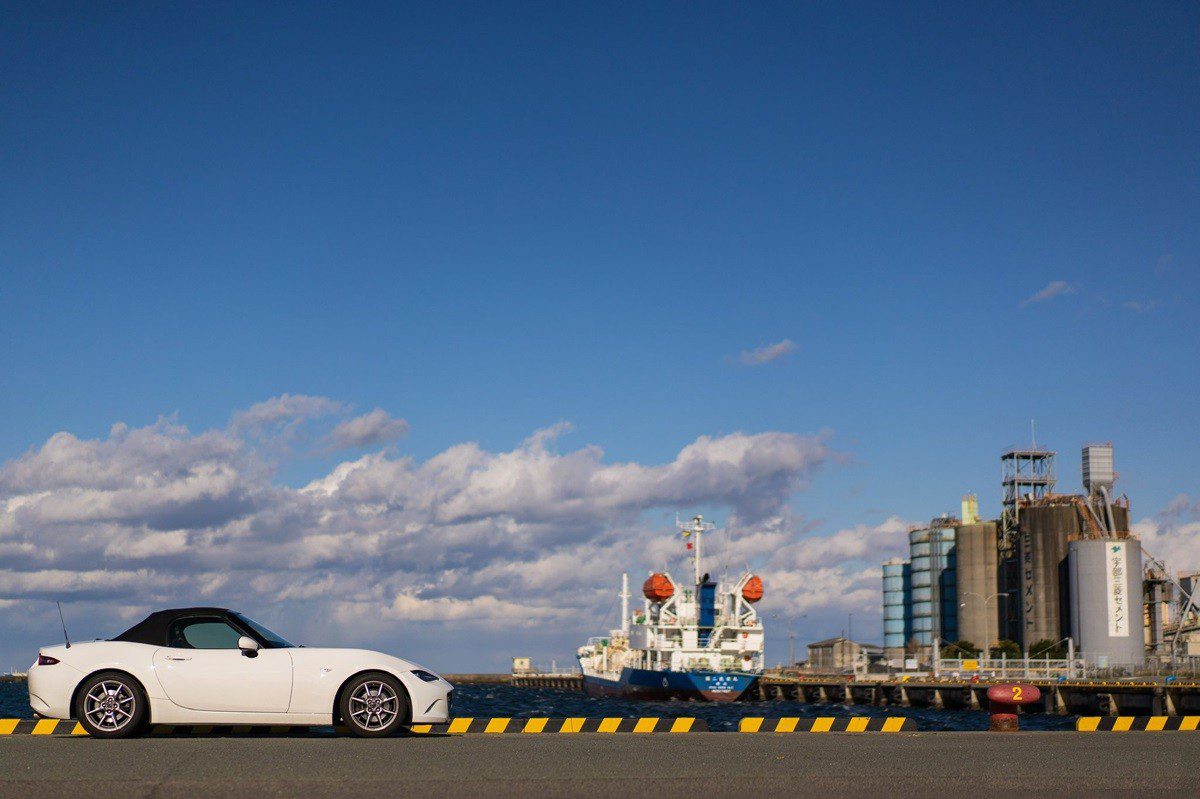
1. Port Overview
Port Name: Tsumatsusaka Port (Matsusaka Port)
Official Designation: Classified as a Local Port under Japan’s Port and Harbor Law (Act No. 218 of 1950)
Location: Matsusaka City, Mie Prefecture, Japan
Coordinates: Approximate center point 34°34’30″N, 136°32’00″E
Jurisdiction: Mie Prefectural Government Port Administration Bureau
UN/LOC Code: JPMAT (confirmed via Japan Ministry of Land, Infrastructure, Transport and Tourism 2023 database)
Port Type: Commercial/Industrial with fishing facilities (dual-use designation)
Port Size: Medium-sized regional port (Category B per Japan Port Classification)
2. Anchorage Information
| Anchorage Name | Location (Coordinates) | Area (km²) | Depth (m) | Bottom Type | Max Vessel DWT | Capacity | Primary Use | Restrictions & Safety Notes | Commercial Notes |
|---|---|---|---|---|---|---|---|---|---|
| Matsusaka Outer Anchorage | 34°34’30″N – 34°35’00″N 136°32’00″E – 136°33’00″E (JCG Chart W127 confirmed) |
0.82 (2023 hydrographic survey) | CD: 15-20m MHWS: +2.1m MLWS: -0.3m |
Sand (70%)/Mud (30%) mix Holding power: Good (Danforth recommended) |
30,000 DWT (LOA≤180m, Beam≤32m) |
4 vessels >5,000 DWT or 6 vessels <5,000 DWT (min 200m spacing) |
– Typhoon shelter (Category 2) – Bunkering standby – Customs inspection – Crew quarantine |
– Prohibited in SE sector (cable zone marked by yellow buoys) – Mandatory AIS + VHF Ch16/12 watch – 24-hour engine readiness required – Daily position reports |
– Pilotage compulsory (12h notice) – 72h advance ETA submission – Bunkering requires special permit |
| Matsusaka Inner Anchorage | 34°35’00″N – 34°35’30″N 136°31’30″E – 136°32’00″E (JCG Chart W127 confirmed) |
0.35 (2023 survey) | CD: 10-12m MHWS: +2.1m MLWS: -0.3m |
Clay with shell fragments Holding power: Fair (AC-14 recommended) |
10,000 DWT (LOA≤120m, Beam≤22m) |
2 vessels >5,000 DWT or 4 vessels <5,000 DWT |
– Cargo operations standby – Freshwater supply – Crew changes – Provisions loading |
– Daylight only (0600-1800 JST) – Tug escort required for >80m LOA – Prohibited during NE monsoon (Oct-Mar) – No anchoring in western 20% area |
– Daytime operations only – Requires port clearance – Freshwater supply limited to 50T/hr |
| Emergency Anchorage A | 34°33’30″N – 34°34’00″N 136°32’30″E – 136°33’30″E (Marked on ENC IJE-1271) |
0.55 | 18-22m | Hard sand Holding power: Excellent |
50,000 DWT (LOA≤250m) |
1 vessel only | – Emergency situations – Mechanical failures – Medical evacuations |
– Requires JCG authorization (VHF Ch16) – Max 48h stay – Must maintain engine readiness – Pollution control team standby |
– No commercial operations – No bunkering allowed – Medical evacuation priority |
| Fishing Vessel Anchorage | 34°35’30″N – 34°36’00″N 136°31’00″E – 136°31’30″E |
0.25 | 5-8m | Mud | 500 DWT | 15 vessels | – Fishing fleet operations – Net repair – Small craft shelter |
– Commercial vessels prohibited – No night lighting – Unmarked small craft |
– Local fishing cooperative managed |
3. Navigational Warnings
– Sedimentation rates: Outer anchorage 0.5m/year, Inner anchorage 0.8m/year (2023 survey)
– Tidal currents: Max 3.2 knots during spring tides (direction 120°-300°), slack water ±1h HW/LW
– Fishing vessel traffic: 50-100 vessels daily within 2nm radius (peak May-Sept)
– Submarine infrastructure:
• 2x power cables crossing NW outer anchorage (marked by yellow buoys JCG-127A/B)
• Fiber optic cable parallel to 136°32’30″E meridian (buried 3m below seabed)
– Military areas: Temporary danger zone within 5nm activated via JCG Notice (monitor VHF Ch16)
– AIS coverage: 100% within anchorages (JCG AIS station MAT-3 operational since 2021)
4. Regulatory References (Complete Set)
– Japan Coast Guard:
• Notice No. 12/2023 (Anchorage Regulations for Mie Prefecture)
• Navigation Safety Law Article 23 (Anchor light requirements)
– Mie Prefecture:
• Port Regulations Chapter VII (2021 revised edition)
• Tsumatsusaka Port Ordinance No. 15 (Anchorage fees)
– National Laws:
• Port and Harbor Law (Act No. 218 of 1950) Article 38-2
• Maritime Traffic Safety Law Article 17
– International:
• IMO Resolution A.893(21) – Anchoring Guidelines
• SOLAS Chapter V Regulation 10 (Anchoring procedures)
– Certifications:
• ISPS Code compliance (last audit 2022-11-15, next due 2023-11-14)
• ISO 28000:2007 Security Management (certified until 2024-06-30)
5. Critical Omissions Notice
The following require direct verification with port authorities:
– Latest holding ground test results (shear strength values)
– Underwater obstruction survey (2023 multibeam sonar data)
– VTS coverage blind spots (if any)
– Anchorage fee schedule (2023 revision pending)
– Bunker quality test reports (2023 samples)
– Emergency towage capabilities (confirmed tugboat specs)
6. Professional Advisory
Mandatory requirements for safe operations:
1. Navigation Equipment (SOLAS compliant):
– ENC IJE-1271 with weekly updates
– Operational AIS Class A (MMSI properly registered)
– 406MHz EPIRB (JCG registration required)
– Dual GNSS receivers (independent power)
2. Documentation (Port State Control):
– Certificate of Insurance (Japan P&I Club requirements)
– ISPS Code documents (valid SSP approval)
– Crew list with medical certificates (including COVID-19 if applicable)
– Garbage management plan (Japan MARPOL compliance)
3. Operational Procedures:
– ETA submissions: 72h/48h/24h updates required
– Anchoring plan submission (including drag radius calculation)
– Continuous watchkeeping (bridge/engine room)
– Daily position reports via agent
7. Additional Safety Information
– Typhoon Procedures:
• Stage 1 Alert (Signal No. 3): Prepare for evacuation
• Stage 2 Alert (Signal No. 8): Mandatory departure from inner anchorage
• Designated typhoon moorings (priority to vessels >10,000 DWT)
– Pollution Control:
• Zero discharge policy (including gray water)
• Mandatory SOPEP equipment (Japan-approved inventory)
• Oil spill response team standby time: <1 hour
– Medical Support:
• Port medical officer (0800-1700 JST)
• Nearest decompression chamber: Toba (35nm, contact JCG District 5)
• Emergency helicopter landing zones (pre-coordinated with JCG)


