The Port of Kiel has completed the final construction phase of its land-based electricity supply infrastructure. With the new expansion, the terminal can simultaneously supply up to three cruise ships and four ferries with emission-free energy. The facility has been providing environmentally friendly ship supplies since 2019.
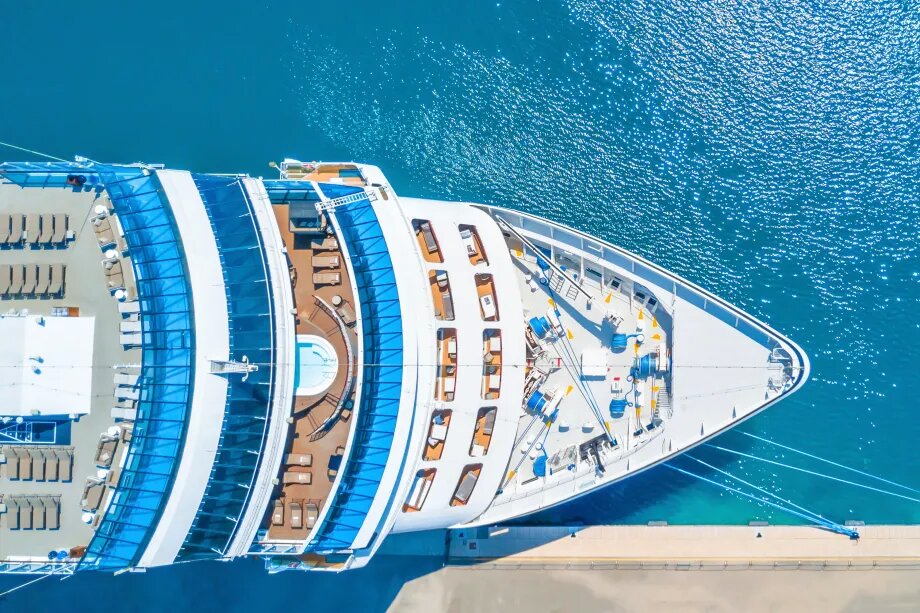
The maritime station has launched its second shore-based power supply facility for cruise ships at the Ostseekai terminal. Instead of a single cruise ship, as before, the expansion now allows power to be supplied to two cruise ships simultaneously. Another cruise ship can use shore-based power at the Ostuferhafen terminal. The expansion, now completed, is the latest component of Kiel’s energy infrastructure, one of the most extensive in the world.
Dirk Claus, Managing Director of Seehafen Kiel GmbH & Co. KG , said: “With this launch, we as a port are completing the development of our shore-based energy infrastructure. Seven seagoing vessels will now be able to simultaneously receive green shore-based energy supplies in the Port of Kiel, including three cruise ships.”
The executive also emphasized that “we have invested €50 million in land-based energy alone in recent years, and last year we already managed to reduce ship emissions by 60% thanks to the supply of land-based energy. By 2026, we will supply 80% of all ships with land-based energy.”
The new onshore power facility at Ostseekai, with a capacity of 16 MVA, 50/60 Hz, /11 kV, is an extension of the Ostseekai facility, which has been in operation since 2021 (also 16 MVA, 50/60 Hz, /11 kV). This means that when two ships dock at the cruise terminal simultaneously, both can receive shore power simultaneously.
“Both last season and this season, there have been several days when both cruise ships have wanted to use shore power on the Ostseekai. This is a clear sign: the demand for shore power from cruise lines is extremely high, and we are delighted with the excellent collaboration that is taking place,” Claus explained. Construction of the extension began in November 2024 and was completed as planned.
The partners for the new facility were PowerCon, Siemens, Inros Lackner, and Stemmann. The expansion of the Port of Kiel’s energy infrastructure was made possible thanks to funding from the federal government, the state of Schleswig-Holstein, and the European Union. Financial support comes from the Climate and Transformation Fund and the Joint Task for the Improvement of Regional Economic Structures (GRW).
The expansion of the onshore power supply was one of the port’s priority projects to reduce CO2 and air pollutant emissions from ships during calls. Following the inauguration of the first installation at Norwegenkai in 2019, with a capacity of 4.5 MVA, 50 Hz, and 10 kV, a combined installation was opened to supply cruise ships at Ostseekai (16 MVA, 50/60 Hz, /11 kV) and ferries at Schwedenkai (5 MVA, 50/60 Hz, /11 kV).
In September 2023, a supply facility was also opened at the Ostuferhafen loading center, technically connecting four berths and capable of supplying one cruise ship and up to two ferries. (Combined 16 MVA and 4.5 MVA system, 50/60 Hz, /11 kV)
With the expansion of the Ostseekai, construction of Kiel’s onshore energy supply infrastructure is complete. The port aims to completely eliminate its CO2 emissions by 2030 at the latest.