From a green sailor to a senior officer serving on ocean-going vessels, the journey of a maritime professional pursuing their dream is long and rigorous, requiring years of experience at sea, repeated skill refinement, and standardized qualification assessments. Among these, passing the national standardized competency assessment is a crucial step for seafarers to advance to management-level positions, obtain certification, and set sail.
On June 23, China’s first national-level seafarer assessment center in the northern region—the Tianjin Maritime Safety Administration Seafarer Assessment Center—was officially inaugurated. This key project, approved by the Ministry of Transport, features top-tier equipment, pioneering technology, a fair system, and forward-looking planning, becoming the “ultimate examination hall” for management-level seafarers such as captains and chief engineers in the northern maritime area, safeguarding the high-quality development of shipping talent.
National-Level Platform Established
Upgrading the Seafarer Assessment Landscape in the North
The seafarer promotion system has a clear hierarchy. Starting from trainee and able seaman positions, individuals must accumulate long-term practical experience at sea, complete progressive role training, and meet dual standards of qualifications and competence before becoming eligible for examinations for management-level positions such as captain, chief engineer, chief officer, and second engineer. Management-level seafarers are the core backbone responsible for navigation safety, daily operations, and equipment maintenance. Their professional competence directly impacts shipping safety and industrial development quality and efficiency. The national standardized competency assessment serves as the authoritative core basis for grading and certifying these high-end positions.
The official inauguration of the Tianjin Maritime Safety Administration Seafarer Assessment Center marks a comprehensive upgrade of the seafarer assessment system in the northern region, enabling specialized, intelligent, and centralized assessment of management-level and operational-level seafarers. This significantly enhances the convenience, standardization, and authority of seafarer assessments, improving the quality and efficiency of regional shipping talent cultivation.
It is reported that the center was approved for construction in December 2019, commenced construction in February 2022, and completed acceptance inspection in March 2026. It features 17 specialized assessment rooms and 280 standardized computer-based examination stations, covering three major sectors: ship navigation, engine room machinery, and marine electrical systems. Based in Tianjin and serving the northern region, it has become an exclusive national-level platform for northern seafarers to realize their dream of becoming captains and refine their skills.
Relying on Pioneering Intelligent Technology
Sharpening Seafarers’ Core Practical Abilities
As the first intelligent seafarer assessment base in northern China and a leader domestically, the center employs multiple nationally pioneering technologies to reconstruct seafarer assessment standards, shifting captain selection from “experience-based judgment” to “intelligent assessment,” precisely identifying high-quality captain talents capable of navigating complex sea conditions and adapting to new types of ships.
Nationally pioneering “Bridge-Engine Room Linkage” collaborative assessment model, restoring real captain duty scenarios. The center is equipped with an internationally leading 360° panoramic navigation simulator, incorporating port databases from over 150 countries worldwide and more than 200 mainstream and new energy ship types. It can simulate hundreds of extreme and complex sea conditions such as night navigation, heavy fog, storms, and wind waves, highly restoring various maritime emergency scenarios like narrow channel navigation, ship berthing and unberthing, and main engine failures. This equipment achieves the nation’s first real-time “Bridge-Engine Room Linkage” with the automated engine room, completely replicating the entire process of a captain issuing navigation commands and the collaborative operation of the deck and engine departments. It upgrades the traditional single-person “individual assessment” to a “team collaboration” evaluation, truly realizing “what is tested is what is used, what is used is what is tested,” precisely examining the captain’s core abilities in overall command and emergency response.
Nationally pioneering oil-free and water-free physical simulation engine room, creating a safe and efficient training and assessment environment. The center adopts a hardware-in-the-loop simulation technology combining physical objects and simulation. Without the need for fuel oil or water circulation, it can achieve automated operation of the engine room under all working conditions, with over 1,000 preset fault points for comprehensive assessment of seafarers’ fault diagnosis and equipment maintenance capabilities. This green and low-carbon system not only has zero safety risks and allows for unlimited repeated practical training but also saves over 240 tons of fuel oil and reduces carbon emissions by 767 tons annually, allowing seafarers to hone their skills in a safe and efficient environment.
Simultaneously, the center has taken the lead in achieving intelligent assessment for eight core subjects, including electronic chart display, route planning, and engine room simulation. Li Zhiqing, Director of the Seafarer Department and Second-Level Inspector of Tianjin Maritime Safety Administration, stated: “The dedicated intelligent assessment system built by the center can trace the entire operational trajectory of seafarers and automatically generate objective scores, avoiding subjective biases in manual scoring from a technical perspective, upholding the fairness and justice baseline of seafarer examinations, and consolidating the credibility of maritime assessments.”
Forward-Looking Layout for New Business Forms
Empowering High-Quality Development of Shipping
For every seafarer pursuing their ocean-going dream, years of maritime experience lay a solid professional foundation, while the national standardized intelligent assessment serves as the authoritative “official pass” for certification and setting sail. Unlike traditional assessment bases, the center goes beyond “assessment and certification,” focusing on the development trends of intelligent and green shipping to empower and build capacity for the long-term development of high-end seafarers like captains.
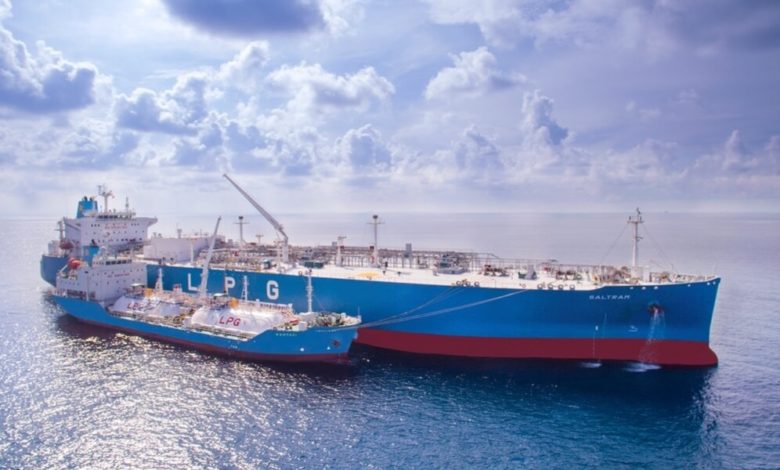
In terms of assessment layout, the center breaks through the limitations of traditional conventional ship types, specifically setting up specialized assessment areas for new energy ships such as LNG, LPG, and dual-fuel vessels, adapting to the operational standards of new green ships. It also reserves expansion interfaces for software iteration and ship model development, allowing for dynamic updates of assessment scenarios for intelligent and special-purpose ships, cultivating composite high-end captain talents suitable for industry development. Additionally, the equipment is equipped with Dynamic Positioning Systems (DP) and Integrated Bridge Systems, filling the gap in high-end seafarer assessment for northern offshore engineering ships and wind farm maintenance vessels, enriching the capability assessment dimensions for captain positions.
The center has built a fully intelligent examination management system, achieving closed-loop control over examination arrangement, personnel scheduling, on-site organization, intelligent scoring, and result archiving, significantly improving assessment quality, efficiency, and standardization levels. In the future, Tianjin Maritime Safety Administration will focus on the development direction of “high intelligence, deep integration, and assessment collaboration,” continuously optimizing the assessment system, enriching training scenarios, and upgrading equipment functions, striving to build a leading domestic and world-class benchmark base for seafarer assessment.
Talent is the core foundation for high-quality shipping development. The official inauguration of the first national-level seafarer assessment center in northern China has further improved the professional competency evaluation system for seafarers in the northern maritime area, opened up a key channel for seafarers to grow, succeed, and pursue their ocean-going dreams, continuously empowering the quality improvement and upgrading of Tianjin as a core northern international shipping hub, and steadily supplying high-quality, specialized maritime talents for the construction of a strong transportation network and a strong maritime nation.