Nanjing, October 8 (Reporters Luan Yongsheng, Lyu Qianyuan) Jiangsu, the only province in China that simultaneously possesses a great river, a major river, a large lake, and the sea, is also one of the regions with the densest water network in the country, boasting unparalleled advantages in water transport. In recent days, the 2025 “Writing the Chapter of Youth on the Motherland” online thematic interview and collection activity has been fervently underway across Jiangsu. Reporters visited the Nanjing Port to listen to the stories of innovation they are writing with their youthful passion.
“Smart Brain” Controls “Unmanned Terminal”
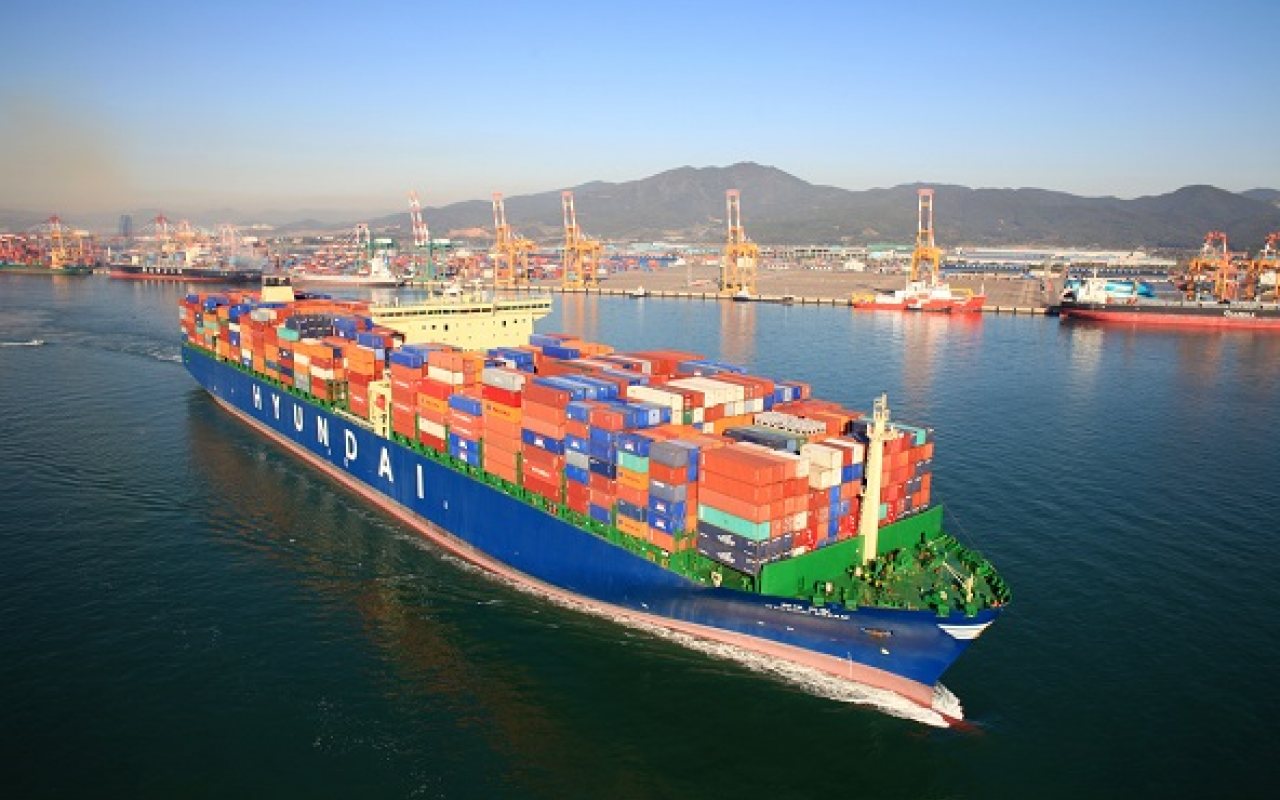
The Nanjing Port Longtan Container Terminal is located in the Longtan waterway of the Nanjing section of the Yangtze River. With a quay length of 2310 meters, it is the largest single container terminal along the Yangtze River and an important channel for international container imports and exports in the Nanjing area.
Entering the port area, reporters saw an endless stream of vessels on the river, and the quay cranes along the bank were busy yet orderly. Quay cranes are specialized cranes for loading and unloading containers at the forefront of container terminals, and their operation is similar to a “claw machine”. Surprisingly, the vast port area was “unmanned,” relying entirely on an automated control system for precise grabbing.
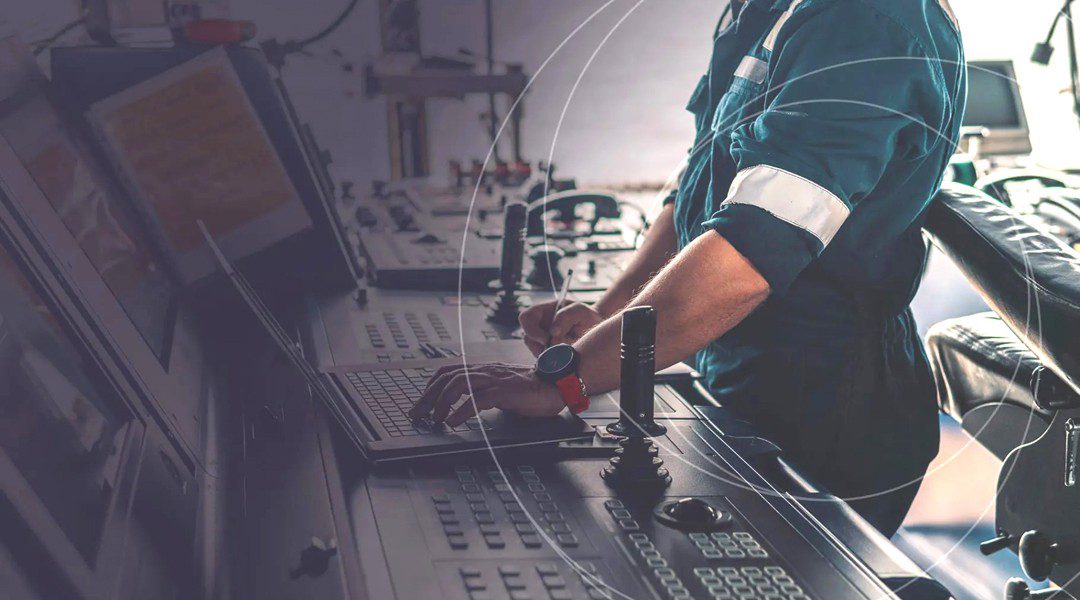
Duan Changwei, General Manager of Nanjing Port Longtan Container Co., Ltd., explained, “Staff remotely operate using the ‘Smart Brain’ from an office building several kilometers away. An average of over 40 container ships berth at the Longtan Port Area daily. Since the implementation of the ‘Smart Brain,’ one operator can simultaneously control 4 to 5 rail-mounted gantry cranes, doubling efficiency.”
Duan Changwei stated that the terminal has now moved away from traditional operation modes and is becoming increasingly intelligent. “We have built a ‘Six-in-One’ smart port system based on our self-developed TOS (Terminal Operating System), achieving a 100% electronic documentation rate for loading and unloading operations; implemented automated yard renovations to achieve unmanned operations, forming an automated yard with 22 automated equipment units, 21 heavy container yard blocks, and an annual handling capacity exceeding 2 million TEUs; and researched and developed a digital twin system to accelerate the shift of port operations from ‘experience management’ to ‘smart management’.”
In the first half of this year, Nanjing Port Longtan Container Co., Ltd. handled a container volume of 1.7442 million TEUs, a year-on-year increase of 5.4%. As the first inland river Five-Star “China Green Port” and a Four-Star “China Smart Port,” the Longtan Container Terminal emphasizes both intelligence and green development, jointly promoting the sustainable development of the port.
“Technological Innovation” Leads to “Single Champion”
In today’s ports and terminals, port machinery such as cranes play a crucial role. At Nanjing Port Machinery Manufacturing Co., Ltd., General Manager Zhang Chuanping told reporters, “Almost every port and terminal along China’s coast and rivers has our equipment. We have achieved global leadership in the specific segment of port portal cranes.”
“The fully automated portal cranes we developed based on multi-dimensional perception and intelligent control technology automate the entire process: grabbing material with the grab bucket closed, moving to unload above the hopper, and returning to the grabbing point. This improves cargo handling efficiency and reduces port operating costs,” Zhang Chuanping explained.
Due to continuous dedication and innovation in the field of port machinery, Nanjing Port Machinery was selected for China’s eighth batch of manufacturing “Single Champion” enterprises list in March 2024. This title holds significant prestige – according to the application requirements, a “Single Champion” must have long focused on specific niche product markets in manufacturing, possess internationally leading production technology or processes, and have a leading market share for its single product globally or domestically.
Forging new quality productive forces in port machinery, Nanjing Port Machinery has now embarked on a new round of innovation. “We will continue to strengthen the innovative R&D of port machinery equipment products, develop lightweight products like MHC and lightweight portal cranes for the overseas market to enhance international market competitiveness; and focus on automated port machinery products and full life-cycle management platforms for port machinery, continuously tackling new technologies such as RTG automation,” Zhang Chuanping said.
To date, Nanjing Port Machinery holds over 200 national patents. In 2025, it plans to apply for over 30 intellectual property rights, complete 3-5 scientific research projects, and strive to be the “vanguard” of technological innovation in port equipment.
“Innovative Models” Drive “Cost Reduction and Efficiency Improvement”
While hardware and software for smart ports are being upgraded, innovation in logistics transport models has also become a key engine for improving quality, increasing efficiency, and reducing costs in “Water Transport Jiangsu.” Entering the Longtan Railway Yard, 35-ton open-top containers filled with coal are seen arriving directly at the port area via dedicated railway trains. “Container-to-bulk” spreaders precisely grab the containers, hydraulically flip to unload the coal, which is then directly transferred to cargo ships. Simultaneously, the “Nanjing-Yangshan” river-sea rail service, laden with containers, is ready to depart for Shanghai’s Yangshan Port to connect with international trunk line vessels. The entire rail-water intermodal process is efficiently connected and seamless. This is precisely the new pattern of diversified intermodal transport innovatively created by Shenghai Company under the Jiangsu Port Logistics Group.
“Traditional wagon transport requires multiple transfers, resulting in high loss rates and costs. We innovatively use 35-ton open-top containers to replace wagons. After arriving directly at Longtan Port by rail, specialized spreaders directly unpack and load the cargo onto ships. The entire process involves no cargo touching the ground and zero loss, saving nearly 20 million yuan in logistics costs annually,” Guan Junjun, General Manager of Shenghai Company, told reporters.
This model focuses on transporting refined coal from Lianghuai and Northern Jiangsu, forming a circular transport channel of “direct rail delivery + direct sea shipment.” It boasts three major advantages: low cost, stable dedicated trains, and environmental friendliness with no loss. In December 2024, Shenghai Company released the group standard “Process Specification for 35-ton Open-top Container Container-to-Bulk Rail-Water Intermodal Transport,” providing a replicable “Jiangsu Solution” for the industry. According to statistics, the new model has cumulatively reduced costs by 80 million yuan, achieving a全程 “no landing, zero spillage, no dust” process, becoming a demonstration case for Jiangsu ports’ green and smart transformation.
Guan Junjun told reporters that the innovative model of the sea-rail service can significantly improve efficiency, reduce costs, and save energy. “The ‘Nanjing Longtan Port – Shanghai Yangshan Port’ river-sea rail service we developed uses an innovative transport method of road collection to the port and direct rail transport, shortening transport time from 4 days to 2 days. It possesses three core advantages: transport efficiency improved by 50%; comprehensive logistics cost per container reduced by 1200 yuan, saving 16 million yuan annually; and the shift from road to rail reduces energy consumption by 6500 tons of standard coal annually.” In November 2024, this service was selected as a typical case for national rail-water intermodal brand routes.
Empowered by intelligence, forging ahead with innovation. Through technology and innovation, Jiangsu’s water transport demonstrates vigorous developmental vitality. A new vision of modern water transport is gradually unfolding across this land connecting rivers and seas.