By PortalPortuario Editorial Team
In the early hours of this Friday (28), TCP, the company that manages the Paranaguá Container Terminal, recorded the milestone of 1.5 million TEUs handled throughout 2025. This feat was achieved 20 days earlier than in 2024, the year in which TCP became the third port terminal in the country to reach this volume of operations.
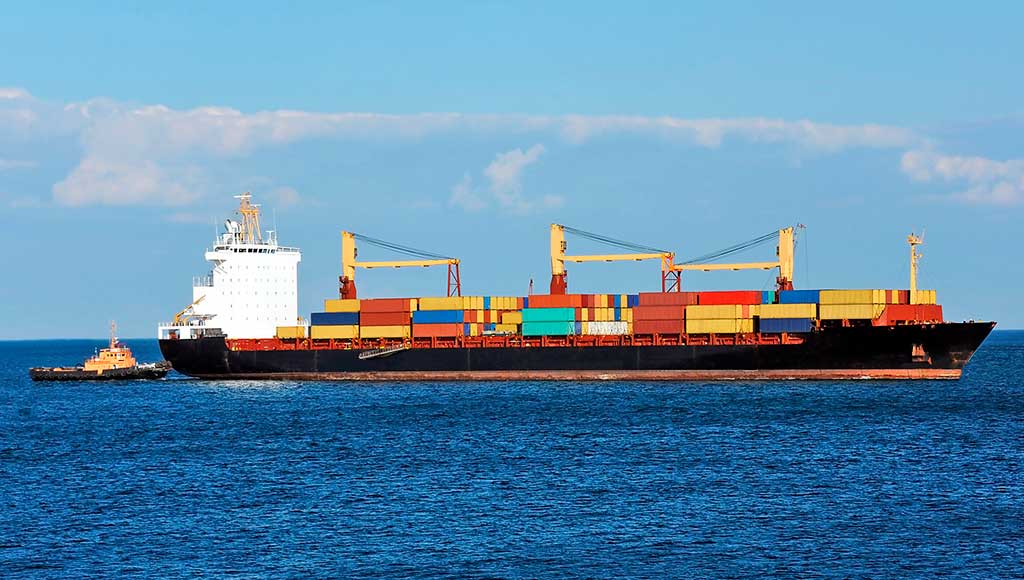
The record occurred during cargo handling on the container ship CMA CGM Rodolphe, which is 299 meters long (LOA), 48 meters wide (beam), and has a capacity of 9,400 TEUs.
“The volume of 1.5 million TEUs handled still in November is in line with the 5% growth projections for this year and reflects the commitment and professionalism of the Terminal team and the support of the port authority, the Navy, and the Paranaguá pilotage. Today, TCP is a fundamental axis for the Brazilian trade flow, as it is the largest port terminal in terms of handling in the Southern Region of the country and the third largest in Brazil,” highlights TCP’s institutional and legal superintendent, Rafael Stein.
According to the most recent balance sheet, covering the period from January to October, the Terminal exported 557,755 TEUs, a 5% increase driven by shipments of agribusiness products such as meat and frozen goods, wood, beans, and sesame. In the import flow, the volume reached 546,880 TEUs, 2% higher than last year, with the automotive, chemical products, electronics, and machinery segments standing out.
New operational draft
This November, Portos do Paraná approved ordinance No. /2025, which determines the expansion of the operational draft of the access channel to the Port of Paranaguá from 12.80 meters to 13.30 meters for container ships. The measure was supported by simulation studies commissioned by TCP and conducted, in September of this year, at the Numerical Test Tank of the University of São Paulo (USP).
According to estimates, the expansion of the draft, which is the depth from the lowest point of a vessel to the waterline, by 50 centimeters brings an increase in transport capacity equivalent to 400 full TEUs per ship.
“The completion of the rock blasting works and the increase in the operational draft depth will allow ships traveling through the Port of Paranaguá and arriving at the Terminal to carry more cargo per trip, which translates into greater efficiency for exporters, importers, and shipping companies. The results of this measure will be observed in the coming months and should further boost the growth of handling in 2026,” explains Stein.
Since 2024, the operational draft of the access channel to the Port of Paranaguá has already undergone three revisions, going from 12.10 meters to 13.30 meters. The increase in depth of 1.20 meters represents a capacity increase of 960 full TEUs per ship.
Works and investment
The results achieved at the Paranaguá Container Terminal come on the heels of a series of investments made in the last five years, a period in which over half a billion reais were invested in infrastructure works and the acquisition of new equipment.
Anticipating the Terminal’s decarbonization plan and the expansion of the number of plugs in the area for refrigerated container (reefer) storage, TCP completed, in 2023, the installation of a gas-insulated electrical substation to meet the increased demand.
In 2024, the largest reefer yard in South America, with 5,268 outlets, was inaugurated, expanding the leadership of the company that already held the title of the largest export corridor for meats and frozen goods in the country. In September 2025, TCP reached a 44% share in chicken meat exports and 30% in beef shipments.
Operations at the Paranaguá Container Terminal also became more sustainable: since 2022, TCP has committed to purchasing electricity entirely from renewable sources, earning the company the I-REC (International Renewable Energy Certificate) for the third consecutive year. Furthermore, a pilot project to electrify three rubber-tired gantry cranes (RTG) was completed, resulting in a 97% reduction in greenhouse gas emissions in the operation of each piece of equipment.
The purchase of new equipment was part of the Terminal’s recent investment package, which acquired 17 new Terminal Tractors (TT) and 11 RTGs, making TCP the owner of the largest machinery fleet among Brazilian terminals, with a total of 69 TTs and 40 RTG cranes.
“The success of TCP’s investment plan can be seen in the results achieved in recent years and reinforces the company’s strategy, which will continue to work to make the Paranaguá Container Terminal a global benchmark in management and efficiency in port logistics,” concludes Stein