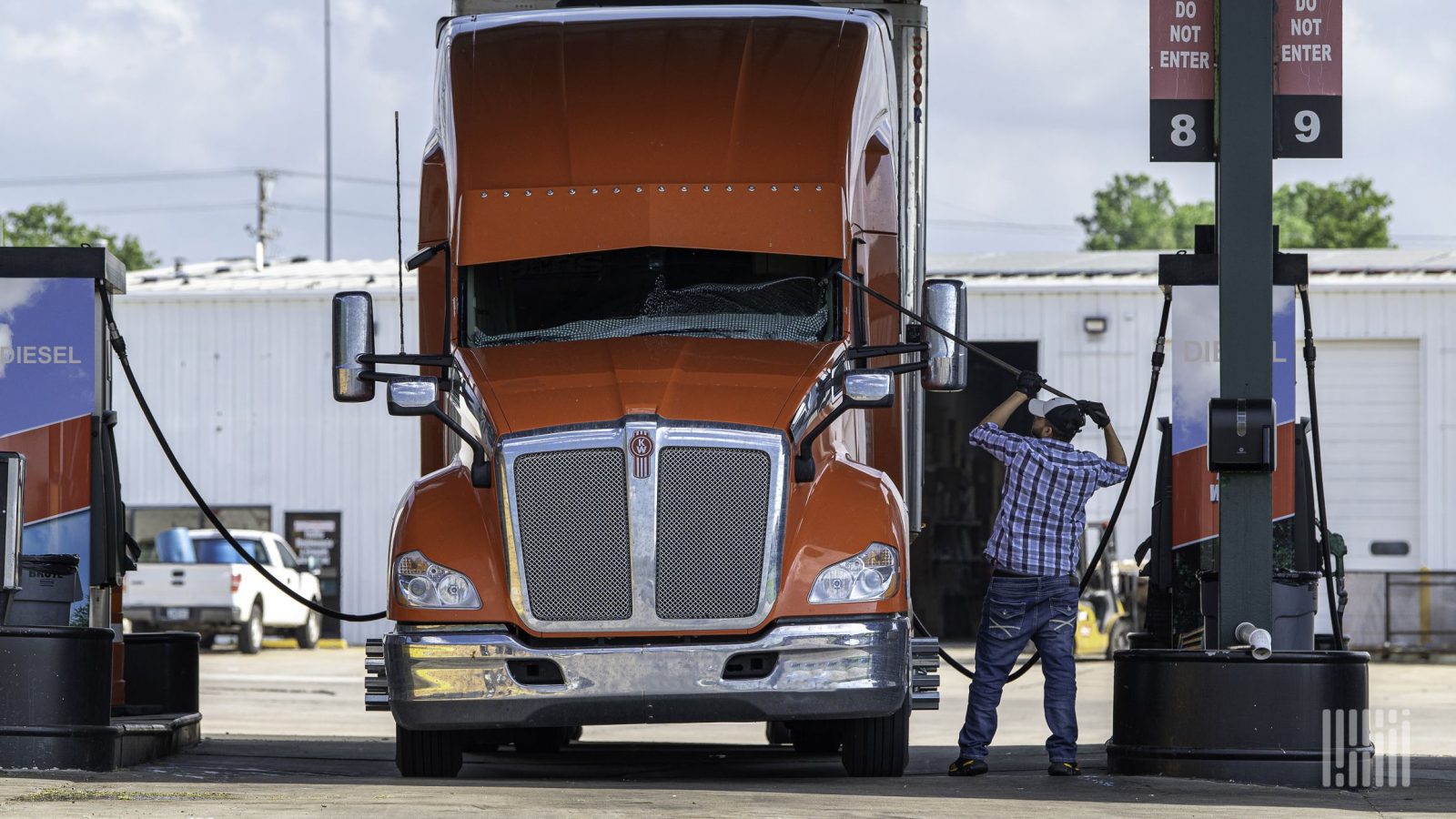
Companies contracting out drivers could see higher costs. (Photo: Jim / )
The Biden administration has unveiled a proposed rule that could raise costs for trucking companies and gig transportation, such as Uber and Lyft, that rely on independent contractors.
“Through our enforcement in the wage and hour division, we know that misclassification is occurring in many industries and sectors,” said Principal Deputy Administrator of WHD Jessica Looman during a media briefing Tuesday. “We believe the proposed regulation would better protect workers from misclassification, while at the same time providing a consistent approach for those businesses that engage or wish to engage with independent business contractors.”
In early 2021, just before the Biden administration came into office, the Trump administration published its own independent contractor status that is considered far more favorable to establishing that a worker can be independent.
Turning back the clock on contractor status
The DOL’s new proposal would modify WHD regulations to revise its analysis for determining employee or independent contractor classification under the Fair Labor Standards Act (FLSA) “to be more consistent with judicial precedent and the act’s text and purpose.”
The Department of Labor proposes:
No ABC test
“However, the department believes it is legally constrained from adopting an ABC test because the Supreme Court has held that the economic reality test is the applicable standard for determining workers’ classification under the FLSA as an employee or independent contractor,” the proposed rule states.
“Because the ABC test is inconsistent with Supreme Court precedent interpreting the FLSA, the department believes that it could only implement an ABC test if the Supreme Court revisits its precedent or if Congress passes legislation that alters the applicable analysis under the FLSA.”
Boosting costs
Still, the change in policy could place a heavier burden on trucking companies that rely on an independent contractor model to show that their drivers are in fact independent workers and not employees — an adjustment that would boost operational costs.
As it relates to trucking, Looman said during the briefing that the new guidance “will be very fact-specific depending on the nature of the trucker’s relationship in terms of whether or not they are properly classified as an independent contractor or an employee.”
Nick Geale, vice president of workforce policy at American Trucking Associations, said his group “is reviewing the new proposed rule and looks forward to providing feedback to the department, but we are disappointed this proposal seeks to undo the current rule which has brought needed clarity to the issue of independent contractor status.”
“Broadly speaking, I think the concern is that additional costs to companies like Uber and Lyft ultimately lead to higher prices for consumers, which will drive demand down for these services and ultimately reduce the need for as many workers,” Matt Spoke, CEO of Moves Financial, which handles payments for gig-economy companies, told .
The National Retail Federation (NRF) quickly underscored its opposition as well. “The changes being proposed by the Labor Department will significantly increase costs for businesses across all industries and further drive already rampant inflation,” said NRF Senior Vice President of Government Relations David French in statement on Tuesday.
“NRF staunchly opposes a change in this important area of law, which is both unwarranted and unnecessary. This decision will only foster massive confusion, endless litigation, reduced innovation and fewer opportunities for employees and independent contractors alike.”
The public will have 45 days to comment on the rule after it is published in the Federal Register on Thursday.