Carnegie Clean Energy has made headway on the development of the MoorPower project, with the design of CETO wave energy device spin-off – aimed at aquaculture sector – nearing completion.
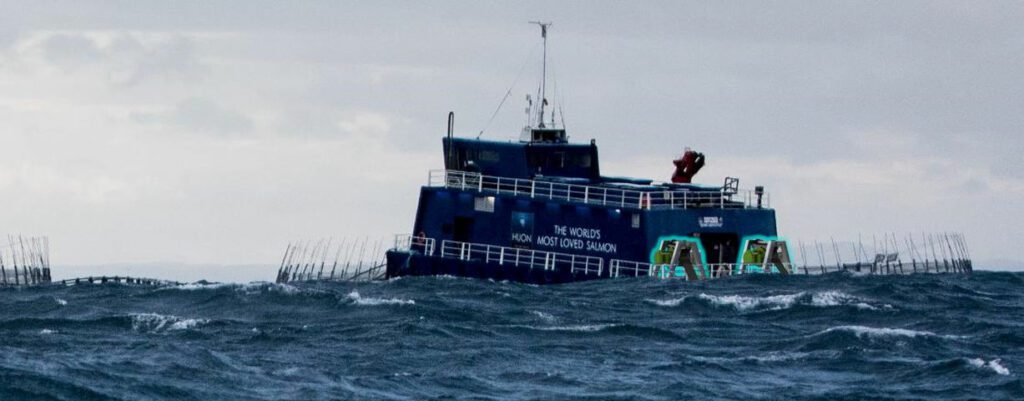
Aquaculture barge with illustration of MoorPower wave power system added (Photo courtesy of Carnegie Clean /Base image Huon Aquaculture)
According to Carnegie Clean Energy, the preliminary commercial-scale MoorPower technology design is nearing completion as part of the $2.4 million (AU$3.4 million) project.
Progressing both the commercial-scale design and the scaled demonstrator design will ensure that that the scaled demonstrator deployed in North Fremantle in Australia meets the requirements and objectives of Carnegie’s commercial customers, the company said.
The MoorPower technology is a CETO-derived wave energy product designed for moored vessels, offering a solution to the challenge of securing clean and reliable energy for offshore activities and reducing the reliance on diesel generation.
The initial target market for MoorPower is offshore vessels such as feeding barges for the aquaculture sector.
The project is supported by close to $970,000 (AU$1.35 million) cash support from the Blue Economy Cooperative Research Centre (CRC) and will also be delivered in collaboration with a consortium of partners including two of Australia’s largest aquaculture companies, Huon Aquaculture and Tassal Group.
Over the two years project duration, Carnegie will design, install and operate a scaled demonstrator of the MoorPower technology offshore from its headquarters and research facility in North Fremantle, Western Australia.
Following successful demonstration, the major aquaculture industry partners of the project are most likely to become the first adopters of the MoorPower commercial product, Carnegie said.