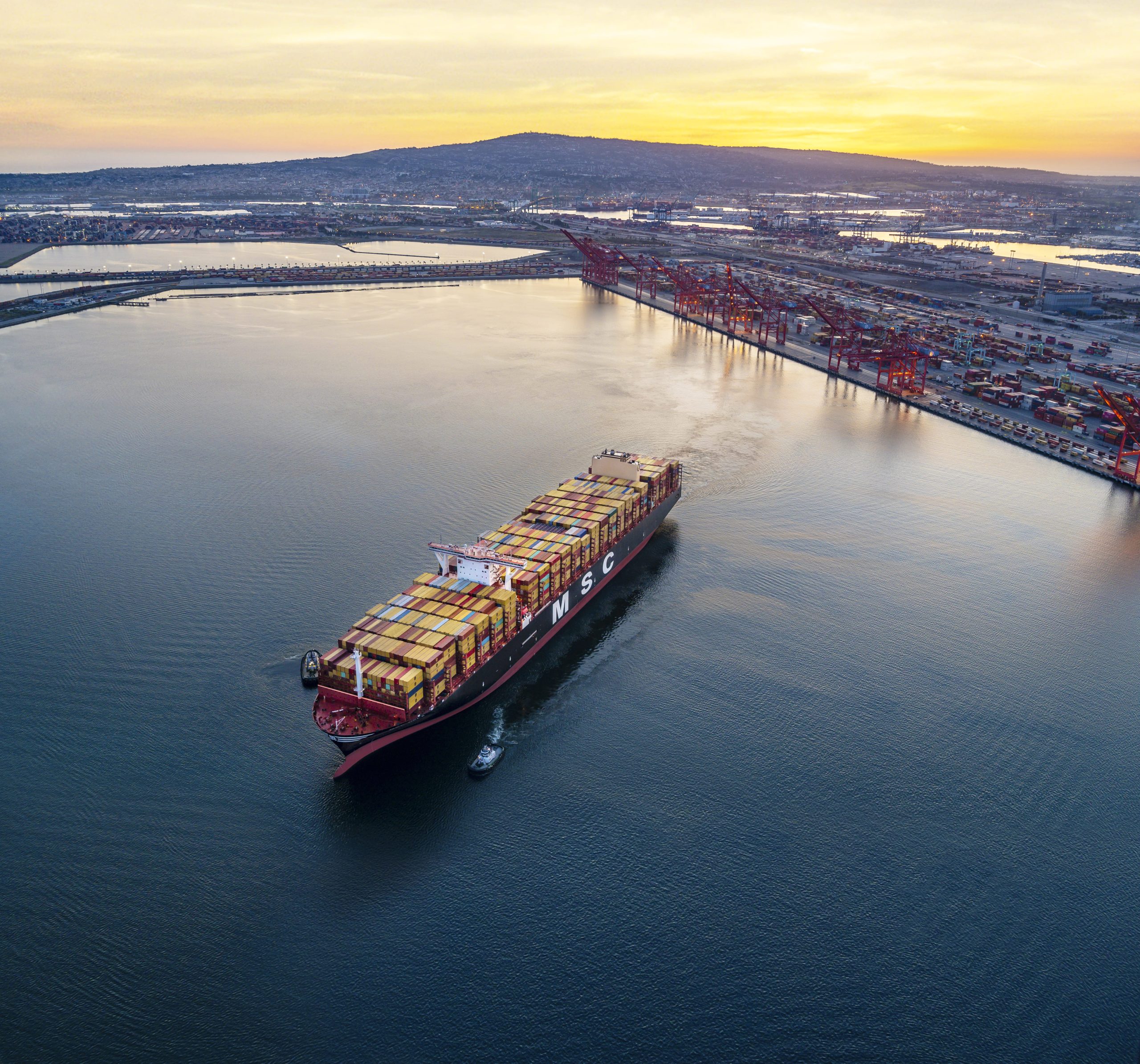
On 22 June and 26 June, the fifth (CHB2041) and sixth (CHB2042) vessels in a series of 10,300-teu LNG container ships ordered by MSC were launched via floating dock at the yard’s No. 1 slipway. According to Changhong International, this marks the first time the company has launched 10,300-teu container ships using a floating dock, representing a technical advance in its large-scale shipbuilding and launching operations.
The MSC container ship series is a joint development between CIMC ORIC and Changhong International, comprising 10 vessels in total. Each ship measures 299.95 metres in length, 45.6 metres in beam and 25 metres in depth, with a design speed of 20 knots. The vessels use an LNG dual-fuel propulsion system and are said to meet ammonia-ready and methanol-ready design requirements, positioning them within the broader trend towards greener shipping.
MSC site manager Dong Qi and his team, along with Lloyd’s Register (LR) classification society surveyor representatives SH Goh and Wang Kai, attended the launching ceremonies, alongside Changhong International deputy general manager and chief engineer Wang Jiazheng, general manager assistant Fu Dafei, and other company managers and project team members.
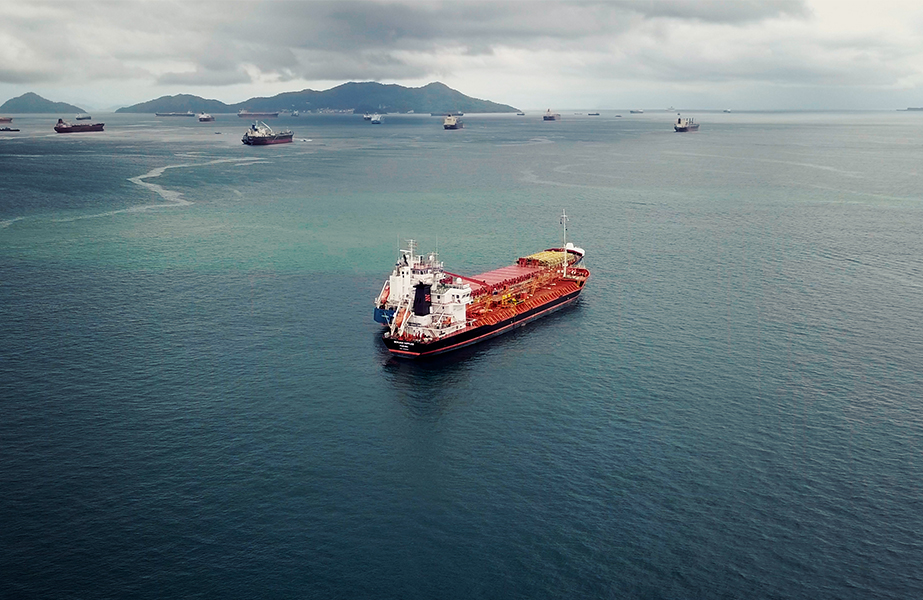
On 26 June, Changhong International also held launching ceremonies for two 115,000-tonne oil tankers — CHB3015 and CHB3026 — built for Navios. CHB3015 is classed by the American Bureau of Shipping (ABS), while CHB3026 is classed by LR. Representatives from both classification societies, the shipowner’s on-site supervision team, and company leaders were present at the event.
The tankers are described by Changhong International as a new generation of LR2 Aframax deep-well pump tankers developed in accordance with the latest international standards and regulations. Each vessel has an overall length of approximately 249.9 metres, a beam of 44 metres and a depth of 21.5 metres.
In addition to conventional fuel oil, the tankers are said to be capable of conversion to cleaner energy sources such as methanol and LNG in the future. The vessels also feature provision for medium-voltage shore connection (HVSC), which will allow shipowners to connect to shore power systems during port berthing, reducing emissions from auxiliary generators.