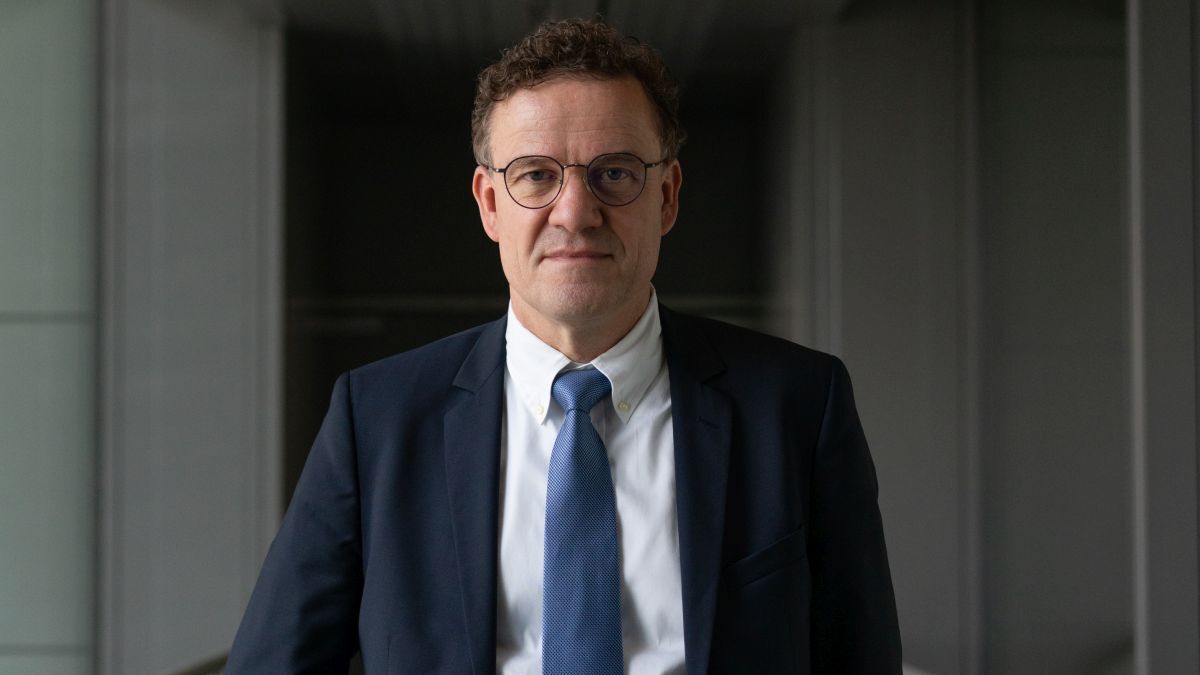
Ulrik Dan Frørup (BV): “Class is a catalyst for shipping’s sustainability transition” (source: Bureau Veritas)
Container ship operators are ramping up their future fuels initiatives and turning to class societies for help
The rise in container vessels fuelled by alternative fuels is illustrated well by DNV and IHS Markit data (as of 1 June 2022).
In terms of the number of vessels, 88% of newbuildings were fuelled by conventional fuel versus 7% for LNG in 2020. This has jumped to a large 51% of newbuilds being fuelled by LNG versus 47% using conventional fuel in 2022 year to date.
In terms of general tonnage, the figures notes LNG use in 2020 was 18%, jumping to 44% in 2022 year to date. 6% of the new fleet in gross tonnes (gt) will use methanol (Maersk and CMA CGM’s planned newbuilds).
DNV executive vice president for business development Jan-Olaf Probst tells CST the tonnage figures compared with the vessel numbers show “the signal is the bigger vessels are going for alternative fuels. We see it in the 7-8,000 TEU class, 13-15,000-TEU class and the 24,000-TEU class.”
And, as he says, “methanol is coming”, adding, “As well as the 13,000-TEU tonnage announced that will use this fuel, we could also see methanol used for smaller container ship tonnage in the northern European area. Our guess is due to political and media reasons, LNG does not have a high reputation in this area as it is seen as a grey fuel. Many shipowners would prefer making the transition from grey to bio and synthetic easier using LNG – however, some are hesitating as this option is mostly ignored in public.”
Hence, methanol will attract greater interest. Furthermore, the interim guidelines for methanol are a benefit and allow easier operation and building of methanol-fuelled vessels.
Mr Probst continues, “IMO’s interim guidelines are 95% of the final version, so it is easier to find support from flag states, and combined with our Class Rules, it is much easier to operate the vessels compared with before the interim guideline were available.”
Another potential for container ships is the use of fuel cells. Mr Probst says, “Some owners are looking at using fuel cells, not batteries. This is a good thing as fuel-cell capacity is getting bigger and bigger. Fuel cells can be operated on hydrogen or with methanol. Combining it with the same fuel as the main engine means only one fuel is needed on board.”
Mr Probst sums up by highlighting that choosing the right fuel for a new vessel order is critical. “If you order a vessel now, you need a fuel with which to operate the vessels in the next 20 years is possible without changes. Therefore, the option to switch from grey fuel to bio and later even to synthetic is essential. You need a different fuel to HFO, whatever the size of the container vessel.”
Derisking innovation
Elsewhere, to develop the new fuels, designs and technologies it needs to decarbonise, shipping will need one key element: trust between all stakeholders. Class is at the heart of this, says Bureau Veritas Marine & Offshore (BV) chief commercial director Ulrik Dan Frørup.
He points out the range of options currently under development to decarbonise shipping is “extraordinary” – from engines capable of burning hydrogen or ammonia as fuel, to smart coatings and air bubbles that reduce friction, to a wide range of kites and sails that harness the power of the wind to curb fuel consumption and emissions.
But Mr Frørup highlights challenges for operators, “For shipowners, however, retrofitting these innovative solutions on their existing vessels, or installing them on newbuilds, can feel like a leap of faith. Given the level of investment at stake, owners want reassurance these solutions are safe, reliable, and deliver sufficient emissions reductions in line with their targets.”
Therefore, he says while classification societies have always played a fundamental role to ensure safety and regulatory compliance, “this role has now become more important than ever: class is a catalyst for shipping’s sustainability transition, providing the trust, expertise and validation needed to support safe innovation”.
He singles out how BV has helped derisk ambitious new projects through its rules, approvals in principle (AiPs), joint development projects, R&D partnerships and risk assessment processes.
BV recently granted an AiP for an innovative concept combining LNG and container ship jumboisation, developed by GTT, Alwena Shipping, and COSCO Shipping Heavy Industry Zhoushan shipyard. BV’s role was to confirm the concept of the retrofit, the layout of the LNG fuel containment system and gas fuel supply system, supported by an auxiliary safety system, and ensure compliance with regulations including the IGF Code and BV Rule NR 529.
Mr Frørup explains, “The retrofit and upsizing concept is ambitious and a major modification, as it involves cutting the vessel in two, integrating a 28-m hull block containing a 12,000-m3 membrane-type LNG fuel tank, a gas handling system and an additional 1,100-TEU cargo capacity above that. The purpose of this pioneering design is to reduce emissions while also making it a commercially attractive option by increasing the vessel’s lifetime and cargo capacity.”
Silk Alliance launch
Lloyd’s Register Maritime Decarbonisation Hub and partners have launched The Silk Alliance to develop a Green Corridor Cluster beginning with the intra-Asia container trade.
The Silk Alliance is developing a fleet-specific fuel transition strategy for container ships operating in Singapore and wider Asia.
Lloyd’s Register Maritime Decarbonisation Hub is working with 11 leading cross-supply chain stakeholders to develop a fleet fuel transition strategy that can enable the establishment of a highly scalable Green Corridor Cluster.
The Silk Alliance members will draw from their individual areas of expertise to develop a fleet-specific fuel transition strategy for container ships operating primarily in Asia, based on the Lloyd’s Register Maritime Decarbonisation Hub’s First Mover Framework. This is designed to strengthen leadership and foster collaboration in the maritime industry to meet its COP26 commitments and to demonstrate tangible actions that can lower the investment risk that is currently preventing the wider uptake of sustainable carbon-neutral fuels.
One of the members, Yang Ming Marine Transport Corp says, “Yang Ming is pleased to participate in The Silk Alliance to enhance our commitment to decarbonising our fleet, which has been evidently demonstrated through our upcoming plan to build five 15,000-TEU vessels with a greener and low-carbon fuel option.”
Elsewhere, Liberian Registry executive vice president of innovation and regulatory affairs Thomas Klenum highlights challenges the class society is helping container operators overcome. He says, “The enormous and rapid growth within the container ship segment in both main dimension and cargo carrying capacity over the last 50 years still causes immense challenges from both design and operational aspects.
“One of the key areas of concern is container ship fires that unfortunately have caused several disasters in recent years, and this has also been acknowledged by IMO, and the Liberian Registry is actively contributing to the work in IMO to enhance the regulatory framework for container ships to avoid ship fires in the future.”
He adds that of similar concern is the loss of containers overboard that “unfortunately happens more and more frequently when container ships encounter heavy weather conditions, and one of the main reasons for the increased frequency is the continuously increasing size of container ships that are causing equally increasingly loads and forces acting on the container securing arrangements”.
Liberian Registry is addressing this safety issue with other key industry stakeholders including within IMO.
Another key area specific to the container ship segment is the new environmental requirement in Marpol Annex VI for the Carbon Intensity Indicator (CII) that will enter into force from 2023 onwards.
Mr Klenum says, “With the current method for calculating the CII value, the vessels on short voyages and many port stays will be penalised by the CII rating system, which will primarily have a negative impact on feeder container ships.”
Therefore, Liberia has throughout the deliberations at IMO supported voyage adjustments and correction factors for the CII system not to penalise specialised ship types such as feeder container ships.
Mr Klenum continues, “Liberia recently submitted a proposal to IMO for implementing a correction factor for vessels on short voyages and with many port stays, but unfortunately this has not yet been agreed and will therefore not be reflected in the CII rating for the first three years (2023-2025). Liberia will continue to support these correction factors for the CII system in our efforts to ensure a global level playing field without penalising specialised ship types such as feeder container ships.”
Liberian Registry is also actively involved with joint industry projects for innovative container ship designs. Mr Klenum explains, “These JIPs are focusing on the application of new technologies, innovative container ship design features and alternative fuels, and while the primary aim may be to decarbonise international shipping, there is also a focus on making container ships increasingly competitive and sustainable going forward.”