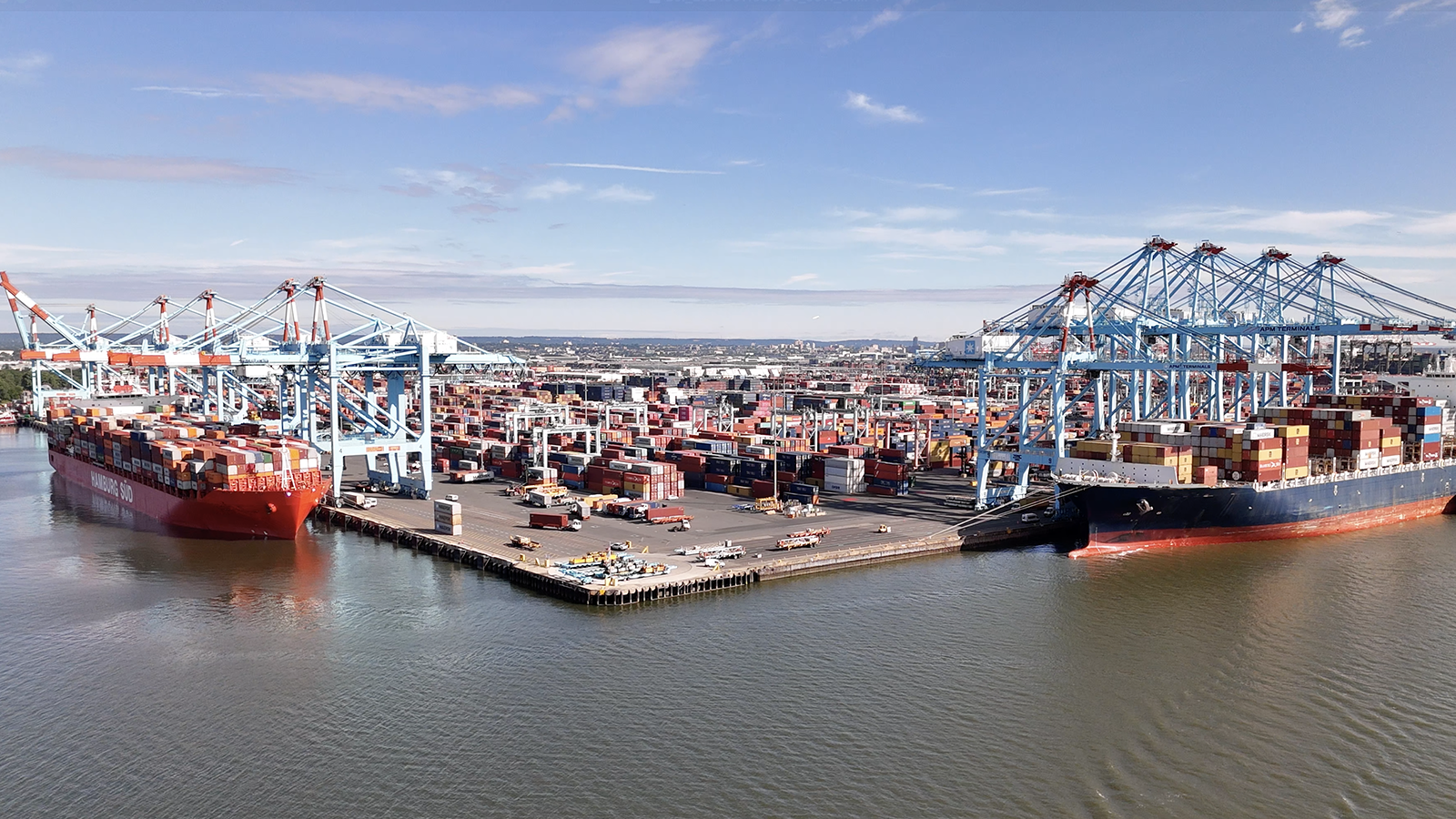
The concessionaire of the Libertador Simón Bolívar Port of Guayaquil, Contecon, filed a lawsuit alleging unconstitutionality against Ecuador’s port regime.
In this vein, the operator requested the Court to prioritize its lawsuit against the legal framework, using as a reference a previous ruling that limited private participation in the energy sector.
Contecon’s argument was that it is a victim of unfair competition, because the current law allows private port terminals to operate through simple permits, exempting them from liability and the payment of royalties, elements to which companies that have a state delegation contract are subjected, reported Primicias.
In this regard, the concessionaire seeks for the Constitutional Court to radically alter the legal regime of private ports in Ecuador. Its new legal strategy is to demand that the same criteria of Ruling /25 be applied, a recent decision that limited private participation in the electricity sector.
Contecon’s legal strategy now focuses on requesting that the rapporteur judge, Ximena Cárdenas, apply to the port sector the same criteria of Ruling /25, regarding the governance of strategic sectors – such as electricity or ports.
That ruling declared the energy sector regulation unconstitutional because it violated the constitutional mandate that private intervention must be strictly exceptional and regulated by law. The ruling generated rejection from the President of the Republic himself, Daniel Noboa, who castigated the Court and published the judges’ faces.
“The regulation of exceptionality cannot be at the regulatory level,” the court stated in the electricity ruling. And among the arguments of the port concessionaire is that the 1976 Port Law and its 2000 regulations were never updated in accordance with the principles of the 2008 Constitution.
“What is being questioned is not private participation in port activity, but that such participation be carried out through legal mechanisms that allow the State to fulfill its constitutional responsibility of guaranteeing the continuity, regularity and quality of the public service.”
According to Contecon’s lawyers, in the port system the exception has become the general rule with dozens of small private port terminals operating in places such as Guayaquil, Posorja, Manta and Puerto Bolívar. The concessionaire counts up to 68 terminals.
Only Guayaquil has six private terminals that are members of the association – two of them among the main ports in Ecuador by cargo movement. And barely five ports nationwide are listed as concessioned and three are operated directly by the State, the company reports.
This would demonstrate – according to the plaintiff – that the exception provided by the Constitution for private participation in strategic sectors has become the rule in the port sector.
According to the plaintiff, private ports, far from operating by exceptional delegation, function with “precarious administrative authorizations” that do not guarantee the safety and quality of a service classified as public.
Faced with this situation, the company not only demands that the Court skip the chronological order to issue an urgent ruling, but also asks the court to dictate a transitional regime.
This measure would seek to avoid a legal vacuum or “limbo” in the sector and would force private operators to regularize their situation within a set deadline, forcing them to sign more solid contractual arrangements.
The Office of the Attorney General of the State and the Presidency of the Republic have closed ranks – together with the Association of Private Port Terminals of Ecuador – defending the current port model and requesting the Court to reject the public action of unconstitutionality.
The State’s defense accuses Contecon of suffering from a “conceptual confusion” by assuming that any private participation in ports must be treated and molded to the constitutional figure of “exceptional delegation.” The Attorney General’s Office warns that the concessionaire could be committing an abuse of rights and trying to “fish in troubled waters,” after multiple lawsuits on the same controversy.