At a time when the ignition in the Middle East and the escalation of geopolitical conflicts continue to hit global trade, the latest report by the World Trade Organization (WTO) highlights that investments in data centers, advanced semiconductors, IT equipment, and digital infrastructure are creating new merchandise flows, boosting demand on liner routes and offering critical support to the sector.
Overall, the picture emerging for 2026 -based on WTO data- is not one of trade collapse, but of significant slowdown. After the strong 4.6% increase in the volume of global goods trade in 2025, the baseline forecast for 2026 is limited to 1.9%, before a mild recovery to 2.6% in 2027. In other words, the international economy is not stopping, but entering a phase of lower speed, where the resilience of trade will be judged by new factors.
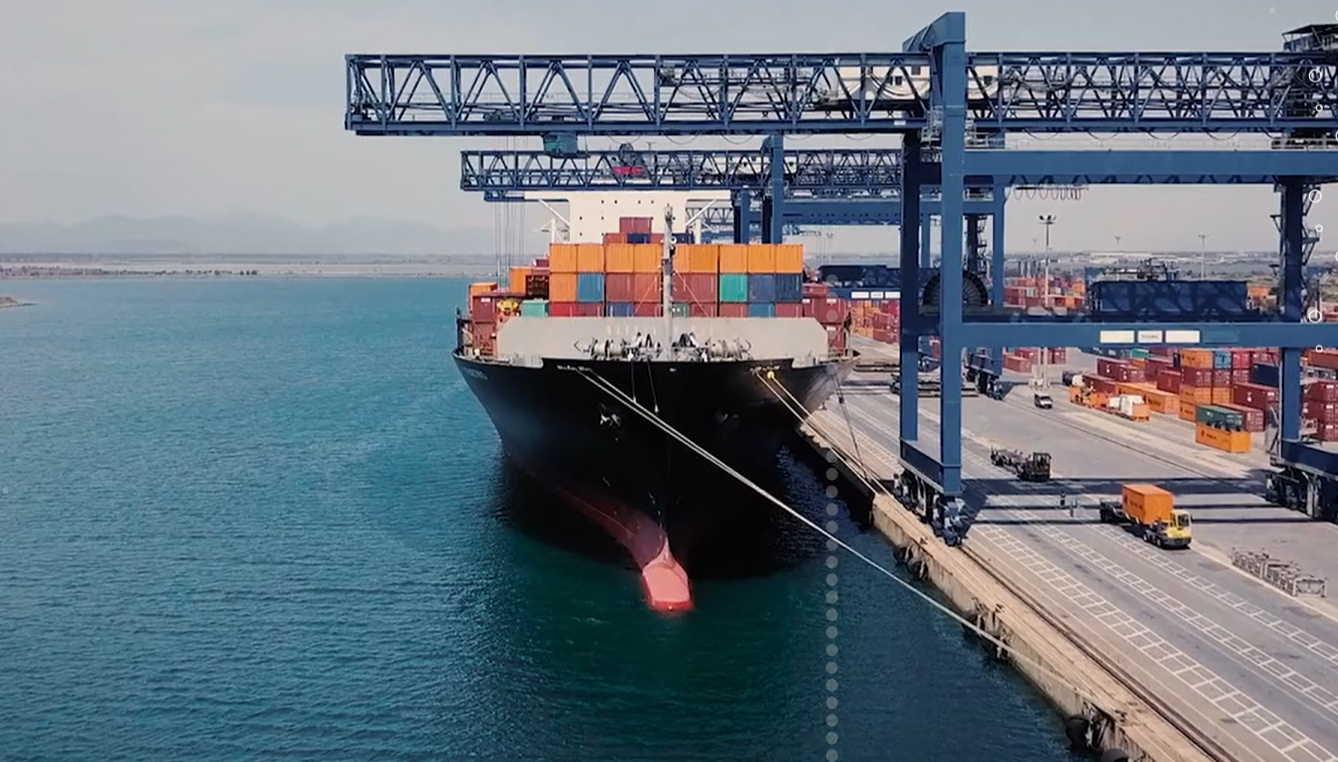
In this context, this shift is particularly significant for the containership market. The sector has already experienced successive shocks in recent years, from the pandemic and supply chain realignments to diversions via the Cape of Good Hope due to the Red Sea crisis and more recently in the wider Middle East. Now, the market is called upon to assess to what extent the new wave of demand linked to artificial intelligence can act as a counterbalance against the pressures caused by war and energy price hikes. The answer, according to the data, is that it can offer substantial support, if everything proceeds according to estimates.
The chief economist of the WTO, Robert Staiger, describes the current conjuncture as a contest between “strong and opposing forces.” On one side, global demand for products that enable the development of artificial intelligence continues to increase. These are high-performance semiconductors, servers, data center equipment, data storage systems, optical networks, and other specialized technological cargoes. On the other, the ignition in the Middle East and especially the disruption of key maritime passages is raising the cost of fuel, insurance, and transportation, creating a much less predictable environment for shipping.
The importance of AI-related cargoes is greater than it appears at first glance. They are not only high-value products but also goods with very high import intensity. Simply put, every new data center, every major investment in computing power, and every cycle of technological equipment upgrade activates international goods flows to a much greater extent than, for example, a traditional investment in construction. This explains why artificial intelligence is evolving into a new pillar of support for global trade and, by extension, for containerships.
Especially on the Asia – North America and Asia – Europe routes, these new flows are gaining particular weight. Asia continues to be the main production hub for much of the equipment linked to the artificial intelligence economy, while North America and, to a lesser extent, Europe concentrate a large part of the investments in data centers and digital infrastructure. This practically means that the container shipping market can continue to see support from high-tech cargoes, even if other categories of goods show fatigue.
For liner companies, this shift concerns not only volume, but also the nature of the cargo: it involves cargo often sensitive to time, of high value and of strategic importance for the charterers.
Certainly, according to analysts, the geopolitical aspect should not be underestimated, as it is becoming increasingly weighty. The crisis in the Middle East does not only affect oil, but overall the operating cost of the global supply chain. The rise of crude prices towards 100 dollars per barrel, the uncertainty in the Strait of Hormuz and the pressures on war risk insurance premiums compose a scene that burdens every sea voyage. The WTO report warns that, if the energy crisis intensifies and persists, the core forecast for a 1.9% increase in global goods trade in 2026 could retreat even lower, towards 1.4%. This would be a particularly negative scenario for maritime transport, as it would combine lower demand with higher operating costs. However, in the opposite scenario, if the investment boom in artificial intelligence remains strong, the slowdown could prove milder, offering additional breath to the market.