The international maritime industry is operating at an unprecedented intersection of operational, geopolitical and structural challenges. A permanent permacrisis is actively reshaping traditional trade lanes, alongside the severe financial and administrative realities of the EU ETS, FuelEU Maritime and the looming IMO decarbonisation frameworks. The role of the shipmanager has been fundamentally redefined. Modern shipmanagement is no longer merely an execution function; it is now the strategic interpreter of risk.
To capture the ground level reality of this shifting market, Cyprus Shipping News has compiled this comprehensive Leadership Report. We gathered unvarnished perspectives from top tier maritime executives within the Cyprus shipping cluster, exploring how the premier management companies are navigating these complex hurdles.
The Current Geopolitical and Regulatory Climate
Prolonged Volatility and Global Trade
Capt. Eugen Henning Adami, Managing Director of Mastermind Shipmanagement
The geopolitical landscape across the Middle East and the Red Sea has transformed into a structural shift in global trading patterns. This prolonged volatility requires continuous vigilance and a total overhauling of traditional voyage planning.
Capt. Eugen Henning Adami, Managing Director of Mastermind Shipmanagement, emphasises that widespread rerouting via the Cape of Good Hope leads to materially higher voyage costs, inflated fuel consumption and extended crew fatigue. Operational adaptability is now a core baseline competence required for survival.
Data demonstrates that rerouting routinely increases voyage distances by up to 40%. Elias Constantinou, Chief Operating Officer at Acheon Akti Navigation, notes the direct impact on OPEX is severe, driven by higher fuel consumption and spiked war risk insurance premiums. Acheon Akti relies on dynamic routing and continuous risk assessment to balance safety against commercial efficiency.
Marine fuel supply faces extreme operational complexity. Chrysostomos Papavassiliou, CEO of Island Oil, highlights tighter delivery windows and highly volatile price swings, which Island Oil manages through rigid operational governance and disciplined risk management.
Dieter Rohdenburg, CEO of InterMaritime Shipmanagement, adds that OPEX has risen sharply due to immediate spikes in lubricating oil prices and skyrocketing costs for crew rotation flights.
Shipping remains an inherently adaptable industry. Andreas Hadjipetrou, CEO of Columbia Group, notes they navigate the crisis through greater routing flexibility, stronger real time decision making and an elevated focus on macro risk management. Alexandros Josephides, Director General of the Cyprus Shipping Chamber, highlights the stark reality of stranded crews in the Persian Gulf, noting the Chamber remains highly engaged to ensure communication lines remain open and crew changes are safely executed whenever diplomatic windows present themselves.
The Crew Welfare Crisis
Extended voyages and volatile trading zones place unprecedented pressure on seafarers. To mitigate this, companies like Island Oil reinforce proactive fatigue management and flexible relief windows. Acheon Akti Navigation treats crew safety as an absolute priority, ensuring routing decisions are made first and foremost with personnel safety in mind. Columbia Group places wellbeing at the core of its operational response, providing dedicated mental health support to ensure seafarers feel secure throughout extended contracts.
The Environmental Regulation Disconnect

Elias Constantinou, Chief Operating Officer at Acheon Akti Navigation
There is profound industry concern regarding the mathematical disconnect between environmental performance metrics and the physical realities of modern ship operations. The Carbon Intensity Indicator framework is increasingly viewed as artificial.
When vessels divert for safety and increase voyage distances, their calculated CII performance is severely impacted. Constantinou explains Acheon Akti manages this through total transparency, establishing a proof audit trail to defend vessel performance. Capt. Adami states compliance metrics become entirely artificial under these conditions, risking operational safety by distorting environmental reporting. Josephides confirms the CSC continues to advocate strongly at the IMO for a refined, voyage sensitive methodology that actively mitigates safety driven decisions.
Commercial Dynamics Under EU ETS and FuelEU Maritime

Lusine Aghajanyan, Managing Director of Intercontinental Ship Management
Carbon now carries a distinct price tag. Lusine Aghajanyan, Managing Director of Intercontinental Ship Management, explains that shipmanagers are systematically expected to absorb the operational outcomes of emissions performance without controlling the primary commercial decisions. Shipmanagement fees and contracts must evolve to reflect this vast increase in liability.
Capt. Adami notes the question of who pays remains a primary source of negotiation tension within time charter arrangements. From the bunkering side, Papavassiliou observes a shift toward highly precise contractual wording to ensure total transparency regarding fuel data. Regarding FuelEU Maritime, Rohdenburg reports InterMaritime stands ready to act as a central compliance coordinator, directly facilitating pooling arrangements with third parties to protect owner interests against charterer exploitation.
The Green Transition and IMO Targets
Combating CAPEX Paralysis
Looming regulatory benchmarks have induced asset investment stagnation, stemming from the commercial risk of investing millions into dual fuel technologies that could become technologically obsolete.
Constantinou advises owners to retrofit first, focusing heavily on immediate efficiency upgrades and highly flexible newbuilding designs that avoid locking into a single fuel ecosystem prematurely. Papavassiliou advocates for a staged approach, prioritising cost effective operational retrofits while preparing for regional shifts like the Mediterranean Sulphur Emission Control Area.
Capt. Adami agrees that combining energy saving devices with operational measures like hull optimisation represents the most economically rational path for existing fleets. Aghajanyan emphasises owners require genuine optionality and urges that shipmanagers be brought into the newbuilding and design conversation at the earliest conceptual stages.
Alternative Fuels and Commercial Traction
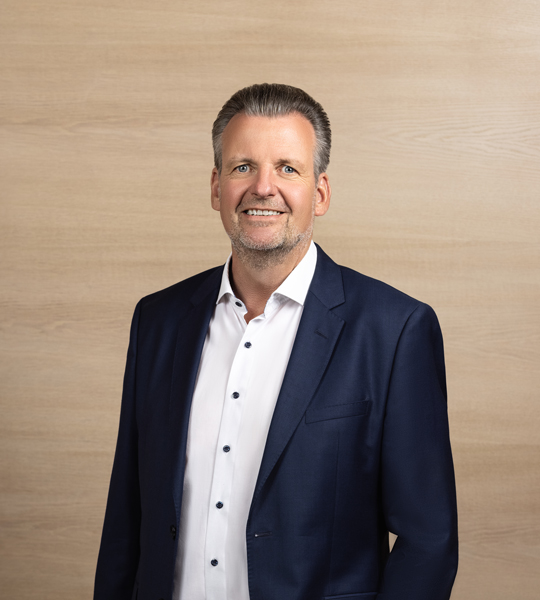
Dieter Rohdenburg, CEO of InterMaritime Shipmanagement
Evaluating the commercial viability of alternative fuels reveals a clear divide between immediate transitional solutions and future zero carbon pathways.
Rohdenburg points out that projected global volumes will simply not meet alternative fuel demand by 2050. Because of this stark reality, InterMaritime heavily focuses on carbon abatement technologies, spearheading a live pilot project for an onboard carbon capture system alongside methanol newbuildings. Conversely, Papavassiliou reports rapid commercial traction for drop in biofuels, with Island Oil securing ISCC EU certification to meet surging practical demand.
Technology and The Human Element
AI and Targeted Tech Investments
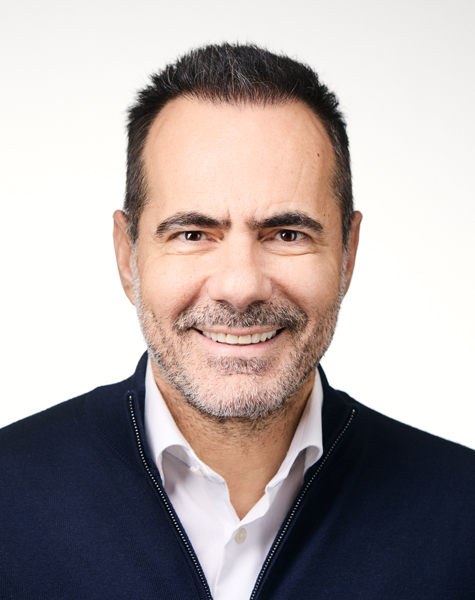
Andreas Hadjipetrou, CEO of Columbia Group
Digital tools must serve purely as decision support mechanisms rather than adding administrative noise. Hadjipetrou explains Columbia Group has a dedicated AI team standardising workflows on enterprise controlled systems like Microsoft Copilot to safely leverage AI across finance and compliance. Rohdenburg notes InterMaritime employs a dedicated AI specialist to optimise heavy administrative tasks, freeing managers to focus on direct vessel oversight.
Tech investments must yield quantifiable outcomes. Papavassiliou highlights real time voyage optimisation tools to ensure total standardisation between ship and shore. Capt. Adami focuses investments on integrated platforms and predictive maintenance systems. Aghajanyan cautions that technology is only valuable if it creates a corporate culture where data actively prevents operational and technical failures.
Maritime Cyber Security

Chrysostomos Papavassiliou, CEO of Island Oil
Cyber resilience is treated as a core operational safety issue.
Papavassiliou details rigid infrastructure controls, strict network segmentation and unannounced cyber drills at Island Oil. Capt. Adami warns that Mastermind ensures cyber resilience through continuous infrastructure stress testing, embedding cyber safety directly into the Safety Management System.
Closing the Seafarer Training Gap
The rapid onboarding of advanced software and alternative fuels requires a transformed skill set. Josephides emphasises the CSC is collaborating with academic institutions to radically update maritime curricula and expand simulation based learning.
Rohdenburg reports InterMaritime uses advanced Virtual Reality training suites to individually simulate complex systems and alternative fuel handling in a completely safe environment. Constantinou rejects generic certification in favour of scenario driven practical learning tailored around actual onboard operational risks. Capt. Adami warns that technology is advancing faster than the collective ability to train people, demanding an intense focus on genuine operational competence.
Post-Crisis Leadership and Equity
Psychological Resilience at Sea
The shipping industry frequently gravitates towards visible risks, such as machinery reliability and compliance, while overlooking the emotional accountability carried by seafarers.Following severe operational incidents or geopolitical close calls, leadership ashore must actively rebuild the confidence of their shipboard commanders. A key observation from recent industry coaching dialogues is the danger of the hindsight illusion.
Command decisions are rarely made in clean conditions; they are executed amid noise, time pressure and partial information.
Shore-based management must foster a culture of disciplined self-appreciation and psychological regulation, ensuring that a captain’s internal review after a crisis does not become distorted by self-doubt. Post-crisis leadership begins with a deliberate reset, protecting the trust between ship and shore so that the team grows from the event rather than becoming guarded.
Equity and the Leadership Mandate
The maritime sector is undergoing a profound structural shift regarding diversity and executive leadership. The focus has moved completely beyond simply bringing women into the industry, shifting directly toward placing female leaders at the helm of technical and operational boards. As the sector digitalises, AI-driven logistics and automated operations are creating new entry points.
However, true structural change requires active sponsorship rather than passive mentorship. Senior leaders must use their influence to secure heavy operational roles for diverse talent, ensuring that the green transition is inherently an equitable one. Companies must adopt inclusive design in everything from personal protective equipment to medical facilities, ensuring that the physical realities of life at sea are safe and accessible for all crews.
Cyprus as a Global Maritime Anchor
Navigating the EU Presidency
The Cyprus shipping cluster remains one of the most dynamic and resilient maritime hubs globally. Contributing approximately 1.9 billion euros to the national economy and representing 7 percent of the GDP, Cyprus maintains its status as the largest third-party shipmanagement centre in Europe. With Cyprus holding the Presidency of the Council of the European Union in 2026, the local cluster is uniquely positioned to shape international maritime policymaking. Furthermore, the recent re-election of Cyprus to the Council of the International Maritime Organisation ensures that the operational realities faced by shipmanagers are directly communicated at the highest legislative levels.
Maintaining Competitiveness
Operating successfully without direct state investment, the Cyprus flag upholds global recognition for its reliability. To maintain this prestige amid evolving foreign direct investment screening rules and complex EU sanctions frameworks, ongoing collaboration between the private sector and the Shipping Deputy Ministry is paramount. The digital transformation of the ministry’s services marks a vital step toward modernising administrative procedures, safeguarding Cyprus as a top-tier maritime investment hub.
The Future Outlook
Sector Consolidation: Mega Scale vs.
Boutique Specialisation
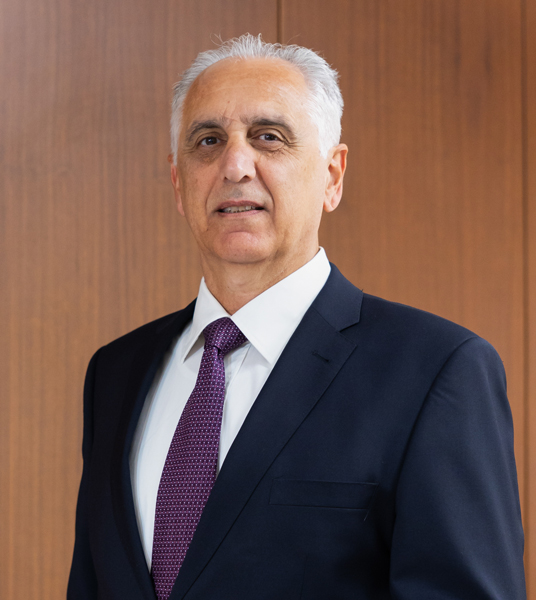 Alexandros Josephides, Director General of the Cyprus Shipping Chamber
The sector is entering a phase of rapid consolidation, sparking debate over whether massive scale is an absolute prerequisite for survival.
Josephides notes Europe was built on Small and Medium Enterprises, asserting a highly profitable space remains for smaller, high quality managers who compete strictly on elite operational quality. Hadjipetrou demonstrates that Columbia Group utilises massive scale to deliver purchasing power to partners while retaining bespoke solutions through flexible digital platforms.
Constantinou firmly positions Acheon Akti as an agile specialist delivering deep independent technical expertise for owners who actively reject corporate standardisation. Rohdenburg reinforces this, positioning InterMaritime as a deeply personal outsourced technical department. Capt. Adami concludes that many owners heavily prize customised solutions, ensuring both massive global platforms and boutique players will continue to coexist.
The Next 18 to 24 Months
The immediate horizon will be characterised by sustained operational pressure. Aghajanyan predicts this relentless pressure will expose weak corporate structures but highlight the true value of elite shipmanagement. Hadjipetrou expects clear strategic alignment and human capital to be the primary differentiators of performance. Papavassiliou concludes that the environment will highly reward organisations possessing the unique capability to seamlessly integrate trading discipline, physical execution and compliance readiness.
The consensus of the CSN 2026 Leadership Report is clear. Shipmanagement has outgrown its legacy identity as a simple service provider. It has evolved into the critical operational hub of the maritime world, where complex regulatory ambition must be converted into safe, compliant and commercially responsible action.