In 1947, in the world that followed the Second World War, countries signed the General Agreement on Tariffs and Trade (GATT) with the objective of relaunching the international economy by gradually reducing trade barriers.
In 1995, that agreement was expanded with the formation of the World Trade Organization. In between, in 1964 the United Nations organized the Conference on Trade and Development (UNCTAD) to help developing countries integrate into the world economy through trade and investments.
More recently, since the 2008 international financial crisis, the G-20 brings together the countries with the greatest weight in global decisions to chart a course of action on numerous issues that also include trade and investments.
To these organizations are added other associations of countries (OECD, BRICS), various thematic organizations (FAO, United Nations Framework Convention on Climate Change and its panel of experts, the IPCC) and, finally, the multilateral financial organizations (IMF and World Bank as a result of the 1944 Bretton Woods Agreement) as facilitators of growth for developing countries.
80 years of success
Over the course of almost 80 years and despite numerous political and economic crises, that international framework succeeded in reducing poverty, raising life expectancy, and leveling the playing field between countries of different capabilities.
Between the late 1990s and 2015, moreover, the “era of globalization” was characterized by a new stage of technological change and the formation of large value chains that blurred economic borders and helped foster greater convergence of average income in the world.
This latest stage of high growth, however, concealed a wear and tear on the international economic institutional framework that was reflected in the web of preferential trade agreements, frequent use of non-tariff barriers, and expanded agendas of multilateral organizations that neglected higher-consensus priorities such as food security or health.
In that context, the 2008 financial crisis, its consequences in Europe in 2012, the outbreak of COVID-19, and the risks of new technologies for employment, among the most important factors, led to unsatisfactory economic results in many advanced countries, pushing their voters towards more conservative agendas.
Separate paths
In that context, in 2025 the new government of President Trump in the United States decided to separate from the path his country had led, exercising a new strategy that uses trade penalties against other countries, both competitors and political allies, to build a “new order” that ensures the well-being of its citizens (lower taxes, less immigration, a shift in the social agenda towards a more conservative position), while seeking to maintain its country’s international economic primacy.
To achieve these objectives, open negotiations have been maintained with the escalation and de-escalation of trade threats.
These measures are supported by special legislation that over the years has allowed American presidents to manage situations of exception and urgency without going through Congress.
This fact has led the United States Congress itself to keep an inventory of measures that shows the back-and-forth of executive decisions on a case-by-case basis.
Change of Strategy
On the international political stage, President Trump’s administration sought to reaffirm its country’s status as a world power by activating its role as a guarantor of peace in localized conflicts. At the same time, its strategic weight in international security has been part of the incentives to quickly reach trade agreements with the United Kingdom, the European Union, and Japan.
Several factors played a role behind this change in American foreign strategy, but without a doubt the main one was technological competition with China. One of the alerts observed in the United States was the result of the Chinese plan “Made in China, 2025” launched in 2015 and which, currently, continues to evolve without labels, but with clear actions for the development of artificial intelligence, green energy, electric vehicles, and future development based on its own technological capabilities.
This type of policy has already been widely used by China, allowing it to climb up the value chains from its role as a generic supplier of inputs to the highest levels of technological design and decision-making.
As a side effect, Chinese policies have also shown shortcomings, for example, with the generation of overproduction of steel, aluminum, and solar panels, among the most important cases, which has ended up affecting international markets.
The Role of the Dollar
Another point of concern for the United States is the intention of China and its partner countries in BRICS to replace the dollar as the currency in international commercial transactions. More recently, the conflict over rare earths as an input for technology industries highlighted that China supplies 70% of this input to the United States.
China has also sought closer ties with countries in its region through trade and investment agreements with Vietnam, Cambodia, and Indonesia, among others. From the beginning, China’s strategy was to respond with retaliations to the United States’ tariff initiatives in order to eventually sit down to negotiate from leveled positions.
And, for the moment, it seems to be achieving corresponding results. Both due to the manner and the size of the trade and investment flows involved by the United States’ protectionist measures, there were fears for global activity levels.
Economic Resilience
Notably, and for the moment, the international economy has shown resilience to these shocks. Thus, global growth is forecast with a slight slowdown from 3.3% in 2024 to 3.1% in 2026 (IMF data, October 2025) and global merchandise trade maintains its growth between 2024 and 2025 in volume at 2.8% and 2.4%, respectively (according to the WTO, October 2025). Although in this latter case, it must be taken into account that so far this year, United States imports were a record due to the inventory buildup that companies made prior to the entry into force of the “reciprocal tariffs.”
News about trade agreements and ruptures between the United States and the rest of the world follows on a daily basis.
Among the larger developing economies, Brazil and India have suffered the imposition of widespread 50% tariffs as a political “punishment” (imprisonment of Bolsonaro in Brazil and purchase of fuel from Russia in India).
#### Allies, Hostilities, and Truces
Among the historical allies of the United States, Canada faces great commercial hostility and Mexico has achieved a truce while these three countries approach a new renegotiation of the North American preferential agreement (USMCA). South Korea has announced a new agreement during President Trump’s visit to the ASEAN meeting (Association of Southeast Asian Nations composed of Brunei, Cambodia, Indonesia, Laos, Malaysia, Myanmar, Philippines, Singapore, Thailand, and Vietnam) and the materialization of a new “truce” is expected in the case of China.
While this occurs, the main countries in international trade seek to maintain their preferential agreements and consolidate their spheres of influence.
For example, in the case of ASEAN, it is about advancing the RCEP (Regional Comprehensive Economic Partnership) agreement with Australia, China, Japan, Republic of Korea, and New Zealand, while strategic conversations have been established with countries as diverse as India, Russia, and the United States.
To these agreements are added the APTA (Asia-Pacific Trade Agreement), the Asia-Pacific economic cooperation (APEC), and the Trans-Pacific Partnership (CPTPP), to which the Latin American countries of Peru, Chile, and Mexico also belong.
#### Bilateralization of Multilateralism
The World Trade Organization (WTO) has registered 691 notifications of regional trade agreements with more than half in operation.
The multiplication of bilateral and regional negotiations along with the weakening of multilateral organizations opens a question regarding the risks in the immediate future, especially for developing countries.
Unlike the moderate but sustained forecasts of global activity, this risk is affecting investment flows between countries, which in 2025 will fall for the second consecutive year.
#### Capital Flows
In this chapter of foreign direct investments (FDI), Latin American countries follow, on average, the downward trend of incoming investment flows between 2024 and 2025. However, in the current year, a greater number and value of projects announced for the future are verified in Argentina, Brazil, and Mexico.
It is interesting to note that comparing the reception of flows over time since the 1990s, China and the countries of South America have participated at similar levels. However, the nature of the investments was different, since in China these flows allowed the development of industrial and technological value chains, and in South America they concentrated on the exploitation of natural resources.
However, a distinctive aspect until very recently has been that, on the occasion of each international financial crisis, total investments decreased and China reduced its participation while South America
maintained or improved it.
#### 180-Degree Turn
In recent years, China has gone from being a net receiver to a net placer of investments in infrastructure projects distributed around the world, with a strong presence in Africa and Latin America.
In this latter case, investments by Chinese state-owned enterprises in Latin American ports have sought to facilitate trade flows, especially on the Pacific coasts, but also to and from Brazil.
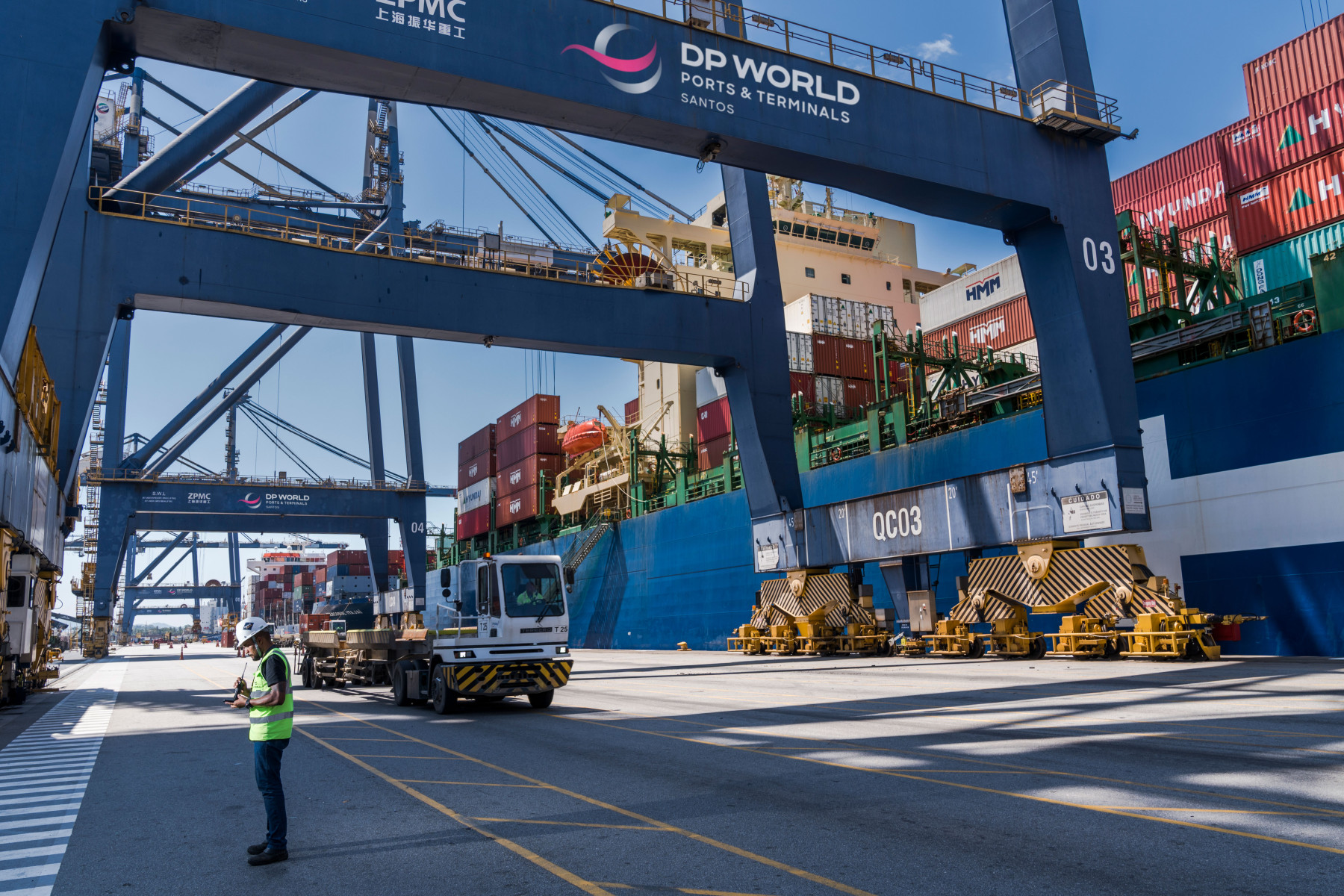
Thus, the ports of Chancay in Peru, Balboa and Cristóbal in Panama, and port terminals in the ports of Paraguaná and Santos in Brazil have been developed. China also has terminals in Mexico’s main ports.
Chinese shipping companies operate secure routes to South America, and this trade facilitation has contributed to the growth of goods flows that transport industrial inputs and finished products to South American ports, while South American countries send minerals (copper, iron, zinc), fuels (coal, oil, and natural gas), and agro-industrial products (soybeans, meats, fruits) to China. More recently, in the last four years, China has sought a different profile as an investor in developing countries, limiting its interest in infrastructure and advancing in technological investments, solar energy (Argentina), and mining, and electric cars (Brazil).
Decoupling in Trade
Returning to the chapter on trade, the readjustment of Chinese supply and demand as a consequence of the trade decoupling with the United States is already visible in Latin American countries like Brazil and Argentina. This is the case, for example, with soybeans. Until the start of the “trade war,” half of the United States’ soybeans were sold to China (around 20% of China’s soybean import demand).
Currently, Brazil and Argentina have occupied that space.
The advance of the Chinese presence in Latin America has reawakened the interest of the United States in our region and explains, in part, the strong support for Argentina and the recent rapprochement with Brazil, despite the ongoing tariff confrontation.
Local Impact
In the case of Argentina, the direct effect of President Trump’s tariff measures focuses on the imposition of a general tariff of 10% (previously it was, on average, less than 2%), which makes our products more expensive to one of our most important destinations (the third market for Argentine exports, representing around 10% share). In the case
of specific products, such as steel and aluminum, the tariffs are higher (50%), while for oil and mining products, the treatments have initially been more favorable.
Compared to competitor countries like Brazil, which for the moment, as already mentioned, faces a 50% tariff, Argentina maintains greater competitiveness.
Between Two Powers
Within the framework of US support for our country, the negotiation of more favorable conditions for some products, such as a possible expansion of the beef quota, wines, citrus fruits, etc., was also announced. US producers have expressed their strong opposition to this initiative.
The indirect effect of these measures has begun to be seen through the expanded trade with China and also our trade deficit with that country.
In the near future, the maintenance of North American tariffs, combined with trade agreements with the European Union, could mean a significant redirection of our agro-industrial supply towards Asian countries.
Constant Changes
Finally, a warning is warranted: this brief synthesis of the situation of international trade and investments, although broad, will not reach the reader as up-to-date since changes, with advances and setbacks, are observed daily. The discussion among analysts focuses on determining the permanence of this new international economic order under construction.
The proven advantages of multilateralism suggest that, with reforms and new initiatives, the majority of the world’s countries will seek to maintain its validity. In the process, the costs may be significant and find Argentina at a critical economic moment, which adds one more test to our usual and recurring external challenges.
The authors are Economists from FIEL. Article published in “Indicadores de Coyuntura No. 680”, November 2025.